

Fires of the Old World I — The Coiled Cradle
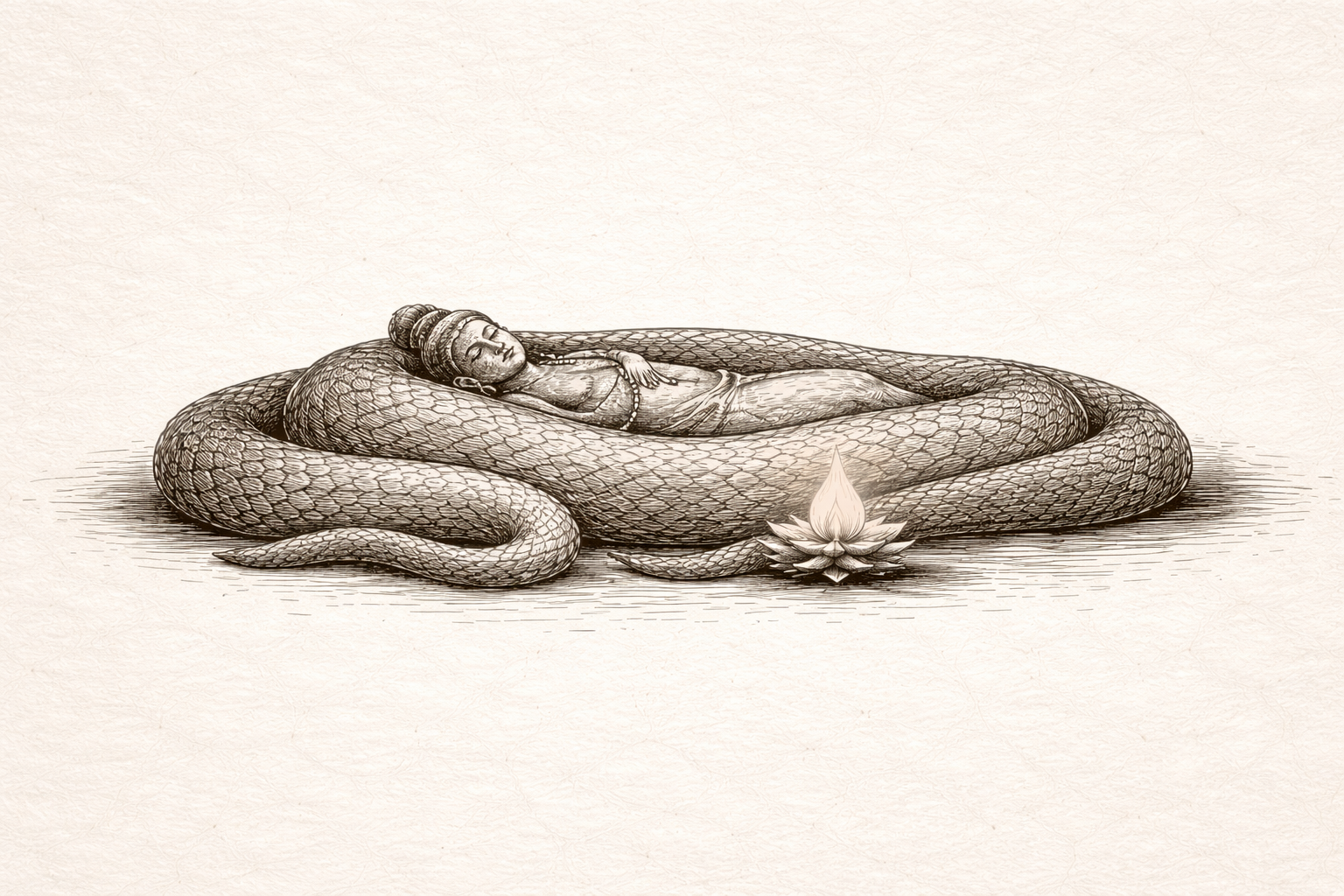
Fires of the Old World I — The Coiled Cradle opens the series at the beginning before beginnings: a dark, water-borne hush, a sleeping god, a great naga holding creation in patience, and the first disturbance moving toward the cradle. It is a hearthlit mythic retelling shaped around measure, restlessness, ash, and the old mercy of things not yet taken.
This is an old story.
Keep silence until it finishes speaking.
The lamp had been lowered until its flame spoke softly to the oil, and the hut breathed in the night’s cool air. Outside, the river moved without hurry, carrying silt like a slow thought. Inside, the reed mat held the warmth of bodies, and the clay floor kept its damp scent of earth and rain.
Listen now.
The world was not yet busy with names. It had not learned the itch of counting. It had not learned hunger.
Before dawn learned where to stand, there was only the black kindness of the deep.
In that deep lay the first stillness, wide as silence and gentle as sleep. No shore yet held it. No tree yet remembered it. It was water without edge, and dark without fear, and in its patient middle the Sleeping God rested as if the whole of being were a lullaby.
He did not lie on stone. There was no stone.
He did not lie on earth. There was no earth.
He lay upon coils.
Ananta, the great naga, held him—coil on coil, scale on scale—an unending cradle made of living patience. Each scale was cool as river-pebble. Each curve was a vow not to let the god fall into wakefulness too soon. The serpent’s body rose and dipped like breath that had not yet become breath, and the god’s weight was answered by that living bed.
At the edge of the coils, a lotus-lamp floated—no wick, no hand, no glass. It was simply a small steady light, as though mercy had been remembered in the middle of nothing. Its glow made the nearest scales shine like wet iron, and the god’s skin took the faint colour of pearl.
The Sleeping God’s eyes were closed, and because they were closed, the deep remained quiet. His hands were open. In his palm, ash lay like soft grey snow, though nothing had yet burned. And near his wrist, looped loosely as if it had always been there, a measuring cord rested—thin, pale, patient—coiled upon a coil, waiting.
Time, if it existed, did not dare to make a sound.
And then something moved along the outer coil.
It was not a storm. Not yet. It was a restlessness with feet, tasting the hush, testing what could be tested.
Continue reading: Fires of the Old World I — The Coiled Cradle at The Lantern Chronicles on Substack.
Also in The Lantern Chronicles

The Mirror, the Ledger, and the Box
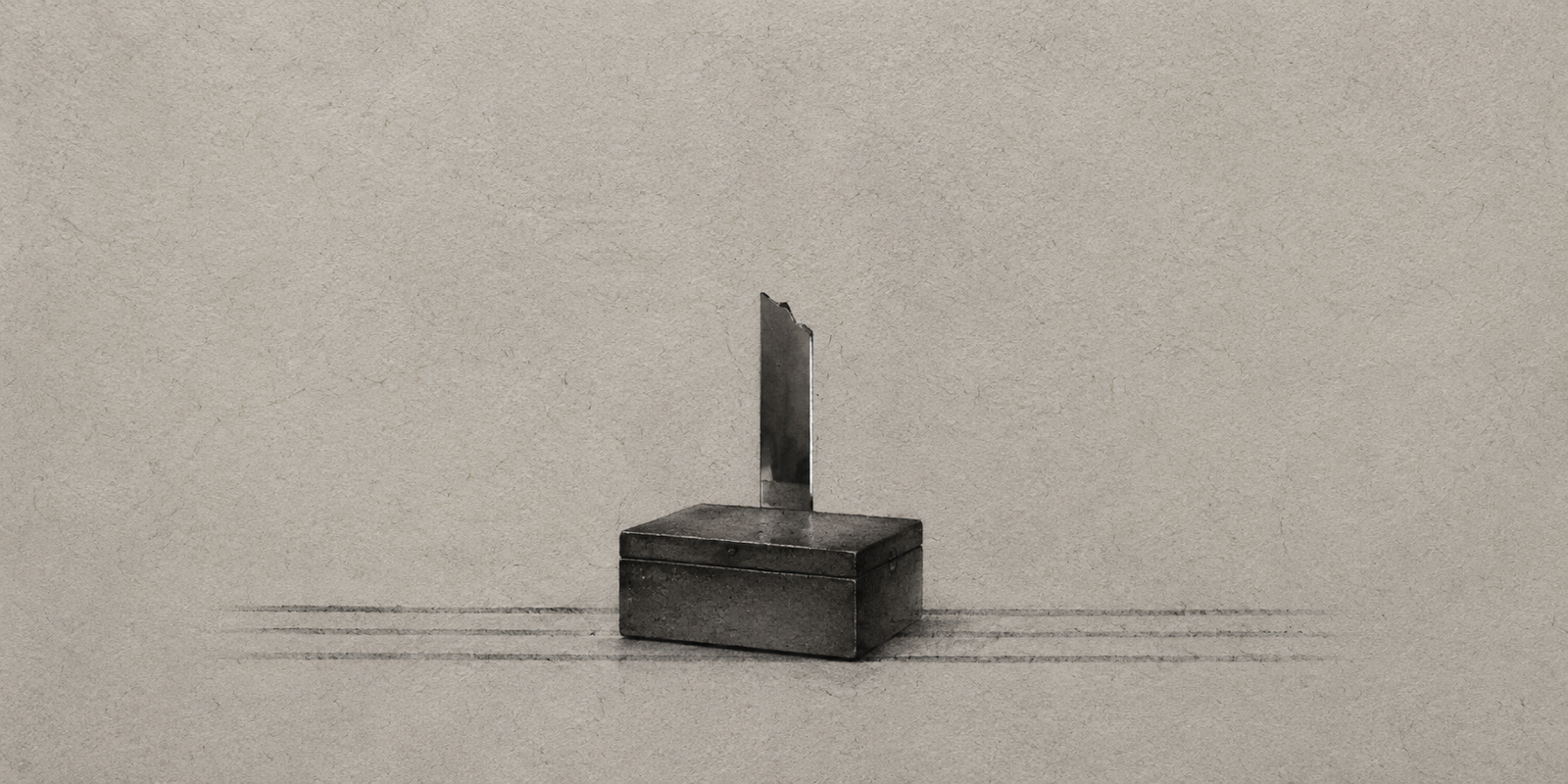
Three ordinary acts—tending a mirror, keeping a ledger, reading a page—draw three voices into the same unseen machinery. In this original flash-fiction triptych by Lucas Varro, hunger becomes debt, witness becomes participation, and attention itself acquires a price. Enter through Mirror Hunger, where one rule has always been enough: do not lean close.

What the Hand Knows
When does effort become interference? This contemplative essay from The Living Way explores wu wei, attention and the human compulsion to force—whether in work, conversation, ambition or the private demand that reality unfold according to plan.

The Beauty Time Is Allowed to Make
A literary-philosophical essay on wabi-sabi, handmade kozo paper, and the modern demand for seamlessness. Beginning with red chalk meeting a resistant surface, Lucas Varro asks whether value must arrive untouched—and whether care becomes destructive when it begins erasing the visible history of objects and human lives.
Continue Reading
If this piece found something in you, you may wish to continue the journey elsewhere.
On The Lantern Chronicles, I gather writings from Angkor, myth and legend, contemplative essays, and poetry — works shaped by silence, beauty, wonder, memory, and the deeper questions that follow us through the world.
It is a place for stone and story, reflection and vow, shadow and revelation.
You would be most welcome there.