
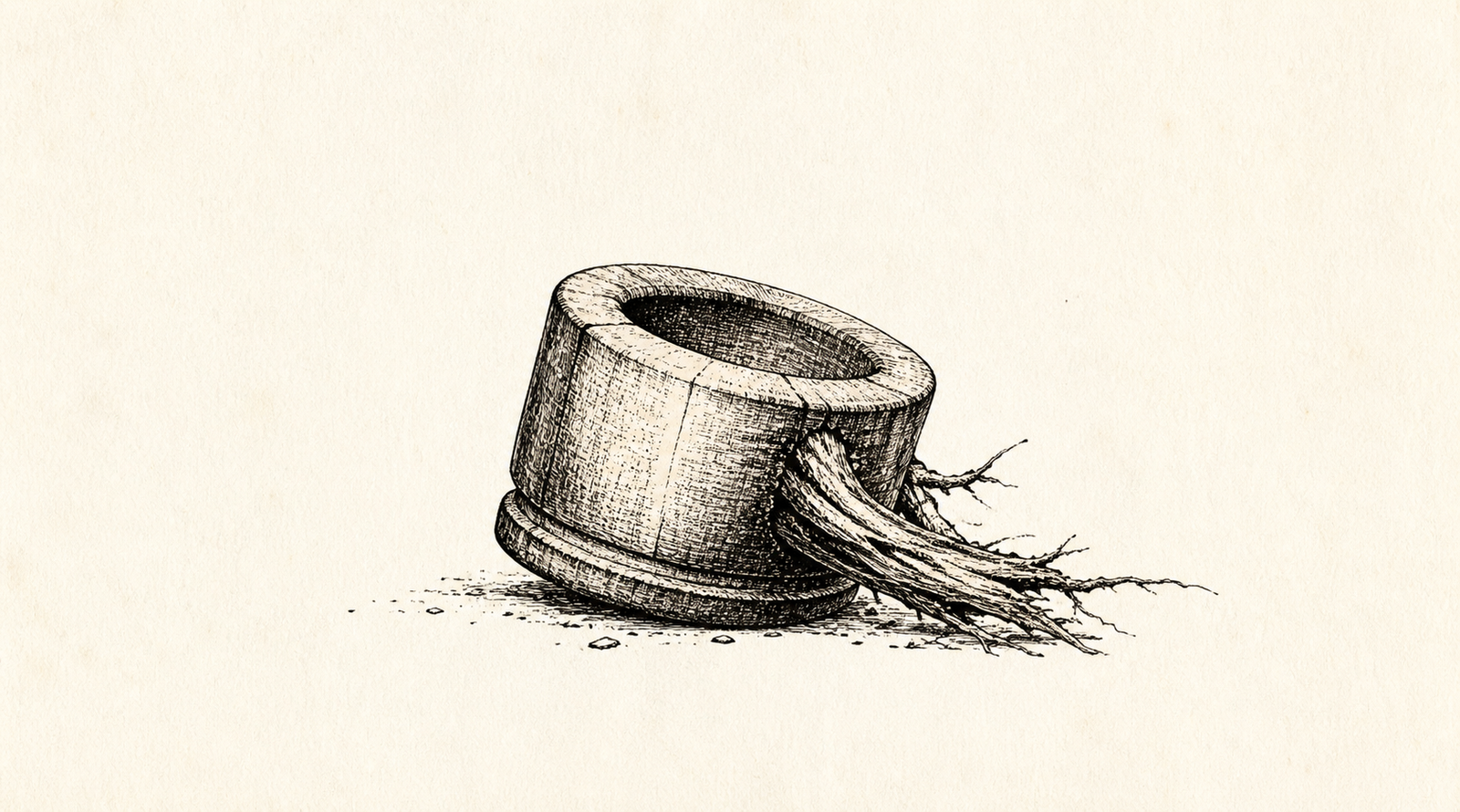

Fires of the Old World XIV — The Fallen Trees
A hearthlit retelling of Krishna, the mortar, and the two Arjuna trees that waited: The Fallen Trees returns to one of the old sacred stories in which the miraculous does not arrive as spectacle first, but through household dust, a mother’s rope, and a child crawling towards what no one else can see.
Listen close.
Outside the cowherd village, where the night smelled of warm milk, damp grass, and lamp-oil, two great trees stood with their roots deep in the dark. Their leaves whispered even when there was no wind. Their bark was old, grey, and split like tired hands.
A child by the hearth leaned against his grandmother’s knee.
“Were they alive?” he asked.
The old woman turned the wick of the lamp lower.
“All trees are alive,” she said. “But these two were waiting.”
—
In those days, Krishna lived among the cowherds of Vrindavan, in the house of Nanda and Yashoda.
He was still small enough to crawl beneath the benches. Small enough to steal butter with both hands and leave white prints along the wall. Small enough to be caught with curds on his mouth and laughter in his eyes.
But nothing in that house stayed where it had been left.
Pots were emptied. Calves were untied. Butter vanished from high shelves. The milkmaids would come to Yashoda with their bangles clinking and their voices sharp with complaint, though each one softened when the child looked up.
“He has taken from my churn.”
“He has fed the monkeys.”
“He has broken the hanging pot.”
“He smiles when we scold him.”
Yashoda would lift him into her lap. She would wipe his mouth. She would look into his dark face and try to be stern.
Krishna would blink.
The bangles would fall silent.
Yet a mother has work to do, even when gods hide in the house as children.
At the edge of Nanda’s yard stood two Arjuna trees.
They were taller than the houses. Taller than the cattle-sheds. Their crowns held birds in the morning light, and their trunks stood close together, with only a narrow space between them.
Children played beneath them.
Cattle rubbed against them and moved on.
Beneath that bark, two names had not finished waiting.
Nalakubara.
Manigriva.
Once, those names had moved through bright courts with gold at their wrists, wine on their breath, and garlands slipping from their hair. Once, the sons of Kubera had laughed beside clear water as though no door were closed to them.
But pride had made them slow to bow. And so the brothers were made to stand until their pride had no foot left to dance on, no hand left to grasp, no voice left to excuse itself.
Years passed over them.
Rain entered the cracks of their bark. Ants travelled their bodies. Birds nested in their arms. Spring climbed through them, and they could not lift a hand to welcome it. Summer burned in their leaves, and they could not walk towards shade.
They learned the thirst of bark.
They learned the weight of birds.
They learned how long a root can remember the foot.
They could not speak.
They could not turn.
They could only wait.
Continue reading: Fires of the Old World XIV — The Fallen Trees at The Lantern Chronicles on Substack.
Also in The Lantern Chronicles
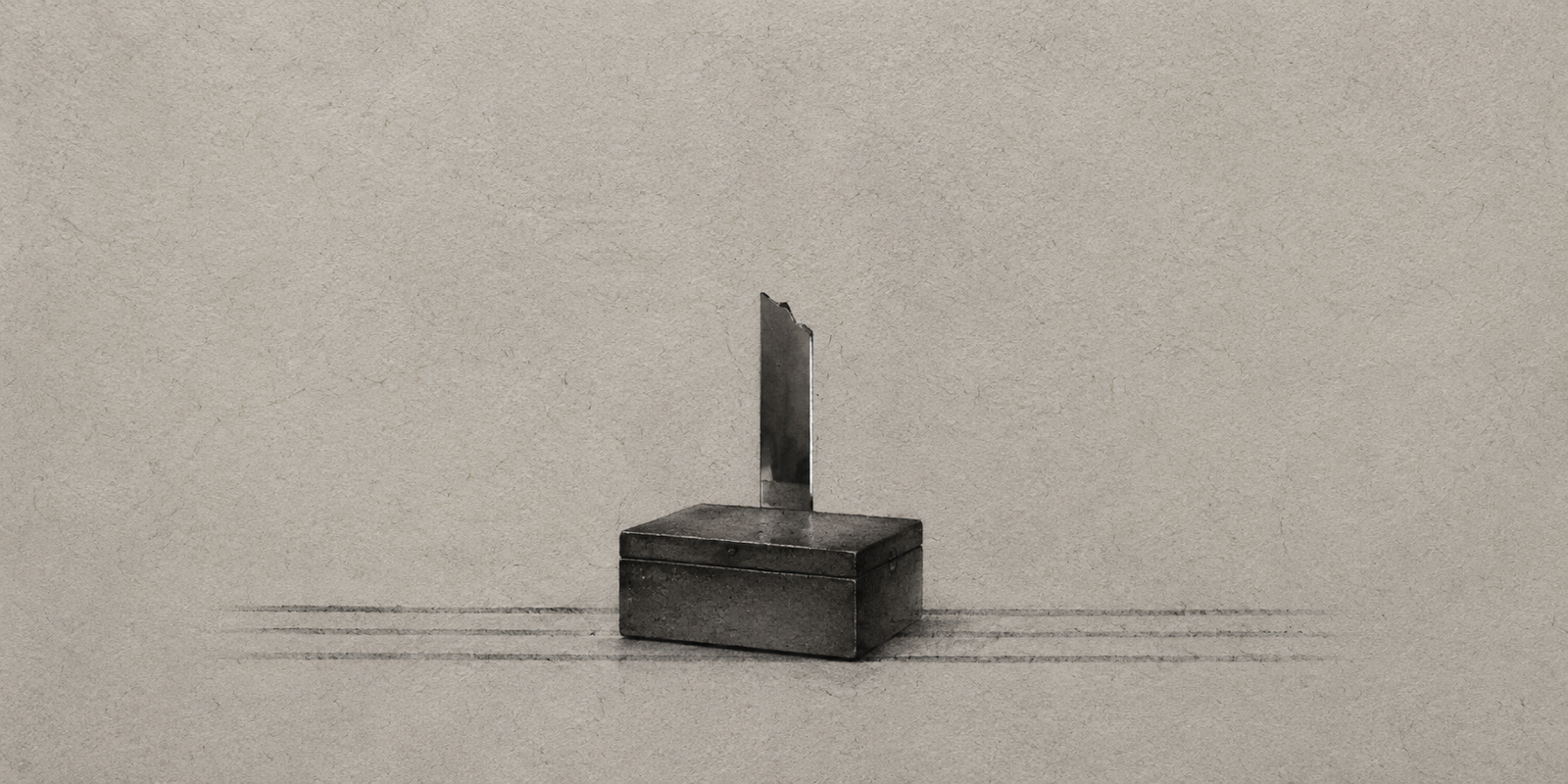

The Mirror, the Ledger, and the Box
Three ordinary acts—tending a mirror, keeping a ledger, reading a page—draw three voices into the same unseen machinery. In this original flash-fiction triptych by Lucas Varro, hunger becomes debt, witness becomes participation, and attention itself acquires a price. Enter through Mirror Hunger, where one rule has always been enough: do not lean close.

What the Hand Knows
When does effort become interference? This contemplative essay from The Living Way explores wu wei, attention and the human compulsion to force—whether in work, conversation, ambition or the private demand that reality unfold according to plan.
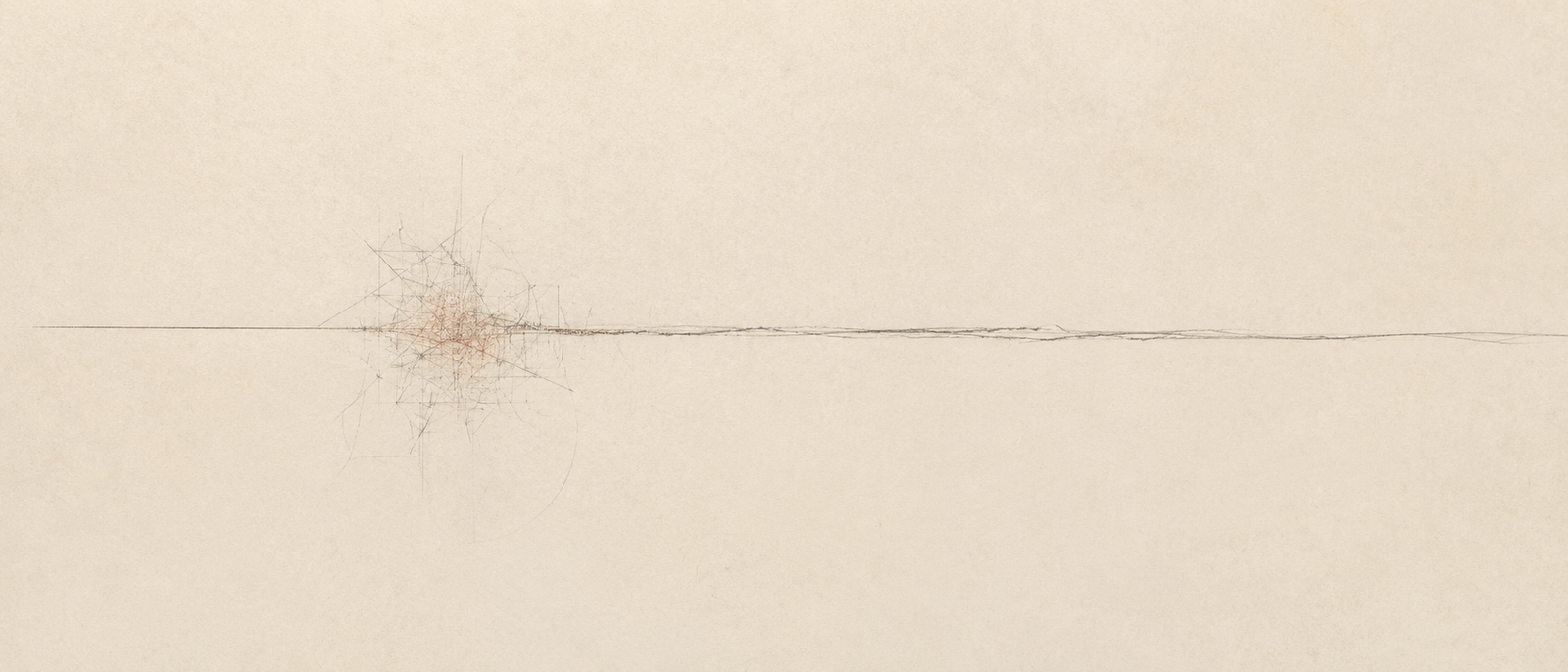

The Beauty Time Is Allowed to Make
A literary-philosophical essay on wabi-sabi, handmade kozo paper, and the modern demand for seamlessness. Beginning with red chalk meeting a resistant surface, Lucas Varro asks whether value must arrive untouched—and whether care becomes destructive when it begins erasing the visible history of objects and human lives.
Continue Reading
If this piece found something in you, you may wish to continue the journey elsewhere.
On The Lantern Chronicles, I gather writings from Angkor, myth and legend, contemplative essays, and poetry — works shaped by silence, beauty, wonder, memory, and the deeper questions that follow us through the world.
It is a place for stone and story, reflection and vow, shadow and revelation.
You would be most welcome there.