
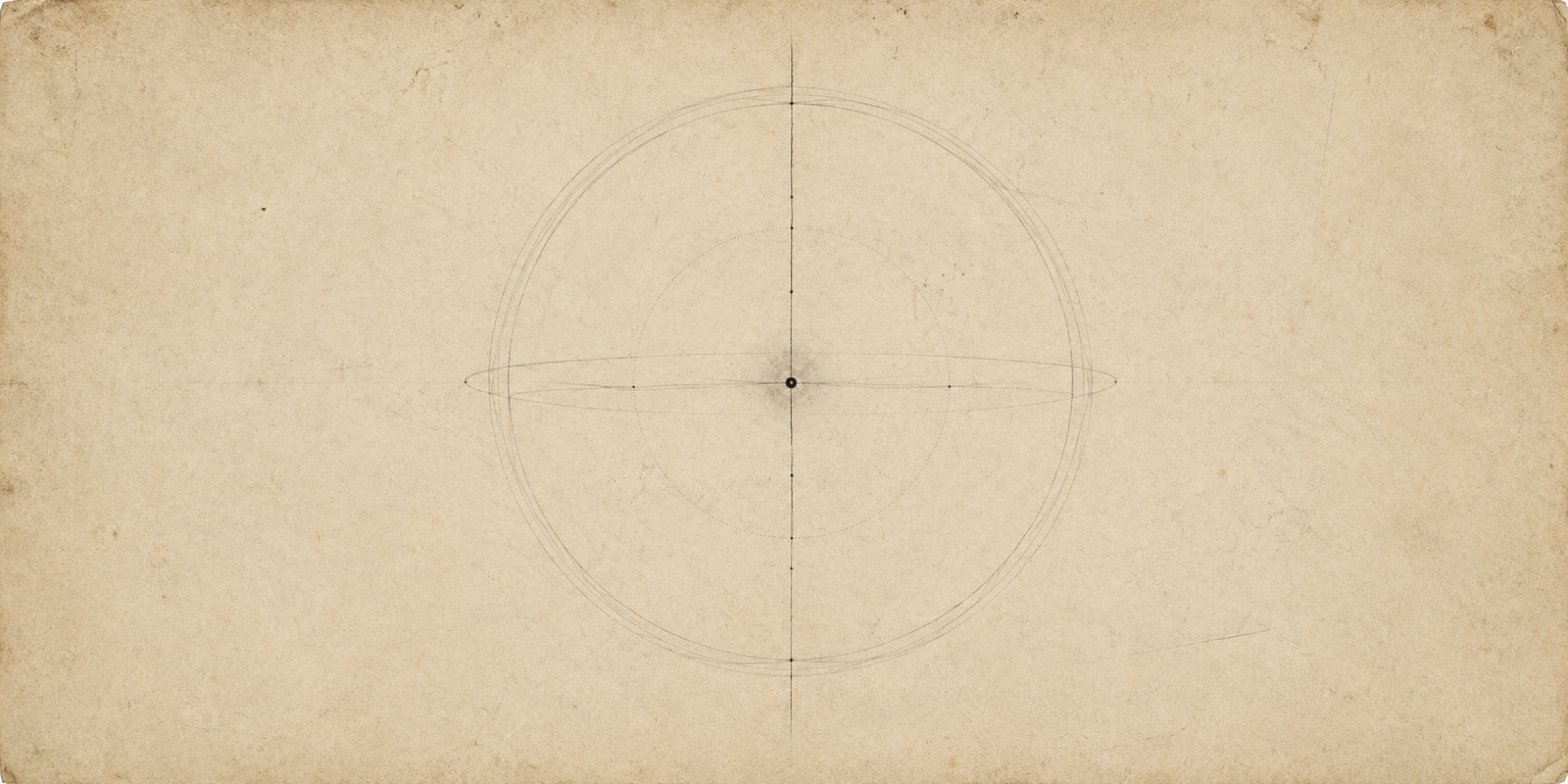

The Astonishment of Being
In The Astonishment of Being, Lucas Varro sets human life against the scale of the universe and asks what remains meaningful beneath such immensity. The essay begins from cosmic indifference — the fact that the universe does not know your name, will not notice when you are gone, and measures human life as almost nothing — before turning toward a stranger, deeper astonishment: that here you are at all.
This is a foundational essay for The Living Way: a meditation on existence, mortality, cosmic scale, human tenderness, and the brief miracle of being awake among other passing lives.
The universe does not know your name.
It never has. It will not notice when you are gone. By every cosmic measure, you are almost nothing: a brief arrangement of matter on a small wet planet, circling an ordinary star, in one galaxy among hundreds of billions. Your fears, your loves, your private shames, the promises you kept and the ones you failed to keep — none of them register beyond the fragile weather of this world.
And yet here you are.
Awake.
Reading these words with something moving in you that no instrument has ever fully explained.
Isn’t that the strangest thing?
The universe is about 13.8 billion years old. At the edge of what physics can describe, language begins to fail. “Before the beginning” may not be a place words can enter. What we can say is that from conditions we barely understand, space opened, particles scattered, and gravity began its patient work: dust to cloud, cloud to star, star to ash, ash to planet.
No intention.
No audience.
No occasion.
Our Earth formed about 4.5 billion years ago, one body among incalculable others, most of which will never be named. Life stirred here, for reasons still not fully understood, and did not stop. It pressed through extinction, ice, darkness, accident, hunger, mutation, and time, until at last there were creatures capable not only of surviving, but of grieving, singing, fearing death, and asking what any of it meant.
Compress all of this into a single day. On that scale, everything we call human history — every war, every poem, every empire, every act of mercy — occurs in the final fraction of the final second. Your own life, even if you are granted many years, lasts less than a flicker within that fraction.
A blink within a blink.
In the far future, after durations that defeat human meaning, the last stars will cool and go dark. Black holes will consume what remains, then spend unimaginable eons evaporating into silence. Eventually, even the final traces of structure will vanish. Everything that ever happened will be, so far as anything remains to know it, indistinguishable from never having happened at all.
This should make everything meaningless.
Strangely, it does the opposite.
The universe’s indifference does not cancel meaning. It strips away false meaning — which is a different thing entirely, and perhaps a mercy.
Continue reading: The Astonishment of Being at The Living Way on Substack.
Also in The Lantern Chronicles

The Stranger Is Where Inheritance Is Weighed
A Living Way essay on faith, inheritance, empire, and moral humility. The Stranger Is Where Inheritance Is Weighed asks how the stories that form us can become either mercy or contempt — and why the true test of any tradition is whether it can still see the stranger.
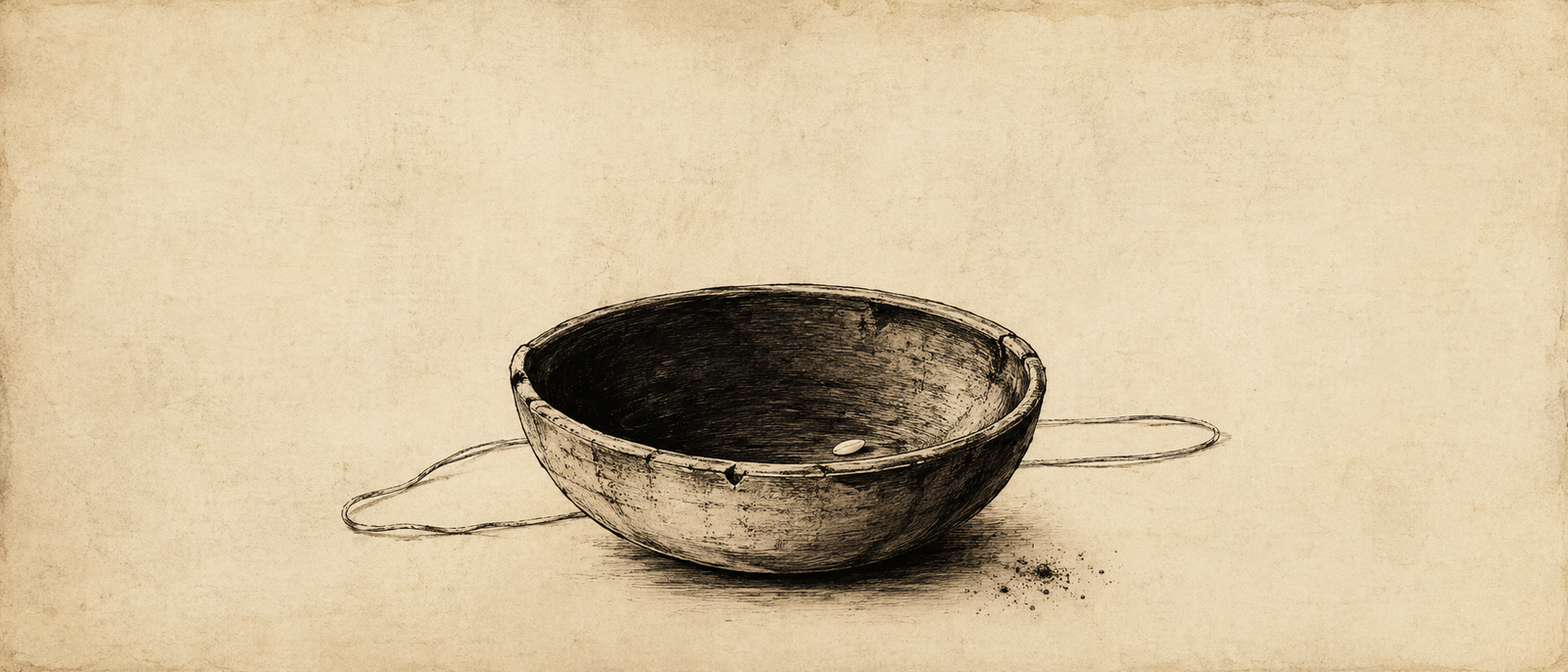

The Beggar God: A Bhikshatana Retelling
A hearthlit retelling of Bhikshatana: Shiva enters the forest as a barefoot beggar, carrying only ash, silence, and an empty bowl. In this Fires of the Old World tale, spiritual pride is not defeated by argument or spectacle, but revealed by what the hand cannot yet release.

At the Lip — A Poem from The Vow
A poem from The Vow on a waterfall, a river reaching the edge, and the stillness that gives falling its shape. At the Lip stays with one overwhelming natural image until movement, constraint, and scale become almost unbearable in their precision.
Continue Reading
If this piece found something in you, you may wish to continue the journey elsewhere.
On The Lantern Chronicles, I gather writings from Angkor, myth and legend, contemplative essays, and poetry — works shaped by silence, beauty, wonder, memory, and the deeper questions that follow us through the world.
It is a place for stone and story, reflection and vow, shadow and revelation.
You would be most welcome there.