
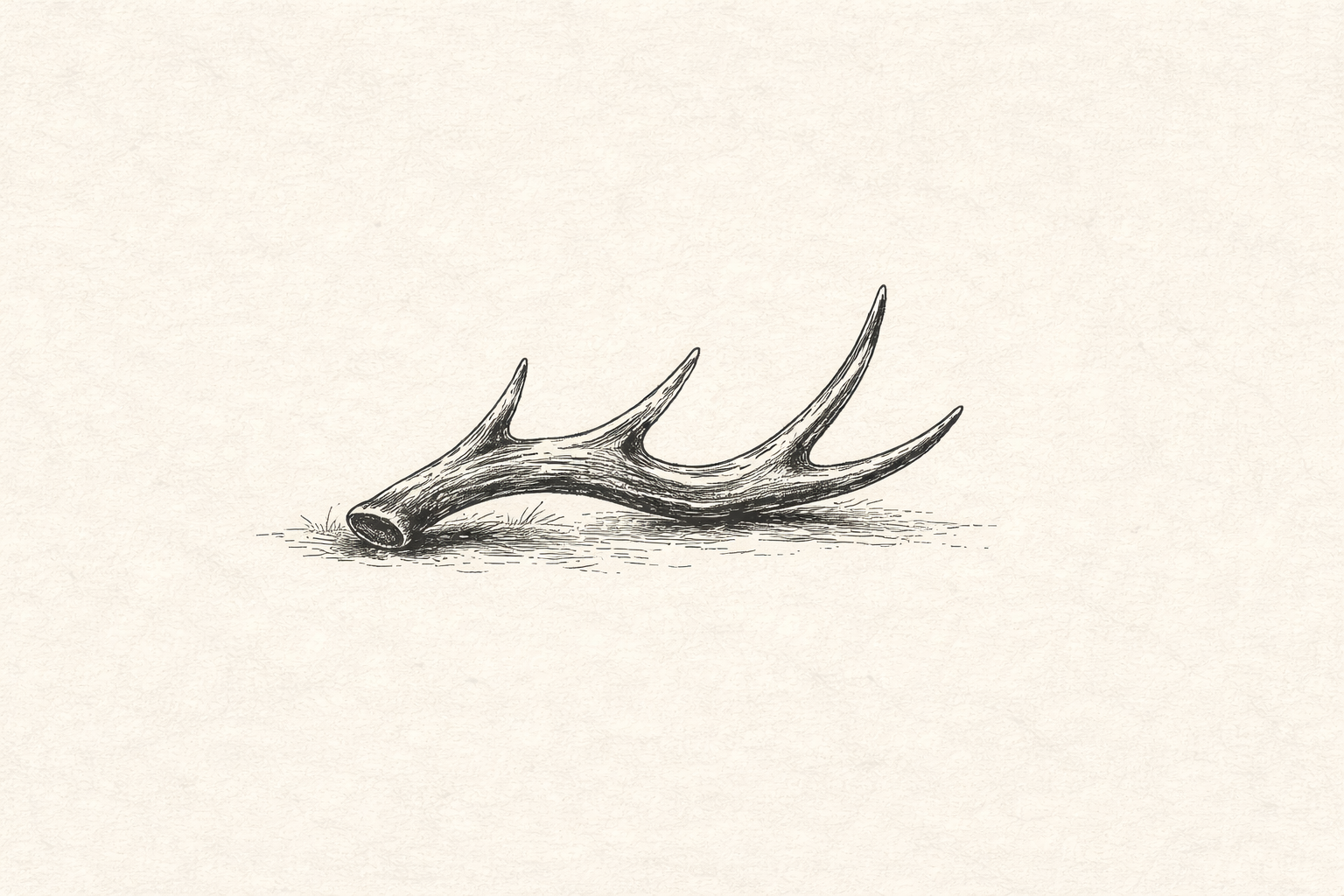

Fires of the Old World IX — The Golden Deer
In this tale from Fires of the Old World, the forest is briefly washed clean, exile seems almost gentle, and one bright thing appears among the trees. The Golden Deer retells the fatal shimmer that draws Rama away from the hermitage: a story of beauty, wanting, deception, and the small crossing by which a whole world is broken open.
When the oil lamp burned low and the insects stitched their thin silver noise beyond the eaves, the old woman drew the child nearer with the edge of her shawl. The mat was cool beneath them. Smoke from the cooking fire clung to the rafters. Outside, water slipped from leaf to leaf in the dark, patient as counting.
“Listen,” she said, and turned the wick down until the flame stood small and golden as a seed. “This is a tale of bright wanting, and of the teeth it keeps hidden.”
In the years of exile, when the princes wore bark and the princess walked the forest paths with dust upon her ankles, there came a season of deceptive peace. The leaves were washed clean. The streams ran clear over stone. Morning entered the hermitage like milk poured into a bowl. Rama gathered wood. Lakshmana mended the thatch and cut fruit with his bright, sure blade. Sita spread wet cloth upon sun-warmed branches and listened to the birds calling across the trees.
It might have seemed enough.
But old forests do not sleep for long.
Far off, beneath a stand of sal where the earth smelled of resin and wet bark, Marica waited under another’s command. Once he had trusted his own strength. Once he had moved with pleasure through fear. But he had felt Rama’s arrows before. He knew the hand that drew that bow. Ravana had come to him with eyes like banked coals and a voice smooth as oil.
“Take another shape,” the demon king had said. “Draw him away.”
Marica had bowed, though the flesh along his back had gone cold. To refuse Ravana was death. To obey him was death also. So he went into the grove alone and knelt with both palms on the ground.
He spoke old words that tasted of iron and root. A wind rose where no branch moved. The dark hair on his limbs shrank into light. His shoulders narrowed. Bone changed its music. Gold ran over his hide, then brighter than gold, until he seemed hammered from treasure and polished with dawn. White spots flowered along his flanks like scattered jasmine. His antlers lifted, fine and shining. Even his eyes he altered, making them wide and soft, as if he had been born only to startle and flee.
When he stepped forward, the forest looked at him and did not know him.
That was the worst of it.
He came near the hermitage at the hour when sunlight thins beneath the trees and everything seems briefly blessed. He kept always just beyond certainty. A flash between trunks. A bright flank. A delicate hoof placed without sound. The kind of vision that does not only catch the eye, but catches the heart in the same motion.
Sita saw him first.
She had been gathering flowers in the clearing, her lap full of white blossoms, when the gold moved among the shadows. She lifted her head. The petals slid from her hands.
There he stood.
No creature of that wood had ever shone so.
Continue reading: Fires of the Old World IX — The Golden Deer at The Lantern Chronicles on Substack.
Also in The Lantern Chronicles

The Mirror, the Ledger, and the Box
Three ordinary acts—tending a mirror, keeping a ledger, reading a page—draw three voices into the same unseen machinery. In this original flash-fiction triptych by Lucas Varro, hunger becomes debt, witness becomes participation, and attention itself acquires a price. Enter through Mirror Hunger, where one rule has always been enough: do not lean close.

What the Hand Knows
When does effort become interference? This contemplative essay from The Living Way explores wu wei, attention and the human compulsion to force—whether in work, conversation, ambition or the private demand that reality unfold according to plan.

The Beauty Time Is Allowed to Make
A literary-philosophical essay on wabi-sabi, handmade kozo paper, and the modern demand for seamlessness. Beginning with red chalk meeting a resistant surface, Lucas Varro asks whether value must arrive untouched—and whether care becomes destructive when it begins erasing the visible history of objects and human lives.
Continue Reading
If this piece found something in you, you may wish to continue the journey elsewhere.
On The Lantern Chronicles, I gather writings from Angkor, myth and legend, contemplative essays, and poetry — works shaped by silence, beauty, wonder, memory, and the deeper questions that follow us through the world.
It is a place for stone and story, reflection and vow, shadow and revelation.
You would be most welcome there.