

Alabaster Dawn, Unspoken
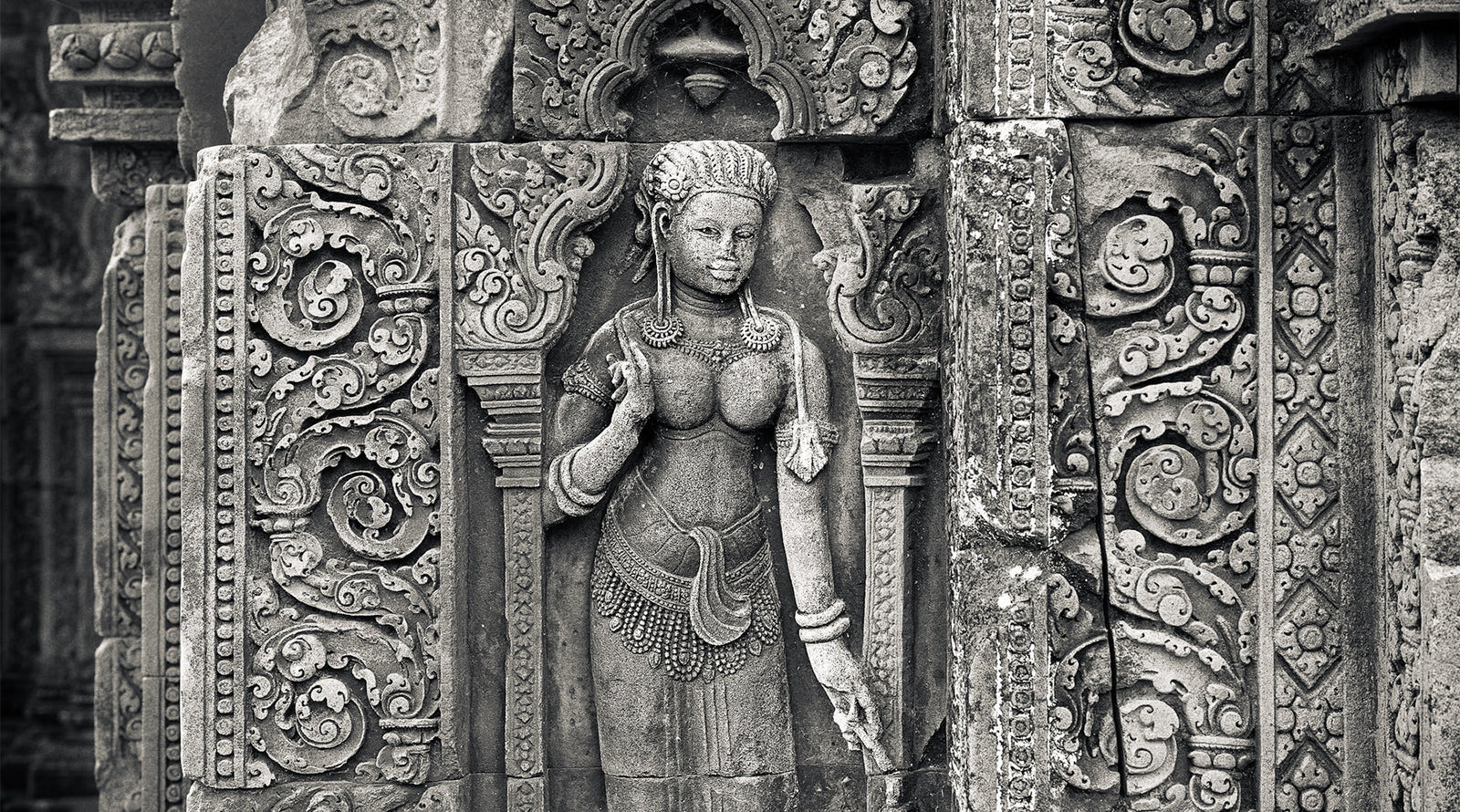
The corridor holds its breath. Cloudlight spills gently over the carved lintels, softening every vine, every curve of stone. The rain has passed, leaving a fine shimmer on the sandstone—an offering the jungle makes in silence. I approach her slowly, as one might approach a thought still forming.
The apsara stands poised above hamsas, her hips tilted in memory of movement, her fingers lifted toward something half-remembered. She is not stone—not entirely. Her gaze does not meet mine, and yet I feel seen.
I lower the tripod. Stillness folds over me like silk. The sky holds to its grey, leaden and luminous all at once. I wait—not for the right light, but for the hush between two breaths. Then I release the shutter. Eight minutes of listening. Eight minutes of prayer.
The exposure gathers not just form, but atmosphere—the gentle curve of shadow, the soaked air, the scent of wet lichen. Time is not captured, only remembered differently.
Stone gathers bloomlight
ancient hips recall the drum—
my heart, struck once, stills
Weeks later, beneath amber light, I cradle the negative in my hands. The chiaroscuro emerges slowly, each wash of tone shaping what the lens only witnessed. With each print, I return to that hour—not to reproduce it, but to relive the breath that preceded it.
She stands still. But something in her dances.
More from the Library


See Also
A concise and impartial dictionary of absence, promises, quarrels, ordinary objects, and the troublesome instability of words.

The City of Service
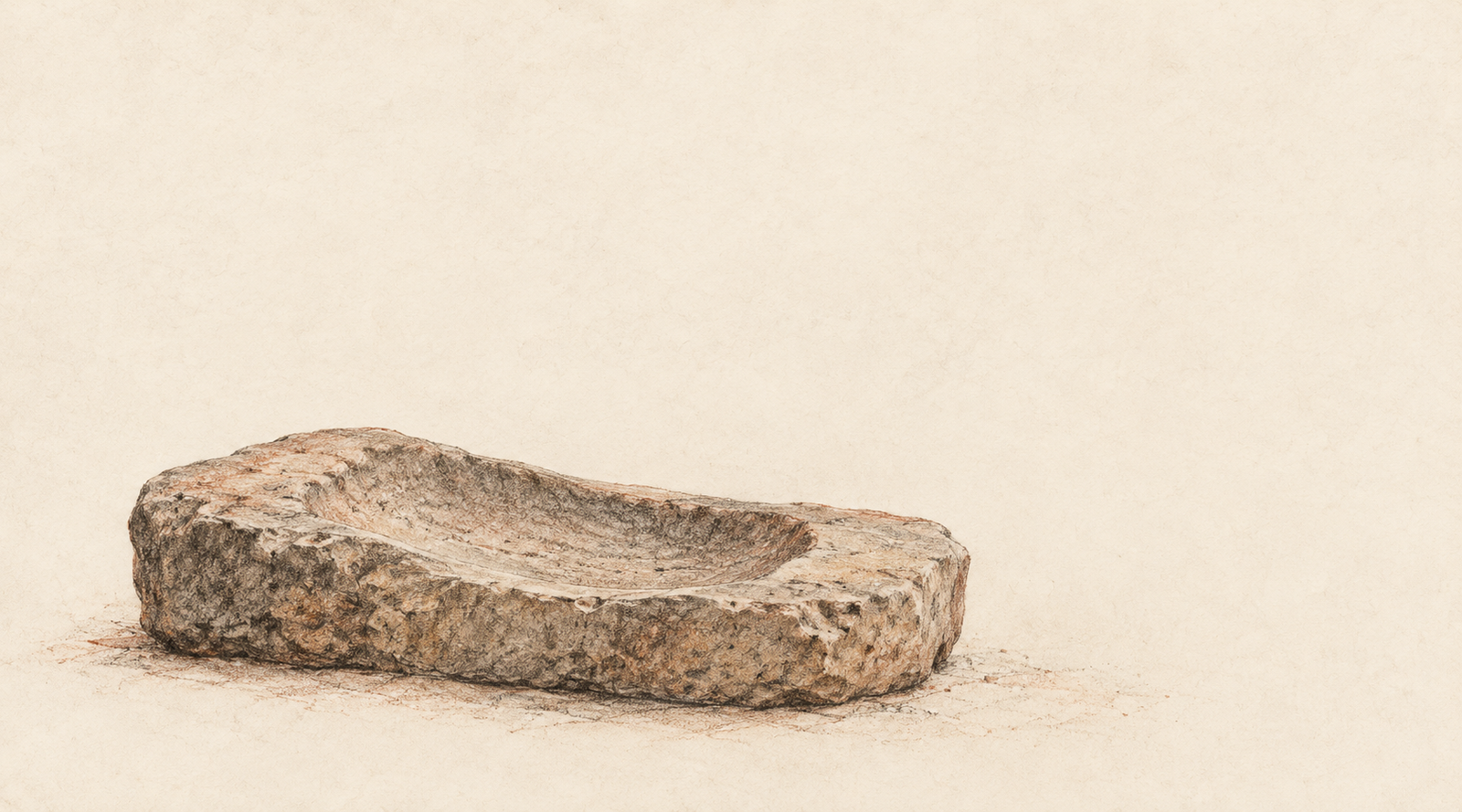
The temple we inherit is a building from which almost all necessity has been removed. Nothing must be brought for it to continue being what we call a temple. The sanctuary asks nothing of us. Stone is good at this kind of independence.
A living temple was otherwise.
Water had to come in. So did grain, cloth, oil, aromatic substances, fuel. The things required for worship arrived because someone carried them across a threshold.

Houses of Wood, Light, and Smoke
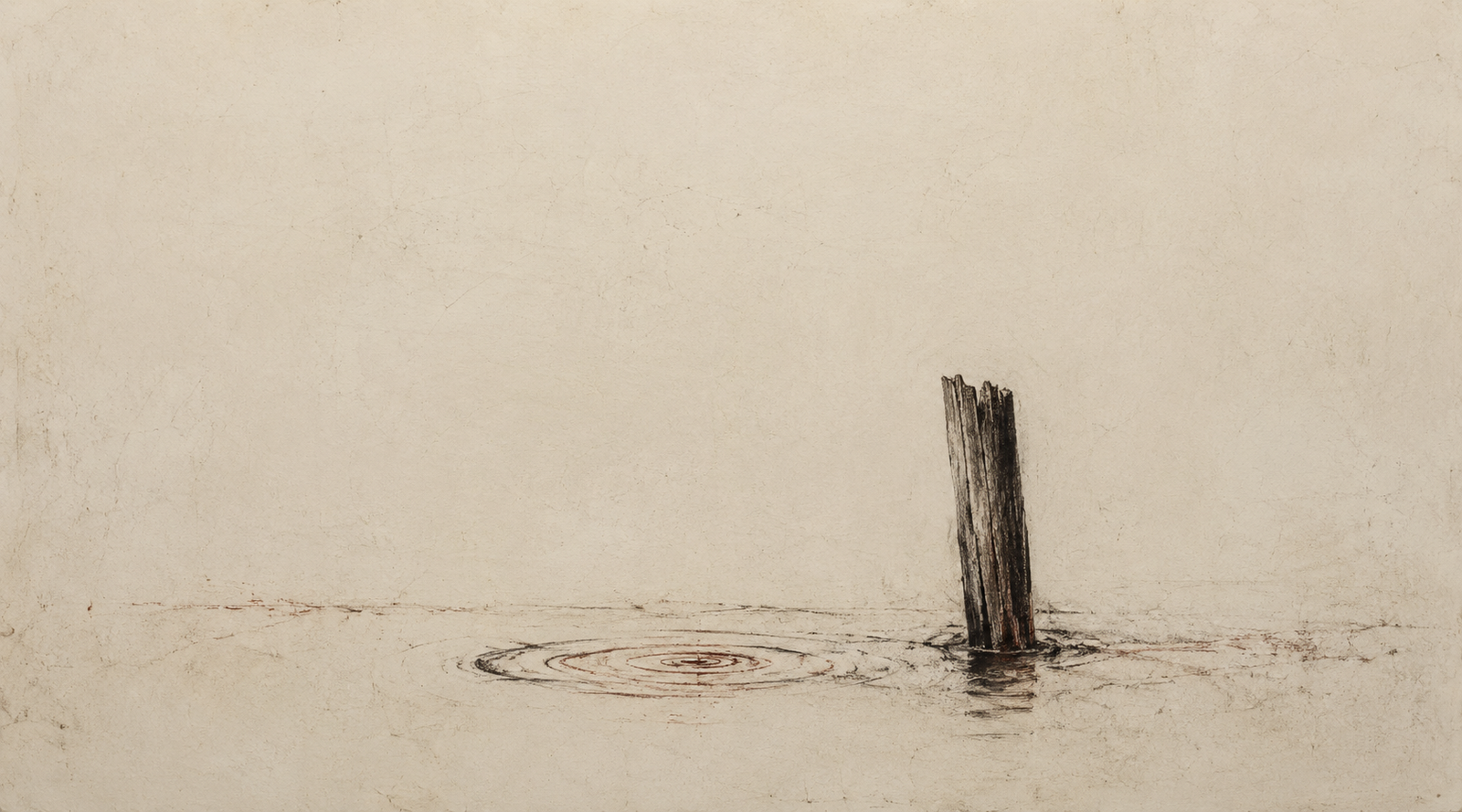
Some of Angkor’s most intimate ruins do not rise above the ground at all. They are postholes, low mounds, hearths and ponds: durable traces of a domestic city built largely from things that decay. To restore that city is to see Angkor not only as stone, but as wood, smoke, water, repair, and people living within calling distance.

$895
Banteay Srei Temple, Angkor, Cambodia — 2022
Limited Edition Archival Pigment Print
Edition
Strictly limited to 7 prints + 2 Artist’s Proofs
Edition Number
This listing is for the first numbered print from the Large Collector Edition: 1/7
Medium
Hand-toned black-and-white archival pigment print on Hahnemühle Bamboo — a museum-grade fine art paper chosen for its quiet tactility and reverent depth, echoing the spirit of the temples.
Signature & Numbering
Each print is individually signed and numbered by the artist on the border (recto)
Certificate of Authenticity
Accompanies every print
Image Size
34.3 x 22.9 inches (87.1 x 58.2 cm)
The first breath of dawn slips through the jungle and finds her waiting—an apsara hewn from rose sandstone, poised as if the next beat of the drum might set her free. Around her, carved foliage curls like held incense smoke, and the corridor listens for centuries already passed.
In this recess of Banteay Srei, silence is not absence but presence: a pulse beneath the lichen, a murmur beneath stone. Hamsas lift her form as if remembering flight, while her fingers echo a gesture the body no longer remembers—but the soul does.
I met her in that breathless stillness, camera cradled like an offering. The sky hung low and grey, yet the air shimmered with presence. I waited until the light settled fully into the moment, then opened the shutter—eight minutes of reverence entrusted to film.
Crafted on medium-format black-and-white film, the negative was shaped using chiaroscuro and gently hand-toned to recover the warmth of that dawn hush. Each print is made on Hahnemühle Bamboo paper, museum-grade and soft to the eye. The edition is strictly limited to twenty-five prints, with two Artist’s Proofs.
Receive her quiet radiance as a threshold of reflection.
Let the silence she carries draw you deeper—click here to step into the Artist’s Journal.