

Listening for the Drum Between Raindrops
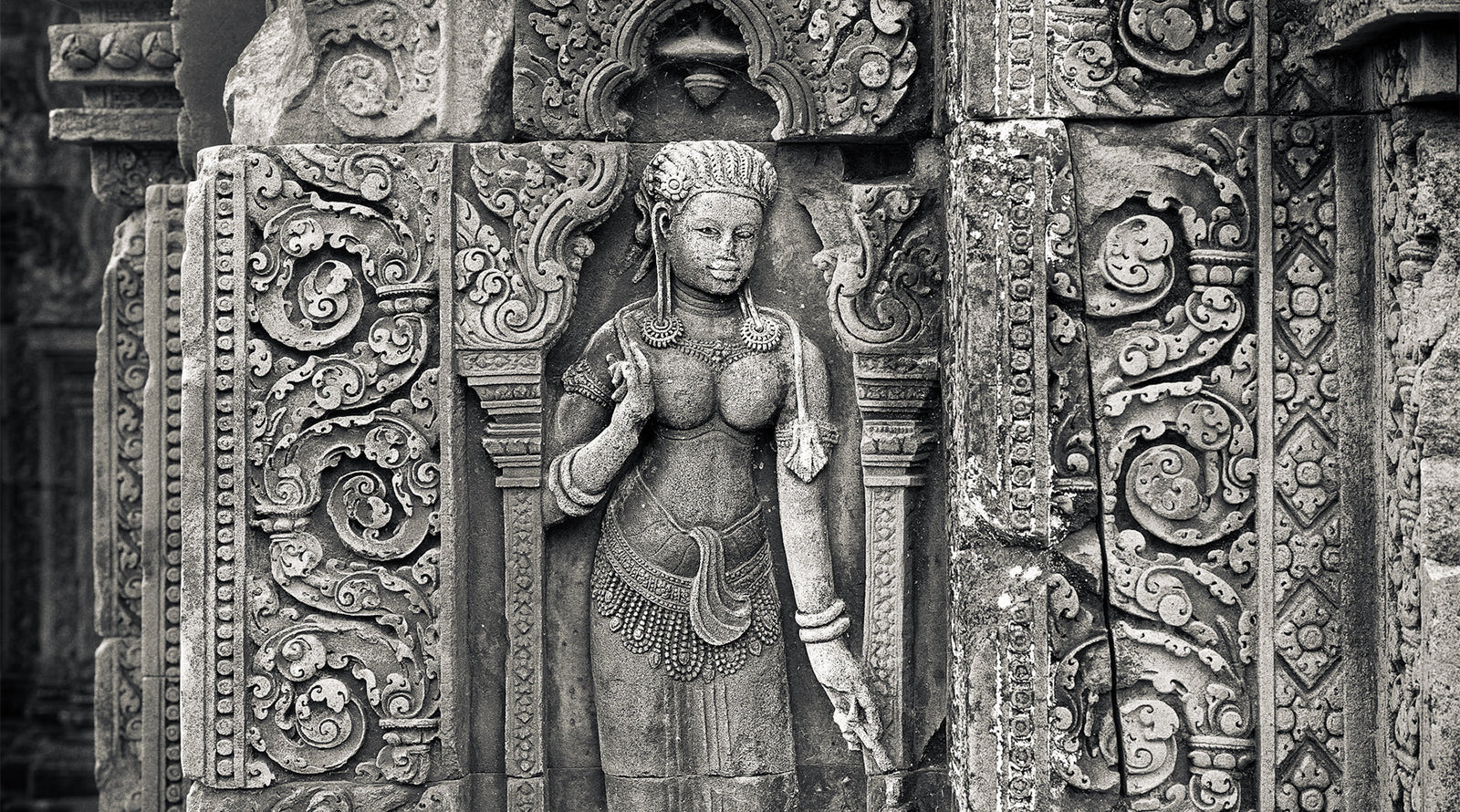
The sandstone gleams with dew, each droplet resting briefly before slipping into a vine-carved groove. The sound—softer than a moth’s wing—is lost to the jungle, but the stone remembers.
The apsara stands in a quiet rhythm. Not posed, but listening. Her fingers offer a gesture that does not close. A pause that does not end. I lean into the hush, aligning lens and breath. The tripod settles like a spine into earth.
I press the release and wait. Not to take, but to receive.
In the stillness, the world becomes tonal: light in gradients, sound in vapour. Her anklets do not chime, yet I hear them—the memory of motion in a body now held by time. The exposure completes, and the air returns like an aftertaste.
Later, in the darkroom, the chiaroscuro flows from silver grain, not as invention, but as retrieval. The stone becomes skin. The silence, voice.
The print arrives not as a product, but as an echo—the one I first heard beneath cloud and rain.
Her silence turns
wild rain into measured pulse;
roots listen, undisturbed.Light rests on a braided crown—
echo of a thunder that never breaks.She offers two fingers,
opens a gate inside the chest
where stone may learn to sing.
More from the Library

Houses of Wood, Light, and Smoke
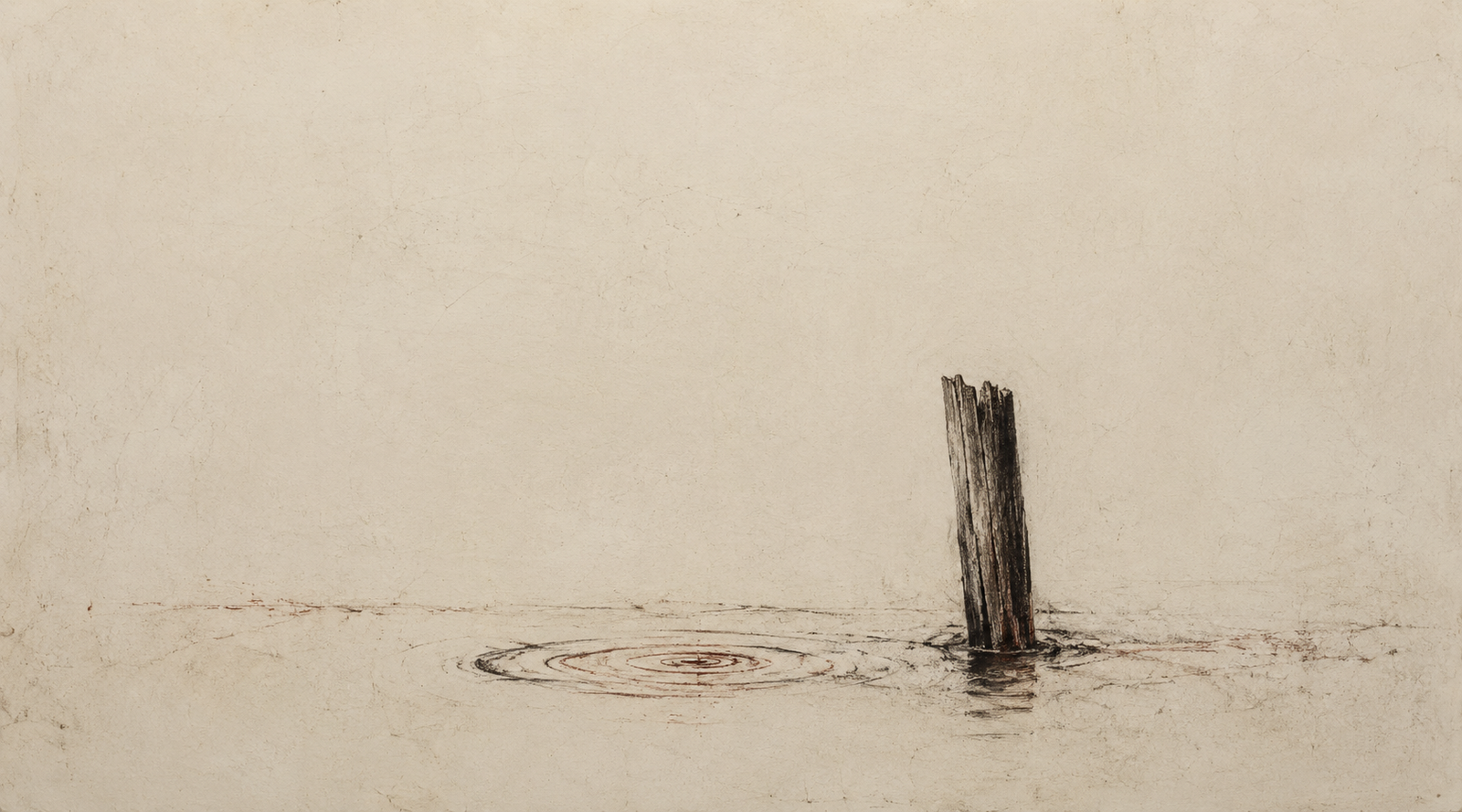
Some of Angkor’s most intimate ruins do not rise above the ground at all. They are postholes, low mounds, hearths and ponds: durable traces of a domestic city built largely from things that decay. To restore that city is to see Angkor not only as stone, but as wood, smoke, water, repair, and people living within calling distance.

What Stone Brings Forth
I had mistaken a gift for something being expelled.
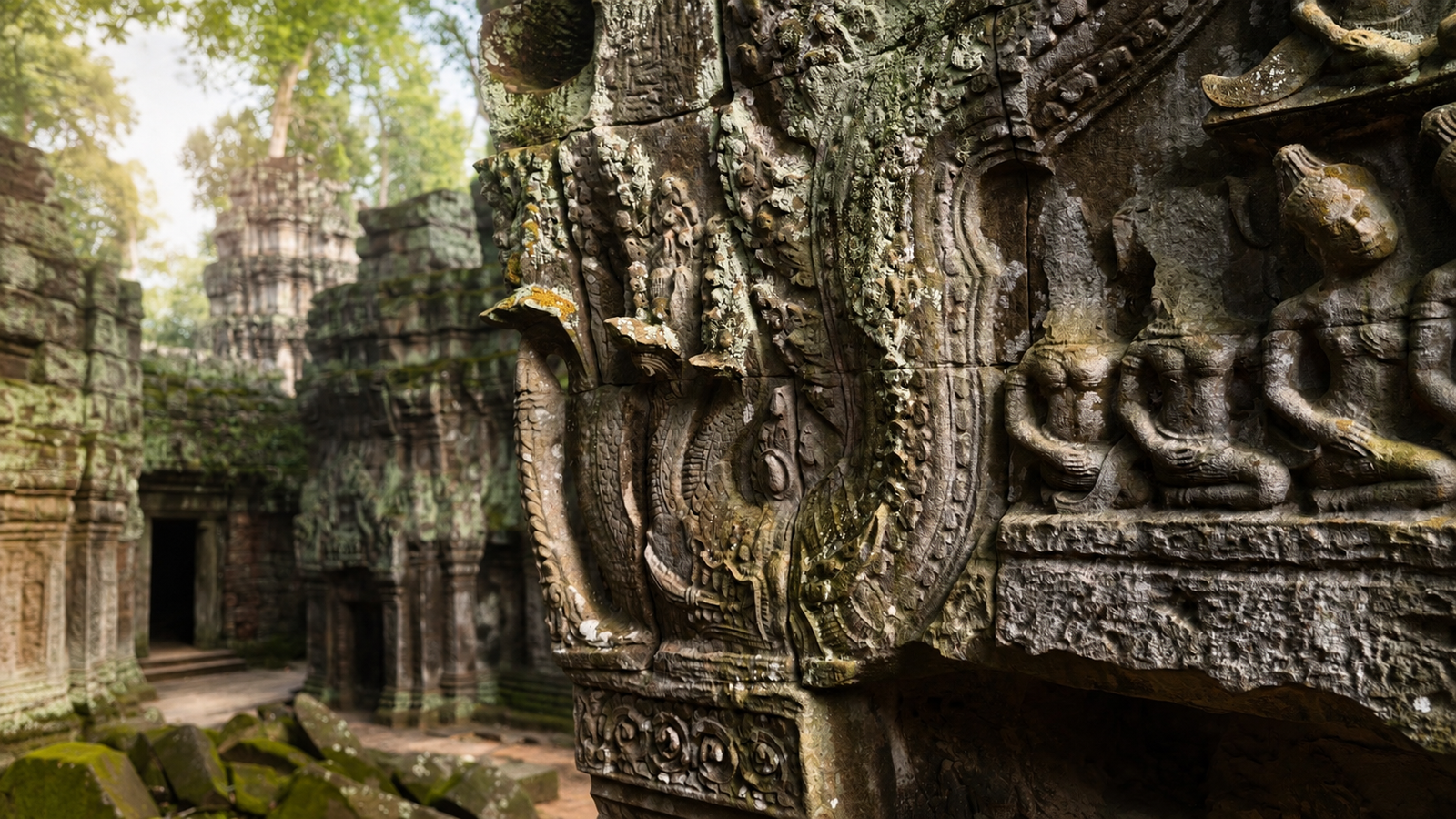
Beneath the nāga's mouth, a stone garland descended bead by bead. Nearby, a makara opened its jaws and another form emerged. Looking closer, the whole temple began to change: serpent became ornament, ornament became architecture, architecture became foliage.
The forest did not introduce this language.
It answered it.

The Eighth Daughter
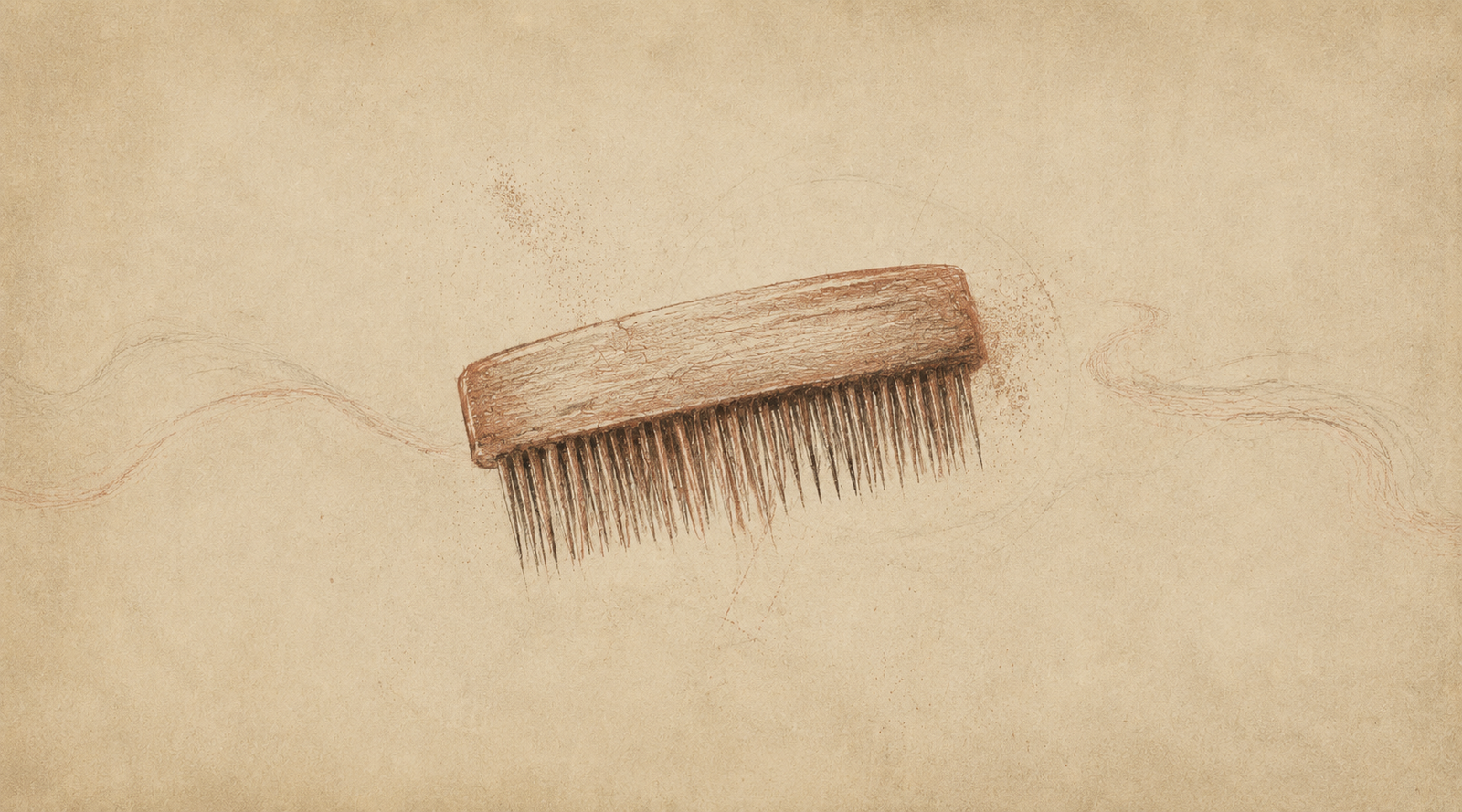
Seven daughters have already been taken by Yamata-no-Orochi when Susanoo reaches the River Hi. Only Kushinada-hime remains. The Eighth Daughter retells the Kojiki episode through a family’s waiting, a girl transformed into a comb, and the patient preparation for the serpent’s return.