

Root, Wall, and the Listening Eye
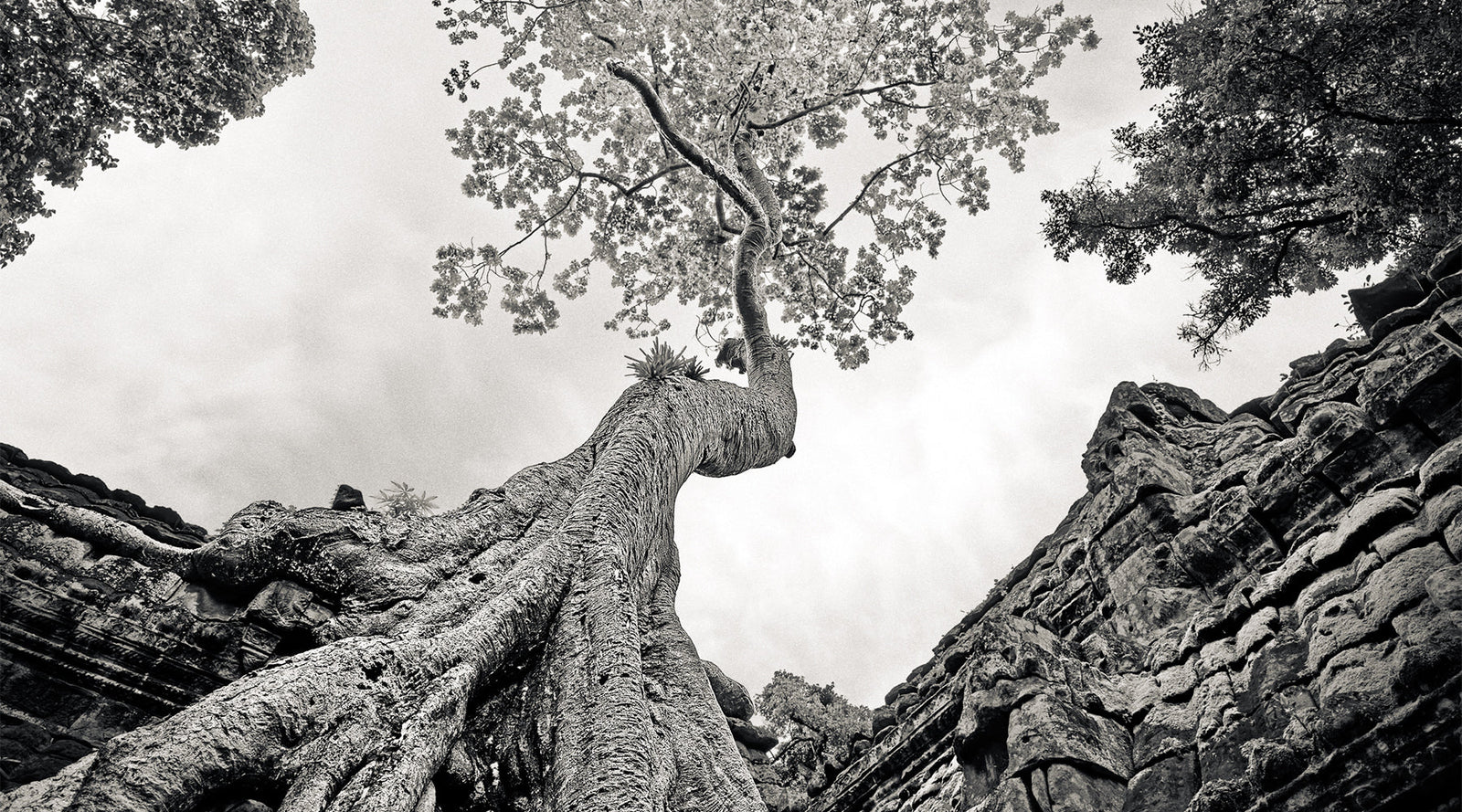
I crouch beside a slick of moss the colour of old jade. A droplet, fat with moonlight’s aftertaste, hangs from the carved lip of a devata’s crown. It magnifies the world upside-down—root becoming sky, wall becoming river. I tell myself to remember the way that droplet hesitates between falling and remaining, because every photograph is born in that same moment of contradiction.
The note I scratch in the margin reads: let light speak first. Beneath it, almost illegible in the humidity: hand-toning must feel like a vow, not a technique.
The day’s first birds cry from hidden rafters of leaf. Their voices fold into the hush, not breaking it but making its edges audible. My own breath shortens, an apprentice to their cadence. Somewhere in the distance a shutter clicks—mine has not yet. I want the wall and root to decide the time, not the clock inside my pocket.
nothing moves
yet shadow tilts
toward the listening root—
a slow unfurling
of bark-coloured breathrain settles
into the wall’s forgotten script;
root learns each syllable
and answers
by holding ondawn is not arrival—
only release
from the tree’s white vein,
drifting back
to stone
When the exposure is finally made, I feel lighter—as if some quiet lineage has accepted me for a moment into its hush. The negative will travel home wrapped in silence. In the darkroom I will unwrap it carefully, bathe it in developer, and watch the first pale outlines of devotion surface like a remembered song. Toning will follow: warm breath over cool silver, alchemy toward listening. And the droplet—now long fallen—will hang again, forever suspended, inviting any eye that lingers to turn its own world gently upside-down.
More from the Library


See Also
A concise and impartial dictionary of absence, promises, quarrels, ordinary objects, and the troublesome instability of words.

The City of Service
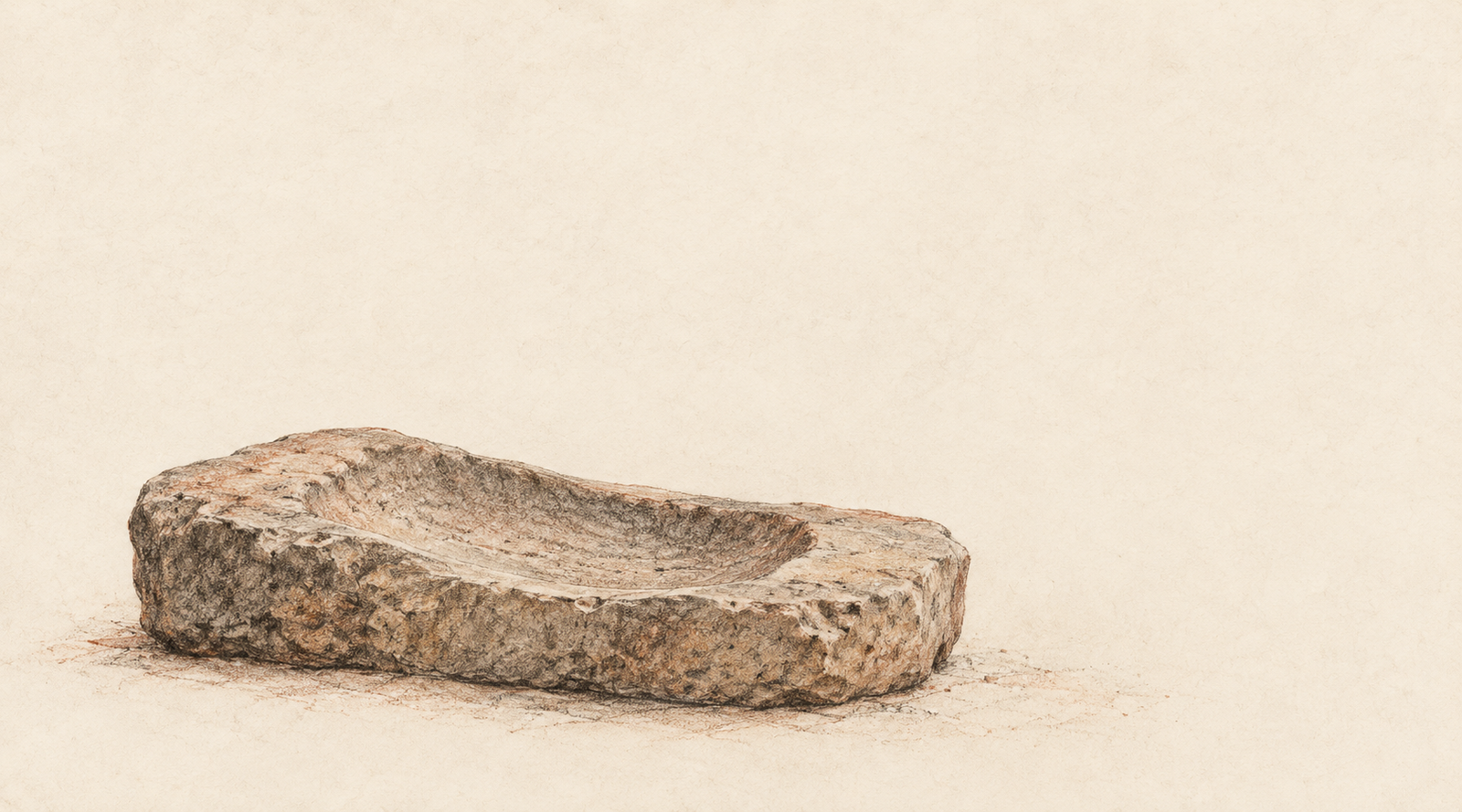
The temple we inherit is a building from which almost all necessity has been removed. Nothing must be brought for it to continue being what we call a temple. The sanctuary asks nothing of us. Stone is good at this kind of independence.
A living temple was otherwise.
Water had to come in. So did grain, cloth, oil, aromatic substances, fuel. The things required for worship arrived because someone carried them across a threshold.

Houses of Wood, Light, and Smoke
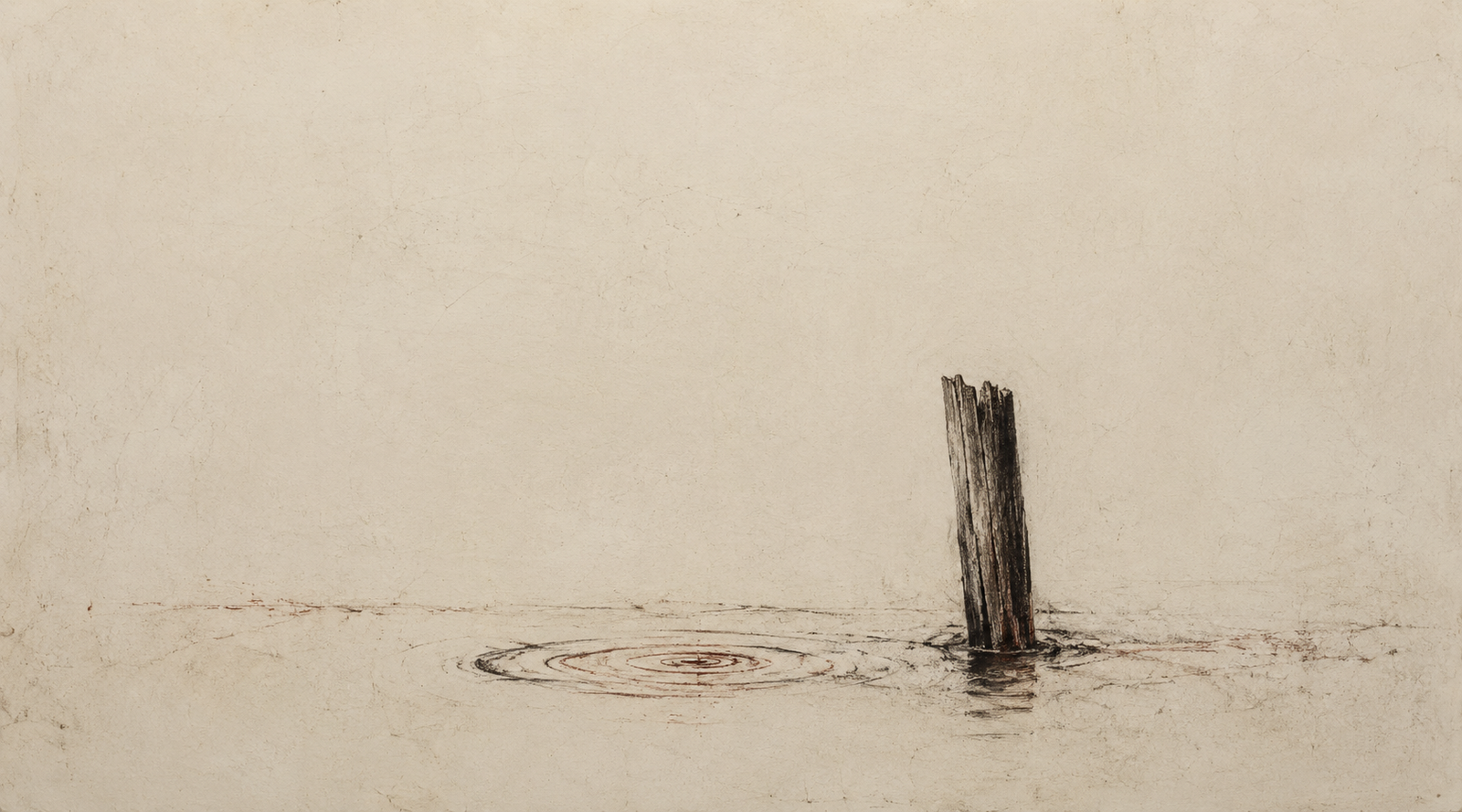
Some of Angkor’s most intimate ruins do not rise above the ground at all. They are postholes, low mounds, hearths and ponds: durable traces of a domestic city built largely from things that decay. To restore that city is to see Angkor not only as stone, but as wood, smoke, water, repair, and people living within calling distance.

$895
Ta Prohm Temple, Angkor, Cambodia — 2020
Limited Edition Archival Pigment Print
Edition
Strictly limited to 7 prints + 2 Artist’s Proofs
Edition Number
This listing is for the first numbered print from the Large Collector Edition: 1/7
Medium
Hand-toned black-and-white archival pigment print on Hahnemühle Bamboo — a museum-grade fine art paper chosen for its quiet tactility and reverent depth, echoing the spirit of the temples.
Signature & Numbering
Each print is individually signed and numbered by the artist on the border (recto)
Certificate of Authenticity
Accompanies every print
Image Size
28 x 28 inches (71.1 x 71.1 cm)
Mist still clings to the crumbling gate when the first breath of dawn slides between trees, lighting the spung’s vast roots like slow-moving water turned to wood. Stone and bark share one pulse; silence settles over their entwined bodies as though the jungle itself were praying.
Standing alone in that pale hush, Lucas Varro felt the temple inhale his presence, then exhale memory back through dripping leaves. Each droplet, each moss-soft contour became a syllable in an unspoken mantra the camera was called to receive.
Medium-format black-and-white film opened for the length of a whispered prayer, letting shadow unfold its depths. Weeks later, under darkroom glow, chiaroscuro revealed the subtle topography of moist stone. Gold hand-toning lent warmth to the midtones, creating a print that seems to breathe when light falls across it.
Strictly limited to twenty-five prints with two artist’s proofs, each 8 × 8 inch impression is signed on the border recto and born on sustainable Hahnemühle Bamboo paper—its gentle fibres echoing the living grain of root and wall.
Welcome this stillness; let it gather its hush in the quiet heart of your space.
Click here to walk deeper into the dawn-lit silence of the Artist’s Journal.