
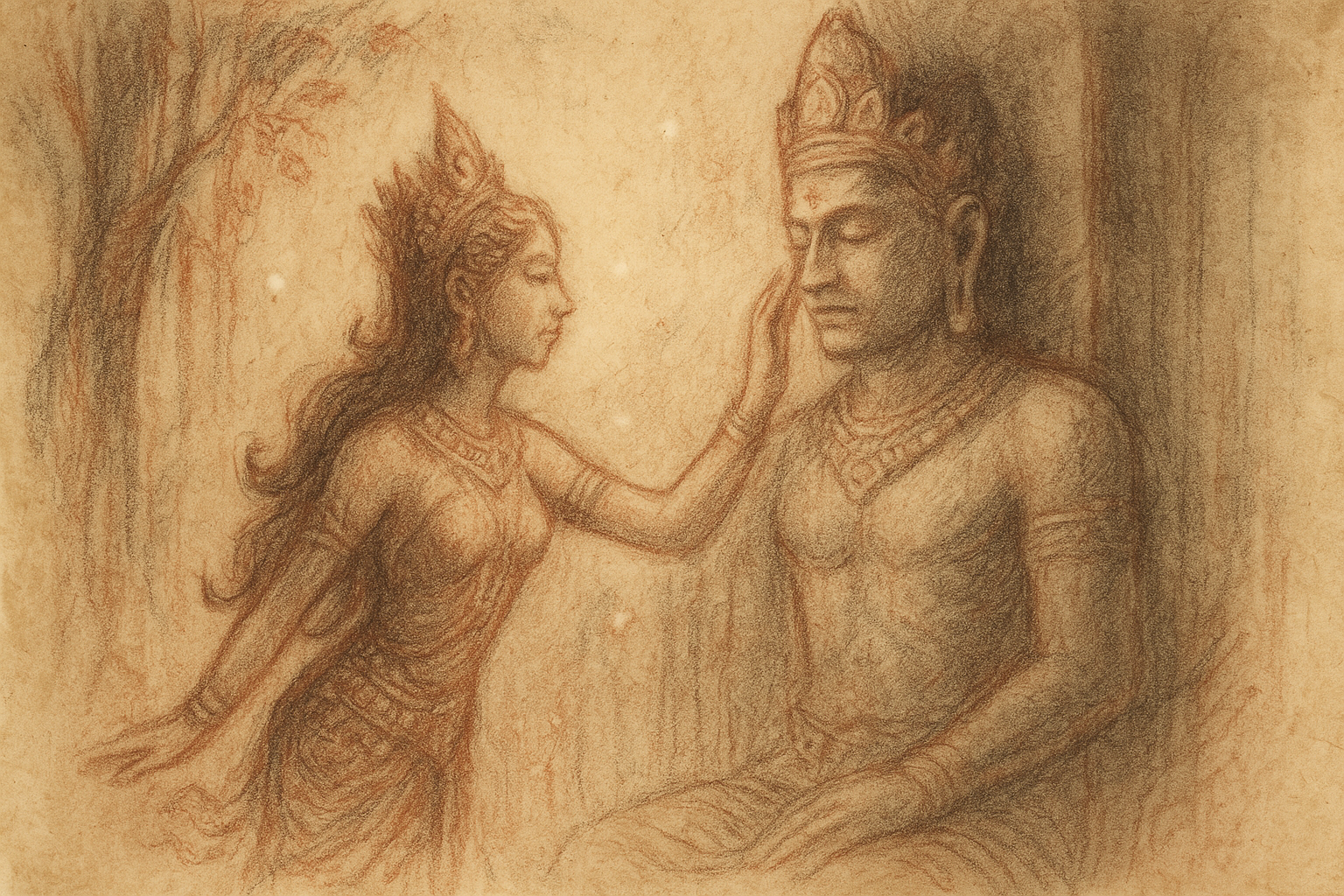

The Apsara and the Stone
—a poem by Lucas Varro
There dwelt a maid of temple grace,
her steps once carved in flight—
she danced no more through time or space,
but waited, veiled in night.
Her fingers poised in curving air,
her gaze cast down in stone—
she yearned for one who once stood there,
but now she danced alone.
He was a guardian hewn of gold,
a sentinel, wise and still,
whose arms had once the heavens held,
yet bound by timeless will.
She loved him through the roots of years,
through lichen, rain, and flame—
whispered songs no soul could hear,
and traced his hidden name.
One dusk beneath the sacred fig,
when even winds lay hushed,
she touched his brow with trembling light—
and into stone she rushed.
Her shadow wove within his form
as petals graced the shrine;
temple walls grew warm with song
no lips would dare define.
They never speak, they never move—
yet stones remember clear
the breath of one apsara,
her presence woven here.
And once each year, when moonlight parts
the gate where lions wait,
they step from walls with silver hearts—
and dance beyond all fate.
—
Receive the next work
Subscribe free to receive new work from the Lucas Varro Library by email.
More from the Library
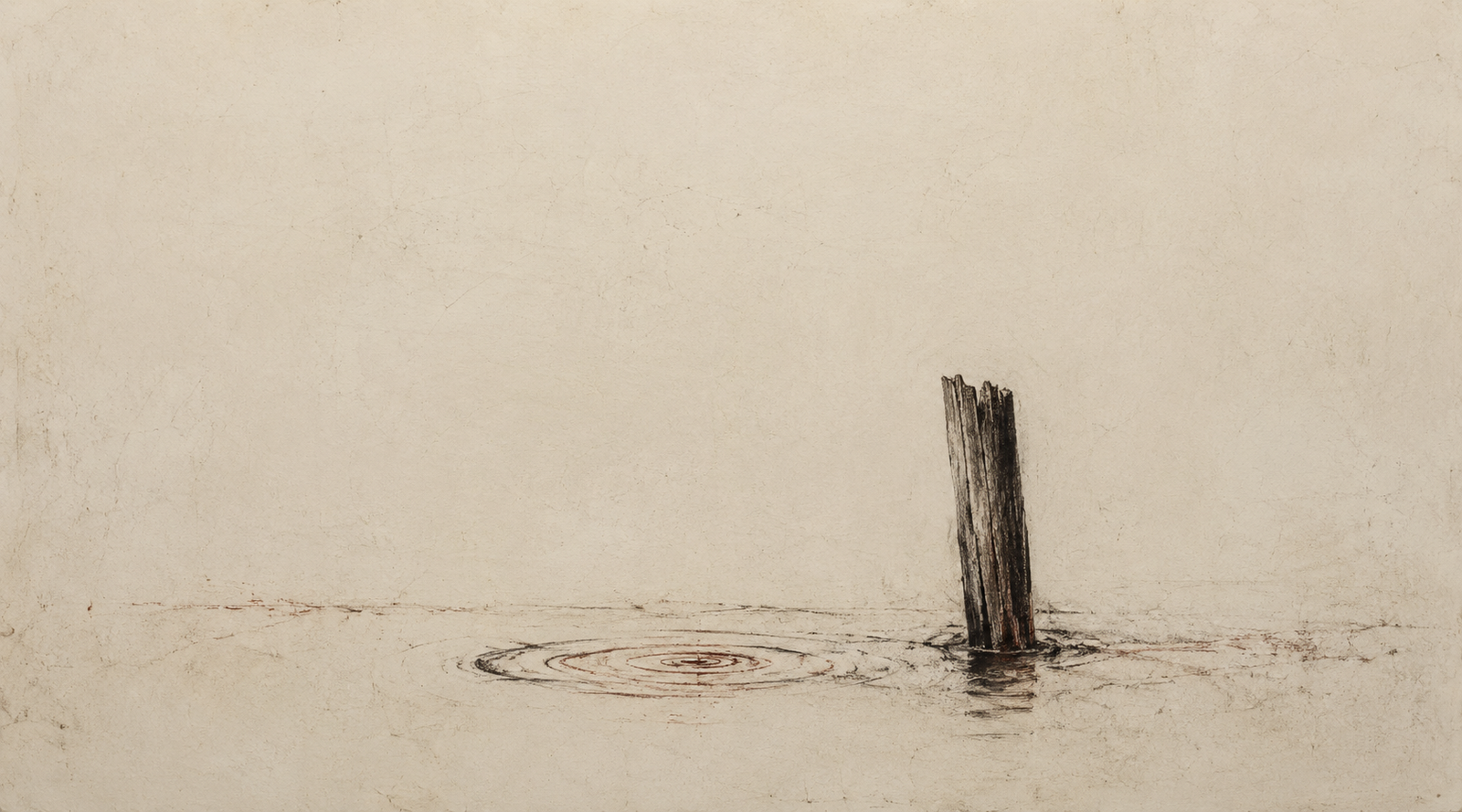

Houses of Wood, Light, and Smoke
Some of Angkor’s most intimate ruins do not rise above the ground at all. They are postholes, low mounds, hearths and ponds: durable traces of a domestic city built largely from things that decay. To restore that city is to see Angkor not only as stone, but as wood, smoke, water, repair, and people living within calling distance.
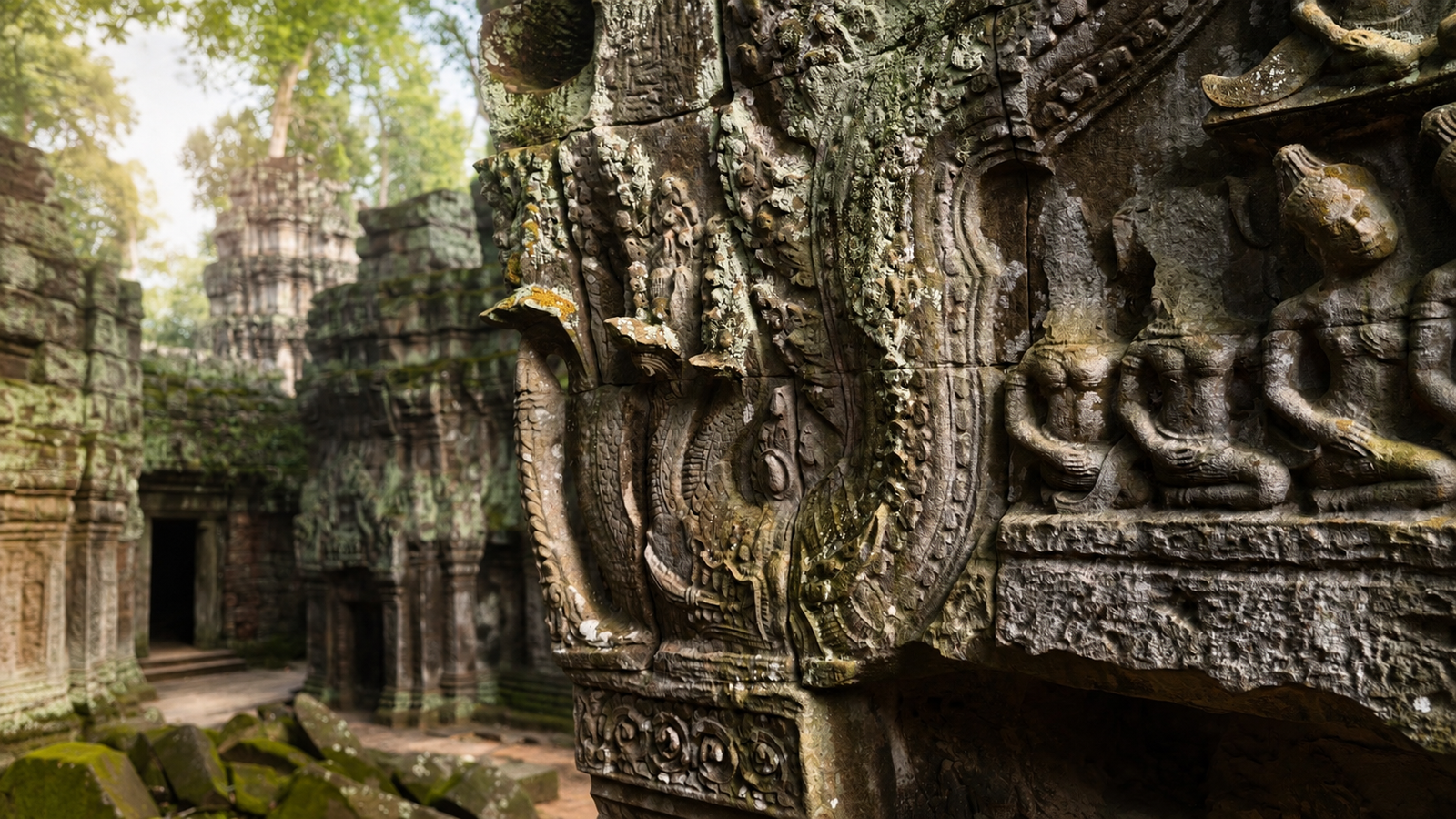

What Stone Brings Forth
I had mistaken a gift for something being expelled.
Beneath the nāga's mouth, a stone garland descended bead by bead. Nearby, a makara opened its jaws and another form emerged. Looking closer, the whole temple began to change: serpent became ornament, ornament became architecture, architecture became foliage.
The forest did not introduce this language.
It answered it.
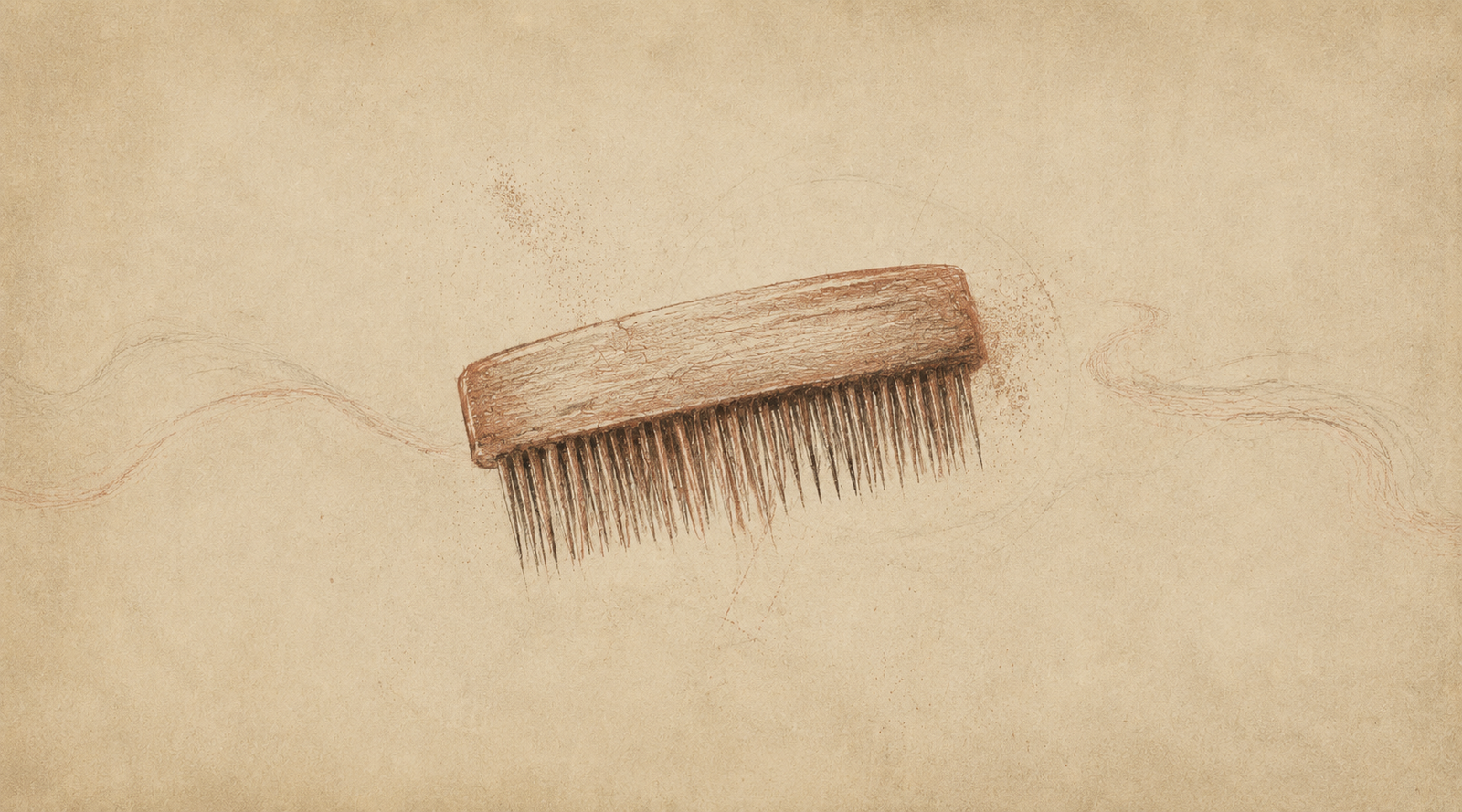

The Eighth Daughter
Seven daughters have already been taken by Yamata-no-Orochi when Susanoo reaches the River Hi. Only Kushinada-hime remains. The Eighth Daughter retells the Kojiki episode through a family’s waiting, a girl transformed into a comb, and the patient preparation for the serpent’s return.