
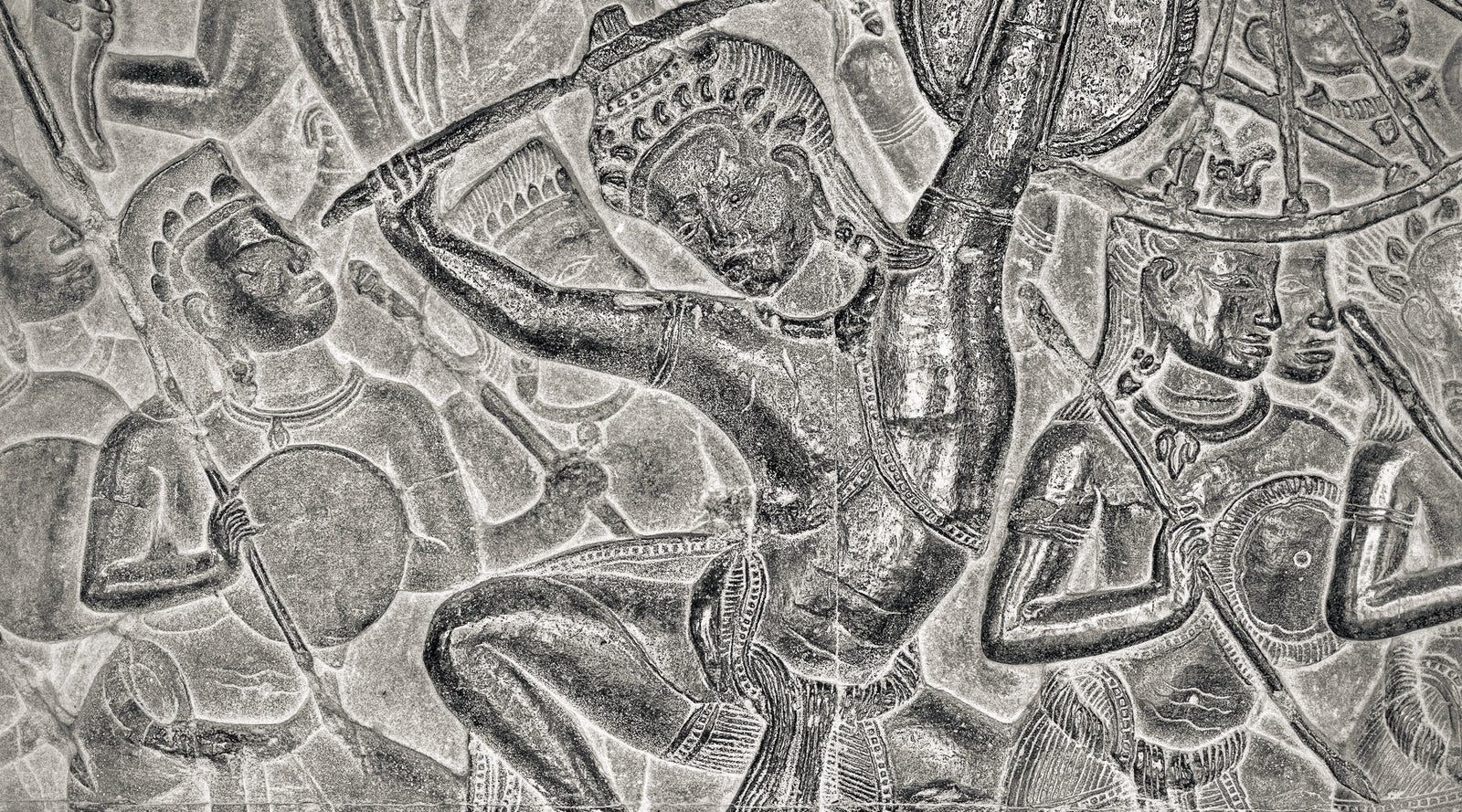

The Gesture Before Annihilation
“There is a breath before every story breaks—
and some live only in that breath.”
In a corridor washed by monsoon light, amid the monumental Mahabharata bas-relief at Angkor Wat, a single figure turns not toward violence, but toward invocation. One arm lifted, one foot poised. The body is not in defiance, but in prayer.
This is not a portrait of battle. It is a threshold.
Carved among legions, the dancer remains solitary in grace. The Kaurava armies surge around him, but his gesture is inward, luminous. He reminds us that in the Hindu epic, even righteousness suffers. The Gita’s unspoken question lingers here: How does one move rightly, knowing what must come?
Lucas Varro captured this moment using large format black-and-white film. He stood before the relief as light returned after rain, and allowed stillness to dictate the frame. In the studio, chiaroscuro shaping revealed emotional depth; hand-toning brought warmth to the carved breath still caught in stone.
The print is made on museum-grade Hahnemühle Bamboo paper and offered in a strictly limited edition of 25, with 2 Artist’s Proofs. Each print is numbered and signed on recto—a devotional act, not merely archival.
The Dance Before Death enters the Spirit of Angkor series as a quiet requiem. It honours those forgotten by name but preserved in motion. It holds open the moment before unravelling. Not with heroism, but with flame. Not with force, but grace.
More from the Library


See Also
A concise and impartial dictionary of absence, promises, quarrels, ordinary objects, and the troublesome instability of words.

The City of Service
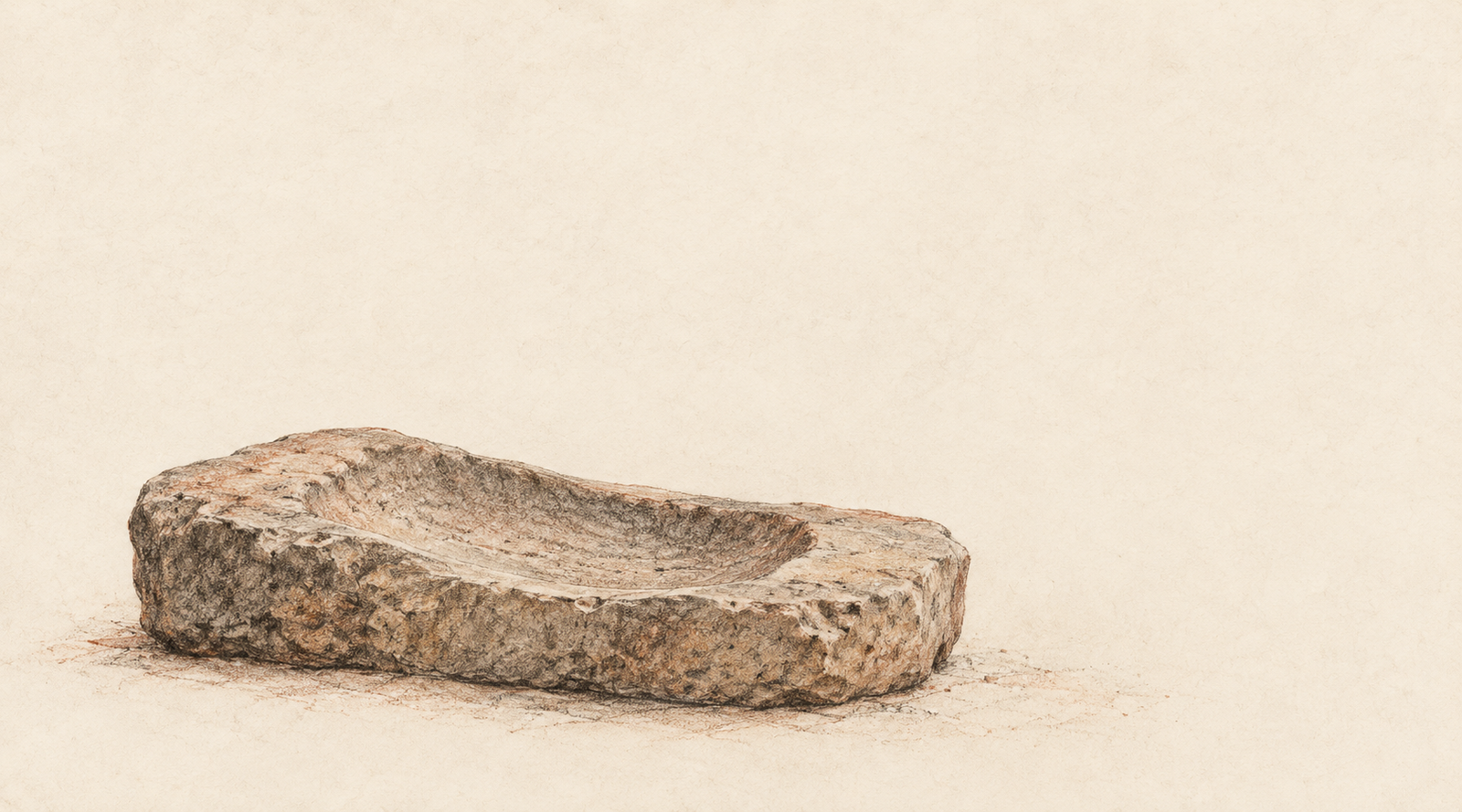
The temple we inherit is a building from which almost all necessity has been removed. Nothing must be brought for it to continue being what we call a temple. The sanctuary asks nothing of us. Stone is good at this kind of independence.
A living temple was otherwise.
Water had to come in. So did grain, cloth, oil, aromatic substances, fuel. The things required for worship arrived because someone carried them across a threshold.

Houses of Wood, Light, and Smoke
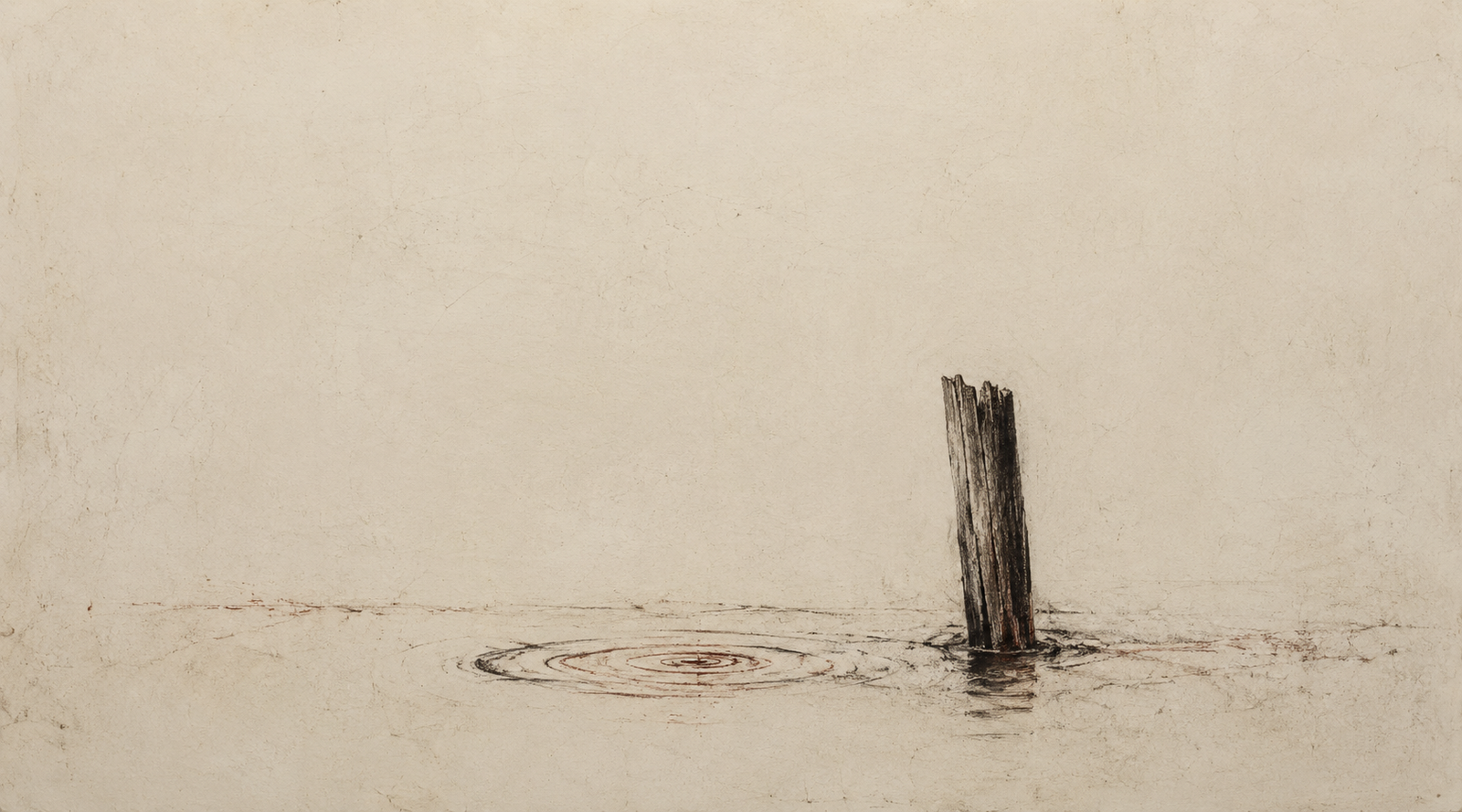
Some of Angkor’s most intimate ruins do not rise above the ground at all. They are postholes, low mounds, hearths and ponds: durable traces of a domestic city built largely from things that decay. To restore that city is to see Angkor not only as stone, but as wood, smoke, water, repair, and people living within calling distance.

$895
Angkor Wat Temple, Angkor, Cambodia — 2020
Limited Edition Archival Pigment Print
Edition
Strictly limited to 7 prints + 2 Artist’s Proofs
Edition Number
This listing is for the first numbered print from the Large Collector Edition: 1/7
Medium
Hand-toned black-and-white archival pigment print on Hahnemühle Bamboo — a museum-grade fine art paper chosen for its quiet tactility and reverent depth, echoing the spirit of the temples.
Signature & Numbering
Each print is individually signed and numbered by the artist on the border (recto)
Certificate of Authenticity
Accompanies every print
Image Size
28 x 28 inches (71.1 x 71.1 cm)
In the hush of Angkor Wat’s storm-washed corridors, a lone dancer stirs the stone. He is carved into the great Mahabharata relief—a Kaurava soldier, mid-stride, one hand lifted not in violence, but in invocation. Though his fate is sealed, the gesture endures.
The wall around him surges with warriors, yet this figure holds the eye. His pose is graceful, vital, filled with a beauty that mourns its own vanishing. He dances not for triumph, but for remembrance—for the spark that flickers just before it is lost.
Lucas Varro encountered this moment in silence, and rendered it with equal care. Captured on large format black-and-white film with a long exposure, the negative was later shaped using classical chiaroscuro techniques. Each print is hand-toned by the artist to coax forth the radiance buried in the stone.
This is a museum-quality archival pigment print on Hahnemühle Bamboo paper. The edition is strictly limited to 25, with 2 Artist’s Proofs. Signed and numbered on border recto, each piece is crafted as a contemplative threshold.
He lifted his hand,
and the centuries stood still.
Click here to enter the Artist’s Journal and follow the echo of his breath.