
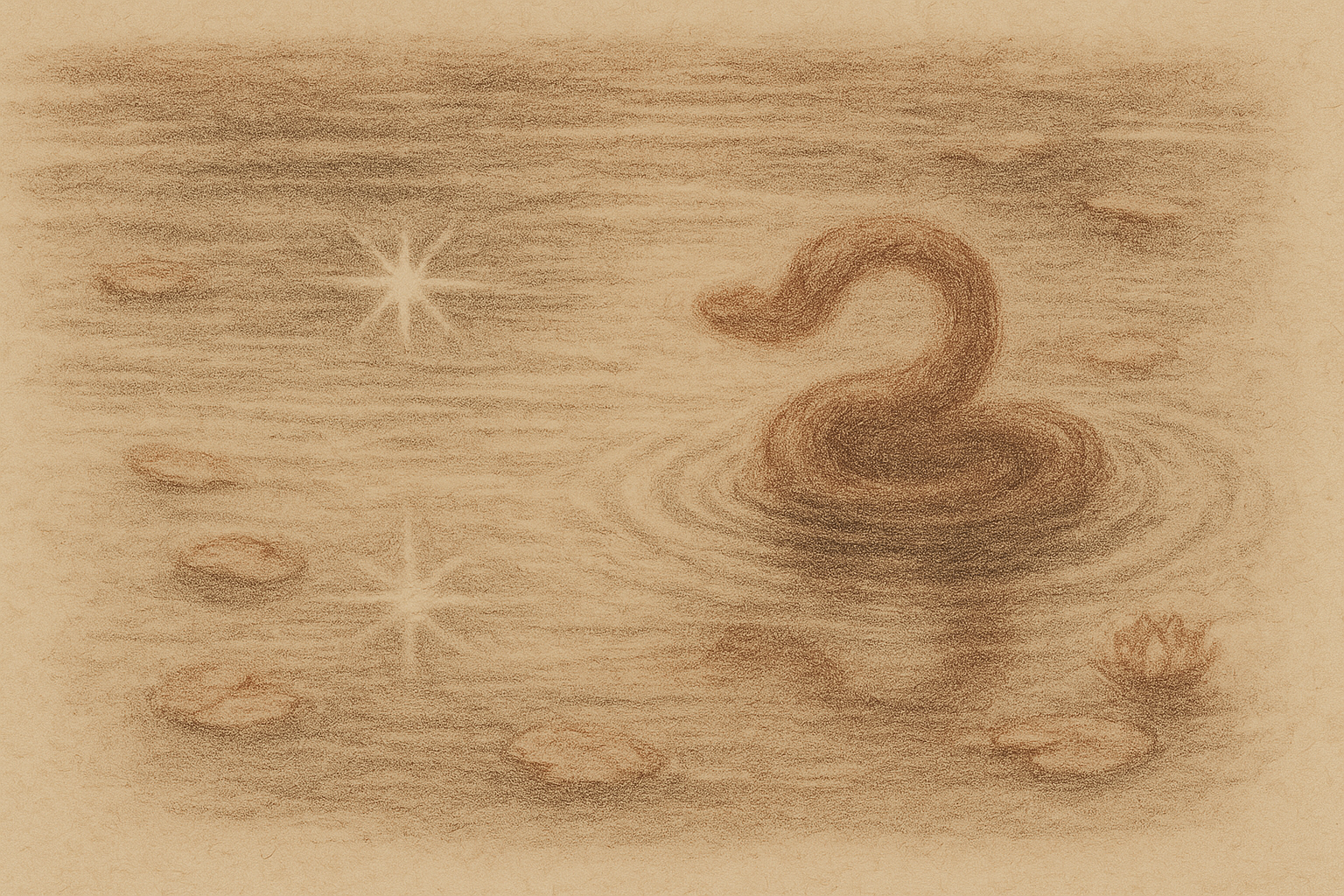

The Serpent and the Star
from the compendium
The Serpent and the Star: Khmer Myths from the Temples of Light and Shadow
Where water touches sky, a memory stirs—
of longing that shaped the world.

When Star Touched Earth
The Sacred Pause Between Realms
Before the temples were stone—before the jungle drew breath—there was only stillness: the endless stillness of sky above, and the great turning below.
Within that silence lived two ancient beings.
One dwelled in the deep—a serpent of boundless coils, older than the rivers, older than the roots of trees. His name was lost, perhaps never spoken. He was called simply Nāga, though he held many forms. He moved through the hidden veins of the underworld, wrapped around the bones of mountains; from his slow breath arose the sacred rains.
Far above him danced the Star. She, too, bore no name—only presence. Silver-gowned, luminous, ageless, she traversed the heavens, rhythm flowing through her limbs, constellations trailing in her wake. Some said she was born of fire. Others whispered she was the first wish of a lotus opening to the moon.
The Serpent knew her only by reflection. When moonlight touched the sacred lake, he would rise, half-submerged, and gaze upward, watching her dance upon the mirrored waters. He never stirred the surface. He never spoke. Yet within his ancient heart, a quiet ache began to stir.
The Star saw him too, though not clearly—not wholly—but in those rare moments when mist thinned and the lake became glass, she glimpsed the shadow of his form gliding far below. His movement rippled the edge of her stillness. It called to something deeper than starlight, something she had not known she longed for.
And so they watched one another—one from the sky, one from the deep—separated only by the thinnest veil of silence.
Eras passed. The world turned. The Serpent circled the roots of mountains. The Star lit the paths of gods.
But longing is a thread, and threads pull.
Slowly, softly, inevitably, they draw what cannot be joined toward the shape of union.
One night, when the moon was new and the boundary between realms had worn thin as silk, the Serpent uncoiled from the roots of the world and rose—not in fury, but in reverence. He moved through cavern and stone, soil and rain-veined clay, until at last he emerged at the surface of the sacred lake. There he rested upon the shore, coiled like a ribbon of shadow. Above him, the Star paused mid-dance. Then, with breathless grace, she descended—soft as stardust drifting onto ancient wood.
For an instant—no longer than the pause between heartbeats—they stood face to face.
Serpent and Star.
Depth and Light.
Neither spoke. No words could contain their names—only silence.
Then the Star stepped gently down, touching earth.
Where her feet fell, lilies bloomed from barren stone.
Where the Serpent curled, the ground shimmered as water.
But the world—the world was not ready.
Balance trembled.
Rivers rose, seeking the sky. Trees bent upward in longing. Shadows deepened beyond their bounds.
Even the gods held their breath.
They say the Star could not remain, her light too fine for soil.
Nor could the Serpent ascend beyond the rim of sky—his being woven into the pulse of the deep.
And so they did the only thing love can do when it cannot endure:
They built a bridge.
Not with hands, nor words, but with memory, with stillness, with stone.
Together, they shaped the first temple.

The Temple Between Realms
The Bridge Shaped by Longing
Its towers rose skyward like starlight ascending.
Its steps sank downward, like roots seeking water.
Its columns bore the weight of both longing and restraint—a sanctuary where light entered shadow, and shadow reflected light.
When it was finished, the Serpent slipped again beneath the lake.
He coiled once more beneath its silence, his breath winding through the veins of the world.
The Star rose.
She vanished into the sky, her final glance gilding the temple’s spires with light no hand could touch.
And the temple stood between them—neither wholly earth nor wholly sky.
Since then, the temples have shimmered with that same stillness.
A hush where the sacred touches stone.
A threshold where longing takes form.
A silence where the serpent waits in the water.
And the star remembers.
Some say when moonlight touches lotus leaves without a ripple,
the Star is watching her reflection—
and the Serpent, still, is listening.

—
Receive the next work
Subscribe free to receive new work from the Lucas Varro Library by email.
More from the Library

See Also
A concise and impartial dictionary of absence, promises, quarrels, ordinary objects, and the troublesome instability of words.

The City of Service
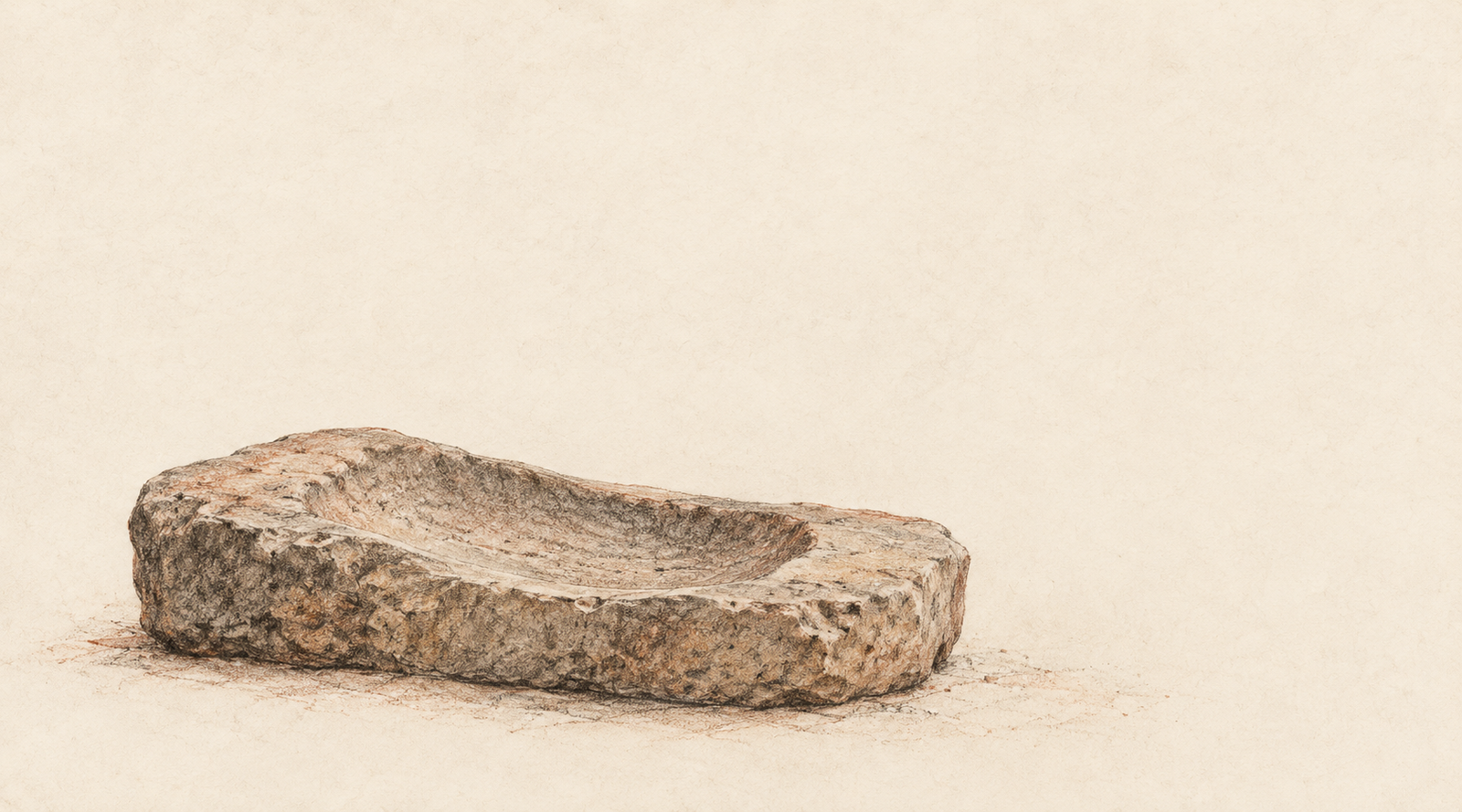
The temple we inherit is a building from which almost all necessity has been removed. Nothing must be brought for it to continue being what we call a temple. The sanctuary asks nothing of us. Stone is good at this kind of independence.
A living temple was otherwise.
Water had to come in. So did grain, cloth, oil, aromatic substances, fuel. The things required for worship arrived because someone carried them across a threshold.

Houses of Wood, Light, and Smoke
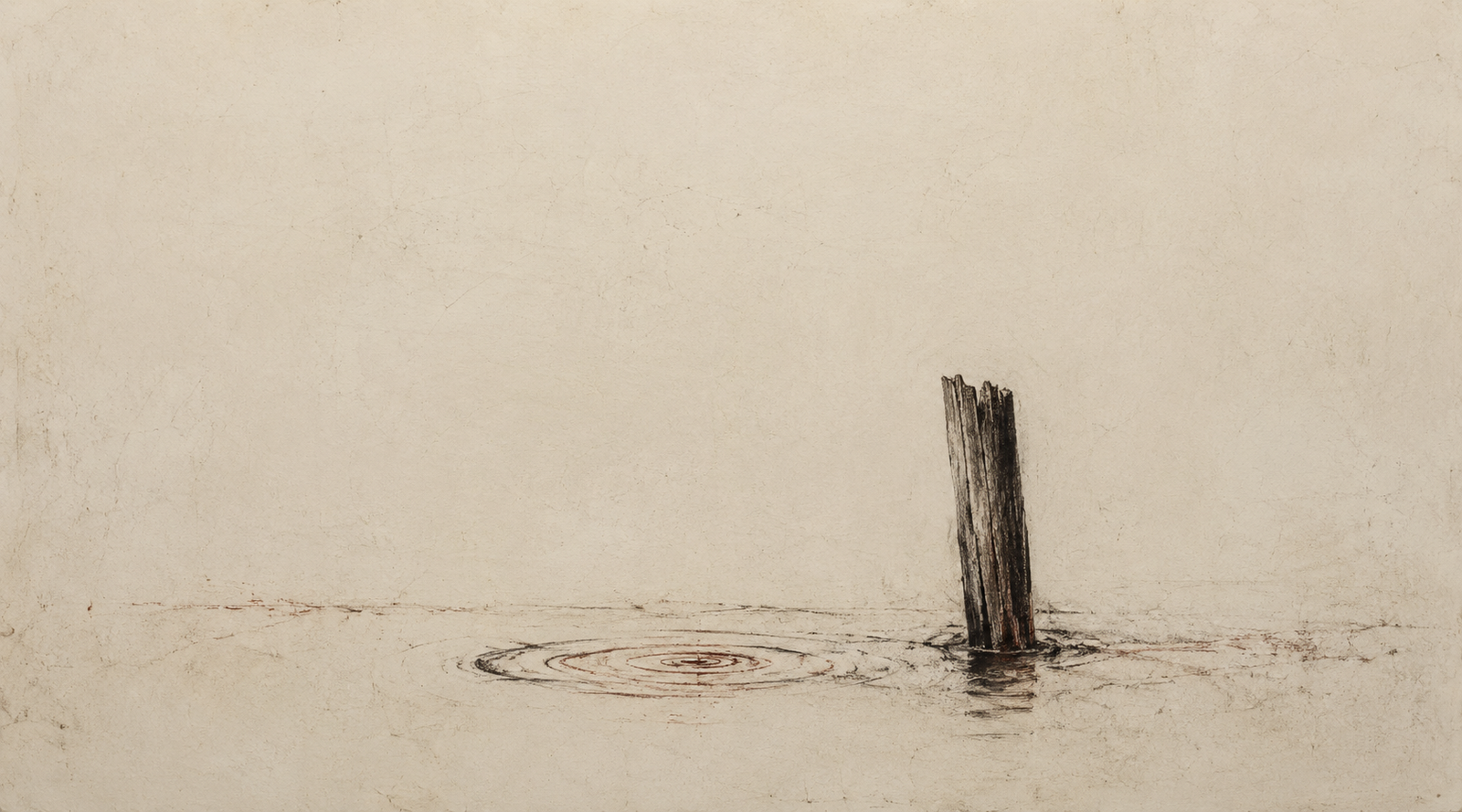
Some of Angkor’s most intimate ruins do not rise above the ground at all. They are postholes, low mounds, hearths and ponds: durable traces of a domestic city built largely from things that decay. To restore that city is to see Angkor not only as stone, but as wood, smoke, water, repair, and people living within calling distance.