

The Silence Within the Stone
“Where stone lifts its own prayer, heaven descends as rain.”
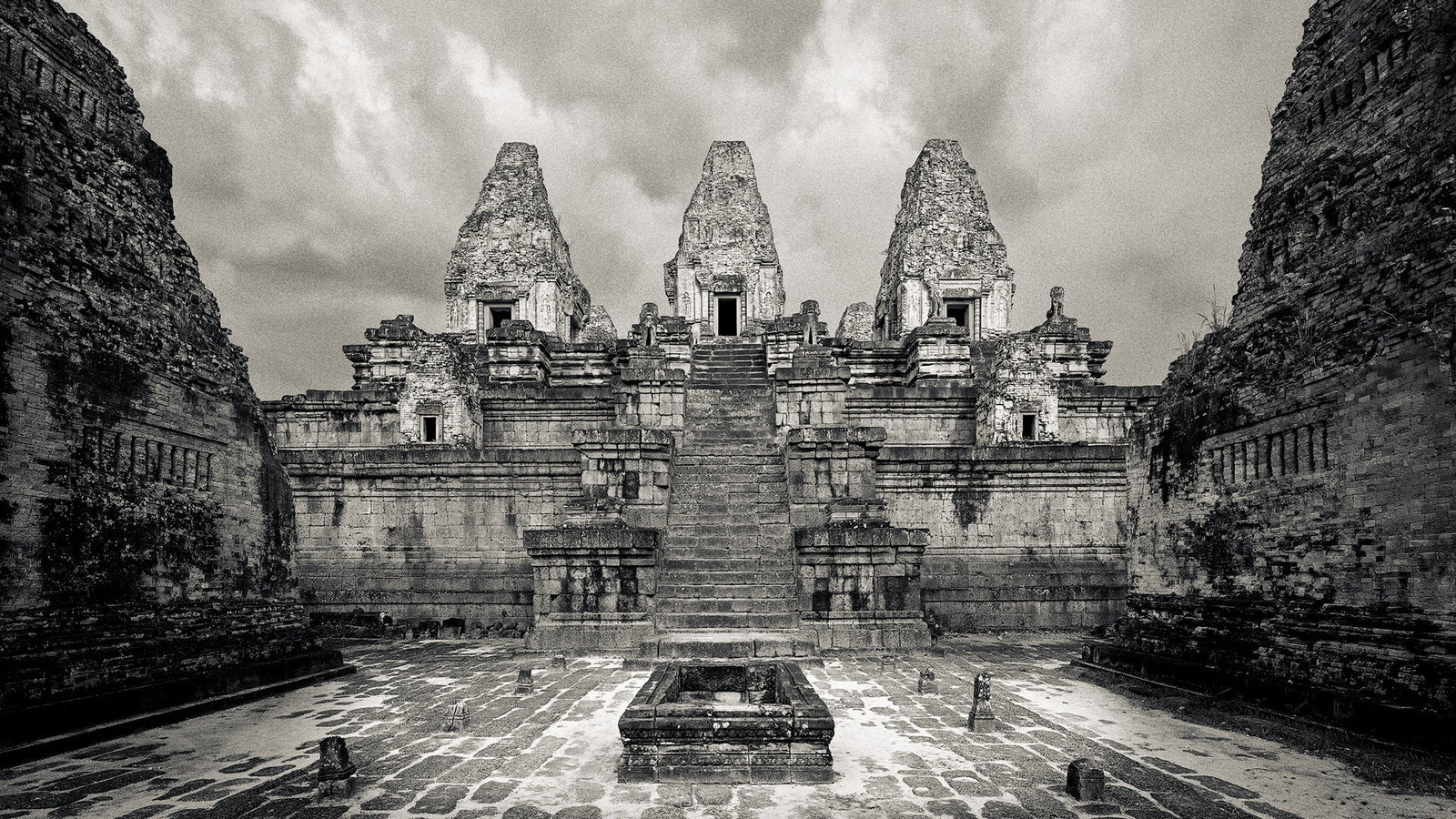
Pre Rup is more than masonry; it is a geography of devotion: five towers mirroring Mount Meru, sanctuary of Shiva, Vishnu, Uma, and Lakshmi. On a monsoon dawn in 2021, charged air shimmered silver over laterite. Lucas Varro did not rush. He allowed the hush to permeate marrow and ground glass alike, opening a long exposure only when the stair seemed to breathe.
Long after thunder moved on, the negative carried a residue of silence. In lamplight, chiaroscuro coaxed depth from shadow and lifted rain-lit mid-tones until the image pulsed with the storm’s forgotten heartbeat. Hand-toning followed—layered pigments settling like quiet sediment—until stone and sky shared one continuous breath.
The resulting photograph, Where the Gods Dwell, stands within the Spirit of Angkor series as an axis of ascent and descent: earth rising, cloud bowing, divinity dwelling between. Its five towers extend a silent invitation—climb without motion, listen without ear.
“Climb, and the sky will kneel.”
Held on museum-grade Hahnemühle Bamboo paper, each archival pigment print is signed, numbered, and limited to twenty-five impressions with two Artist’s Proofs. The paper’s warm fibres echo earth; its subtle tooth cups the hush of rain. To live with this print is to shelter a measured breath of sacred architecture, a storm-lit corridor where light waits on silence.
More from the Library

See Also
A concise and impartial dictionary of absence, promises, quarrels, ordinary objects, and the troublesome instability of words.

The City of Service
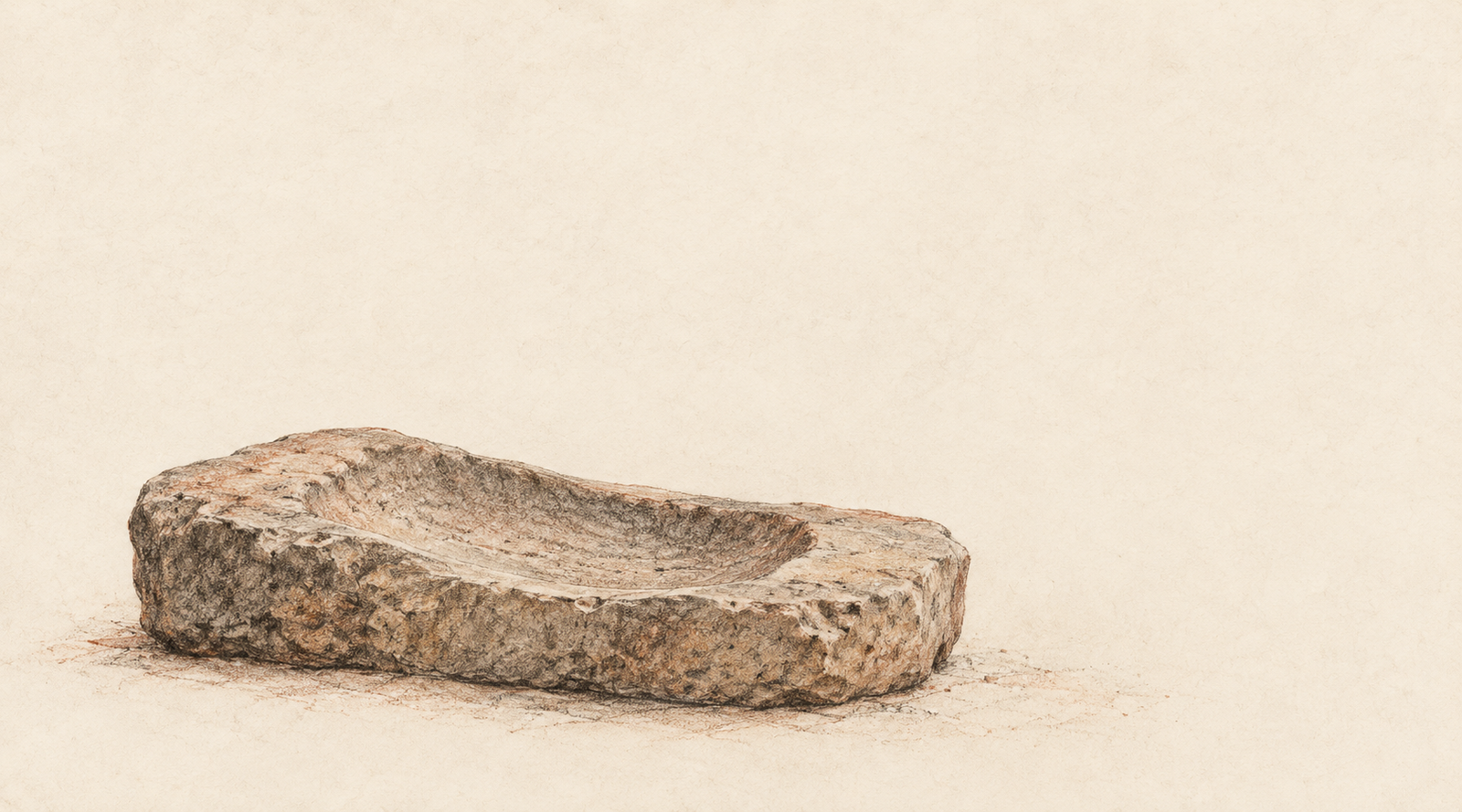
The temple we inherit is a building from which almost all necessity has been removed. Nothing must be brought for it to continue being what we call a temple. The sanctuary asks nothing of us. Stone is good at this kind of independence.
A living temple was otherwise.
Water had to come in. So did grain, cloth, oil, aromatic substances, fuel. The things required for worship arrived because someone carried them across a threshold.

Houses of Wood, Light, and Smoke
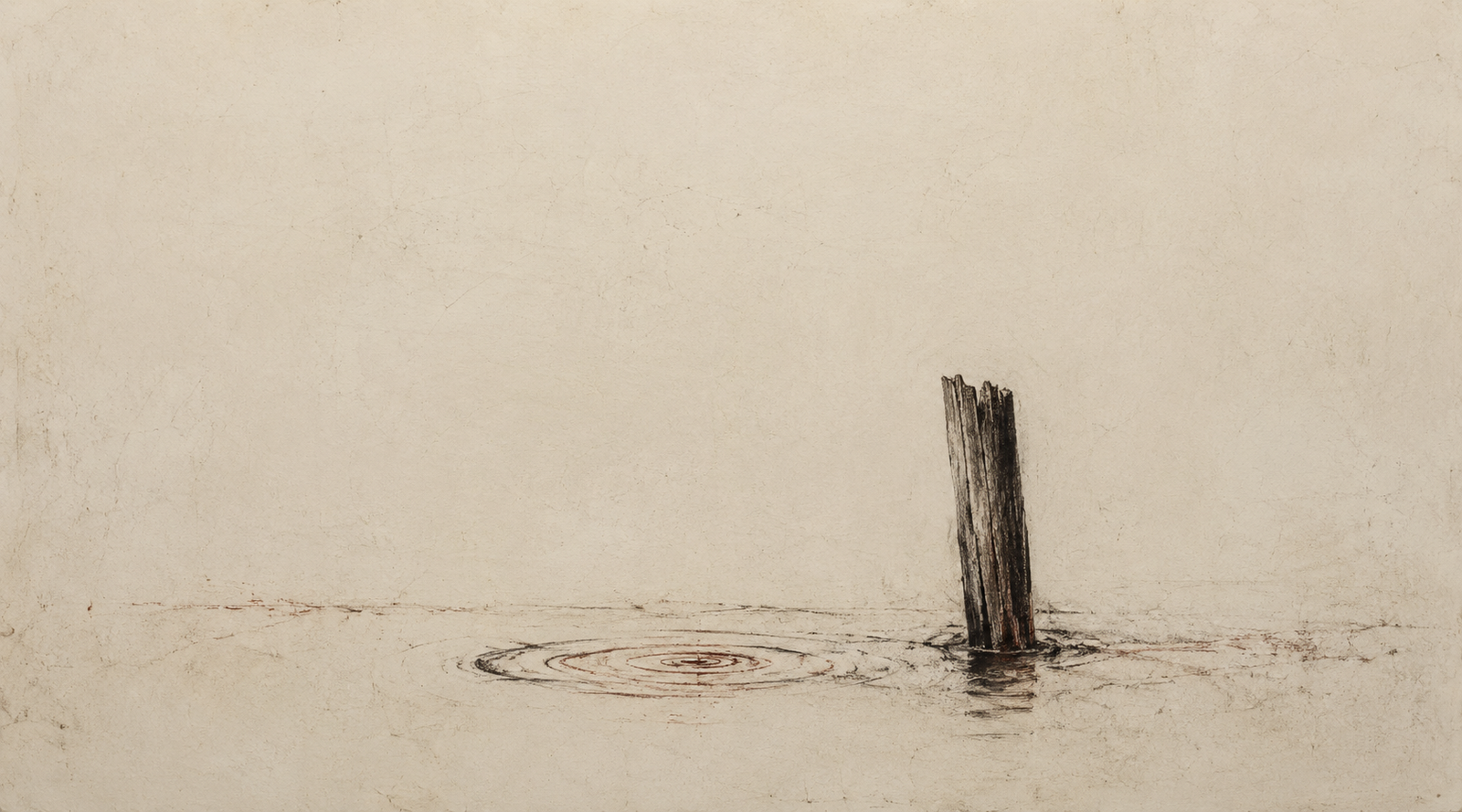
Some of Angkor’s most intimate ruins do not rise above the ground at all. They are postholes, low mounds, hearths and ponds: durable traces of a domestic city built largely from things that decay. To restore that city is to see Angkor not only as stone, but as wood, smoke, water, repair, and people living within calling distance.

$895
Pre Rup Temple, Angkor, Cambodia — 2021
Limited Edition Archival Pigment Print
Edition
Strictly limited to 7 prints + 2 Artist’s Proofs
Edition Number
This listing is for the first numbered print from the Large Collector Edition: 1/7
Medium
Hand-toned black-and-white archival pigment print on Hahnemühle Bamboo — a museum-grade fine art paper chosen for its quiet tactility and reverent depth, echoing the spirit of the temples.
Signature & Numbering
Each print is individually signed and numbered by the artist on the border (recto)
Certificate of Authenticity
Accompanies every print
Image Size
28 x 28 inches (71.1 x 71.1 cm)
Storm gathers over Pre Rup with the gravity of an ancient hymn, each rumble folding cool rain-air into the courtyard’s porous stone. In that charged half-light five towers rise like weathered psalms, their open doorways breathing mysteries older than speech.
The temple itself seems to inhale, quincunx of spires mapping Mount Meru against a sky of restless pewter. Water varnishes laterite; every stair glistens like first light made tactile. Stillness moves here, and movement is a kind of stillness.
I waited motionless in the rain, the lens open and listening, my breath slowed to the tempo of thunder. Across the glass the stair became a dark river of ascent, and for a suspended moment I felt looked-upon rather than looking—a brief recognition between presence and stone.
Developed in the studio, the negative received chiaroscuro’s quiet guidance, depth coaxed from shadow, hush teased from light. Hand-toning followed, layer on layer, until the print held the low hum of rain and the unseen pulse of gods.
Each archival pigment print is made on museum-grade Hahnemühle Bamboo paper, strictly limited to 25 with 2 Artist’s Proofs, and signed and numbered on the border recto—an offering of rarity, craft, and devotion.
Should this storm-lit stair find a home with you, may it become a silent threshold where breath, shadow, and spirit meet.
To step further into its making, click here to enter the Artist’s Journal.
Previously titled ‘Pre Rup Temple, Study I, Angkor, Cambodia. 2021,’ this photograph has been renamed to better reflect its place in the series and its spiritual tone. The edition, provenance, and authenticity remain unchanged.