

When Silence Blooms
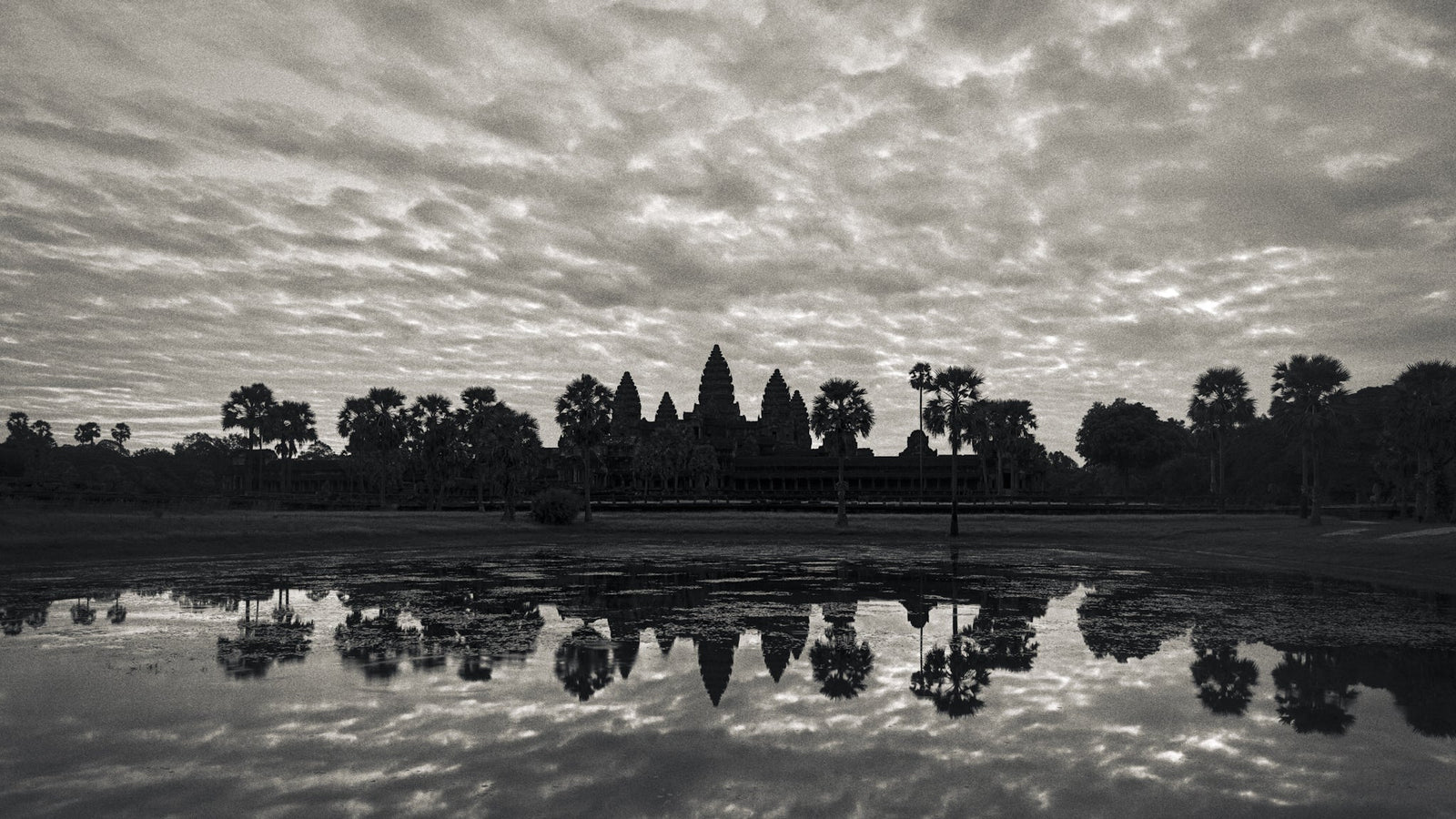
The jungle hush before dawn is not absence but breathing—an inhalation wide as the sky itself. I arrive in darkness, folding open the mahogany limbs of the 8 × 10, feeling dew bead on wood and skin. The pond before Angkor Wat lies unbroken, a pool of waiting thought. In that dimness, sound grows delicate: the soft press of a shutter cable between my fingertips, the faint settling of distant roof tiles as night loosens its grip.
Gradually the clouded ceiling brightens, not with color but with texture—a slow feathering of grey upon deeper grey. The towers stir in reflection long before stone distinguishes itself from shadow. It is as though water remembers them first, offering an echo so the world might recall its shape. My exposure begins on the threshold of this remembering, a drawn-out breath that neither rushes nor lingers.
Lotus dawn mirrors
stone towers inhale first light—
silence walks on water
The shutter closes as gently as a monk touching prayer beads. In the moment afterwards, the air feels newly rung, tuned to a quieter pitch. Hours later, in the darkroom, I stand once more at that pond—this time waist-deep in fixer and hush—guiding silver toward its final hush. Hand-toning is a second vigil: shadows softened until they confess faint glimmers, highlights cooled to the tone of half-lit marble. Each wash of pigment becomes a translation of stillness, coaxing the pond’s breath onto paper.
When the print finally dries, I see no image so much as a held silence: five spires hovering, sky kneeling on water. It allows viewers not to look but to listen, to feel the slow blooming of dawn inside their own breath.
More from the Library

Houses of Wood, Light, and Smoke
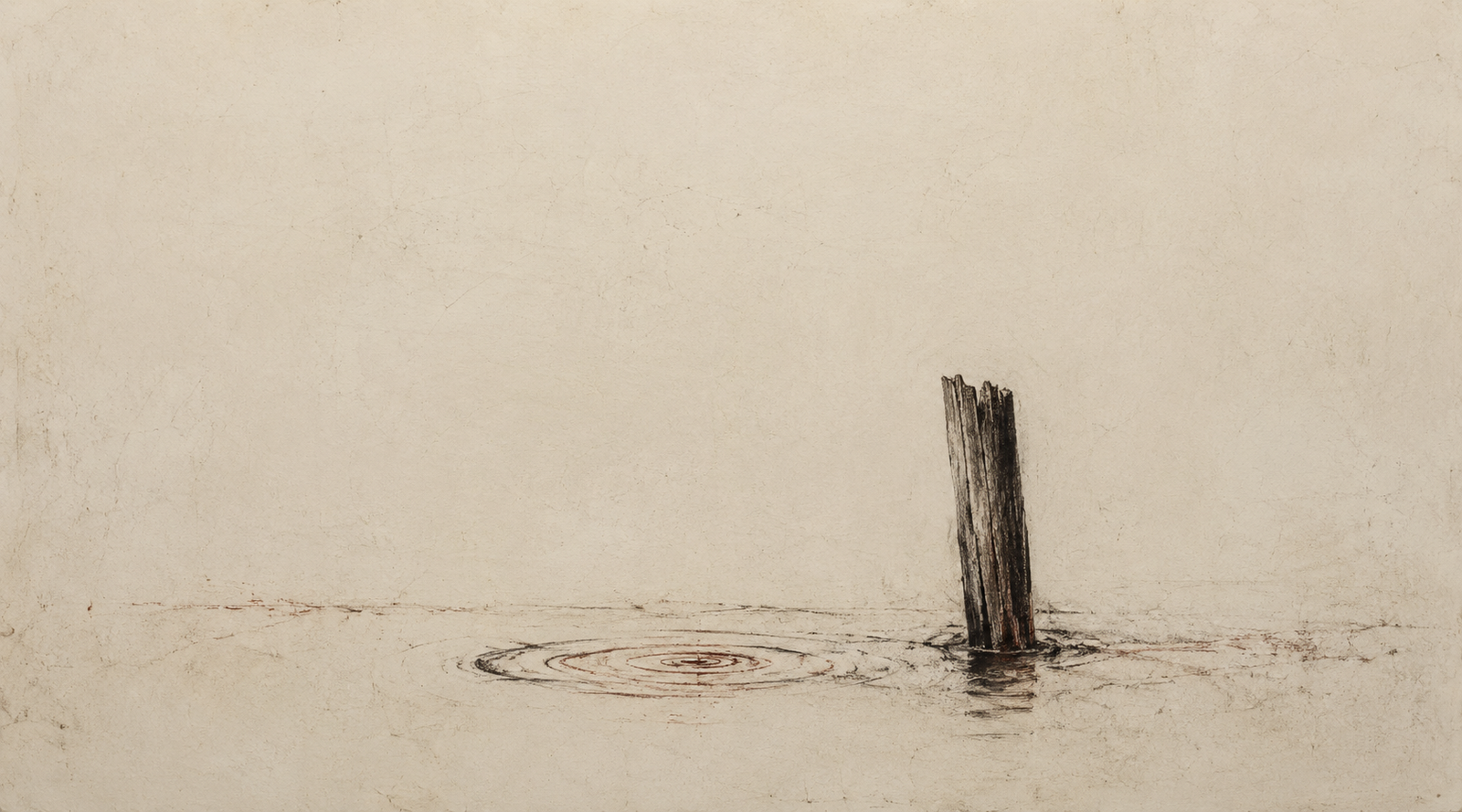
Some of Angkor’s most intimate ruins do not rise above the ground at all. They are postholes, low mounds, hearths and ponds: durable traces of a domestic city built largely from things that decay. To restore that city is to see Angkor not only as stone, but as wood, smoke, water, repair, and people living within calling distance.

What Stone Brings Forth
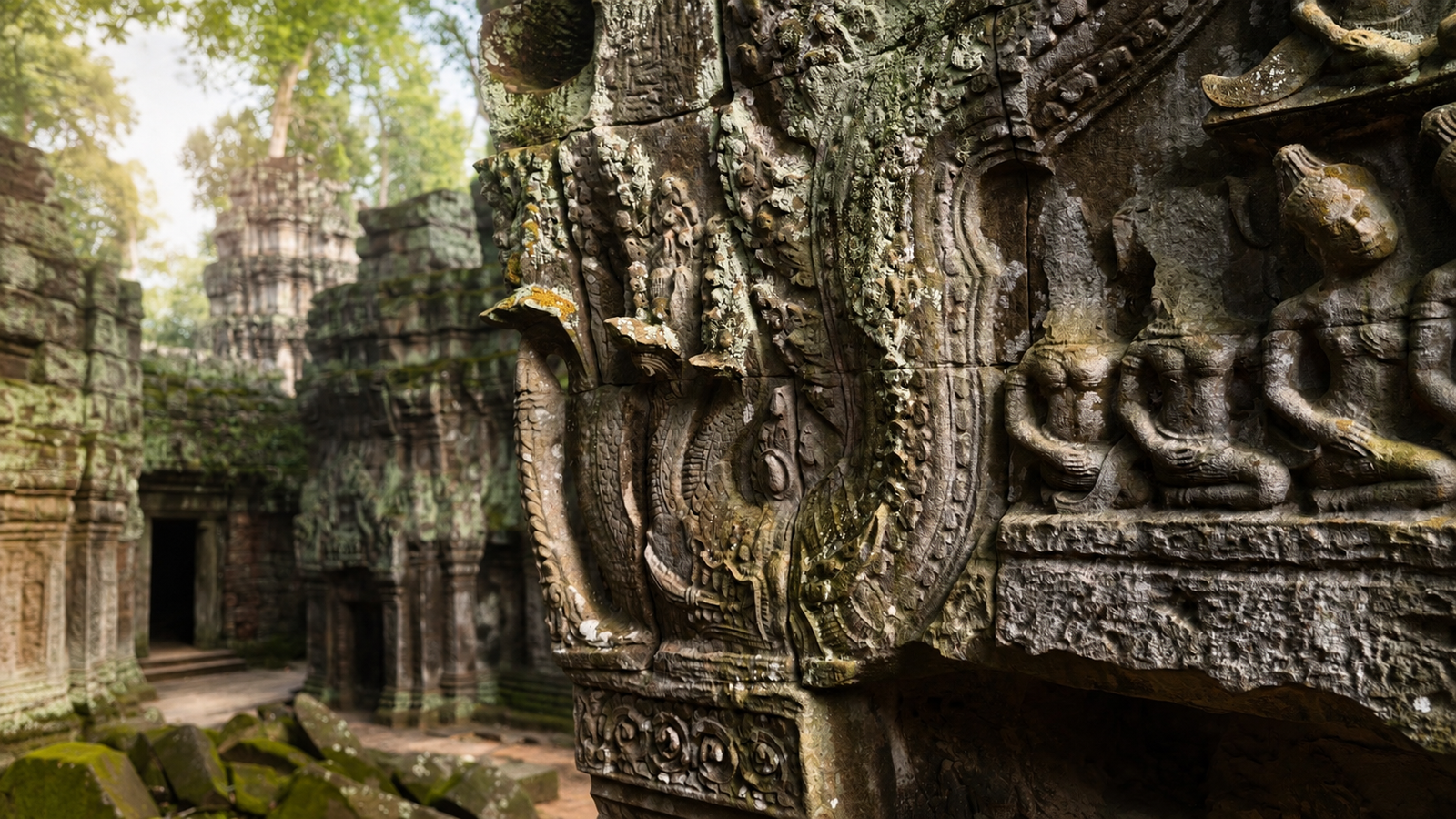
I had mistaken a gift for something being expelled.
Beneath the nāga's mouth, a stone garland descended bead by bead. Nearby, a makara opened its jaws and another form emerged. Looking closer, the whole temple began to change: serpent became ornament, ornament became architecture, architecture became foliage.
The forest did not introduce this language.
It answered it.


The Eighth Daughter
Seven daughters have already been taken by Yamata-no-Orochi when Susanoo reaches the River Hi. Only Kushinada-hime remains. The Eighth Daughter retells the Kojiki episode through a family’s waiting, a girl transformed into a comb, and the patient preparation for the serpent’s return.

$895
Angkor Wat Temple, Angkor, Cambodia — 2020
Limited Edition Archival Pigment Print
Edition
Strictly limited to 7 prints + 2 Artist’s Proofs
Edition Number
This listing is for the first numbered print from the Large Collector Edition: 1/7
Medium
Hand-toned black-and-white archival pigment print on Hahnemühle Bamboo — a museum-grade fine art paper chosen for its quiet tactility and reverent depth, echoing the spirit of the temples.
Signature & Numbering
Each print is individually signed and numbered by the artist on the border (recto)
Certificate of Authenticity
Accompanies every print
Image Size
28 x 28 inches (71.1 x 71.1 cm)
Dawn enters on a breath so soft it barely stirs the palms. Over the lotus pond, the five towers of Angkor Wat rise not in stone, but in reflection—sky doubling back into water, memory leaning toward form.
The hush is complete. Wind holds its voice. Light kneels. In this early hour, Lucas Varro stood unseen, lens poised at the water’s edge. Reverence guided the exposure—a slow inhalation of the moment as the towers drifted into mirrored stillness.
Captured on 8×10 black-and-white film, the image was later shaped in the darkroom through classical chiaroscuro and hand-toned with care. Shadow and light were coaxed gently forward, honoring the atmosphere of that silent hour.
Each impression is a museum-grade archival pigment print on sustainable Hahnemühle Bamboo, limited to 25 prints with 2 Artist’s Proofs, signed and numbered on the border recto.
Let this reflection become the still water of your interior shrine.
To step softly into the hush of mirrored dawn, click here and enter the Artist’s Journal.
Previously titled ‘Dawn Reflection, Angkor Wat Temple, Cambodia. 2020,’ this photograph has been renamed to better reflect its place in the series and its spiritual tone. The edition, provenance, and authenticity remain unchanged.