
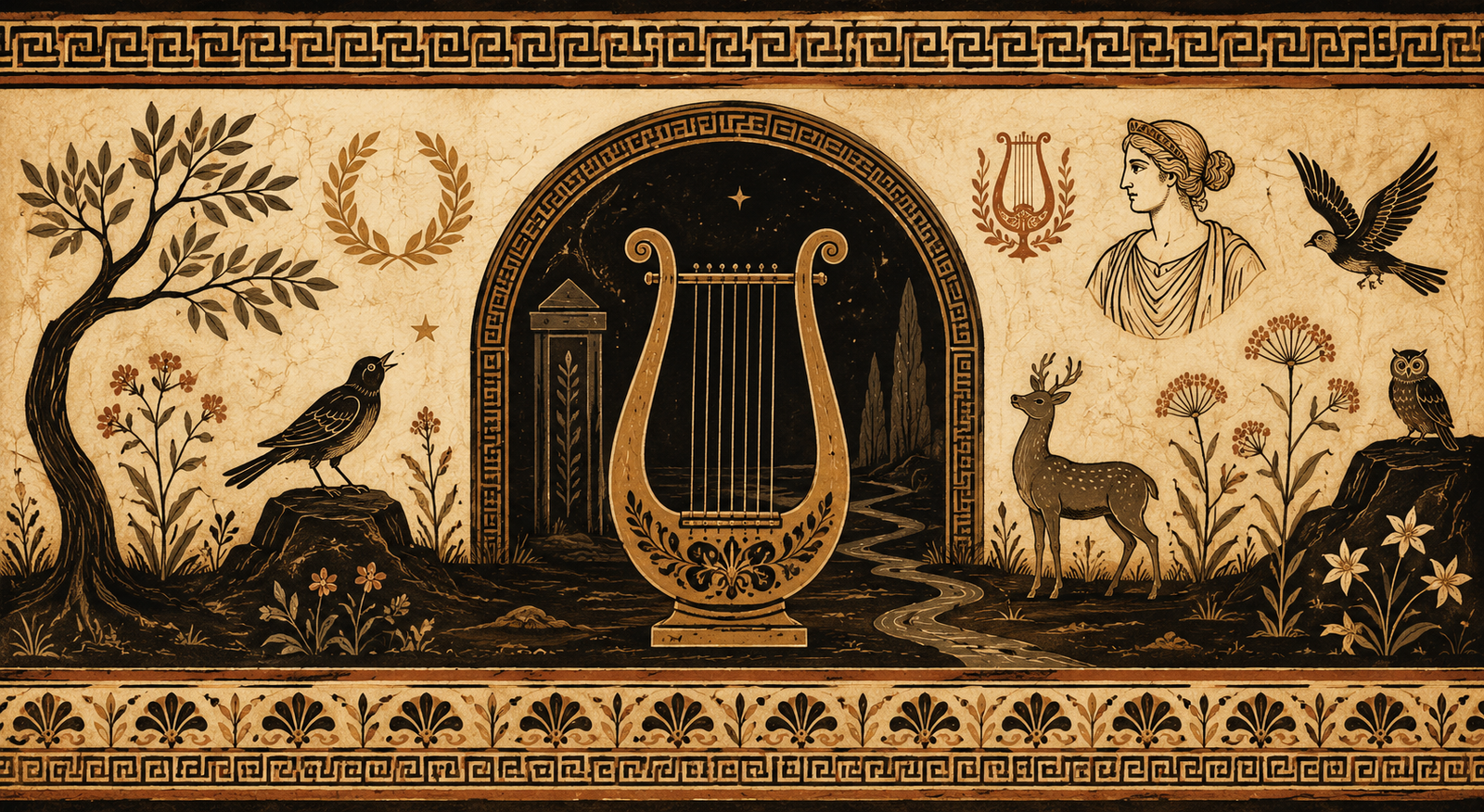

Orpheus’ Lyre — The Song That Made the Dark Listen
A lyre is not a sword.
It cannot strike a monster. It cannot force open a gate. It cannot wrestle Cerberus from the path. It cannot command Hades, who is not a god easily commanded by anyone, and certainly not by a grieving singer with dust on his feet.
That is why Orpheus’ lyre matters.
In Greek myth, not every power looks like strength. Some powers are quieter. They do not break the door. They make the keeper of the door listen.
A lyre is a small stringed instrument, held in the hands and played by plucking the strings. In the Greek world, it belonged to music, poetry, memory, order, and the bright discipline of song.
Orpheus’ lyre was more than an instrument. It was the sign of his gift.
When Orpheus played, the living world listened. Animals came near. Trees leaned towards him. Stones seemed to lose some of their hardness. Rivers paused in their running. Human hearts changed. Even the Underworld, which is not easily moved, made room for his song.
But the lyre was not magic in the simple way some stories imagine magic.
Orpheus did not lift it and receive whatever he wanted.
The lyre gave shape to what was inside him.
That was its power.
In Orpheus and the Underworld, Orpheus does not go below the earth like Heracles, with strength in his arms. He does not go like Theseus, with a sword and a dangerous amount of confidence. He does not go like Hermes, who knows the roads between worlds because roads and crossings are his proper business.
Orpheus goes down with a lyre.
That tells us what kind of tale we are in.
The Underworld is not defeated. It is not tricked. It is not conquered. Orpheus does not smash anything, bind anything, steal anything, or frighten anyone into obedience. He enters the dark with the one power that belongs to him completely: song.
This matters because grief by itself can become wild. It can run everywhere at once. It can fill a room, a house, a road, a whole life. The lyre does something different. It gives grief strings. It gives it measure. It lets sorrow become sound instead of only silence.
That is why the shades listen.
That is why Persephone hears him.
That is why Hades, who rules the place where all mortal lives must end, does not simply turn him away.
The lyre does not make the Underworld gentle. It does not make death stop being death. But for a moment, it makes even the dark attend.
Continue reading: Orpheus’ Lyre at The Alexander Series on Substack.
Also in The Alexander Series
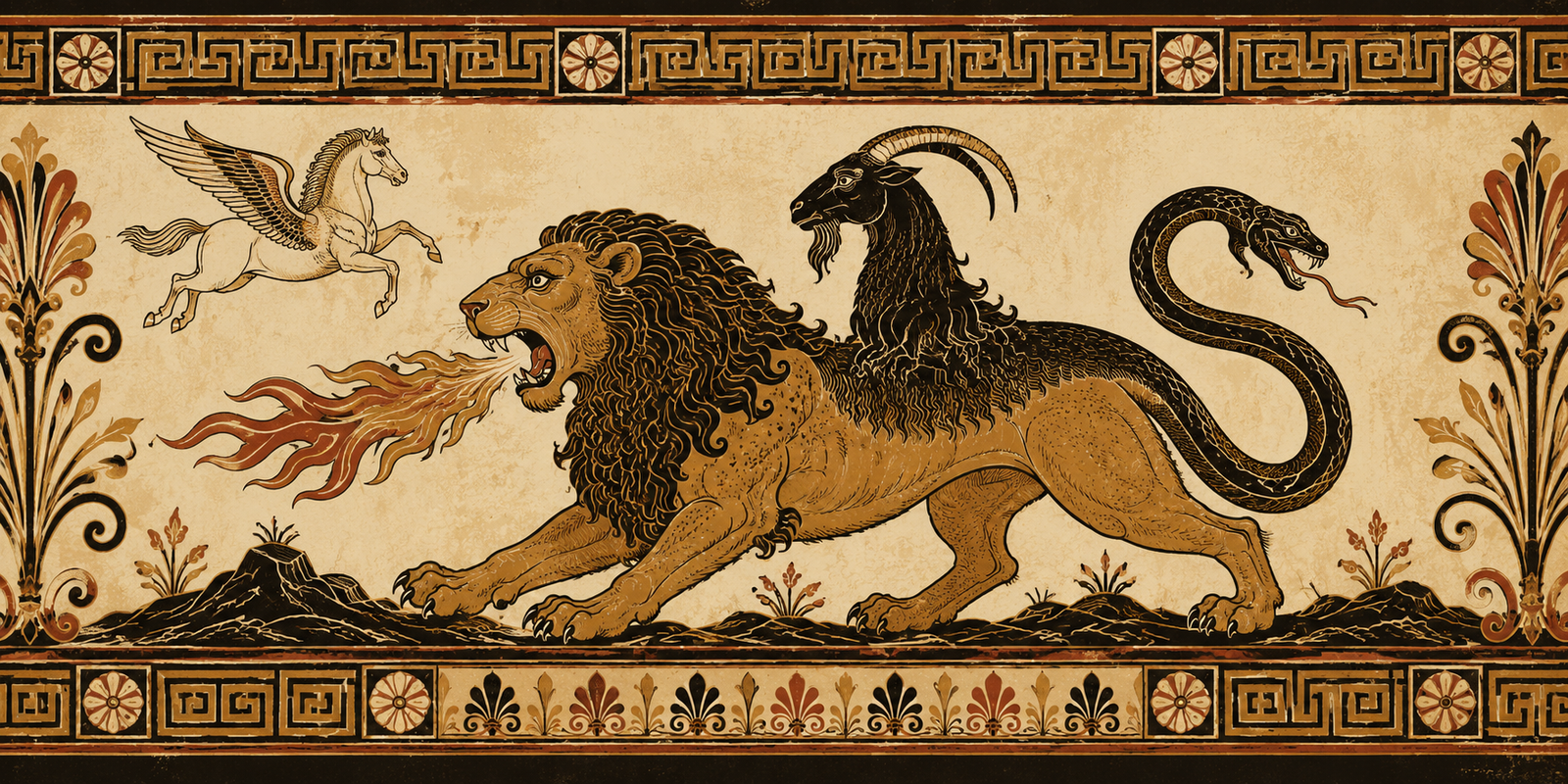

The Chimaera — A Greek Monster of Many Dangers
A child-readable Greek myth guide to the Chimaera: lion, goat, serpent, fire, and the monster’s many joined dangers. This excerpt from The Greek World shows why Bellerophon needed Pegasus, and why the Chimaera is not merely a strange animal mixture, but a precise Greek monster-sign.
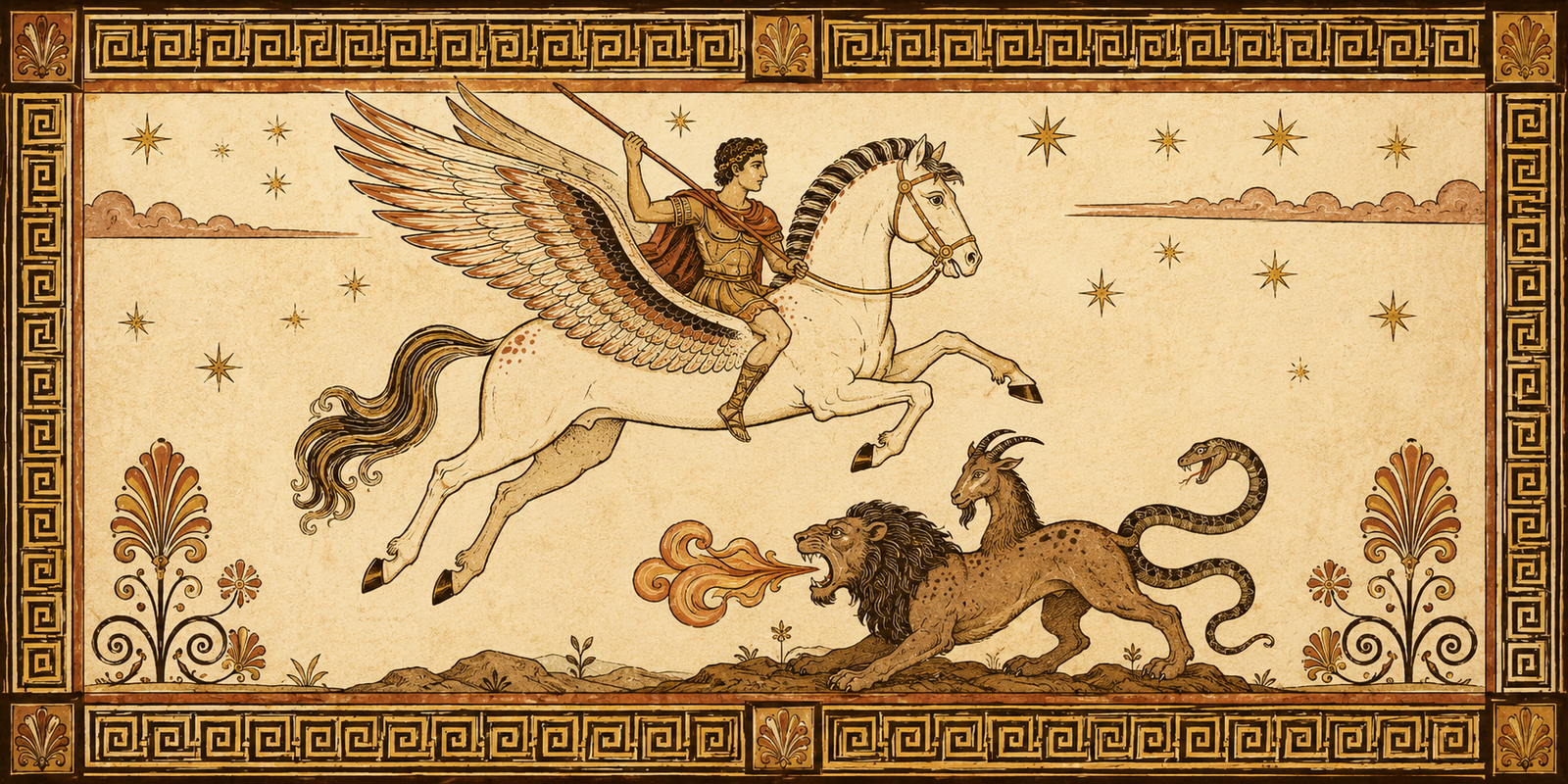

Bellerophon and Pegasus — A Greek Myth Retold for Children
A sealed message, a fire-breathing monster, a golden bridle, and the winged horse Pegasus. This Alexander Series tale retells the Greek myth of Bellerophon for serious child readers, preserving wonder, danger, courage, and the old warning hidden inside height.
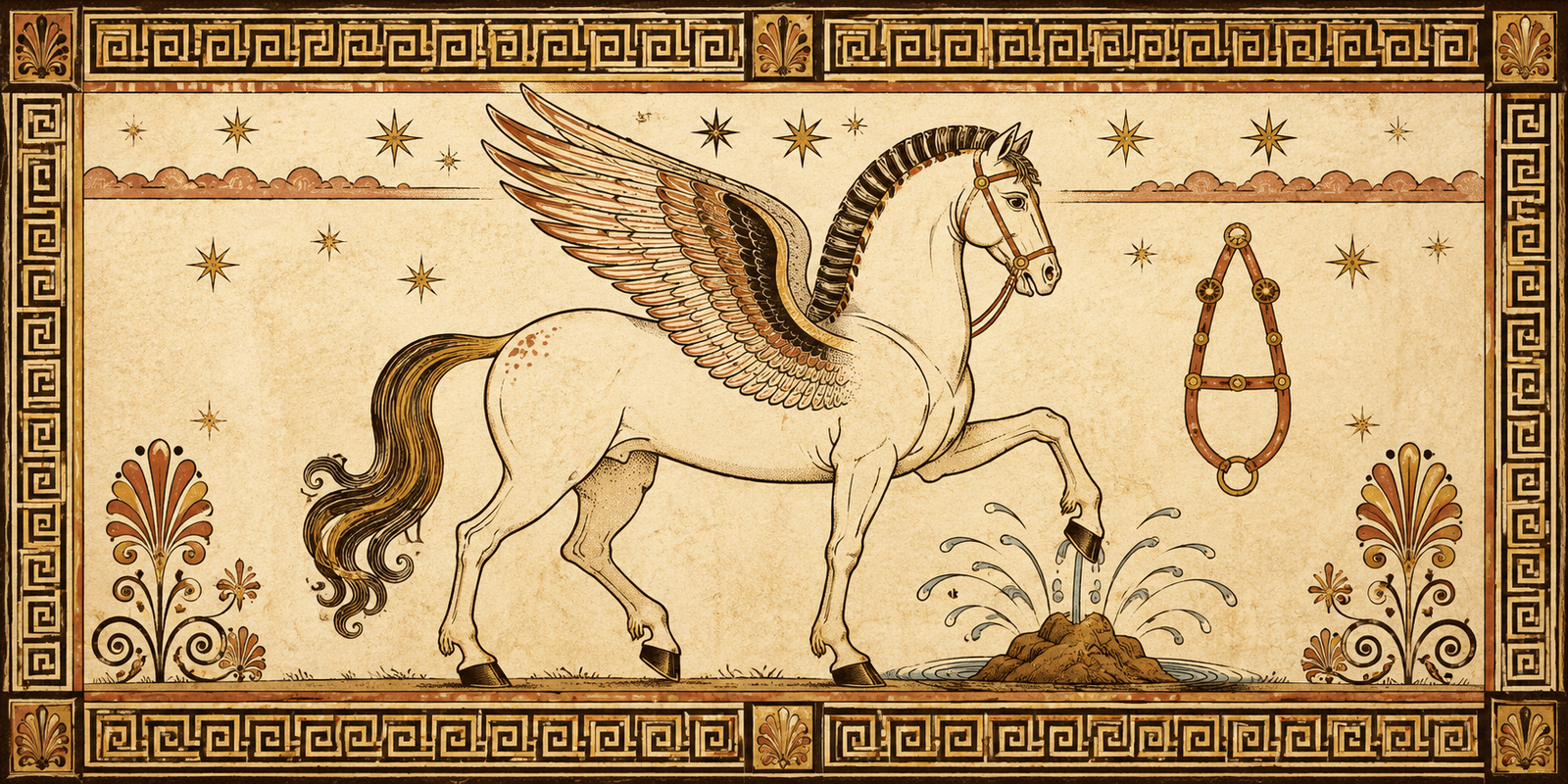

Pegasus — The Winged Horse of Greek Myth
Before Bellerophon takes the bridle, a child should know that Pegasus is not a pet, not a cloud, and not a harmless fantasy creature. This Greek World entry introduces the winged horse of Greek myth as wonder with hooves, wings, danger, and rules.
Continue Reading
If this piece found something in you, you may wish to continue the journey elsewhere.
On The Lantern Chronicles, I gather writings from Angkor, myth and legend, contemplative essays, and poetry — works shaped by silence, beauty, wonder, memory, and the deeper questions that follow us through the world.
It is a place for stone and story, reflection and vow, shadow and revelation.
You would be most welcome there.