


Orpheus and the Underworld — A Greek Myth Retold for Children
Orpheus and the Underworld is a new tale from The Alexander Series: Greek myths retold for children who want to be trusted by stories.
This is the story of a singer who enters the land of the dead with no sword, no shield, and no strength except the song he refuses to leave behind. It is a Greek myth about music, love, loss, courage, and the road no living person should take.
Orpheus could make almost anything listen.
Birds listened. Goats listened, though goats are not famous for politeness. Trees listened, or seemed to. Even stones appeared to settle more deeply into the earth when Orpheus touched the strings of his lyre.
The lyre was not large. It was not golden all over, or set with jewels, or the sort of thing a boastful king would hang on a wall and point at during supper. It was made of wood and string and care. But when Orpheus played it, the world remembered how to be quiet.
Wolves came out of the dark and forgot to be wolves.
Rivers slowed.
Leaves stopped quarrelling with the wind.
Once, when Orpheus sat on a hillside and played until the sun had gone red behind the trees, a whole company of men who had been arguing about a boundary stone stood still with their mouths half-open, listening. By the end of the song, none of them could remember why the stone had mattered so much.
This, for men arguing over land, was very nearly a miracle.
But Eurydice did not listen because she had to.
She listened because she loved him.
She would sit near the doorway in the evenings while Orpheus tested one string, then another, then the first string again, because Orpheus could bear almost any sadness in the world except a note that was nearly right.
“Play it,” she would say.
“I am playing it.”
“No,” Eurydice would say, smiling. “You are worrying it.”
Then Orpheus would look offended for half a breath, because singers are sometimes proud of their suffering, even when the suffering is caused by a badly tuned string. Then he would laugh, and the song would begin properly, and the room would grow still around them.
There are some happinesses that do not announce themselves as happiness.
They are only a lamp on a table, a hand resting near another hand, a voice in the doorway, a song being made in the evening while the dark gathers kindly outside.
Orpheus had such happiness.
Then, one morning, it broke.
Eurydice had gone out among the long grasses beyond the house, where the flowers grew thick after rain. She was walking lightly, gathering stems in the fold of her dress, when a snake hidden in the grass struck her ankle.
And from that moment, Orpheus must follow the one road no living person is meant to take.
Continue reading: Orpheus and the Underworld at The Alexander Series on Substack.
Also in The Alexander Series
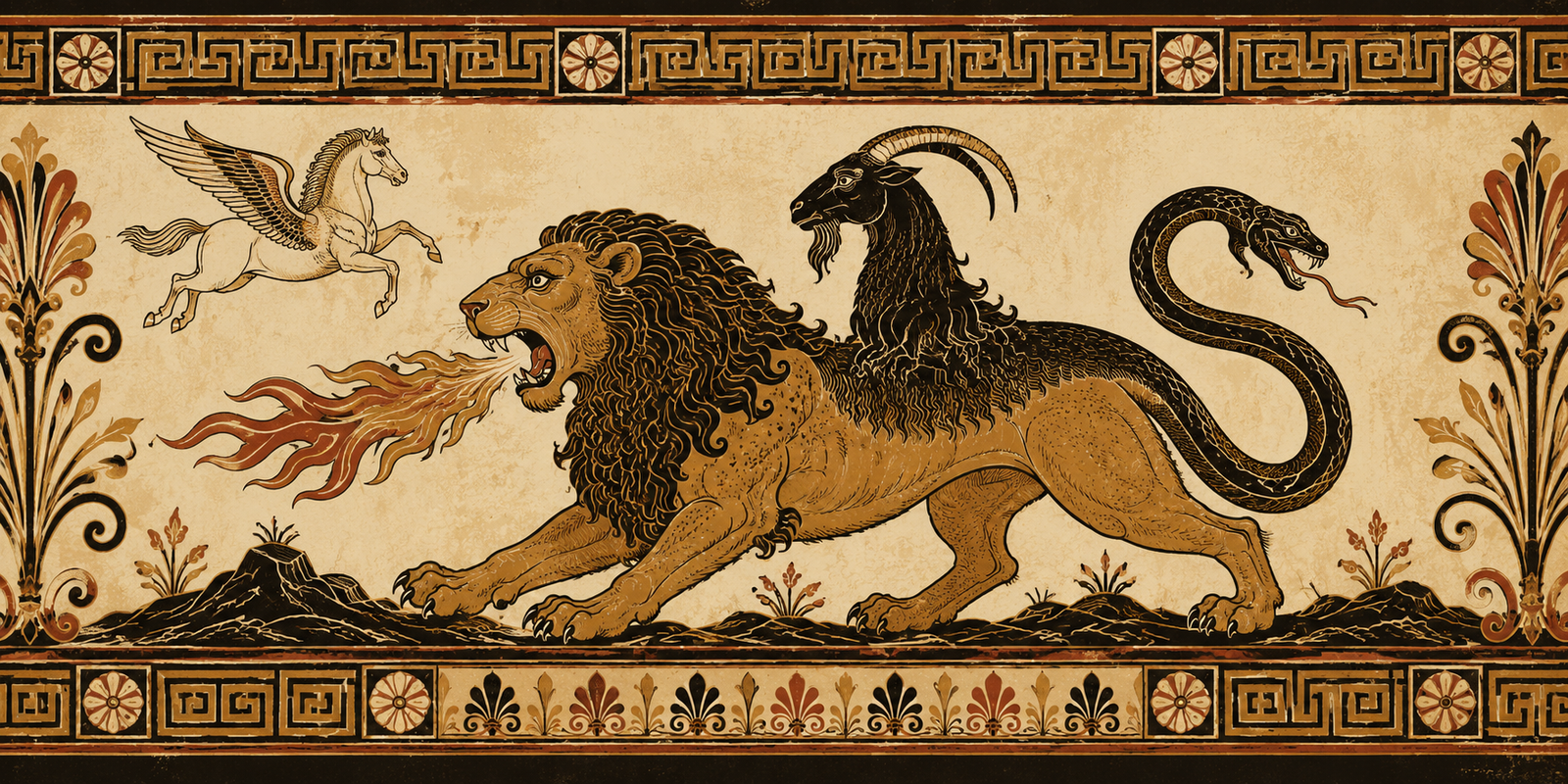

The Chimaera — A Greek Monster of Many Dangers
A child-readable Greek myth guide to the Chimaera: lion, goat, serpent, fire, and the monster’s many joined dangers. This excerpt from The Greek World shows why Bellerophon needed Pegasus, and why the Chimaera is not merely a strange animal mixture, but a precise Greek monster-sign.
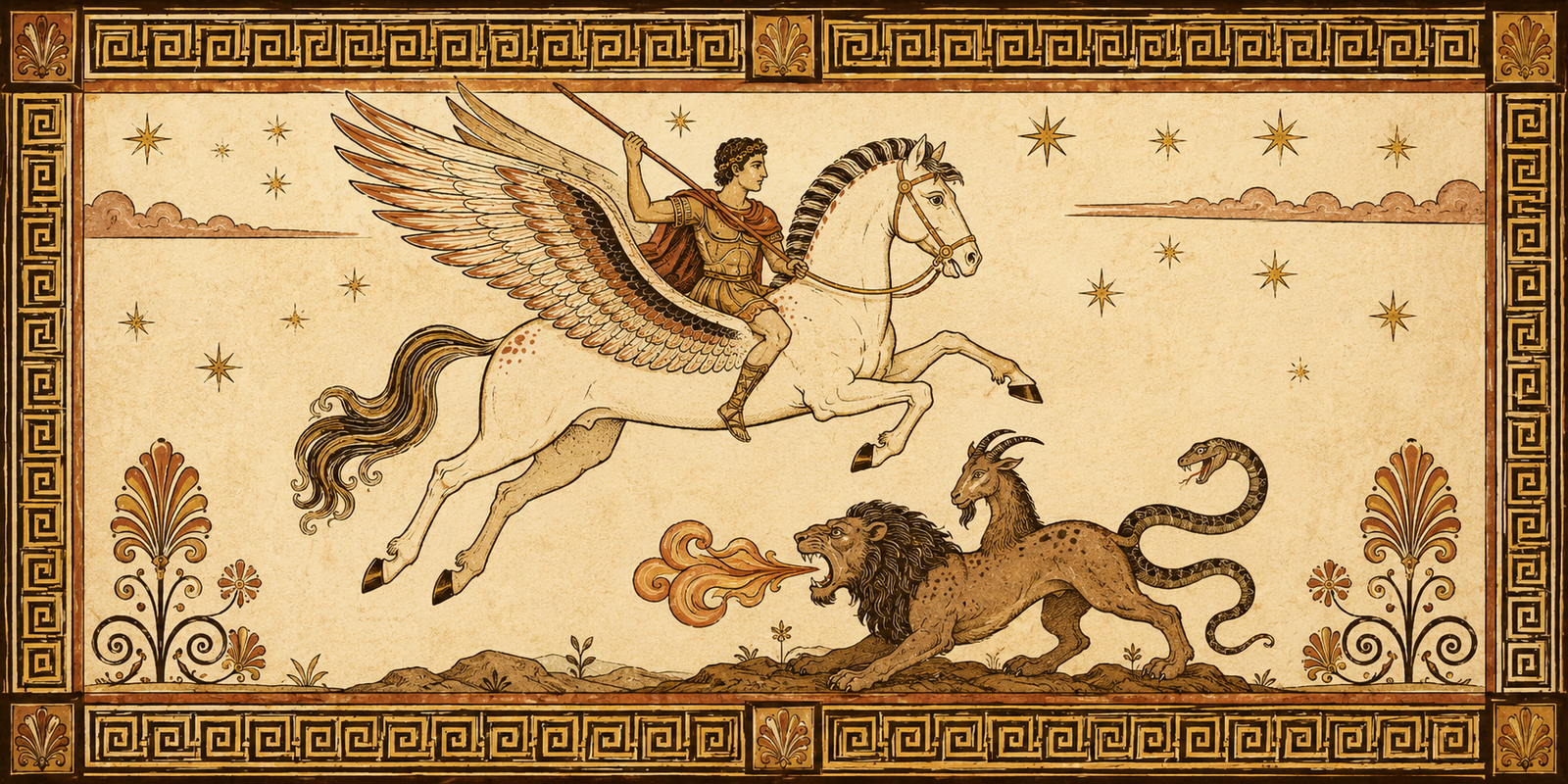

Bellerophon and Pegasus — A Greek Myth Retold for Children
A sealed message, a fire-breathing monster, a golden bridle, and the winged horse Pegasus. This Alexander Series tale retells the Greek myth of Bellerophon for serious child readers, preserving wonder, danger, courage, and the old warning hidden inside height.
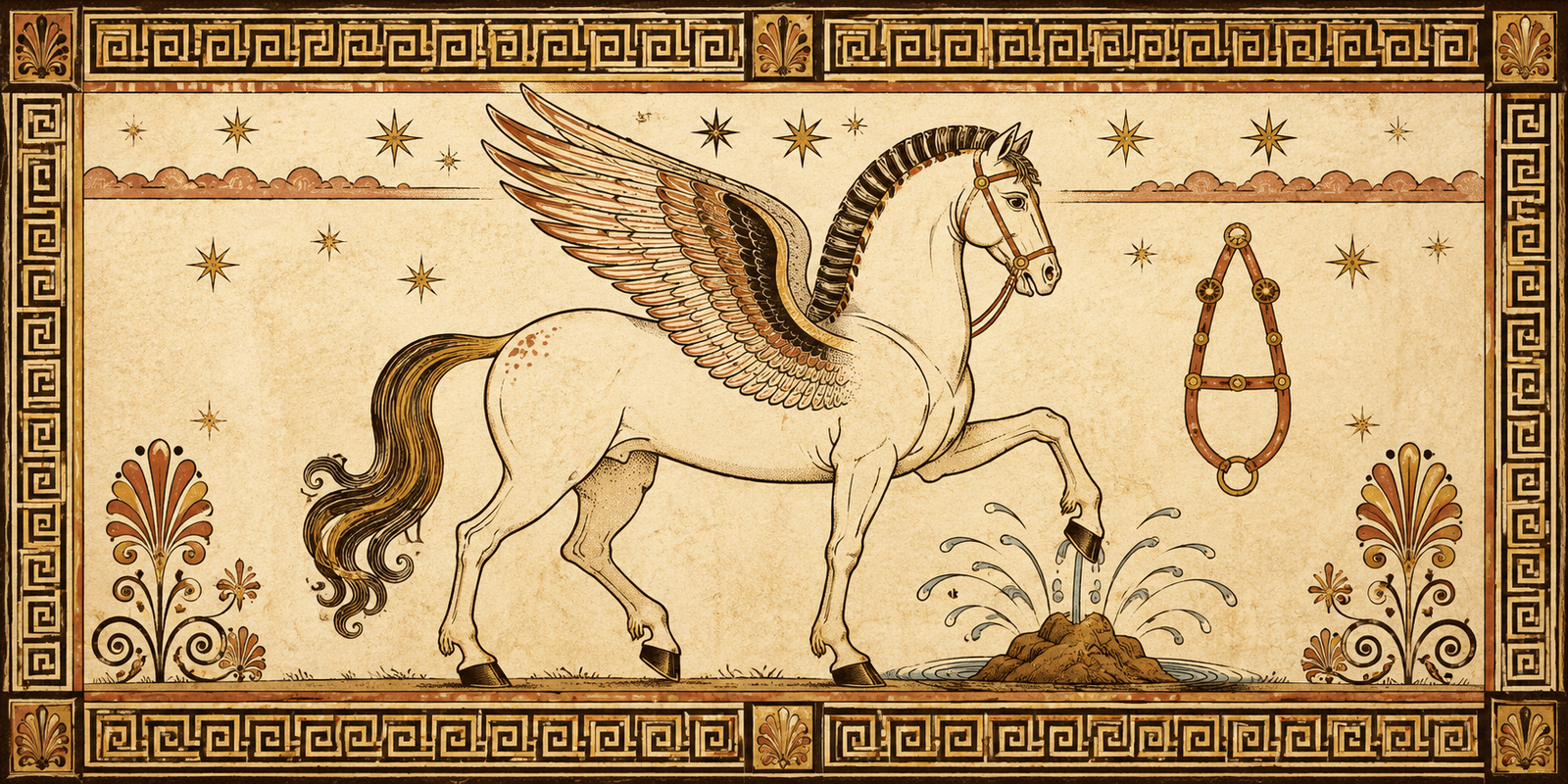

Pegasus — The Winged Horse of Greek Myth
Before Bellerophon takes the bridle, a child should know that Pegasus is not a pet, not a cloud, and not a harmless fantasy creature. This Greek World entry introduces the winged horse of Greek myth as wonder with hooves, wings, danger, and rules.
Continue Reading
If this piece found something in you, you may wish to continue the journey elsewhere.
On The Lantern Chronicles, I gather writings from Angkor, myth and legend, contemplative essays, and poetry — works shaped by silence, beauty, wonder, memory, and the deeper questions that follow us through the world.
It is a place for stone and story, reflection and vow, shadow and revelation.
You would be most welcome there.