
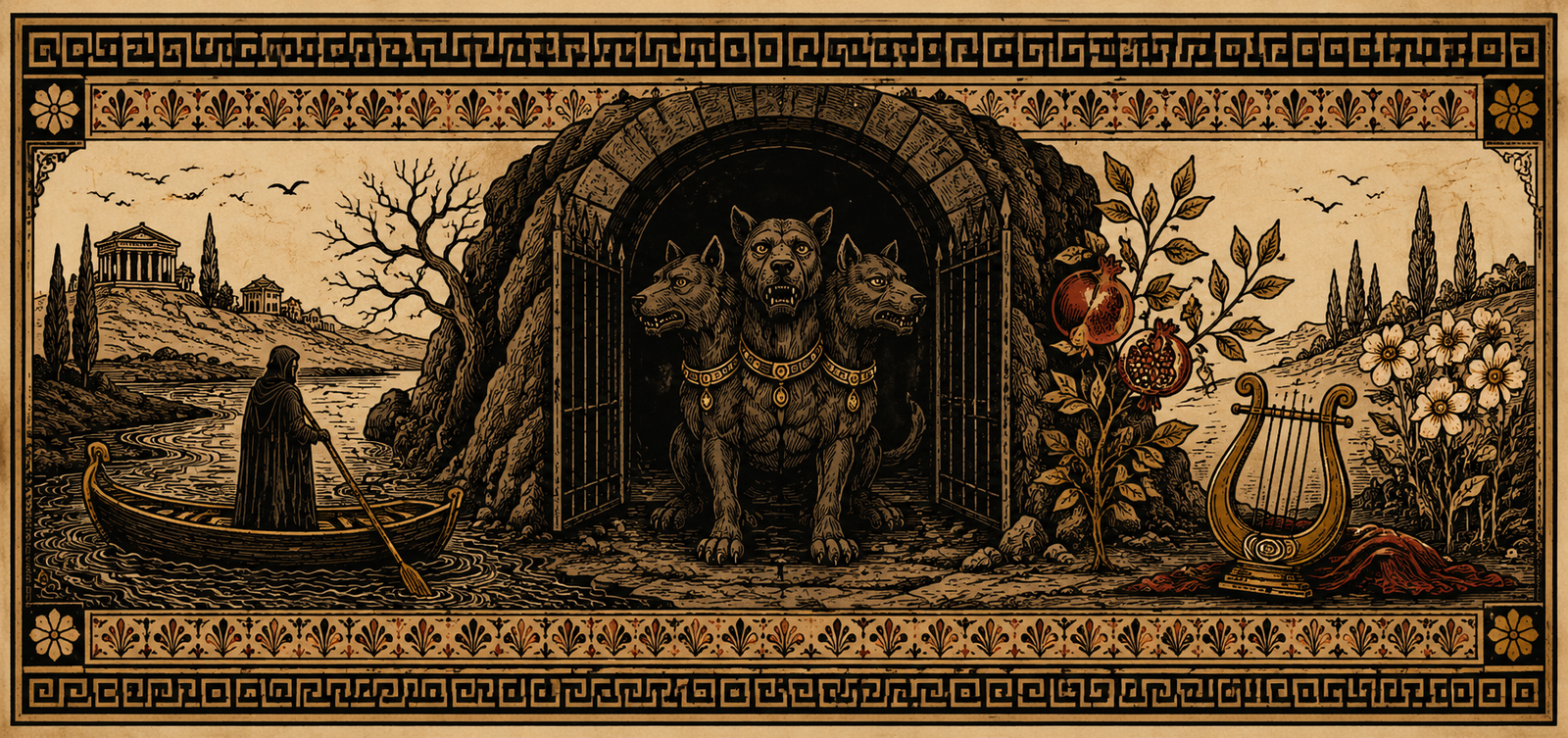

The Underworld — A Greek Myth Guide for Children
Before Orpheus takes his lyre and walks down toward the dead, a child should know this much: he is not going into a cave, or a dungeon, or a gloomy room beneath the world.
He is going to the place where mortal lives are kept after they have ended.
The Greeks called it the Underworld.
It is not a monster’s house, though a monster waits at its gate. It is not simply a place of punishment, though some punishments are kept there. It is not evil in the way a cruel king may be evil, or a lying enemy, or a beast waiting in the dark.
It is older and stranger than that.
It is the kingdom beneath the earth.
In Greek myth, the dead do not simply vanish. They go below, into the shadowed realm ruled by Hades and Persephone. Kings go there. Shepherds go there. Brave people, foolish people, famous people, forgotten people — all mortal lives, sooner or later, pass toward the same dark country.
That is what makes the Underworld serious.
It is frightening not because it is noisy, but because it is quiet, ancient, and very difficult to leave.
The Underworld lies beneath the world of the living. Hades rules there as king, and Persephone sits beside him as queen. The dead become shades: shadowy souls of the people they once were. Rivers mark the way. Gates divide the living from the dead. Cerberus, the great guard dog, watches the entrance.
Most people who enter the Underworld do not come back.
That is why every story of someone going down while still alive feels dangerous.
A living person is not simply travelling to another kingdom. A living person is crossing one of the oldest borders in the world.
The Underworld belongs below.
Not below like a cellar under a house. Not below like a hole dug in a field. Below in the older, stranger sense: beneath the bright world of sun, breath, harvest, noise, running feet, warm bread, barking dogs, quarrels, songs, and open doors.
Above are the living.
Below are the dead.
Between them are rules.
And Orpheus is going down with a lyre.
Continue reading: The Underworld at The Alexander Series on Substack.
Also in The Alexander Series
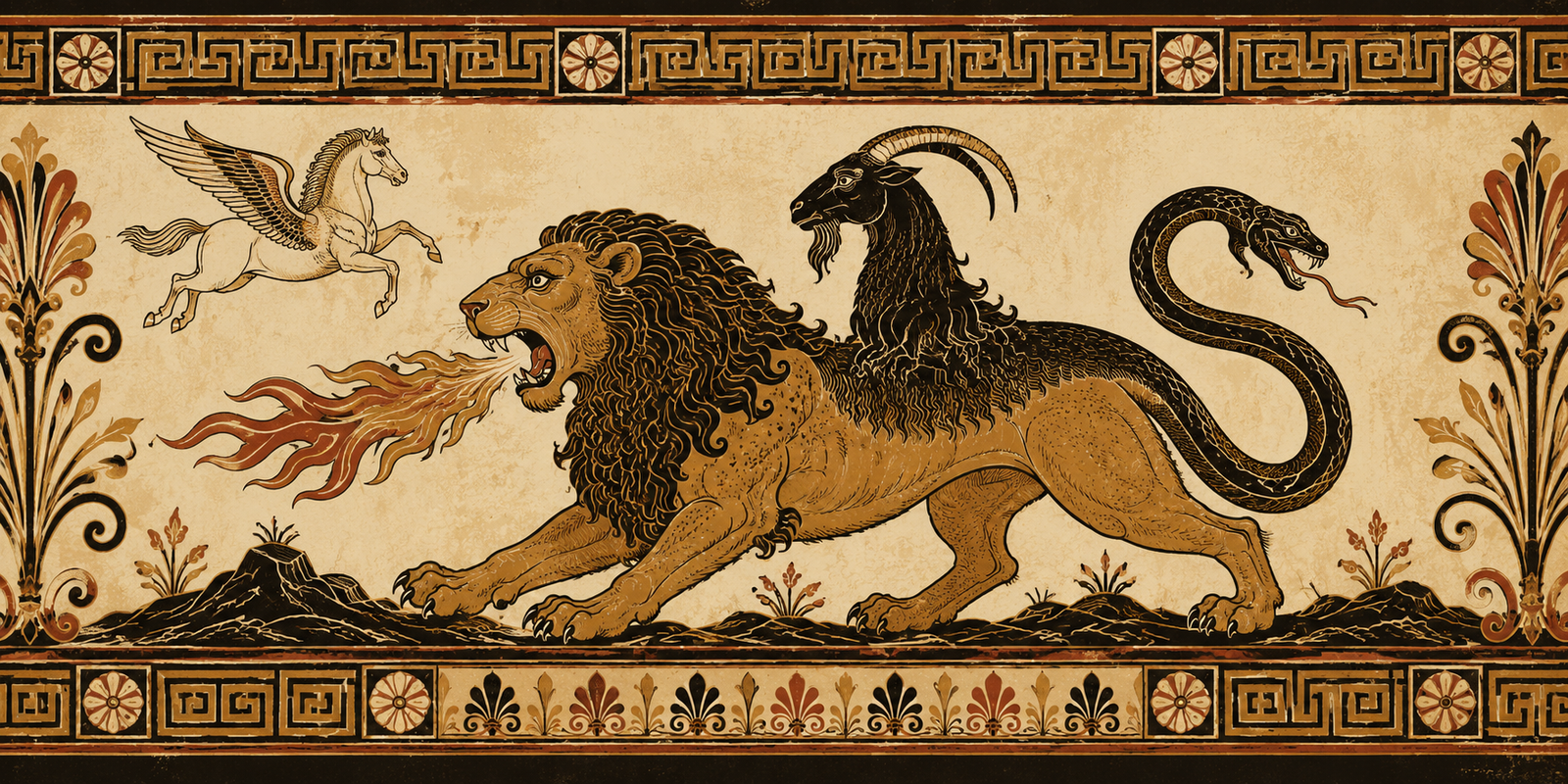

The Chimaera — A Greek Monster of Many Dangers
A child-readable Greek myth guide to the Chimaera: lion, goat, serpent, fire, and the monster’s many joined dangers. This excerpt from The Greek World shows why Bellerophon needed Pegasus, and why the Chimaera is not merely a strange animal mixture, but a precise Greek monster-sign.
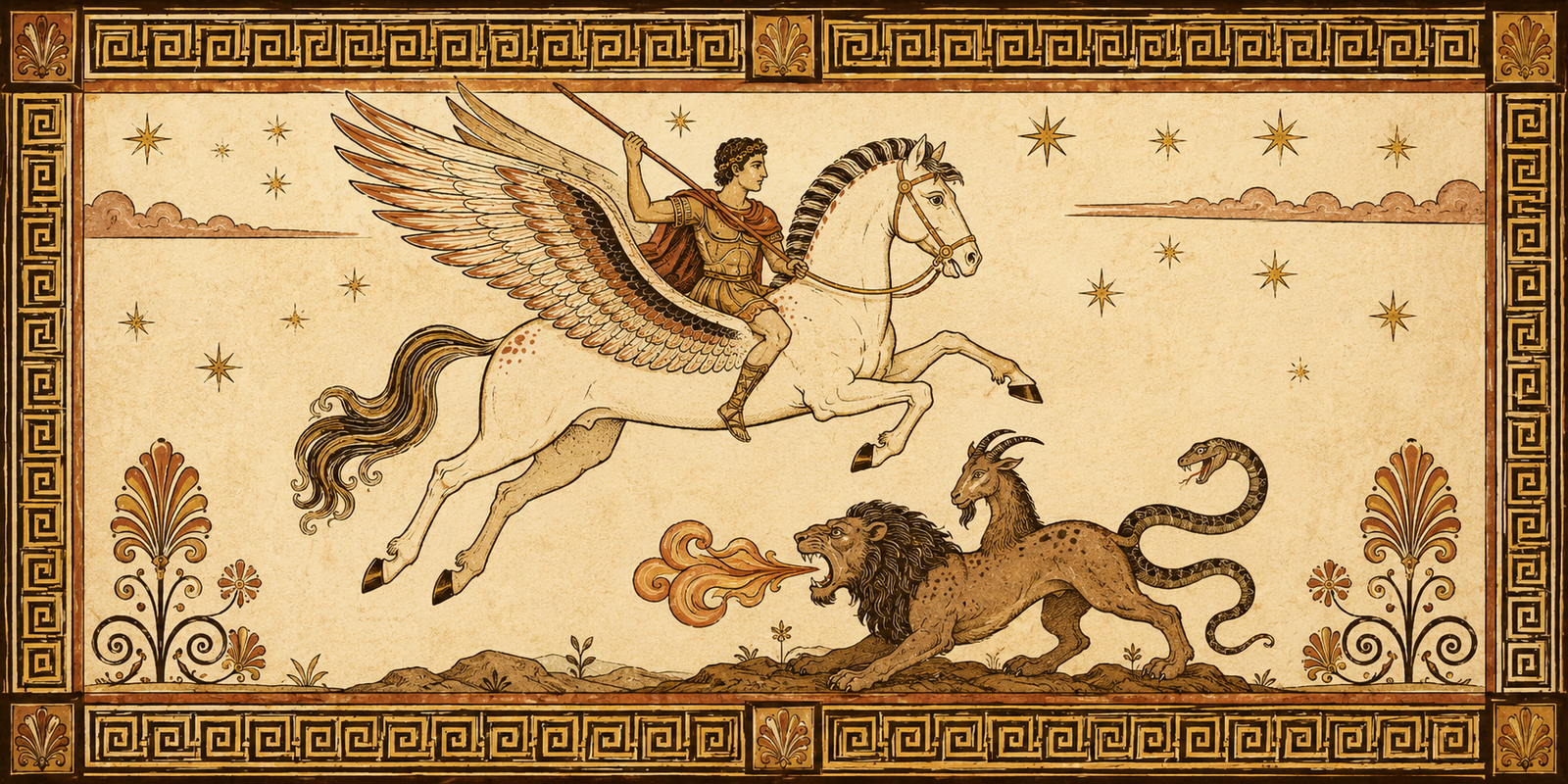

Bellerophon and Pegasus — A Greek Myth Retold for Children
A sealed message, a fire-breathing monster, a golden bridle, and the winged horse Pegasus. This Alexander Series tale retells the Greek myth of Bellerophon for serious child readers, preserving wonder, danger, courage, and the old warning hidden inside height.
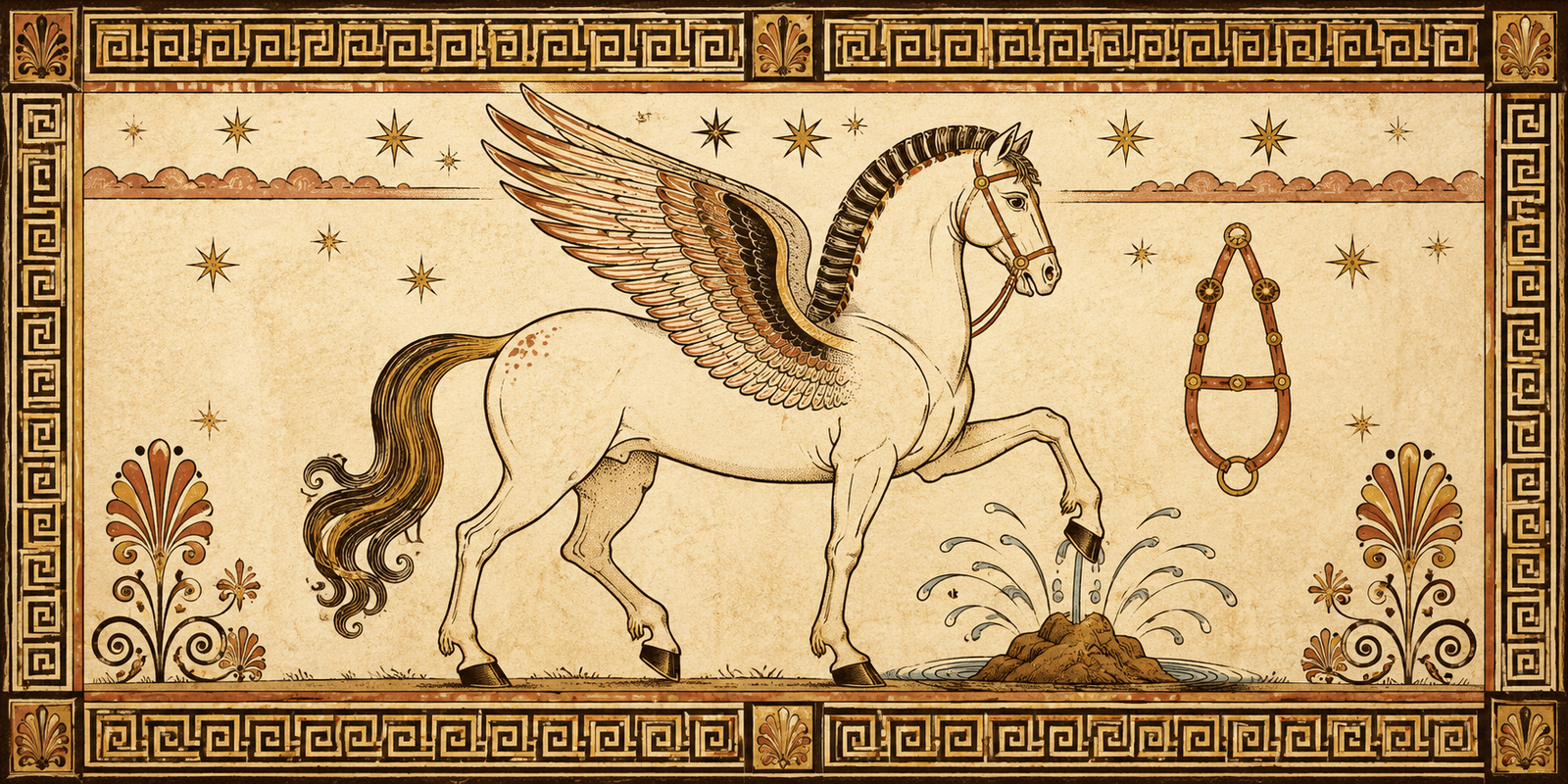

Pegasus — The Winged Horse of Greek Myth
Before Bellerophon takes the bridle, a child should know that Pegasus is not a pet, not a cloud, and not a harmless fantasy creature. This Greek World entry introduces the winged horse of Greek myth as wonder with hooves, wings, danger, and rules.
Continue Reading
If this piece found something in you, you may wish to continue the journey elsewhere.
On The Lantern Chronicles, I gather writings from Angkor, myth and legend, contemplative essays, and poetry — works shaped by silence, beauty, wonder, memory, and the deeper questions that follow us through the world.
It is a place for stone and story, reflection and vow, shadow and revelation.
You would be most welcome there.