
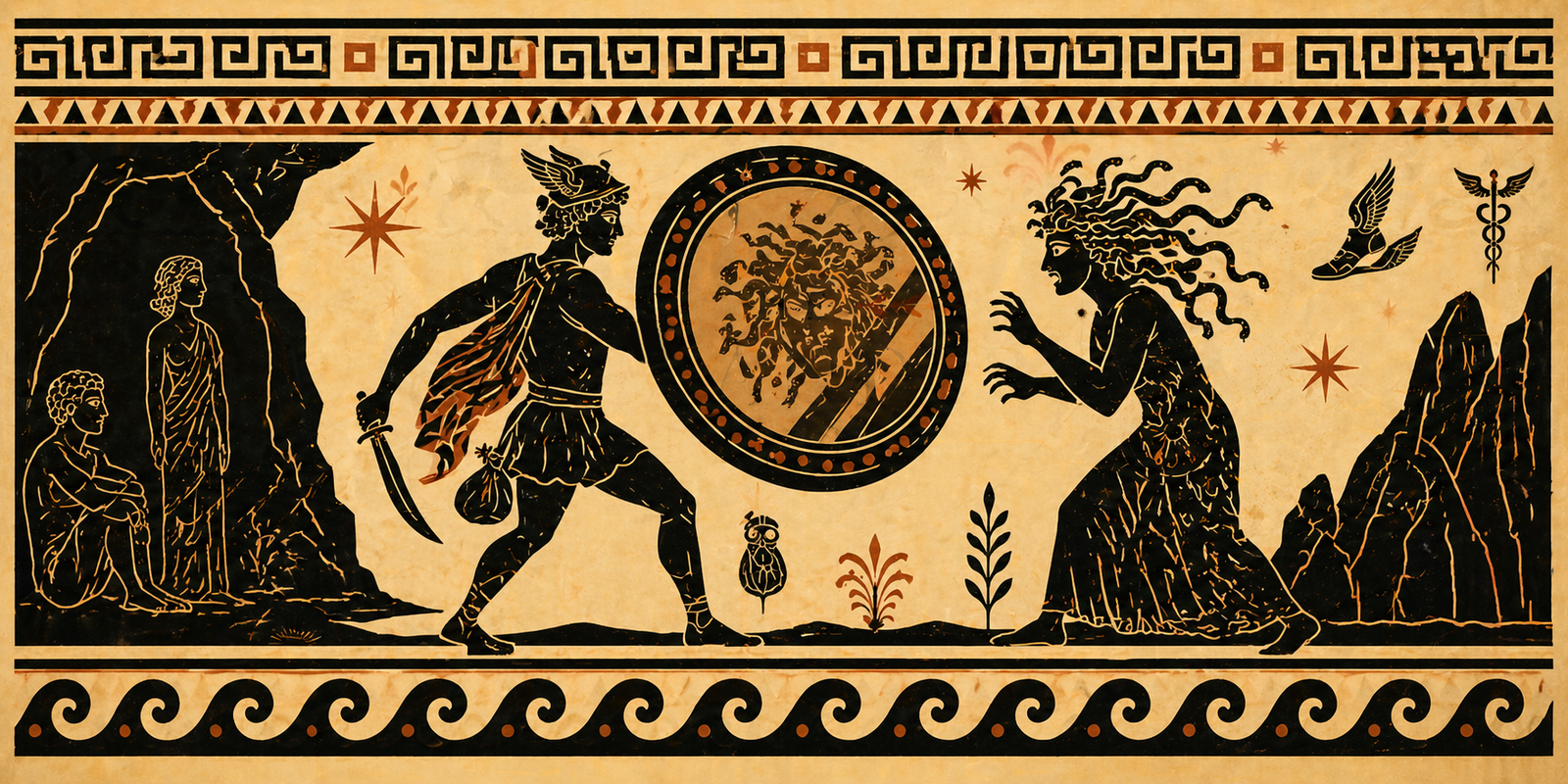

Perseus and the Shield of Athena
Perseus and the Shield of Athena is a Greek myth retold for serious child readers: warm, dangerous, swift-moving, and alive to the old strangeness of gods, monsters, promises, and impossible tasks.
This is a tale of a boy whose courage runs ahead of his wisdom, a mother placed in danger by a greedy king, and a monster no living person can look at and survive. But the heart of the story is not strength. It is the shield: bright, polished, disciplined — the gift that teaches Perseus he cannot defeat every terror by facing it head-on.
Perseus grew up on a small island where the wind was always trying to steal something.
It stole smoke from the cooking fires, spray from the waves, figs from the trees, and, whenever it could, the words from people’s mouths. The fishermen of Seriphos were used to shouting across the shore with both hands cupped around their faces. The goats were used to leaning sideways. Even the houses looked as if they had braced themselves long ago and decided never to stand quite straight again.
Perseus lived there with his mother, Danae, in the house of Dictys the fisherman, who had found them years before when the sea brought them to the island in a wooden chest.
That is the sort of thing the sea sometimes does in old stories. It takes what one king throws away and carries it carefully to someone kinder.
Danae never spoke much of the chest. She did not speak much of the king who had put her in it, either. She spoke instead of useful things: whether the nets needed mending, whether the bread was done, whether Perseus had remembered to sharpen the small knife Dictys used for cleaning fish.
But Perseus knew this much. His mother had once been a princess. She had been shut away by a frightened father. Zeus himself had found her, as gods tend to find what men try hardest to hide. And when Perseus was born, that frightened king had put mother and child into a chest and pushed them out onto the sea.
Perseus did not remember the chest.
Danae did.
That was enough.
By the time Perseus was almost a man, he was strong in the shoulders, quick in the hand, and far too ready to answer insult with courage. Courage is a splendid thing, but when it is young it often runs ahead before wisdom has put on its sandals.
The trouble began with King Polydectes.
Polydectes ruled Seriphos, though it must be said that ruling a small island had not made him modest. Some kings govern as if power has been lent to them. Polydectes governed as if the gods had personally written his name across the sky and asked everyone else to admire the lettering.
He wanted Danae for his wife.
Danae did not want Polydectes.
This should have ended the matter. In a better world, it would have. But many myths begin because a king hears no and decides it must mean try harder.
Continue reading: Perseus and the Shield of Athena at The Alexander Series on Substack.
Also in The Alexander Series
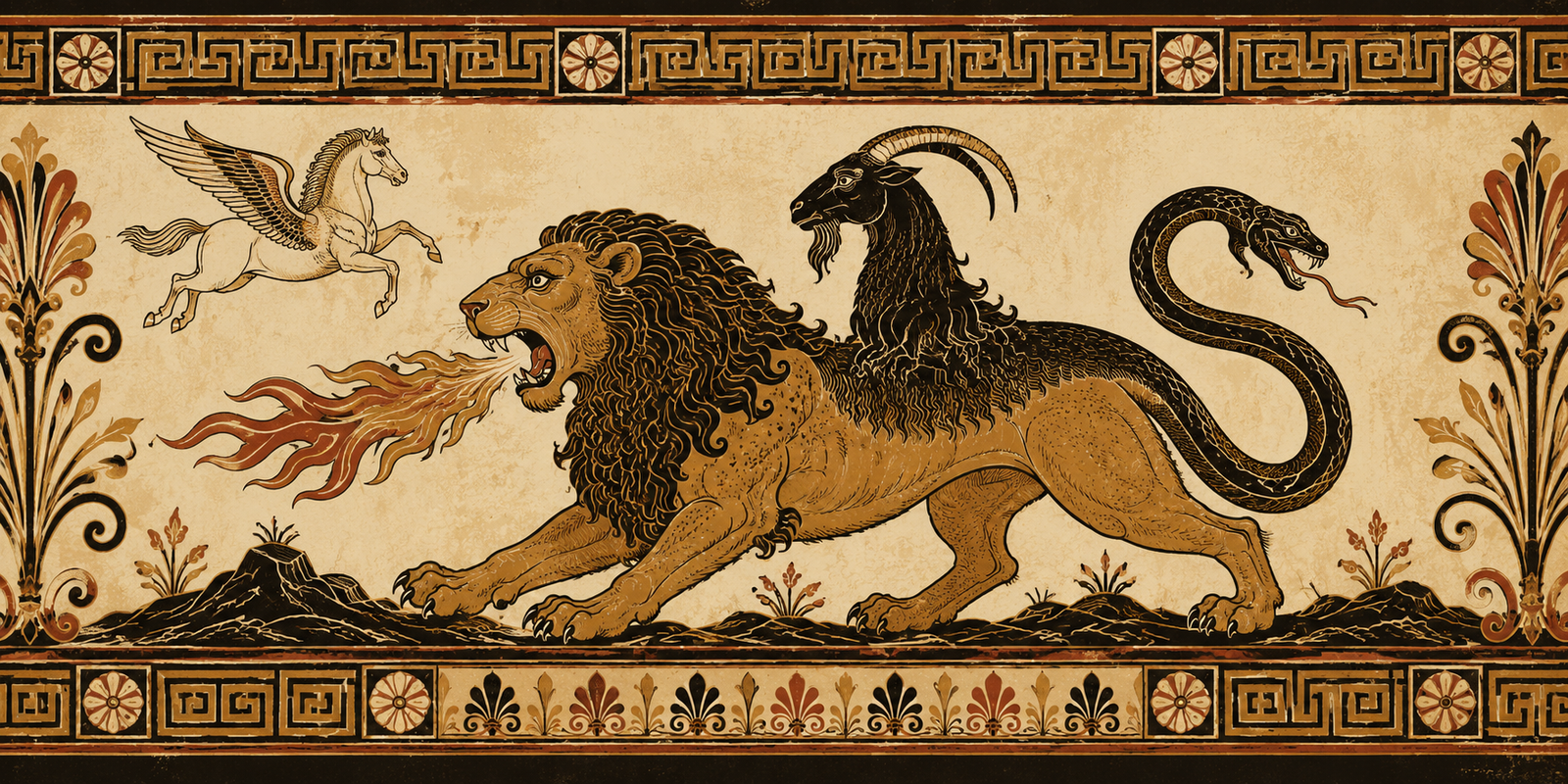

The Chimaera — A Greek Monster of Many Dangers
A child-readable Greek myth guide to the Chimaera: lion, goat, serpent, fire, and the monster’s many joined dangers. This excerpt from The Greek World shows why Bellerophon needed Pegasus, and why the Chimaera is not merely a strange animal mixture, but a precise Greek monster-sign.
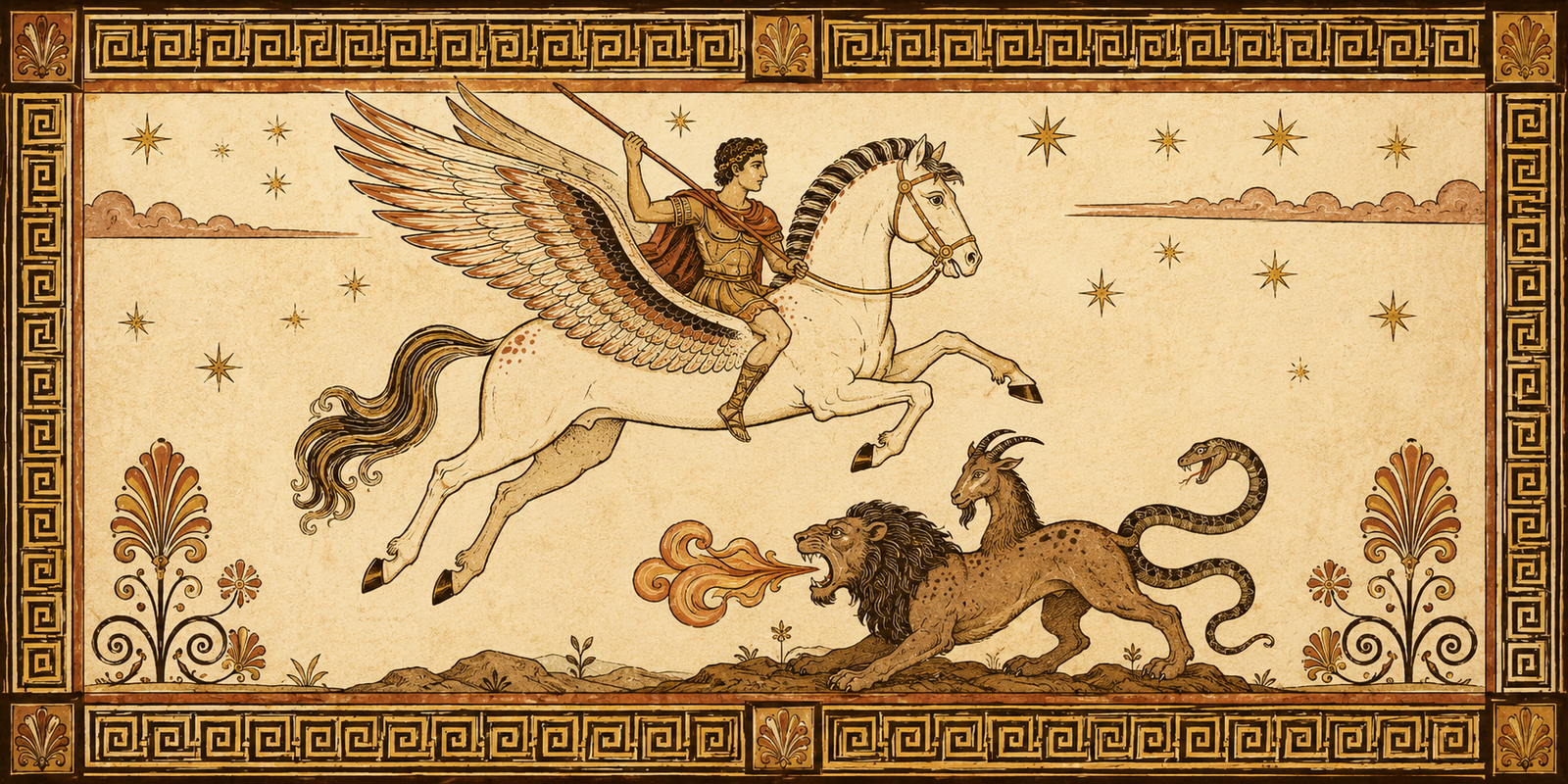

Bellerophon and Pegasus — A Greek Myth Retold for Children
A sealed message, a fire-breathing monster, a golden bridle, and the winged horse Pegasus. This Alexander Series tale retells the Greek myth of Bellerophon for serious child readers, preserving wonder, danger, courage, and the old warning hidden inside height.
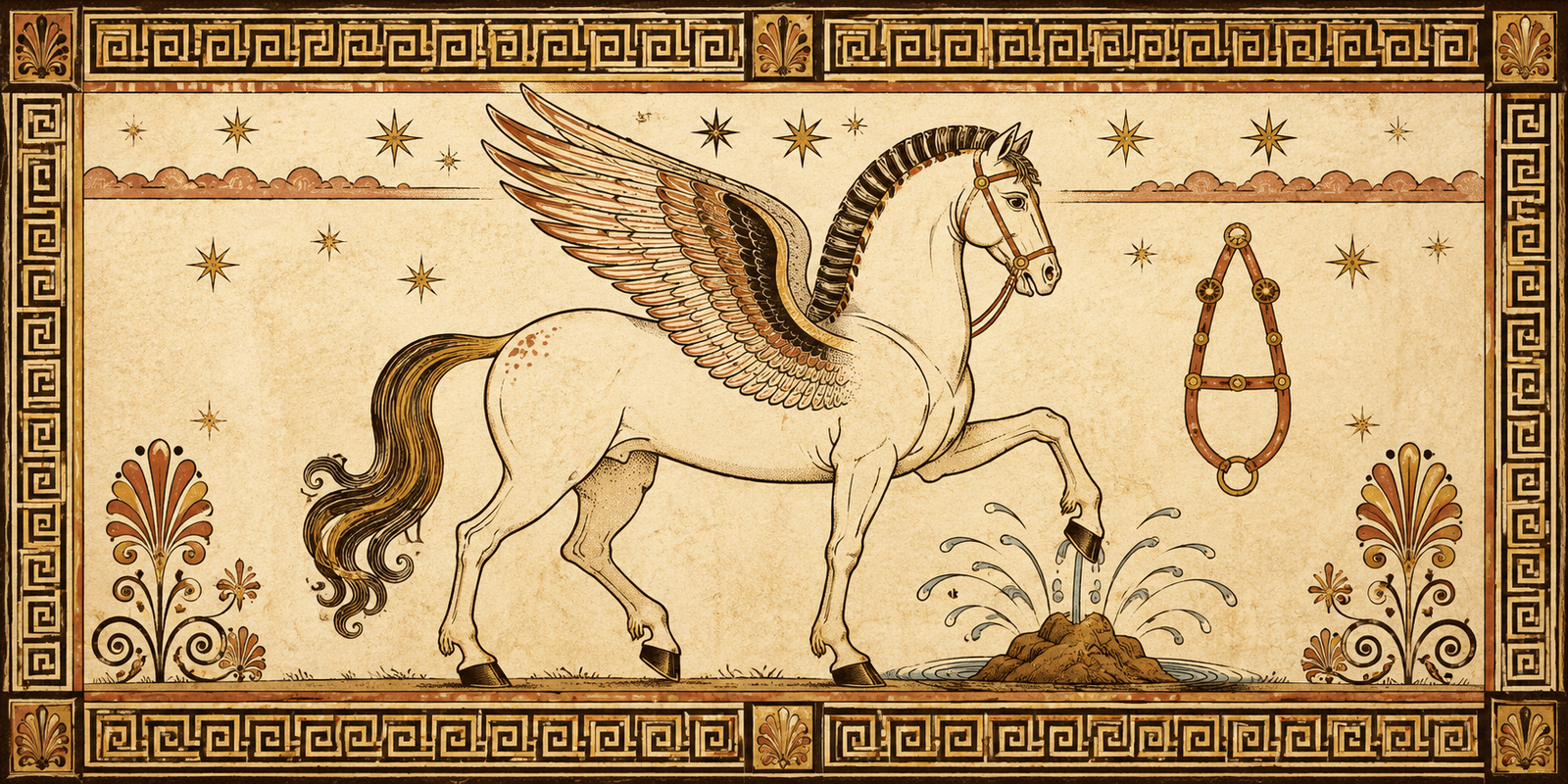

Pegasus — The Winged Horse of Greek Myth
Before Bellerophon takes the bridle, a child should know that Pegasus is not a pet, not a cloud, and not a harmless fantasy creature. This Greek World entry introduces the winged horse of Greek myth as wonder with hooves, wings, danger, and rules.
Continue Reading
If this piece found something in you, you may wish to continue the journey elsewhere.
On The Lantern Chronicles, I gather writings from Angkor, myth and legend, contemplative essays, and poetry — works shaped by silence, beauty, wonder, memory, and the deeper questions that follow us through the world.
It is a place for stone and story, reflection and vow, shadow and revelation.
You would be most welcome there.