
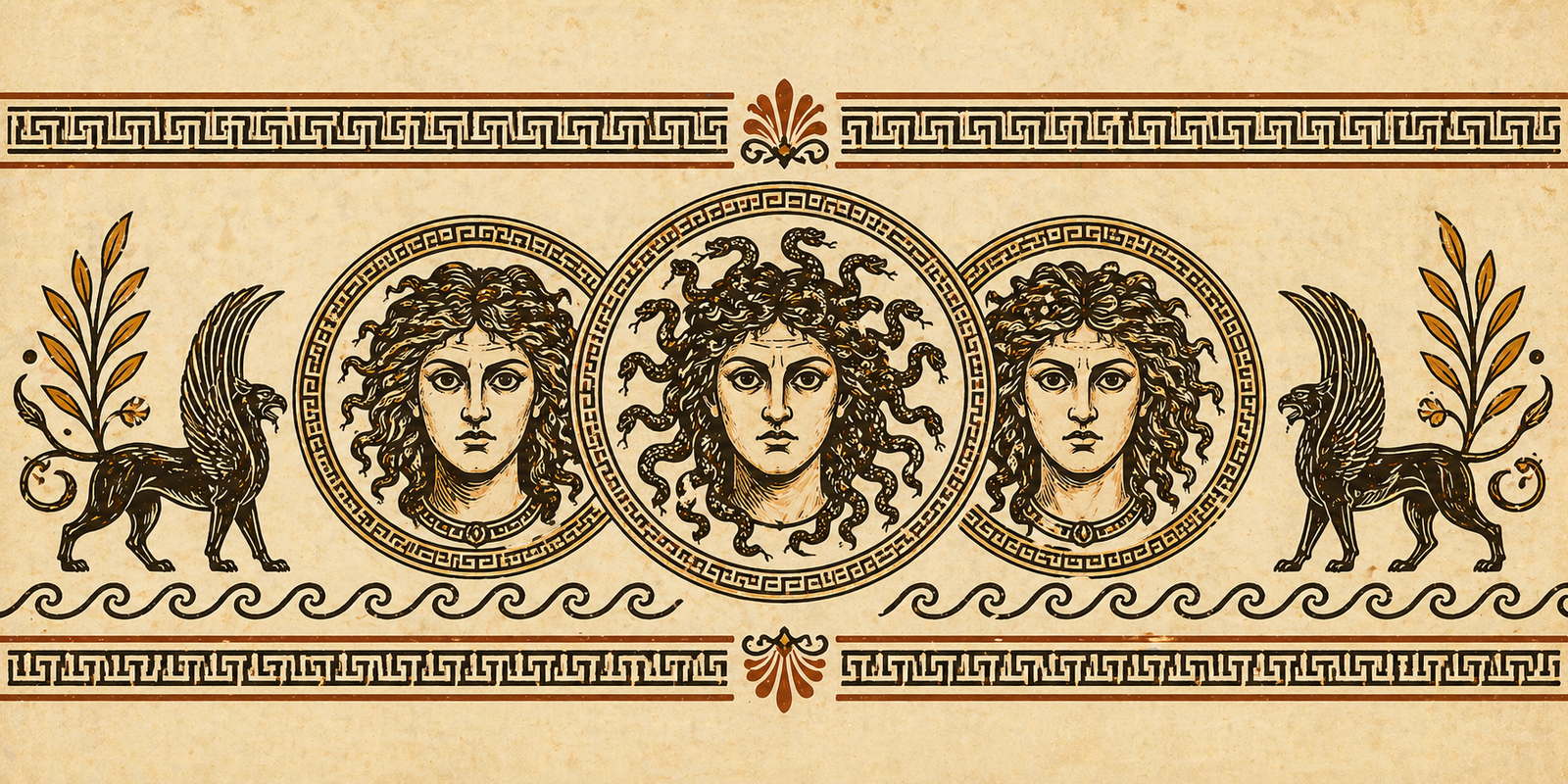

The Gorgons: Medusa, the Shield, and the Danger of Looking
After Perseus has looked into the shield and survived what no one was meant to survive, we can turn back and ask a dangerous question.
What was a Gorgon?
Not simply a monster.
Greek myth has plenty of monsters, and many of them are easier to understand. A lion with impossible hide. A boar sent to ruin a kingdom. A bull-man hidden in a labyrinth. A giant with one eye.
The Gorgons are stranger.
This new entry in The Greek World, part of The Alexander Series, introduces children to the Gorgons after Perseus and the Shield of Athena: three monstrous sisters, snake-haired and terrible to behold, whose danger lies not only in strength, but in sight itself.
They are not only dangerous because they are strong.
They are dangerous because of looking.
To see a Gorgon directly is to be destroyed. That is why Perseus cannot fight Medusa as he might fight another monster. He cannot simply run at her with a sword. He cannot lock eyes with her. He cannot even look at her in the ordinary way.
A Gorgon changes the rules of courage.
The Gorgons are three monstrous sisters in Greek myth: Stheno, Euryale, and Medusa.
Their names are old and fierce. Stheno suggests strength. Euryale suggests a wide-roaming power. Medusa’s name is connected with guarding or ruling, though by the time Perseus meets her, she is most famous for being deadly to behold.
In many tellings, two of the sisters, Stheno and Euryale, are immortal. They cannot be killed. Medusa is mortal, which is very unfortunate for Medusa, because it means she is the one Perseus is sent to find.
The Gorgons are often imagined with snakes for hair, terrible faces, and a gaze that turns living beings to stone.
This is why Perseus needs help from Athena. A hero cannot win this sort of encounter by ordinary bravery. Ordinary bravery would get him killed almost at once.
In Perseus and the Shield of Athena, Medusa is not just an enemy at the end of the road. She is the shape of the impossible task.
Perseus has been sent against something no one expects him to survive. That is important. The people who send heroes on quests are not always kind, and the gods, when they help, often help in very exact and difficult ways.
The Tale shows the most important rule about Medusa:
Do not look directly.
That rule may sound simple.
It is not.
When danger is near, people often want to stare at it. They want to understand it completely. They want to prove they are not afraid. Greek myth is not always impressed by this. Sometimes it says: if you look wrongly, you lose.
Perseus survives because he learns another way of seeing.
The shield allows him to look by reflection. It lets him face the monster without giving the monster his eyes.
That is not cheating.
That is wisdom.
And wisdom, in this story, is the difference between a hero and a statue.
Continue reading: The Gorgons at The Alexander Series on Substack.
Also in The Alexander Series
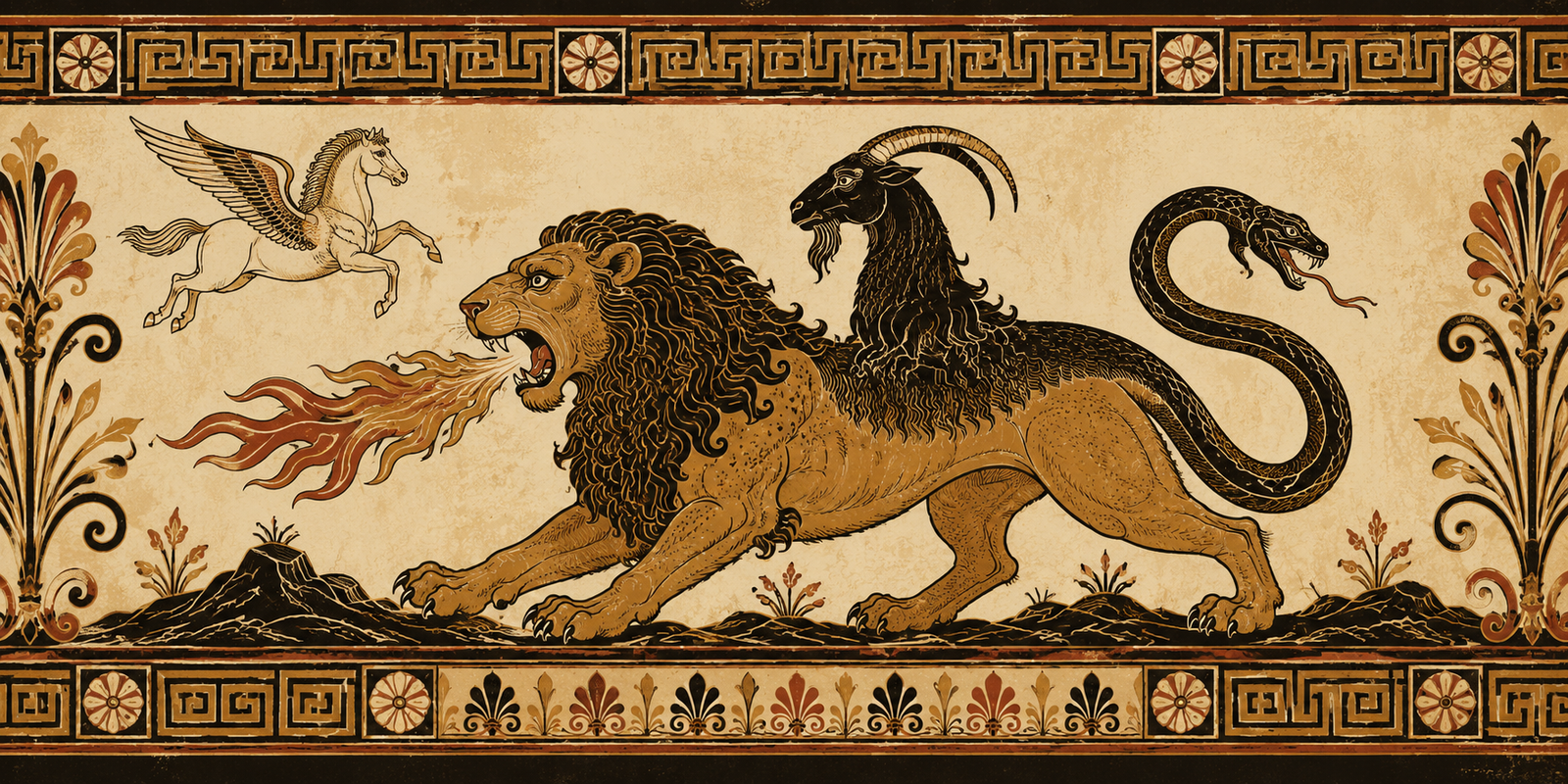

The Chimaera — A Greek Monster of Many Dangers
A child-readable Greek myth guide to the Chimaera: lion, goat, serpent, fire, and the monster’s many joined dangers. This excerpt from The Greek World shows why Bellerophon needed Pegasus, and why the Chimaera is not merely a strange animal mixture, but a precise Greek monster-sign.
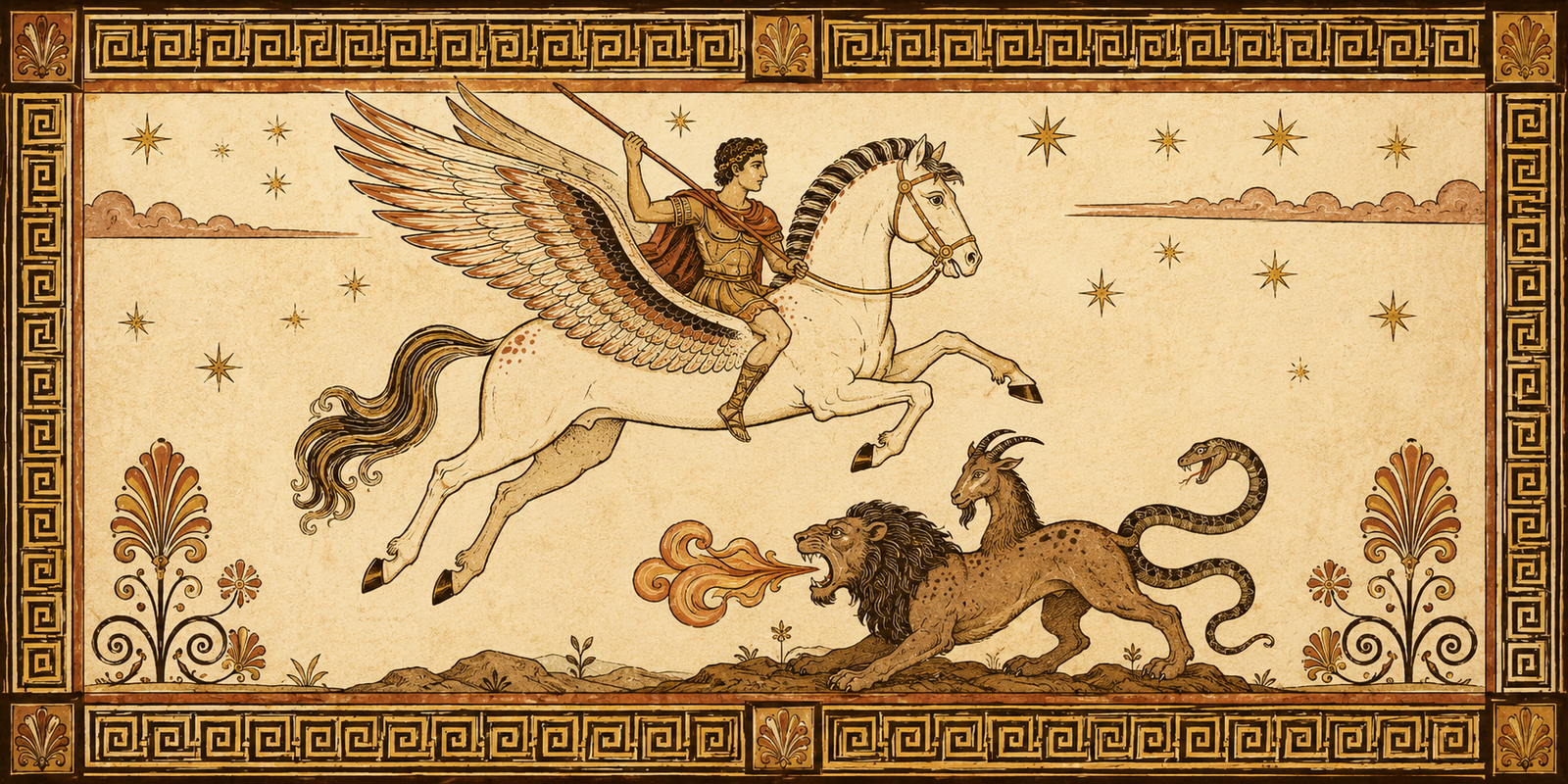

Bellerophon and Pegasus — A Greek Myth Retold for Children
A sealed message, a fire-breathing monster, a golden bridle, and the winged horse Pegasus. This Alexander Series tale retells the Greek myth of Bellerophon for serious child readers, preserving wonder, danger, courage, and the old warning hidden inside height.
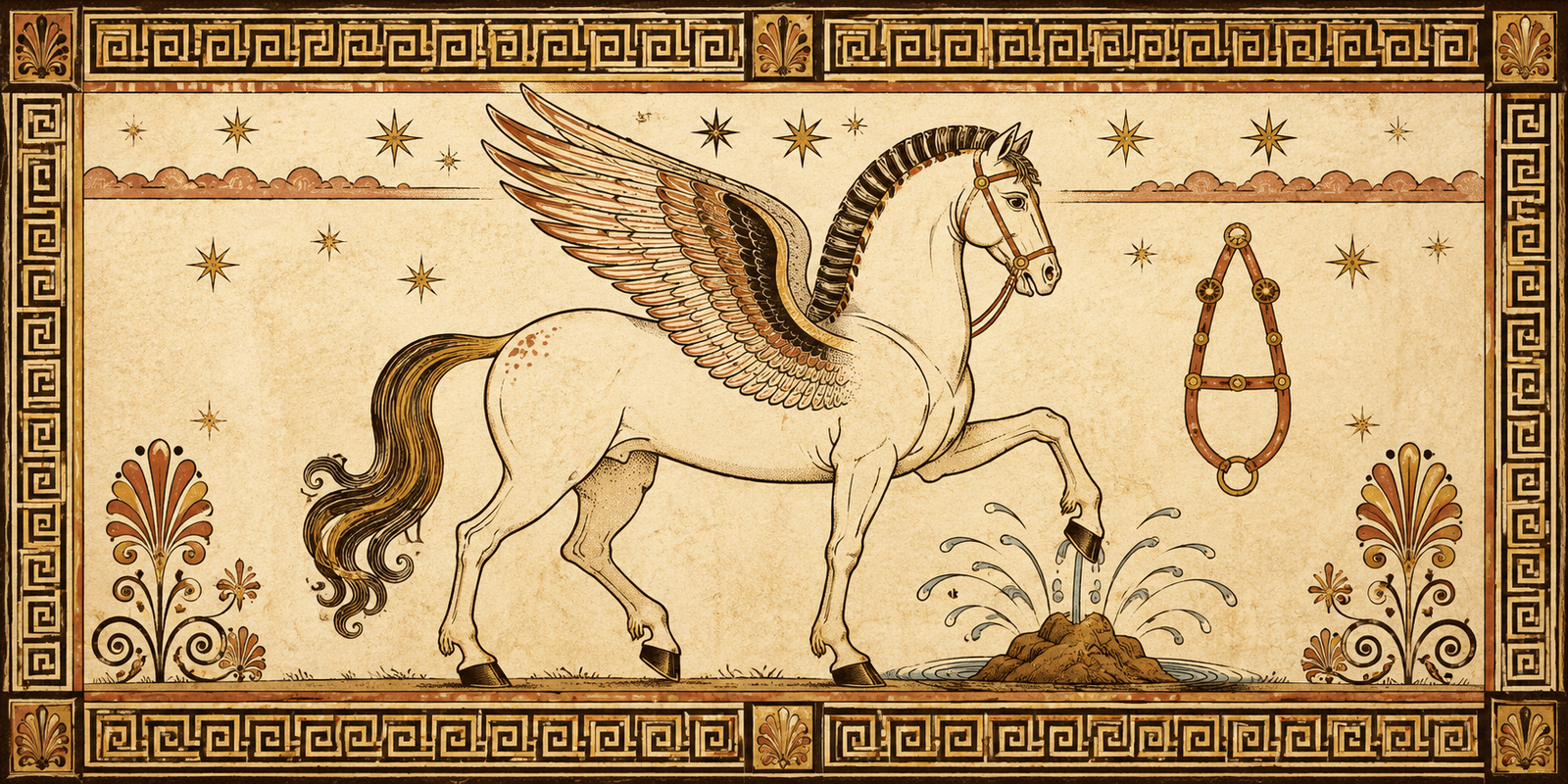

Pegasus — The Winged Horse of Greek Myth
Before Bellerophon takes the bridle, a child should know that Pegasus is not a pet, not a cloud, and not a harmless fantasy creature. This Greek World entry introduces the winged horse of Greek myth as wonder with hooves, wings, danger, and rules.
Continue Reading
If this piece found something in you, you may wish to continue the journey elsewhere.
On The Lantern Chronicles, I gather writings from Angkor, myth and legend, contemplative essays, and poetry — works shaped by silence, beauty, wonder, memory, and the deeper questions that follow us through the world.
It is a place for stone and story, reflection and vow, shadow and revelation.
You would be most welcome there.