
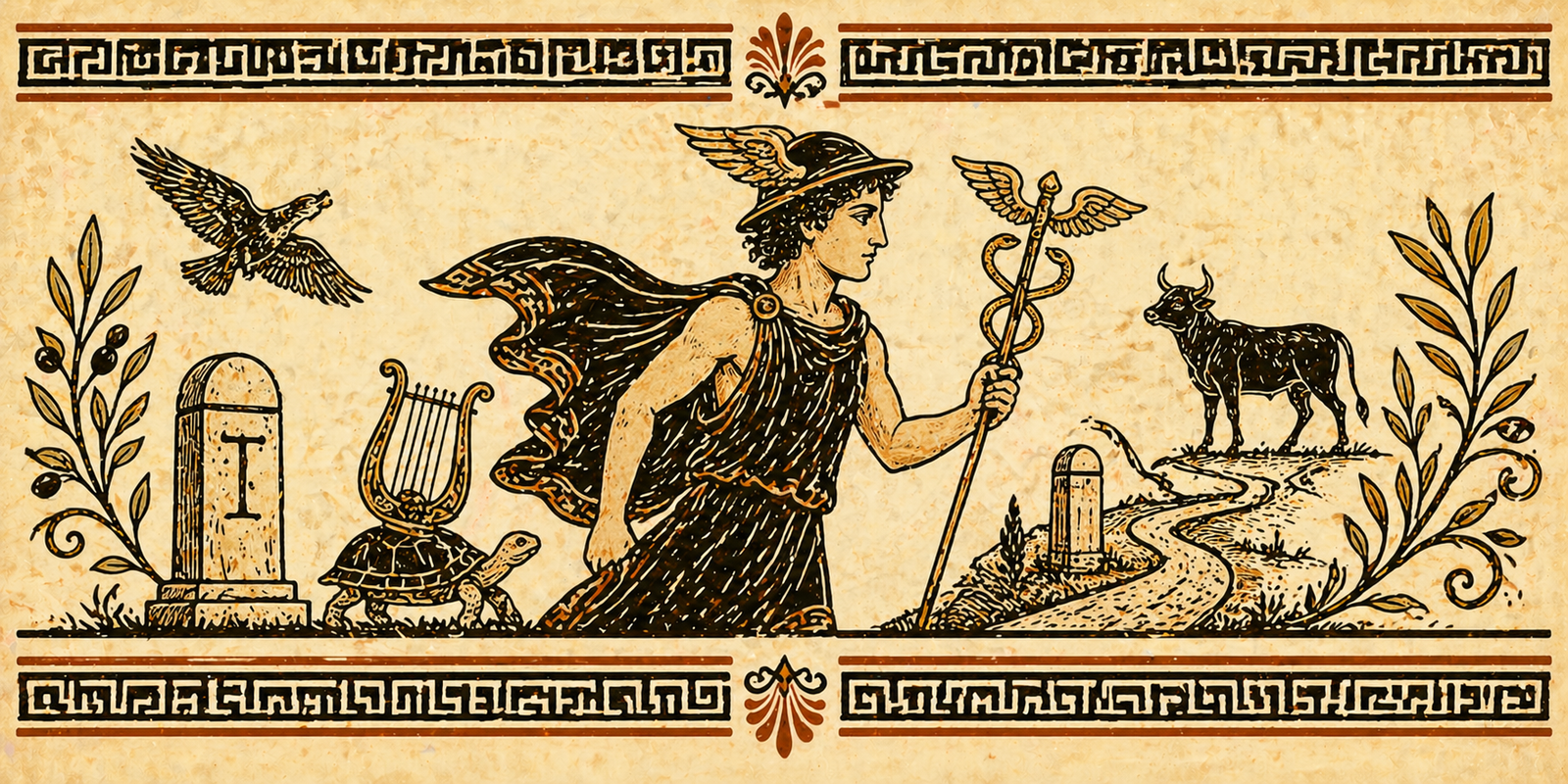

Hermes: The Road, the Message, and the Trick
Before a hero reaches the monster, someone usually has to show the way.
Before a message crosses the sea, someone must carry it.
Before a locked place is opened, someone must know the trick of the door.
That is where Hermes belongs.
This new entry in The Greek World, part of The Alexander Series, introduces children to Hermes: the quick-footed god of roads, messages, thieves, travellers, tricks, lucky escapes, and sudden changes of plan.
Hermes is one of the busiest gods in Greek myth. He moves between places that do not usually touch: Olympus and earth, city and wilderness, the living and the dead, the safe road and the dangerous one. He is the god of travellers, messengers, merchants, shepherds, thieves, roads, clever words, lucky escapes, and sudden changes of plan.
This is quite a lot of work for one god, but Hermes seems to enjoy being busy.
He is quick, sharp, charming, and not always entirely trustworthy. That does not mean he is wicked. It means that when Hermes arrives, something is probably about to move.
Hermes is the messenger of the gods.
He is the son of Zeus and Maia, and he belongs especially to roads, thresholds, journeys, bargains, tricks, and messages. He can cross boundaries other gods do not always cross. He can carry a command from Olympus, guide a traveller through danger, or lead a soul down to the Underworld.
He is also a thief.
This is not a rumour started by his enemies. One of the oldest stories about Hermes says that when he was still a baby, he stole the cattle of Apollo, hid them very cleverly, and then behaved as if he had no idea what anyone was talking about.
Apollo was not amused.
Hermes, however, was already so clever that even his trouble became useful. In that same story, he made the first lyre from a tortoise shell, and Apollo loved the instrument so much that the quarrel turned into an exchange. Hermes gave Apollo the lyre. Apollo let Hermes keep some of the honour that belonged to herds, music, and clever dealing.
This is very Hermes.
He causes trouble. Then he turns the trouble into a bargain.
Hermes is not the strongest of the gods. He is not the king. He is not the thunderer, the sea-shaker, or the great archer.
His power is movement.
He goes where others cannot go easily. He slips through the spaces between things. He appears on roads, at doorways, at crossroads, in dreams, beside travellers, and at the edges of danger. He is often shown with winged sandals, a traveller’s hat, and a herald’s staff.
A herald is someone who carries messages. In the ancient world, that mattered. Messages could begin wars, end quarrels, summon heroes, warn kings, or send someone on a terrible journey. A good messenger needed speed, memory, courage, and a certain amount of nerve.
Hermes has all of these.
He is also a guide. In some myths, Hermes leads the souls of the dead down to the Underworld. This may sound frightening, but it is also strangely gentle. Hermes does not only stand at the beginning of journeys.
He stands at the last road too.
Continue reading: Hermes at The Alexander Series on Substack.
Also in The Alexander Series
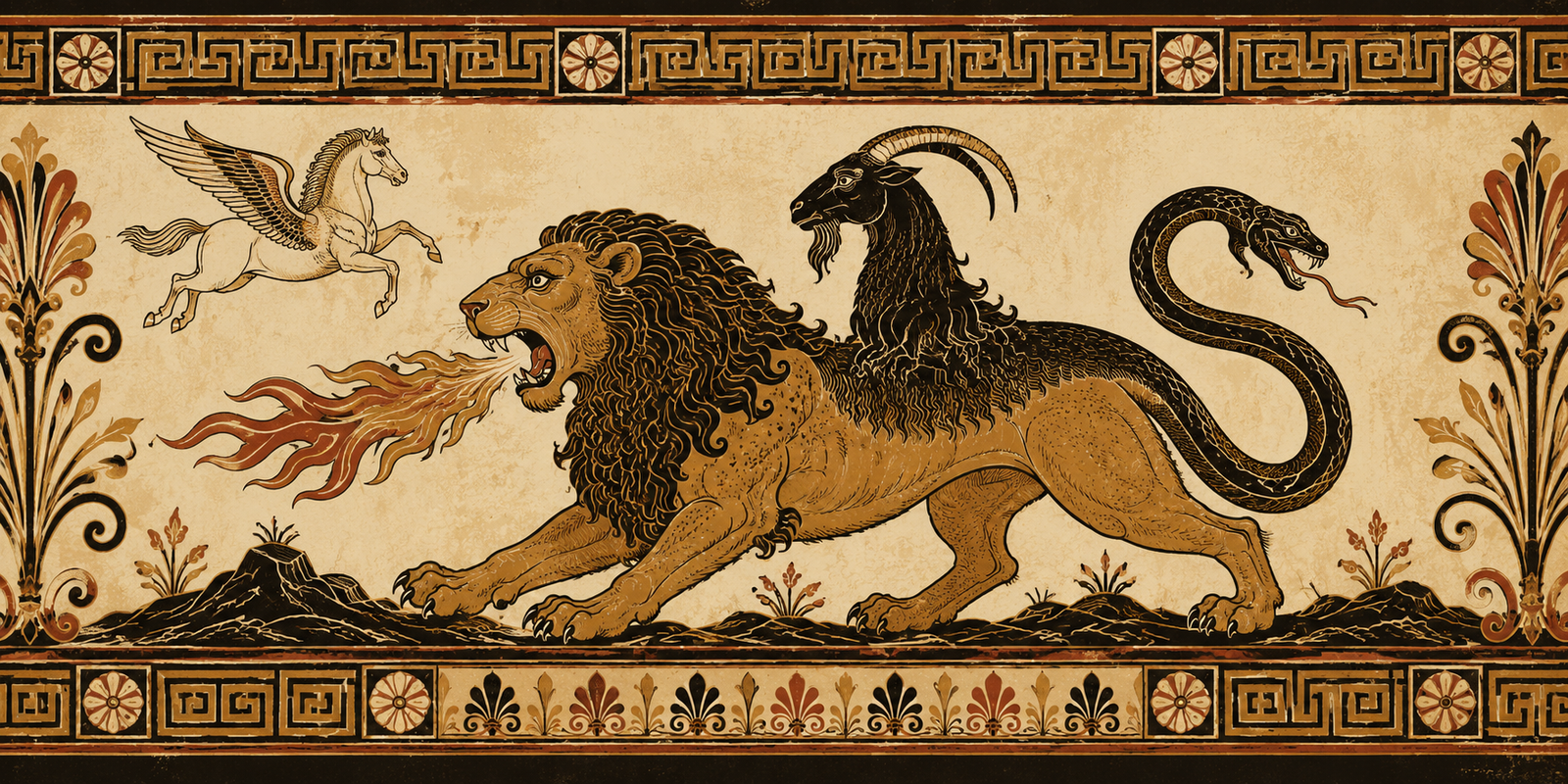

The Chimaera — A Greek Monster of Many Dangers
A child-readable Greek myth guide to the Chimaera: lion, goat, serpent, fire, and the monster’s many joined dangers. This excerpt from The Greek World shows why Bellerophon needed Pegasus, and why the Chimaera is not merely a strange animal mixture, but a precise Greek monster-sign.
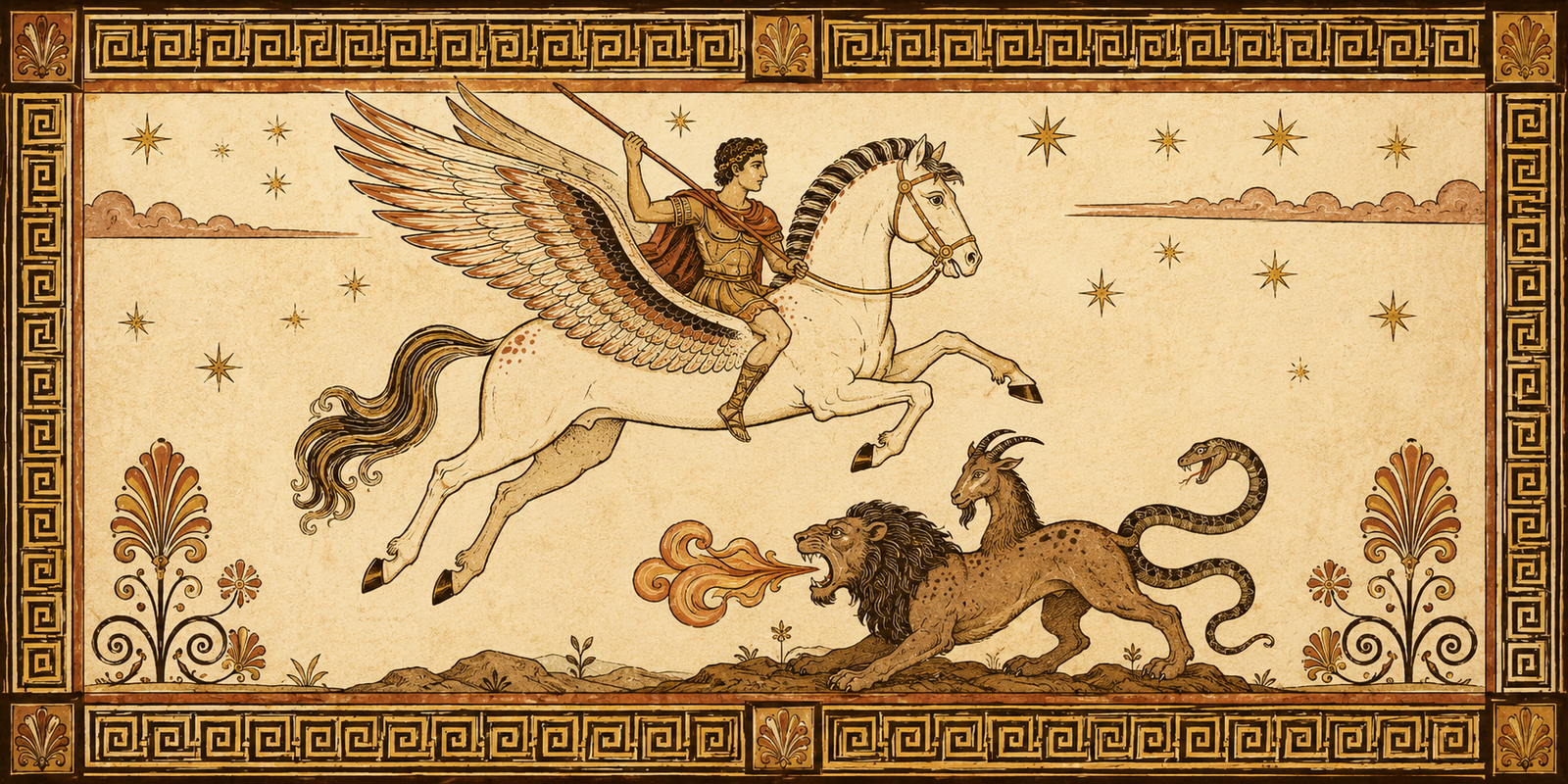

Bellerophon and Pegasus — A Greek Myth Retold for Children
A sealed message, a fire-breathing monster, a golden bridle, and the winged horse Pegasus. This Alexander Series tale retells the Greek myth of Bellerophon for serious child readers, preserving wonder, danger, courage, and the old warning hidden inside height.
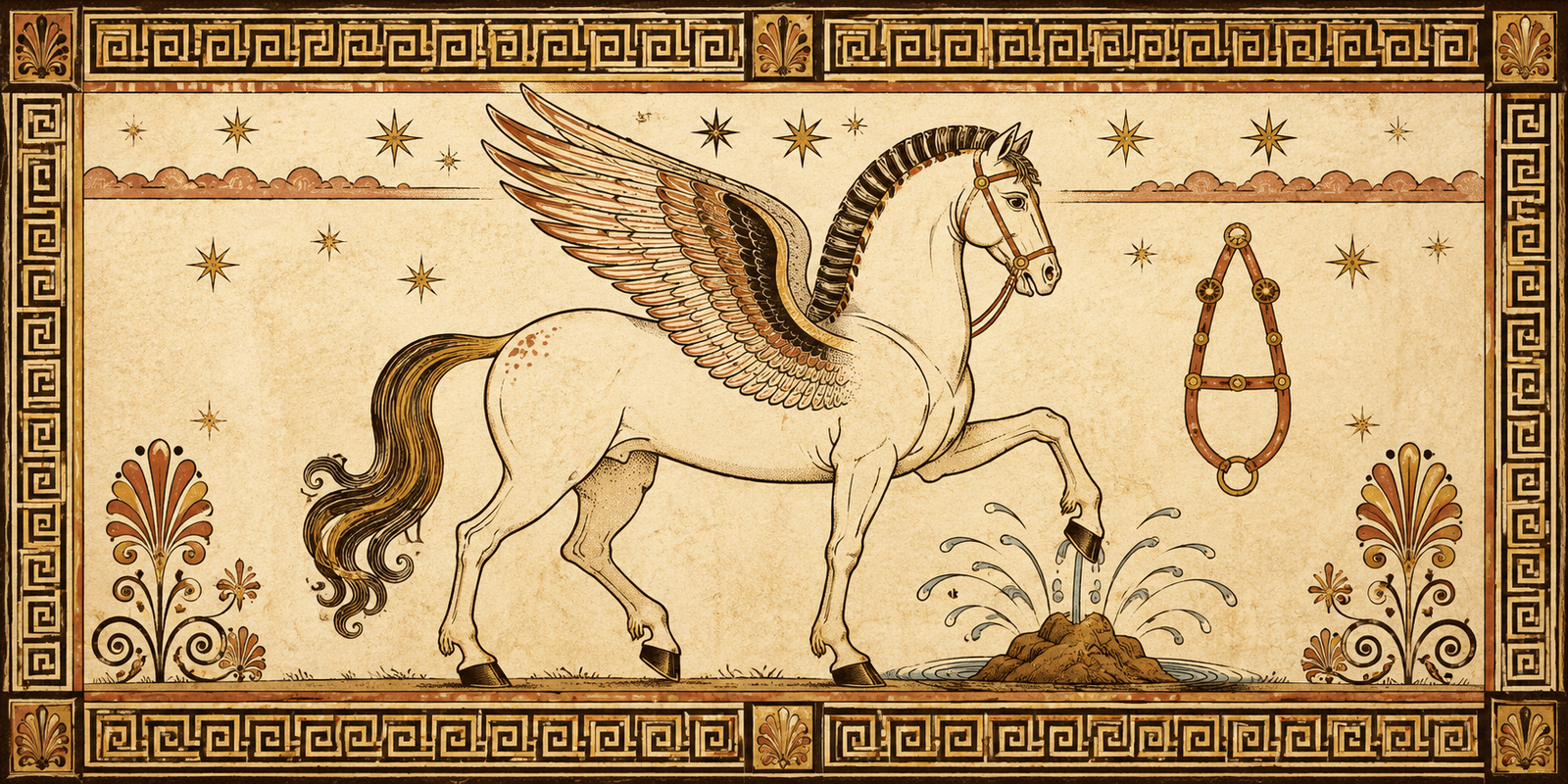

Pegasus — The Winged Horse of Greek Myth
Before Bellerophon takes the bridle, a child should know that Pegasus is not a pet, not a cloud, and not a harmless fantasy creature. This Greek World entry introduces the winged horse of Greek myth as wonder with hooves, wings, danger, and rules.
Continue Reading
If this piece found something in you, you may wish to continue the journey elsewhere.
On The Lantern Chronicles, I gather writings from Angkor, myth and legend, contemplative essays, and poetry — works shaped by silence, beauty, wonder, memory, and the deeper questions that follow us through the world.
It is a place for stone and story, reflection and vow, shadow and revelation.
You would be most welcome there.