
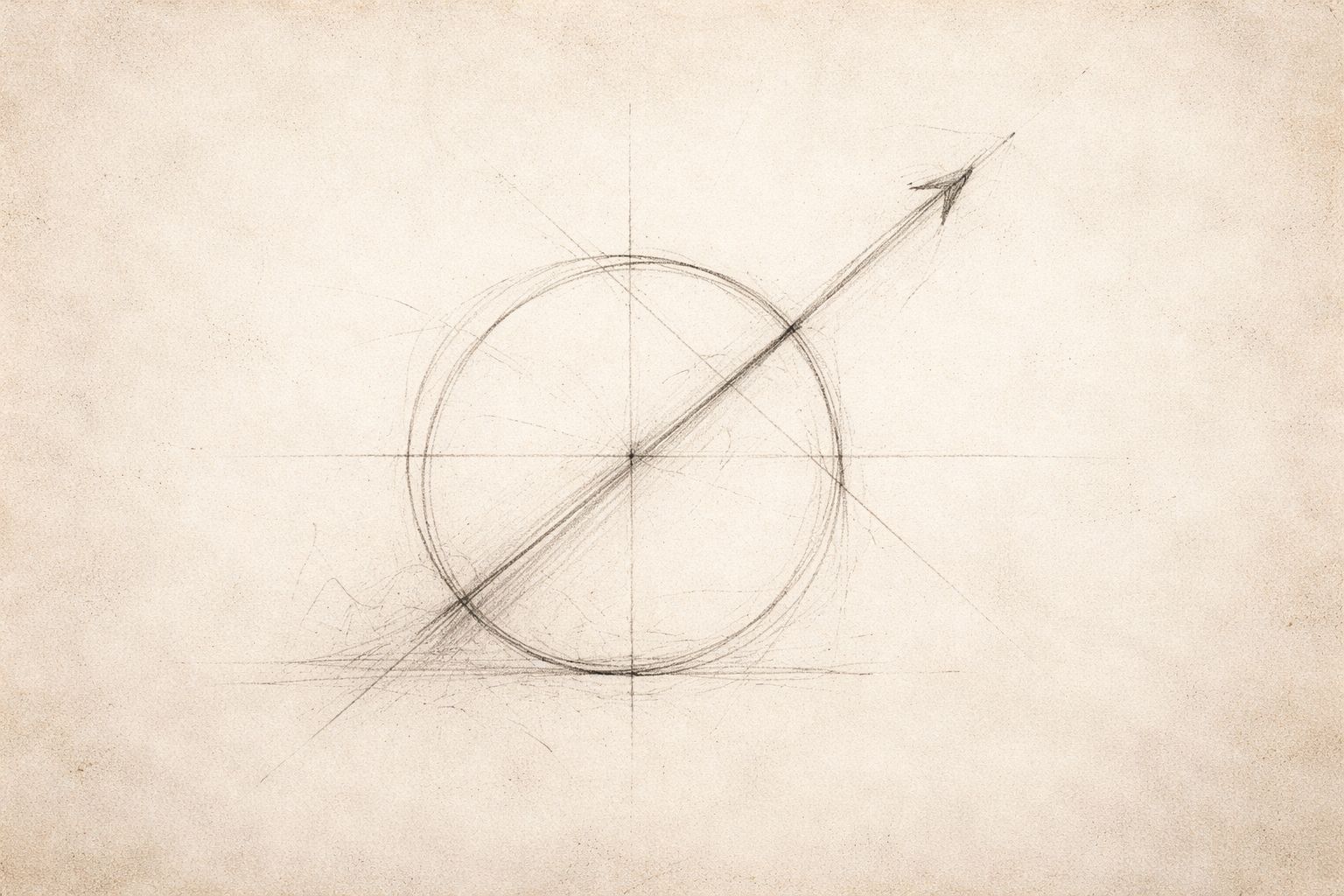

The Mercy of the Unfinished
In The Mercy of the Unfinished, Lucas Varro examines one of modern life’s quieter cruelties: the pressure to appear complete, resolved, smooth, and untouched. The essay asks whether perfection, as it is commonly imagined, is not fullness at all, but a fantasy of exemption from life.
This is a Living Way essay on imperfection, repair, beauty, and the dignity of what has entered time. It does not romanticise damage or sentimentalise brokenness. Instead, it asks what changes when we stop confusing smoothness with truth, and begin to recognise that much of what we value most has acquired its depth through pressure, use, revision, and repair.
One of the quieter humiliations of modern life is that so many people have come to experience themselves not as living beings, but as things on display. They do not merely want to grow. They want to arrive. They want their faces, homes, work, bodies, even their inner lives to bear the finished look of something resolved.
This seems, at first, like a matter of pressure or vanity. It is more than that. It rests on a false idea of value, and a still deeper falsehood about perfection itself.
When most people imagine perfection, they imagine smoothness: a life without visible strain, a face untroubled by time, a room without discord, a self at last integrated and clear. Perfection appears as completion without remainder. Nothing protrudes. Nothing jars. Nothing betrays the weather of becoming.
But nearly everything we truly value in human life takes form under precisely those conditions perfection excludes. Friendship deepens through awkwardness, misunderstanding, repair. Love becomes real not when it escapes disappointment, but when it survives it. Thought ripens by discovering where it has been glib. A face acquires legibility through time. Much of what we call depth is simply the form given to difficulty once it has been borne long enough.
A harder truth follows. Perfection, in the strict sense, would require exemption from life.
A thing could remain perfect only if nothing happened to it that left a mark. It would need immunity to use, to accident, to time, to dependence, to pressure. It could not ripen, because ripening alters form. It could not deepen, because deepening implies strain. It could not become intimate, because intimacy always leaves traces. Perfection, then, is not fullness. It is untouchability.
That is why perfectionism, for all its glamour, so often feels sterile. It is not always a love of excellence. More often it is a fantasy of non-participation: the wish to remain unmarked by the conditions of being alive.
Seen from there, the attraction of imperfection ceases to be a taste and becomes a recognition. One begins to value the imperfect not because rough things are charming, but because only what has entered time can acquire the gravity of the real.
There is a difference between the flawless and the beautiful. The flawless is untouched. The beautiful has been touched, and has not been annulled by it.
A pristine bowl may be admired. A repaired bowl may be understood. That difference is not sentimental. The repaired thing now bears the history of its own vulnerability. It has passed through fracture without being cast out of the human world. It has not been restored to innocence. It has been given continuity.
Continue reading: The Mercy of the Unfinished at The Living Way on Substack.
Also in The Lantern Chronicles

The Mirror, the Ledger, and the Box
Three ordinary acts—tending a mirror, keeping a ledger, reading a page—draw three voices into the same unseen machinery. In this original flash-fiction triptych by Lucas Varro, hunger becomes debt, witness becomes participation, and attention itself acquires a price. Enter through Mirror Hunger, where one rule has always been enough: do not lean close.

What the Hand Knows
When does effort become interference? This contemplative essay from The Living Way explores wu wei, attention and the human compulsion to force—whether in work, conversation, ambition or the private demand that reality unfold according to plan.

The Beauty Time Is Allowed to Make
A literary-philosophical essay on wabi-sabi, handmade kozo paper, and the modern demand for seamlessness. Beginning with red chalk meeting a resistant surface, Lucas Varro asks whether value must arrive untouched—and whether care becomes destructive when it begins erasing the visible history of objects and human lives.
Continue Reading
If this piece found something in you, you may wish to continue the journey elsewhere.
On The Lantern Chronicles, I gather writings from Angkor, myth and legend, contemplative essays, and poetry — works shaped by silence, beauty, wonder, memory, and the deeper questions that follow us through the world.
It is a place for stone and story, reflection and vow, shadow and revelation.
You would be most welcome there.