

Come Waste Your Time With Me
In Come Waste Your Time With Me, Lucas Varro considers one of love’s quietest mercies: the gift of time that does not have to justify itself. In a world that asks every hour to become useful, legible, productive, or improving, the essay turns toward the human need for reprieve — for presence without proof, companionship without performance, and an afternoon allowed simply to be.
This is a Living Way essay on love, presence, usefulness, and the strange redemption of so-called wasted time.
There are people with whom an hour feels spent, and people with whom it feels given back.
The distinction is not moral. It does not separate the worthy from the frivolous, or the ambitious from the idle. It is stranger than that. Some company leaves behind the faint sensation of life having been converted into use. Even pleasure can do this. The evening was enjoyable, perhaps even memorable, but it has entered the ledger. It became an occasion, an outing, a thing one did. Other company alters the texture of time itself. The hour does not seem consumed. It seems released.
Perhaps that is why the phrase wasting time with you can sound, in the right voice, like one of the most tender things a person can say.
On paper it ought to fail. “Waste” is an ugly word, managerial and faintly accusatory. It belongs to reprimand, not devotion. It suggests misuse, drift, a lapse in seriousness. Yet love has a way of taking the hard words of the world and loosening them until they tell the truth. What would be an insult elsewhere becomes, here, a form of reverence. I would waste my time with you. I would let it go. I would stop asking it to defend itself. I would allow the afternoon to pass without forcing it to become anything more than an afternoon in your presence.
This is not laziness disguised as romance. It touches something deeper. Most of us live under an unspoken pressure to make our hours answerable. Even rest now arrives with a brief. Recover. Reset. Return stronger. It is hard to find a corner of life that has not been asked, gently or otherwise, to explain what it is for.
Under that pressure, one begins to feel that a good day is a day that can account for itself. It moved something forward. It produced, clarified, advanced, improved. Even happiness is easier to respect when it leaves evidence. A photograph. A milestone. A finished plan. We trust what can be shown.
So much of what is most necessary cannot be shown in that way.
Late afternoon. Two cups on the table. Nothing unresolved, and nothing achieved. A patch of light moving slowly across the floorboards. One of you says something trivial. The other answers. Then neither speaks for a while. The kettle has long since gone quiet. Outside, a motorbike passes, then another. A dog barks somewhere further off. The room does not deepen into revelation. No great confession arrives. Nothing happens except that the hour keeps going, and neither of you asks anything more of it.
What is this kind of time?
It does not announce itself as important. It would make poor material for the world’s summaries. Yet many lives, examined honestly, are held together less by their dramatic moments than by these small clearings in which the demand to become someone briefly falls away. Not ecstasy. Not accomplishment. Just the soft suspension of the need to turn living into something legible.
That may be one of love’s least discussed mercies.
Continue reading: Come Waste Your Time With Me at The Living Way on Substack.
Also in The Lantern Chronicles

The Stranger Is Where Inheritance Is Weighed
A Living Way essay on faith, inheritance, empire, and moral humility. The Stranger Is Where Inheritance Is Weighed asks how the stories that form us can become either mercy or contempt — and why the true test of any tradition is whether it can still see the stranger.
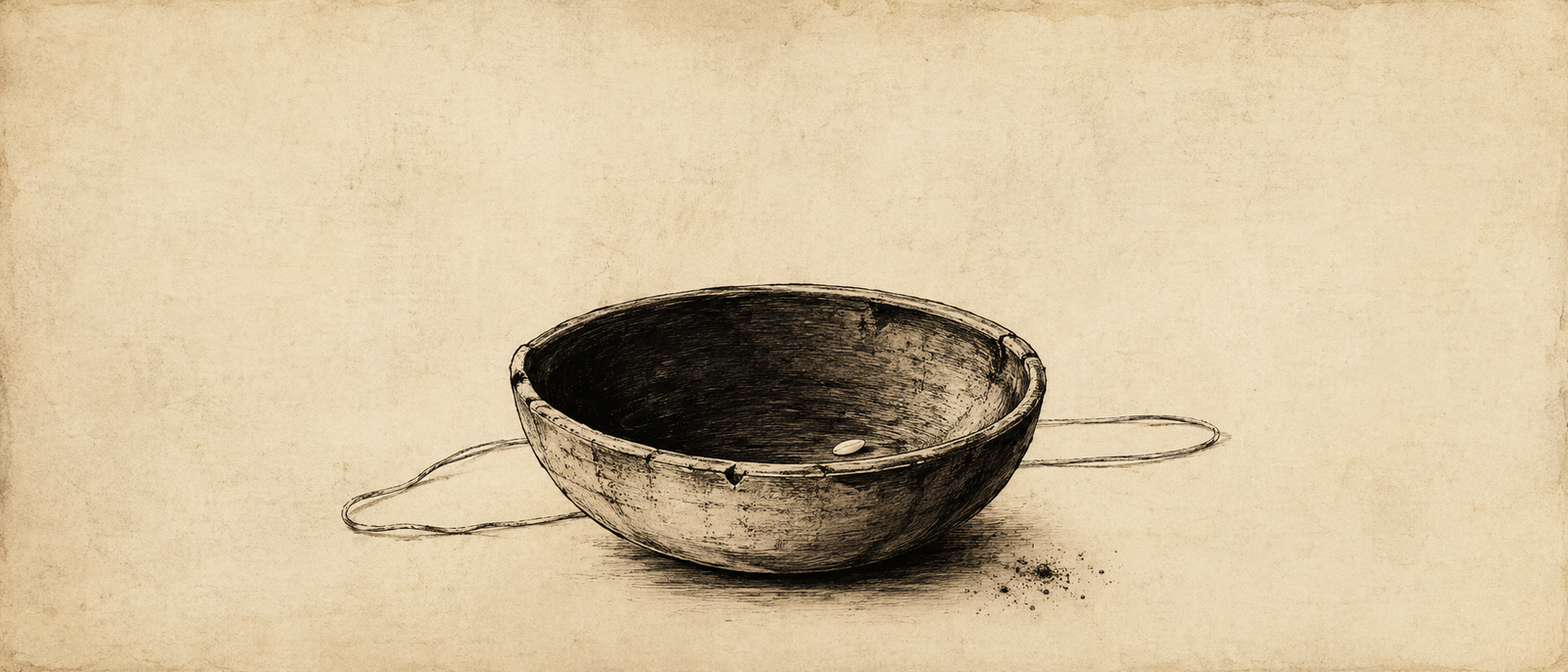

The Beggar God: A Bhikshatana Retelling
A hearthlit retelling of Bhikshatana: Shiva enters the forest as a barefoot beggar, carrying only ash, silence, and an empty bowl. In this Fires of the Old World tale, spiritual pride is not defeated by argument or spectacle, but revealed by what the hand cannot yet release.
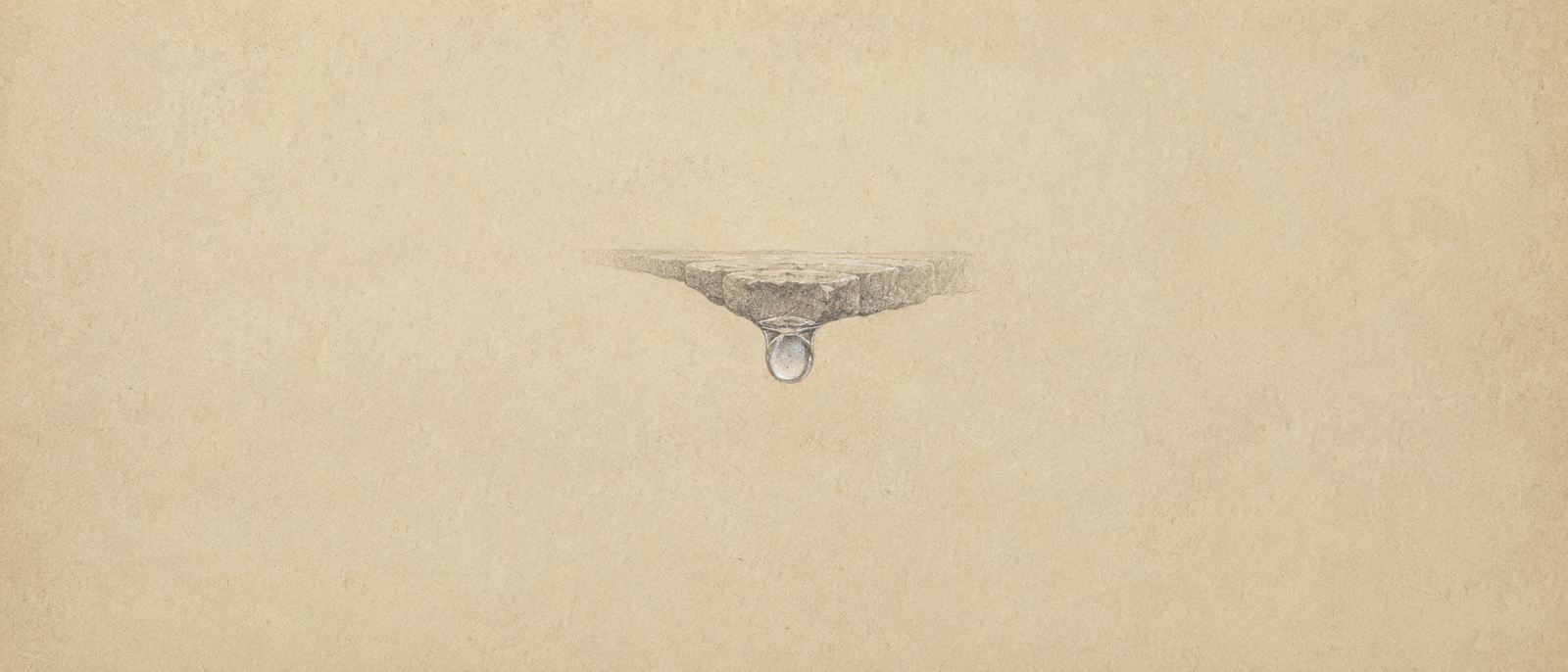

At the Lip — A Poem from The Vow
A poem from The Vow on a waterfall, a river reaching the edge, and the stillness that gives falling its shape. At the Lip stays with one overwhelming natural image until movement, constraint, and scale become almost unbearable in their precision.
Continue Reading
If this piece found something in you, you may wish to continue the journey elsewhere.
On The Lantern Chronicles, I gather writings from Angkor, myth and legend, contemplative essays, and poetry — works shaped by silence, beauty, wonder, memory, and the deeper questions that follow us through the world.
It is a place for stone and story, reflection and vow, shadow and revelation.
You would be most welcome there.