
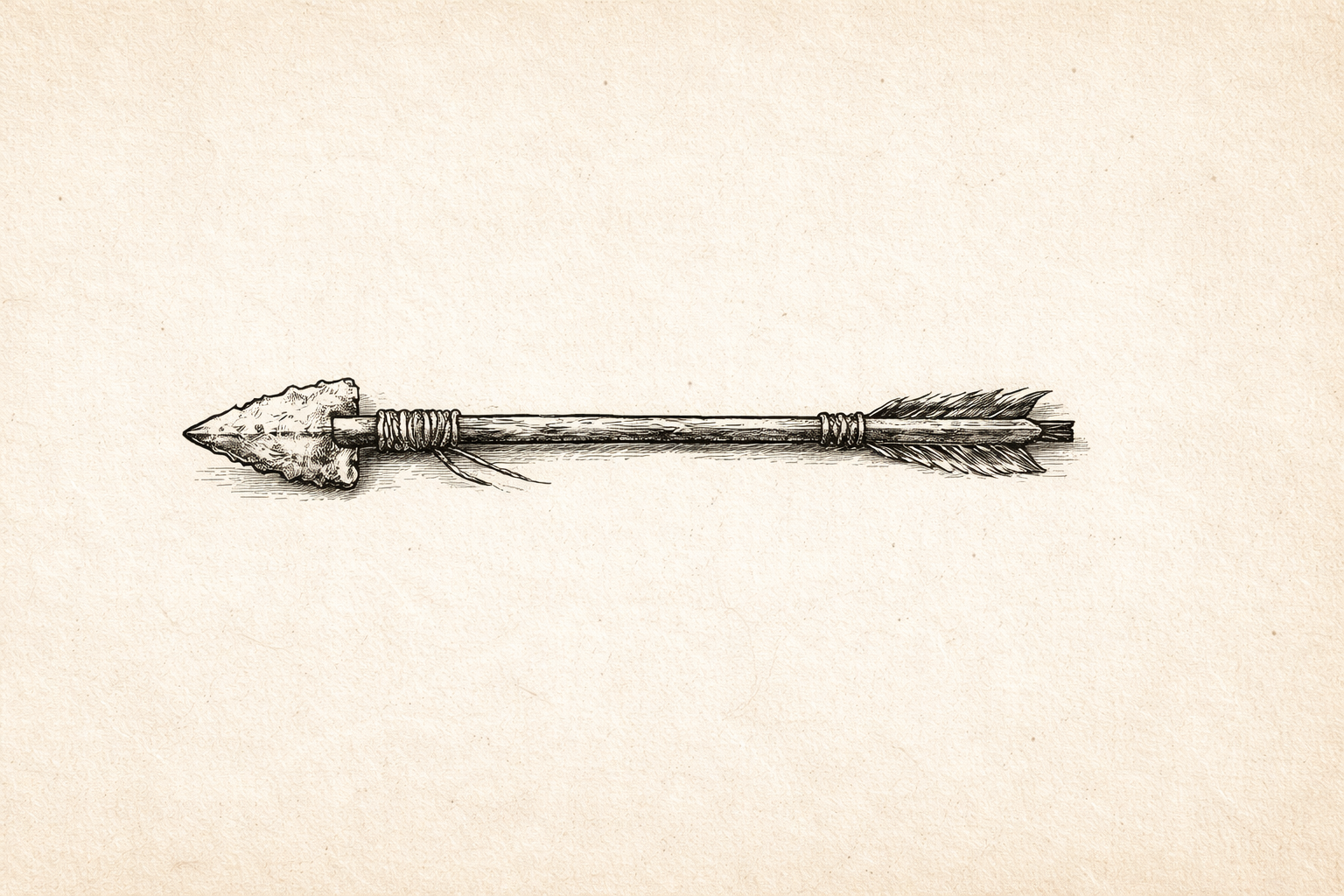

Fires of the Old World VII — The First Arrow
In this tale from Fires of the Old World, Rama is not yet the great king of memory, nor the figure held by centuries of devotion. He is still a boy at the edge of childhood, called from the palace into the forest, where righteousness first asks for blood. The First Arrow is a hearthlit retelling of Rama and Tataka: a story of duty, hesitation, consequence, and the small broken things by which a life records its crossing.
The children had drawn close before the tale began, their heels on the warm reed mat, the lamp making small moons on their knees. Outside, night insects stitched at the dark. Inside, sesame oil breathed from the clay dish. Hearth-smoke lay under the rafters, and the cool evening air had come in through the bamboo slats and settled around their ankles. The old woman turned the wick with a wetted finger. The flame bent, then stood, and made a little gold path across the floor.
“Listen,” she said. “This was before kings grew heavy with crowns. This was when a bow could still fit a boy’s hand, and the forest knew his scent.”
She had a measuring cord beside her, coiled like a resting snake. One child touched it and drew his hand back.
“In those days,” she said, “there was a prince who still slept like a child, one arm above his head, the mark of the pillow still on his cheek when he rose. His name was Rama.”
The sage came at dawn.
The palace had not yet grown loud. Dew lay on the stone steps. In the eastern basin a lotus had just opened. Rama was in the yard with his brother Lakshmana, their fingers sore from the bowstring, when the guards lowered their spears and let the forest-man pass.
He was old, but not frail. Bark cloth hung from his shoulders. Ash lay on his skin. It did not make him look lesser. It made him look as though fire had once tried to keep him and failed. His hair was matted. His eyes were bright under his brow. When he stood before the king, even the hanging banners seemed to grow still.
He did not ask for gold. He did not ask for land. He asked for the boy.
The court shifted. The king’s hand tightened on the lion arm of his chair.
“My son is young,” he said.
The sage looked at Rama, not at the king. “So is the moon when it first rises.”
There were rites to be kept in the deep forest, he said. Fires to be fed. Offerings to be laid down with clean hands. But the rites had been broken again and again by one who haunted that place, a woman in shape and a storm in hunger. Tataka. Her name moved through the hall like cold air under a door.
Some men lowered their eyes.
The king offered soldiers. Chariots. Hunters with seasoned hands. The sage refused them all.
“I need the hand that has not yet learned to shake after the deed,” he said.
The words struck Rama like cold water. He had hunted deer in the royal preserves. He had split reeds at thirty paces. He had loosed shafts into straw men until the straw showed daylight. But this was no deer. No lesson. No bright morning with servants waiting nearby and sweet water in the shade.
This was a forest with a name inside it.
Continue reading: Fires of the Old World VII — The First Arrow at The Lantern Chronicles on Substack.
Also in The Lantern Chronicles

The Stranger Is Where Inheritance Is Weighed
A Living Way essay on faith, inheritance, empire, and moral humility. The Stranger Is Where Inheritance Is Weighed asks how the stories that form us can become either mercy or contempt — and why the true test of any tradition is whether it can still see the stranger.
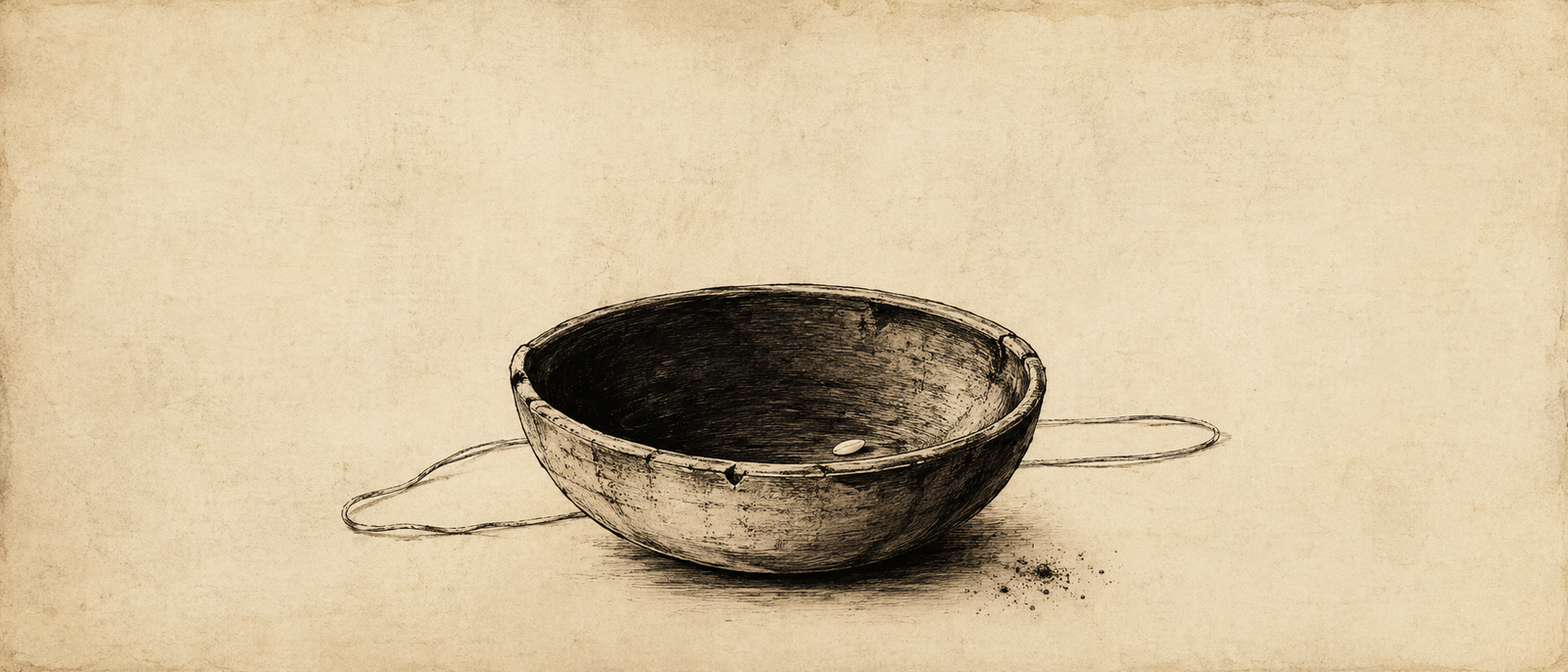

The Beggar God: A Bhikshatana Retelling
A hearthlit retelling of Bhikshatana: Shiva enters the forest as a barefoot beggar, carrying only ash, silence, and an empty bowl. In this Fires of the Old World tale, spiritual pride is not defeated by argument or spectacle, but revealed by what the hand cannot yet release.

At the Lip — A Poem from The Vow
A poem from The Vow on a waterfall, a river reaching the edge, and the stillness that gives falling its shape. At the Lip stays with one overwhelming natural image until movement, constraint, and scale become almost unbearable in their precision.
Continue Reading
If this piece found something in you, you may wish to continue the journey elsewhere.
On The Lantern Chronicles, I gather writings from Angkor, myth and legend, contemplative essays, and poetry — works shaped by silence, beauty, wonder, memory, and the deeper questions that follow us through the world.
It is a place for stone and story, reflection and vow, shadow and revelation.
You would be most welcome there.