
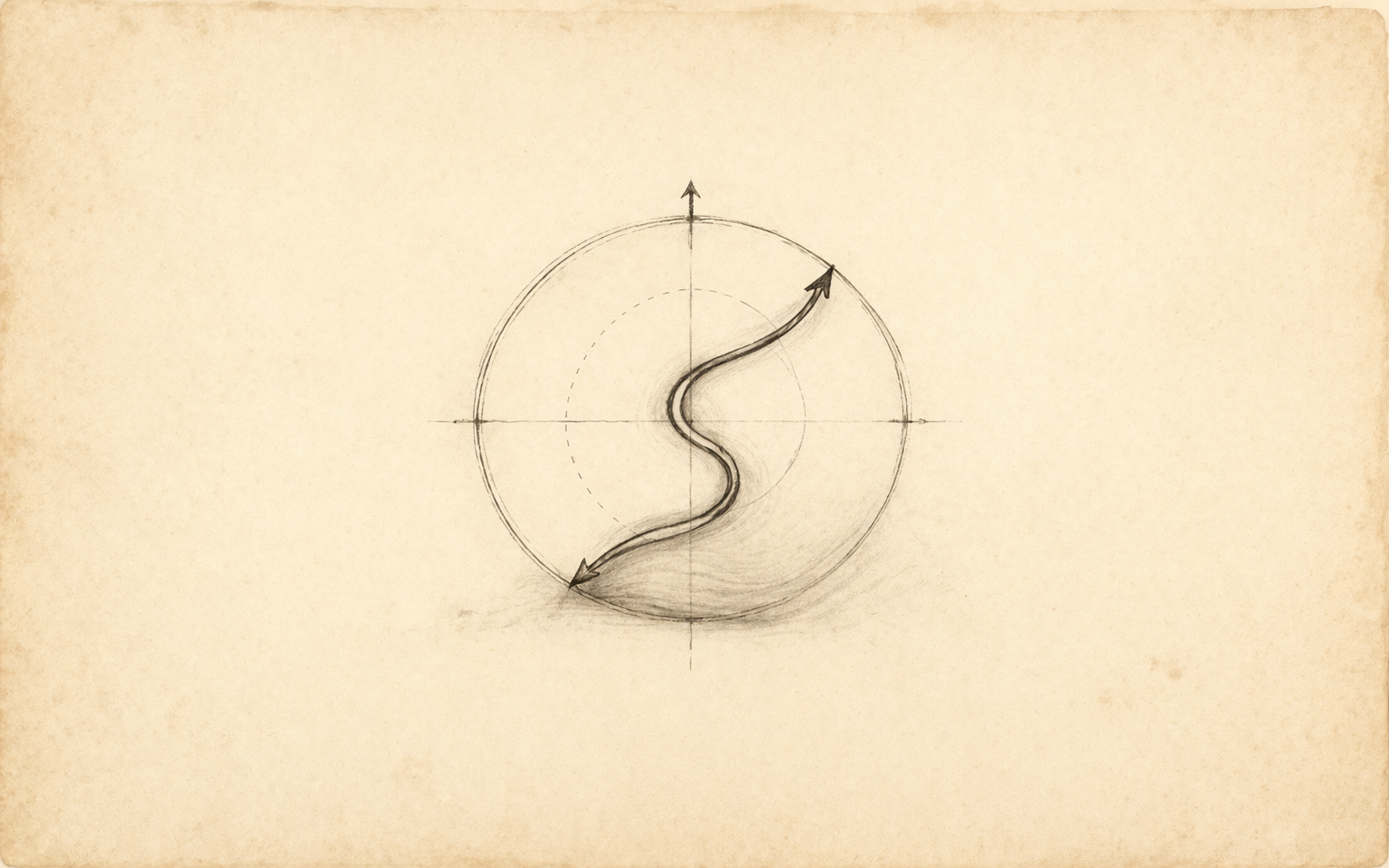

The Architect and the River
In The Architect and the River, Lucas Varro turns to Confucius and Laozi as guardians of two permanent human needs: form and flow, discipline and release, cultivation and unforcing. The essay asks why this ancient tension still feels so intimate to modern life — and why our own age may require both remedies at once.
This is a Living Way essay on human order, moral formation, spiritual strain, and the difficulty of living without becoming either shapeless or hard.
Some lives fail for lack of form. Others fail from an excess of effort.
That may be the deepest reason the old tension between the architect and the river still remains alive. It is not merely a disagreement between two philosophies. It is a wound in human nature. We are creatures who need shaping, yet are damaged by too much strain. We require discipline, and we require ease. We must be taught how to live, yet something in us begins to wither when life becomes nothing but management, correction, and performance.
When a world starts to lose its balance, this tension comes into view. One kind of person looks at disorder and longs for stronger beams: clearer duties, steadier speech, more faithful rituals, habits able to hold human beings upright when appetite and confusion begin to pull them apart. Another looks at the same disorder and suspects that the beams themselves have become part of the suffocation. He sees too much tightening of the hand, too much anxious design, too much moral display. He thinks the cure lies not in adding structure, but in relinquishing the kinds of effort that have made life dry, brittle, and false.
The old Chinese world gave these two instincts their most memorable figures. Confucius and Laozi remain so near one another in the mind because they seem to stand before the same civilisational crisis and turn towards it from opposite ends. Both seek harmony. Both refuse chaos. Both ask what it means for a human life to come into right relation with what is real. Yet one moves towards that end through form, the other through release; one through cultivation, the other through recovery; one by shaping life, the other by ceasing to over-shape it.
Confucius begins from a severe and lasting truth: human beings do not become trustworthy by accident. We are not saved by vague sincerity. We are formed by repetition, by example, by the small disciplines through which desire is educated and character slowly made durable. A society depends not only on good intentions, but on enacted recognitions: how one speaks, how one honours parents, how one bears responsibility, how one grieves, how one receives a guest, how one restrains the self before it becomes dangerous to others. Ritual, in this vision, is not dead theatre. It is one of the ways value takes bodily form.
There is nothing quaint about this. Every serious life knows it. Love that has no discipline becomes mood. Freedom that has no shape becomes drift. Public speech that has no standard becomes noise. A people do not decay only through spectacular evil. They decay when words lose weight, when roles become hollow, when no one knows any longer what is owed. Confucius understands that moral life needs vessels. Without form, much of what is finest in us runs out through the cracks.
Laozi begins from a different severity. He sees how quickly the attempt to improve life becomes another mode of estrangement. The more agitated a civilisation grows, the more rules it generates. The more it loses touch with what is simple, proportionate, and alive, the more compensation appears in the form of systems, declarations, moral effort, and force. Laozi distrusts this compensatory energy. He hears strain inside the rhetoric of virtue. He sees that a world obsessed with managing itself may already be far from the source of order.
His answer is not passivity, but unforcing. Not collapse, but attunement. Not the refusal to act, but the refusal to act from that inner violence which always wishes to impose, tighten, and master.
Continue reading: The Architect and the River at The Living Way on Substack.
Also in The Lantern Chronicles

The Stranger Is Where Inheritance Is Weighed
A Living Way essay on faith, inheritance, empire, and moral humility. The Stranger Is Where Inheritance Is Weighed asks how the stories that form us can become either mercy or contempt — and why the true test of any tradition is whether it can still see the stranger.
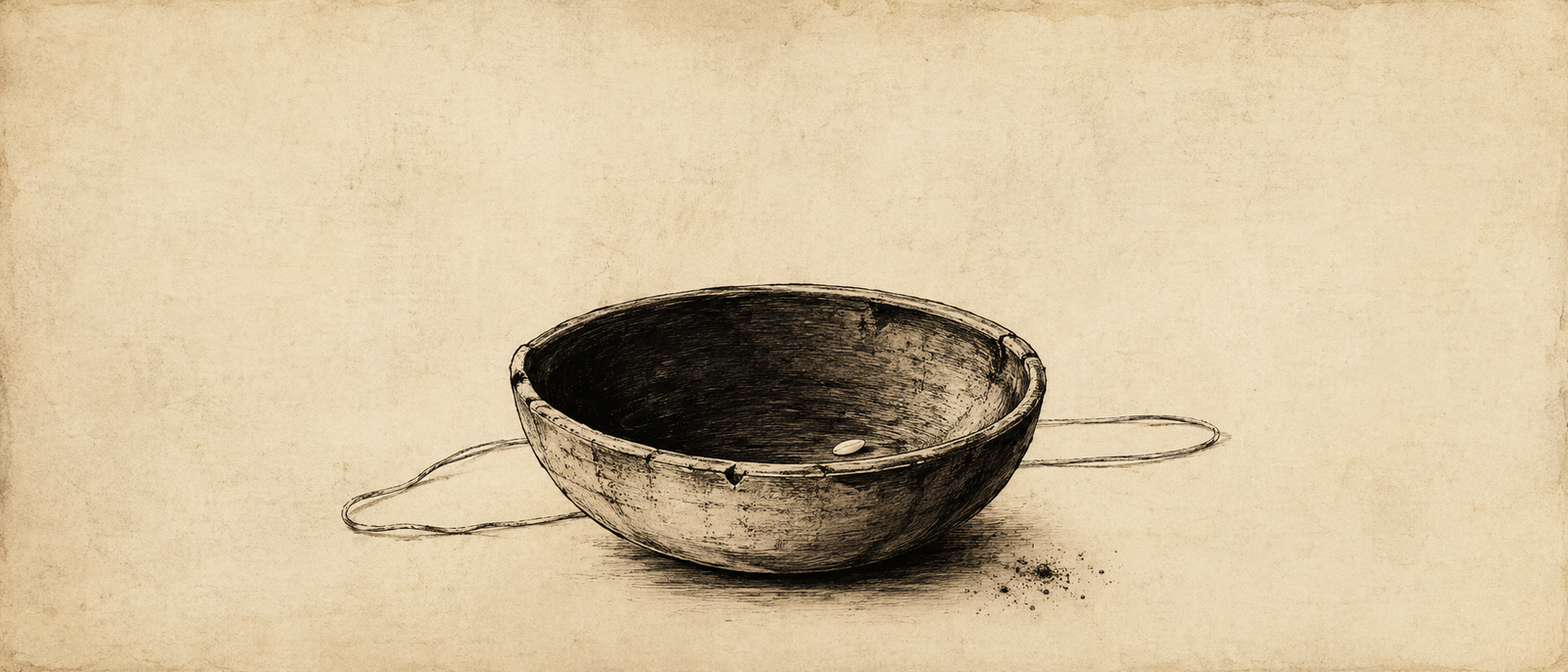

The Beggar God: A Bhikshatana Retelling
A hearthlit retelling of Bhikshatana: Shiva enters the forest as a barefoot beggar, carrying only ash, silence, and an empty bowl. In this Fires of the Old World tale, spiritual pride is not defeated by argument or spectacle, but revealed by what the hand cannot yet release.

At the Lip — A Poem from The Vow
A poem from The Vow on a waterfall, a river reaching the edge, and the stillness that gives falling its shape. At the Lip stays with one overwhelming natural image until movement, constraint, and scale become almost unbearable in their precision.
Continue Reading
If this piece found something in you, you may wish to continue the journey elsewhere.
On The Lantern Chronicles, I gather writings from Angkor, myth and legend, contemplative essays, and poetry — works shaped by silence, beauty, wonder, memory, and the deeper questions that follow us through the world.
It is a place for stone and story, reflection and vow, shadow and revelation.
You would be most welcome there.