
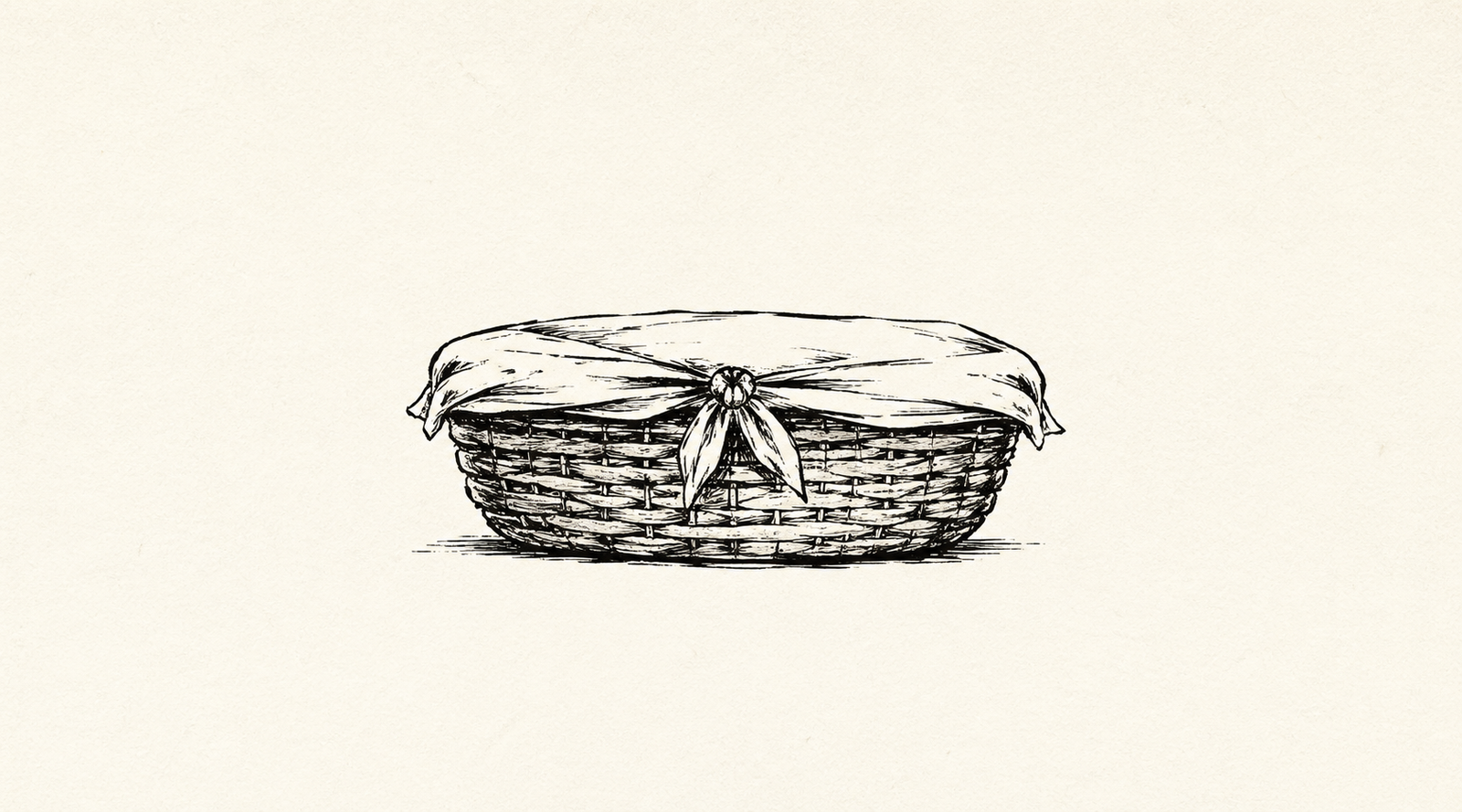

Fires of the Old World XIII — The Child Like a Secret
In this tale from Fires of the Old World, Krishna’s birth is told by lamplight: prophecy, prison, rain, river, serpent, and a sleeping child carried beyond the reach of fear. The Child Like a Secret does not begin with splendour alone, but with chains, a mother’s silence, a father’s trembling hands, and the midnight passage by which the world is quietly changed.
The old woman trimmed the lamp with two careful fingers, and the small room filled with sesame oil, warm smoke, and the cool breath of rain.
Outside, the night leaned against the shutters.
The child beside her had been fighting sleep for an hour. His hair smelt of milk and wet leaves. He watched the flame bend, straighten, bend again.
“Tell me one more,” he said.
The old woman smiled without showing her teeth.
“One more, then. But softly. This is a tale from a night when even the gods listened.”
In the city of Mathura there was a king named Kamsa, and fear sat beside him like a second throne.
He had heard a voice from the sky on the day his sister rode from her wedding. The voice spoke only once, and its words entered him like cold iron. The eighth child of Devaki would bring his death.
So Kamsa took his sister and her husband, Vasudeva, and shut them behind stone.
He gave them walls instead of a house. He gave them chains instead of garlands. He gave them guards instead of kin.
One child came.
Kamsa counted.
Another came.
Kamsa counted.
The prison learnt the sound of birth, and after birth, silence.
Six times Devaki held life against her breast. Six times the king came down with fear in his hands. The lamps burned low. The chains did not speak. Vasudeva stood near her and could not break the world.
When the seventh child stirred beneath Devaki’s heart, the night changed.
No guard saw it. No chain felt it. No door remembered it.
The child slipped from danger as a flame slips from one wick to another. He was carried by unseen power to Rohini, safe beyond Kamsa’s reach. In the prison Devaki’s womb fell still, and the guards whispered that sorrow had done its work.
Kamsa believed them.
Fear often believes what helps it sleep.
In another village, across the river, cows breathed in their stalls and the rain gathered on thatch. Nanda’s house lay in the dark. Yashoda slept with one hand open beside her, as though waiting to receive what the night would place there.
A lamp burned near her bed.
Its flame was small, but it did not die.
The eighth child chose midnight.
Clouds covered the moon. The city slept uneasily. In the prison, the stones were wet with the breath of the storm.
Devaki bent over herself, and Vasudeva knelt beside her. They had no cradle. They had no women of the house. They had no song.
Still the child came.
At first the cell brightened.
It was not the light of a lamp. It was not lightning. It rose from the child himself, soft and terrible, until the walls seemed less certain of their own hardness.
For one moment Devaki saw him as the gods know him.
Continue reading: Fires of the Old World XIII — The Child Like a Secret at The Lantern Chronicles on Substack.
Also in The Lantern Chronicles

The Mirror, the Ledger, and the Box
Three ordinary acts—tending a mirror, keeping a ledger, reading a page—draw three voices into the same unseen machinery. In this original flash-fiction triptych by Lucas Varro, hunger becomes debt, witness becomes participation, and attention itself acquires a price. Enter through Mirror Hunger, where one rule has always been enough: do not lean close.

What the Hand Knows
When does effort become interference? This contemplative essay from The Living Way explores wu wei, attention and the human compulsion to force—whether in work, conversation, ambition or the private demand that reality unfold according to plan.

The Beauty Time Is Allowed to Make
A literary-philosophical essay on wabi-sabi, handmade kozo paper, and the modern demand for seamlessness. Beginning with red chalk meeting a resistant surface, Lucas Varro asks whether value must arrive untouched—and whether care becomes destructive when it begins erasing the visible history of objects and human lives.
Continue Reading
If this piece found something in you, you may wish to continue the journey elsewhere.
On The Lantern Chronicles, I gather writings from Angkor, myth and legend, contemplative essays, and poetry — works shaped by silence, beauty, wonder, memory, and the deeper questions that follow us through the world.
It is a place for stone and story, reflection and vow, shadow and revelation.
You would be most welcome there.