
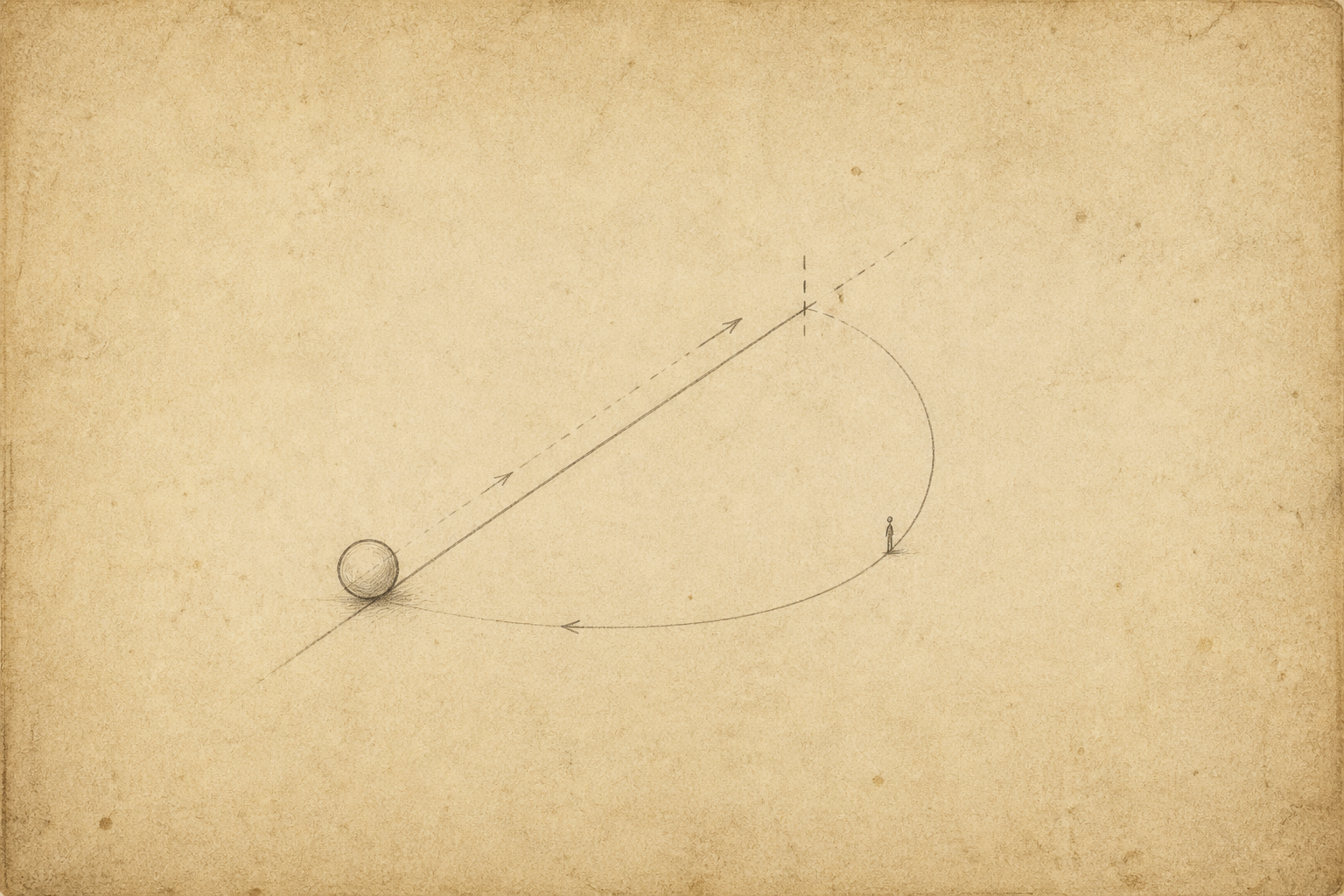

One Must Imagine Sisyphus Present
In One Must Imagine Sisyphus Present, Lucas Varro returns to Camus’s famous final line from The Myth of Sisyphus — “One must imagine Sisyphus happy” — and asks whether the deeper wisdom may lie not in happiness, but in presence.
This is a Living Way essay on Camus, absurdism, acceptance, fidelity, and the quiet freedom of meeting the impossible task without abandoning the soul. It does not soften the stone, redeem the hill, or pretend that suffering becomes meaningful merely because one endures it. Instead, it asks what freedom remains when the task cannot be finished, the world does not explain itself, and yet one must still live.
There are sentences that escape their books.
They pass from philosophy into common speech, from the page into conversation, from argument into meme. They become so familiar that they almost lose their strangeness. Albert Camus’s famous final line from The Myth of Sisyphus is one of them:
“One must imagine Sisyphus happy.”
It is a troubling sentence.
Not because it is obscure, but because it appears too clear. A man is condemned by the gods to roll a stone up a hill. Each time he nears the summit, the stone rolls back down. He descends. He begins again. The labour has no completion, no reward, no hidden usefulness. It is punishment in the form of repetition.
And Camus asks us to imagine him happy.
One feels, at first, the severity of the demand. Why happy? Why this word, of all words, placed at the end of such a myth? Why should the eternal return of failure produce anything like joy? Is Sisyphus wise? Deluded? Defiant? Has Camus discovered something profound, or merely given despair a noble posture?
The difficulty matters because Sisyphus is not only a figure from Greek myth. He has become one of the secret images of modern life.
We know the stone.
We know the hill.
We know the task that returns just after being finished. The room cleaned and dust gathering again. The bills paid and waiting again. The body tended and ageing still. The inbox cleared and refilling. The work completed and replaced by more work. The sorrow understood, then returning under another name. Even success has its boulder: the achievement that becomes expectation, the solved problem that opens into a larger one, the summit that reveals another ascent.
We live among smaller stones. Beneath them all lies the larger one: mortality itself. Whatever we build, love, learn, repair, gather, defend, name, or understand is touched by impermanence. The stone rolls back. Not always dramatically. Often quietly. Often on an ordinary morning.
Camus knew this ordinary terror. He wrote in a century in which many inherited consolations had weakened. Religious certainty had fractured for many; political promises had darkened; progress had shown its machines and its ruins. Human beings still longed for meaning, order, justice, explanation. But the world did not answer in the language they desired.
For Camus, the absurd is born in that collision.
Not human longing alone.
Not cosmic silence alone.
The absurd is the wound between them.
We ask why.
The world does not reply.
We ask again.
The stone waits.
Continue reading: One Must Imagine Sisyphus Present at The Living Way on Substack.
Also in The Lantern Chronicles

The Stranger Is Where Inheritance Is Weighed
A Living Way essay on faith, inheritance, empire, and moral humility. The Stranger Is Where Inheritance Is Weighed asks how the stories that form us can become either mercy or contempt — and why the true test of any tradition is whether it can still see the stranger.
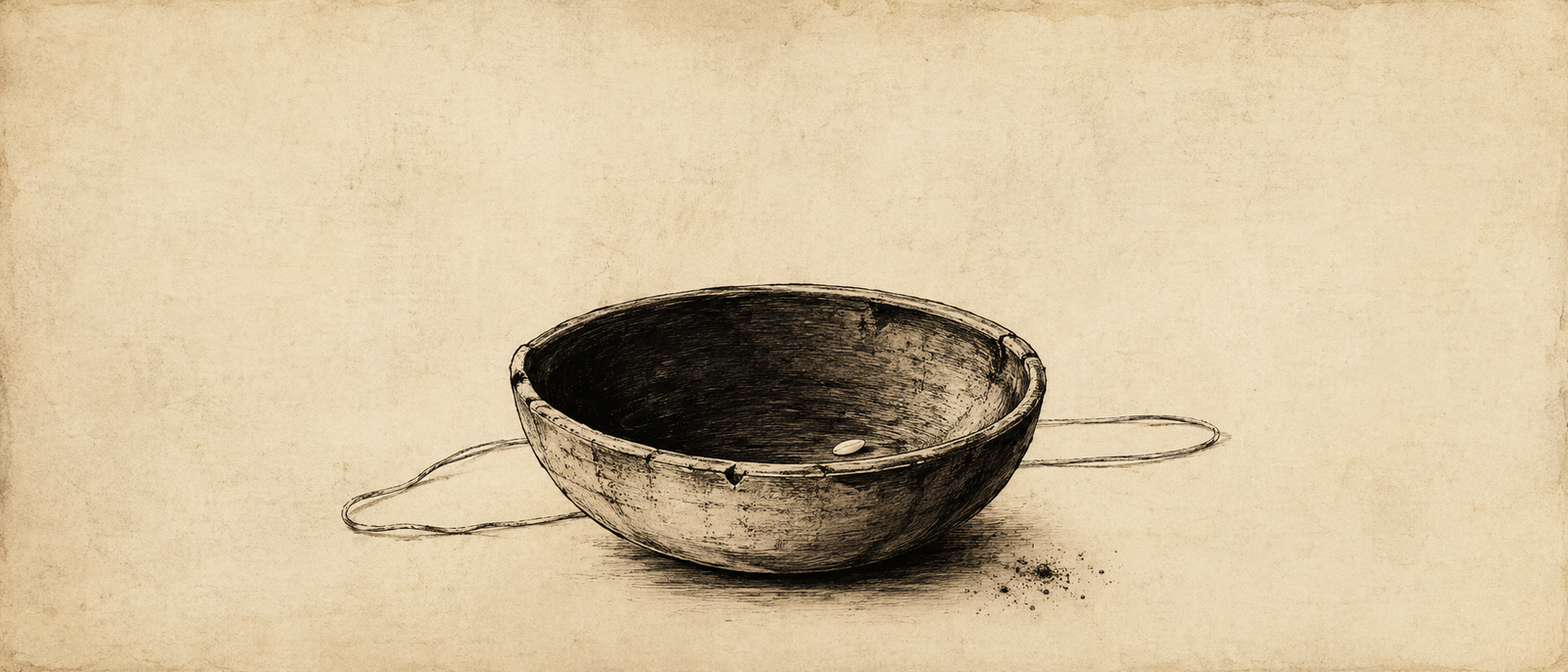

The Beggar God: A Bhikshatana Retelling
A hearthlit retelling of Bhikshatana: Shiva enters the forest as a barefoot beggar, carrying only ash, silence, and an empty bowl. In this Fires of the Old World tale, spiritual pride is not defeated by argument or spectacle, but revealed by what the hand cannot yet release.

At the Lip — A Poem from The Vow
A poem from The Vow on a waterfall, a river reaching the edge, and the stillness that gives falling its shape. At the Lip stays with one overwhelming natural image until movement, constraint, and scale become almost unbearable in their precision.
Continue Reading
If this piece found something in you, you may wish to continue the journey elsewhere.
On The Lantern Chronicles, I gather writings from Angkor, myth and legend, contemplative essays, and poetry — works shaped by silence, beauty, wonder, memory, and the deeper questions that follow us through the world.
It is a place for stone and story, reflection and vow, shadow and revelation.
You would be most welcome there.