
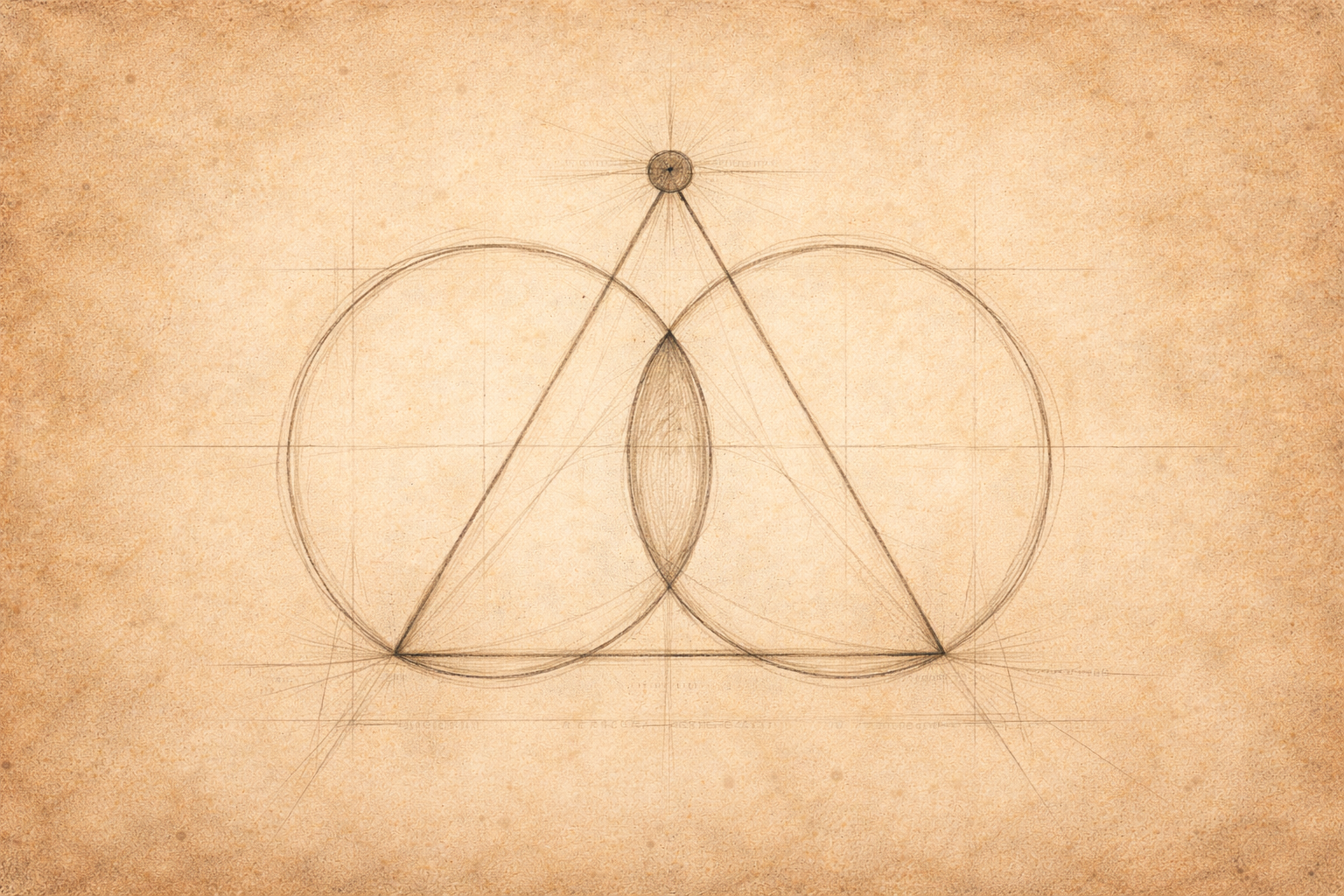

What It Means to Be Equal to a Place
In What It Means to Be Equal to a Place, Lucas Varro returns to Angkor as a proving ground for a larger philosophical question: what kind of person is capable of standing before greatness without reducing it to something smaller, quicker, or more useful?
This is a Living Way essay on place, reverence, inward proportion, and the moral formation required by realities that exceed us. Angkor is not treated merely as a destination, image, or object of admiration, but as a school of stature — a place that quietly reveals whether the self has become steady enough to receive what is greater than itself.
There are places one does not truly meet the first time. One reaches them, looks at them, perhaps even admires them, but the deeper encounter does not yet occur. Something in oneself is still arriving too noisily, too quickly, too much arranged around recognition, coverage, impression. Then one returns months later, or years, and finds not that the place has changed, but that one’s earlier presence there had been thinner than one knew.
This has happened to me at Angkor more than once. I have gone back to a corridor I thought I knew, or stood again in a courtyard that had once seemed merely impressive, and felt with unusual force that the temple was not simply waiting to be seen. It was also, in some quieter way, exposing the terms on which I had come before it. Not judging. Not conferring approval or withholding it. Simply making plain whether I possessed the inward proportion required to stand before such a place without haste, vanity, or reduction.
A great place does not ask whether one has visited it. It reveals whether one is equal to it.
That phrase can sound wrong at first, perhaps even arrogant, as though the task were to rise to some height from which the place might finally be mastered. But that is not the meaning. To be equal to a place is not to exhaust it, decode it, deserve it, or stand over it in the posture of expertise. It is something both humbler and more demanding than that. It is to possess enough inward steadiness that the place does not have to be diminished in order to be bearable. Enough patience that it need not yield at once. Enough humility that beauty does not become ornament for the self. Enough silence that what is greater than oneself can remain greater.
One might call this fitness of soul.
We know, in other regions of life, that equality is not always a matter of rights or rank. One can be unequal to grief. Unequal to love. Unequal to responsibility. Unequal to truth. Not because these things are unfairly withheld, but because they require some width of being one does not yet possess. A person may sincerely wish to love and still be too vain, too frightened, too unformed to bear the reality of another person without turning them into need, fantasy, or function. A person may sincerely wish to know the truth and still be too defensive to admit what would unsettle the arrangement of the self. So too with place. One may arrive sincerely and still be inadequate.
That, perhaps, is the more difficult thing to admit. The failure is not always vulgarity. Often it is disproportion.
Angkor makes this visible because it exceeds us in more than size. Its greatness is not merely monumental. It carries time differently. It carries silence differently. It gathers devotion, ambition, ruin, patience, memory, survivance, and a scale of intention no hurried gaze can comfortably contain. One feels almost at once that the place does not exist to meet one halfway. It does not shorten itself to suit impatience. It does not simplify its reality in order to protect one from being outmatched.
What it exposes is whether one can bear reality without turning it at once into something easier to manage.
Continue reading: What It Means to Be Equal to a Place at The Living Way on Substack.
Also in The Lantern Chronicles

The Mirror, the Ledger, and the Box
Three ordinary acts—tending a mirror, keeping a ledger, reading a page—draw three voices into the same unseen machinery. In this original flash-fiction triptych by Lucas Varro, hunger becomes debt, witness becomes participation, and attention itself acquires a price. Enter through Mirror Hunger, where one rule has always been enough: do not lean close.

What the Hand Knows
When does effort become interference? This contemplative essay from The Living Way explores wu wei, attention and the human compulsion to force—whether in work, conversation, ambition or the private demand that reality unfold according to plan.

The Beauty Time Is Allowed to Make
A literary-philosophical essay on wabi-sabi, handmade kozo paper, and the modern demand for seamlessness. Beginning with red chalk meeting a resistant surface, Lucas Varro asks whether value must arrive untouched—and whether care becomes destructive when it begins erasing the visible history of objects and human lives.
Continue Reading
If this piece found something in you, you may wish to continue the journey elsewhere.
On The Lantern Chronicles, I gather writings from Angkor, myth and legend, contemplative essays, and poetry — works shaped by silence, beauty, wonder, memory, and the deeper questions that follow us through the world.
It is a place for stone and story, reflection and vow, shadow and revelation.
You would be most welcome there.