


The Evil That Wants No World
In this Mytharium essay, Tolkien’s distinction between Morgoth and Sauron becomes more than a question of which dark power is greater. It becomes a way of seeing two different forms of evil: the will to rule, and the will to unmake.
Sauron is the evil most readers meet first.
He is the Eye. He is the pressure of the Ring. He is the shadow in the East, the thought moving through the dark, the will that searches before it strikes. He does not need to appear often in The Lord of the Rings, because almost everything already bends around him. His servants fear him. His enemies organise themselves against him. The geography of the Third Age becomes a map of pressure, with every road, rumour, and dread drawn toward Mordor.
It is easy, therefore, to mistake Sauron for Tolkien’s deepest image of evil.
He is not.
He is Tolkien’s most immediate image of evil: domination, system, surveillance, possession, order without humility, command without love. Sauron wants the world arranged beneath him. He wants a world that continues to exist, provided every will inside it has been made answerable to his own.
Morgoth is worse.
Morgoth does not finally want a world. He wants the world reduced to the condition of his own refusal. Sauron desires subjects. Morgoth desires negation. Sauron is the tyrant of the world. Morgoth is the enemy of worldhood.
This distinction matters because Tolkien does not give us one flat category called evil. He gives evil a history. It has degrees, movements, temperatures, and corruptions of its own. Evil begins in envy. It becomes discord. It hardens into domination. At its furthest edge, it becomes hatred of Being itself.
Sauron stands within that history.
Morgoth begins it.
To see the difference, we have to go back before Mordor, before Barad-dur, before the Ring, before the wars of Elves and Men. We have to go back to the first rebellion, where evil is not yet an army, fortress, weapon, or political order.
It is a note in the Music.
The full essay continues into Tolkien’s account of Melkor’s failed desire to originate, Sauron’s more recognisable evil of order and domination, and the deeper terror of Morgoth’s marring: not merely the corruption of a world, but hatred of the world as gift.
Continue reading: The Evil That Wants No World at The Mytharium on Substack.
Also in The Mytharium


The Man in the Ashes: A Mytharium Retelling from the Book of Job
A grave Mytharium retelling from the Book of Job: a righteous man is brought to ashes, his friends sit with him in silence, and the old story begins its movement toward accusation, whirlwind, and restoration without erasure.


Job and the Answer from the Whirlwind
A serious Mytharium essay on Job, suffering, false comfort, and the voice from the whirlwind. The Book of Job does not offer easy explanation; it gives the sufferer scale, silence, and a creation accusation cannot fill.
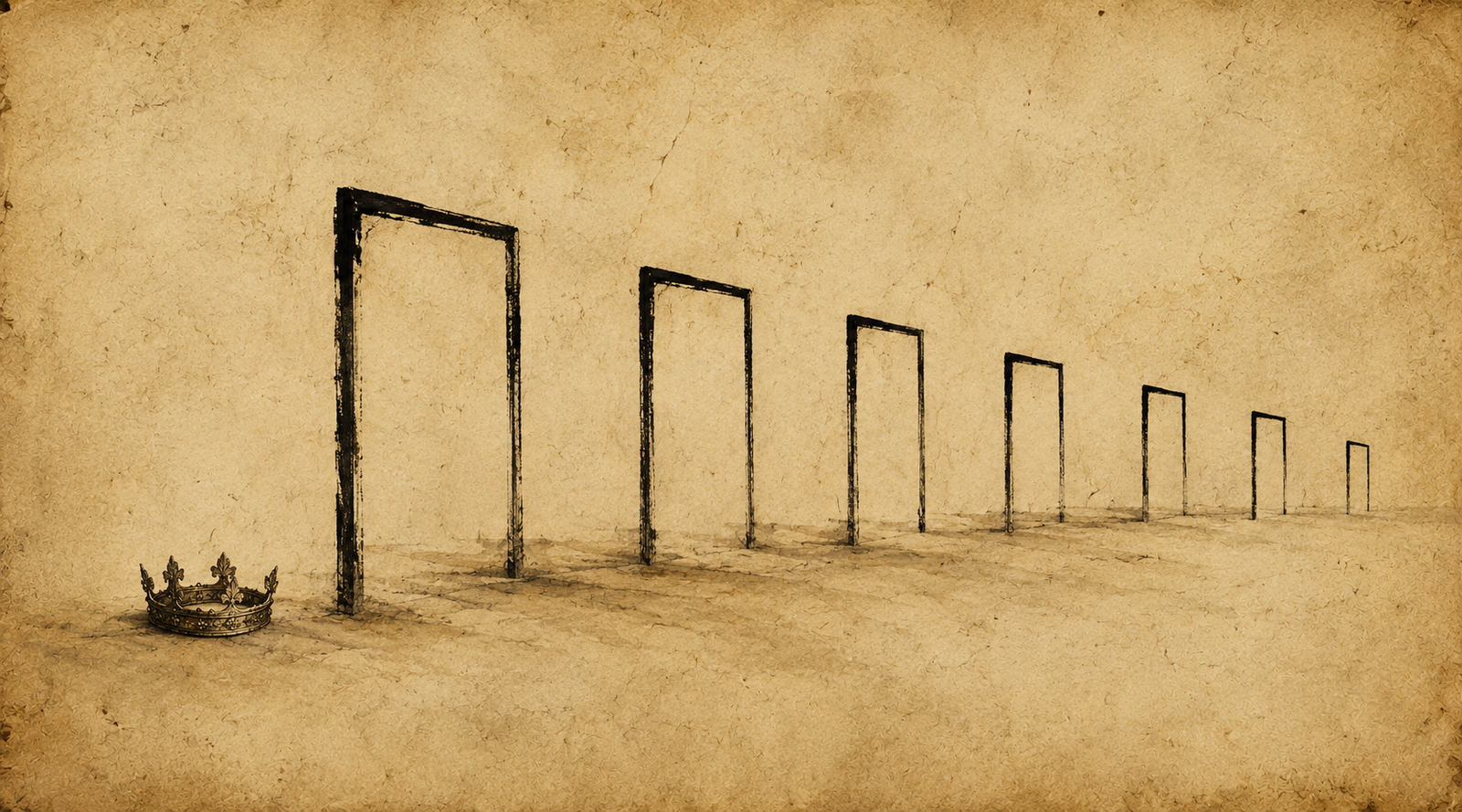

The Seven Gates: Inanna’s Descent Retold
A source-faithful Mytharium retelling of Inanna’s descent into the underworld. Inanna enters crowned, robed, adorned, and named, but the great below has rites of its own. Gate by gate, every sign by which the upper world has known her is taken away.
Continue Reading
If this piece found something in you, you may wish to continue the journey elsewhere.
On The Lantern Chronicles, I gather writings from Angkor, myth and legend, contemplative essays, and poetry — works shaped by silence, beauty, wonder, memory, and the deeper questions that follow us through the world.
It is a place for stone and story, reflection and vow, shadow and revelation.
You would be most welcome there.