
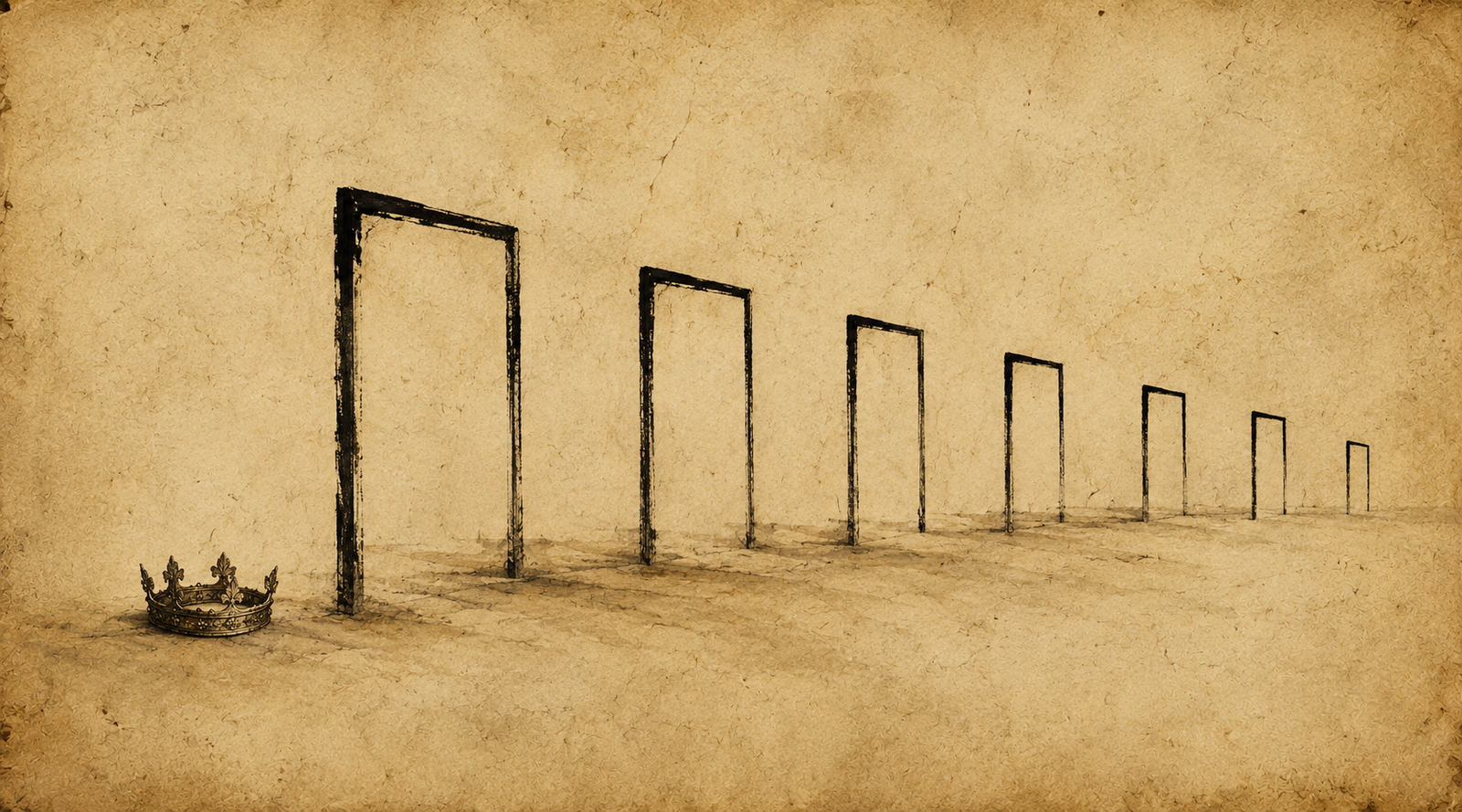

The Seven Gates: Inanna’s Descent Retold
The Seven Gates is a companion mythic retelling for Inanna Goes Down Naked, rendered for The Mytharium as a source-faithful passage into one of the oldest descent stories we possess.
This is not a modernised goddess tale, not a fantasy underworld, and not a story softened into self-discovery. It is a severe old movement: Inanna sets her heart on the great below, enters crowned and robed, and passes through the gates where each sign of power is taken from her.
The essay asks what the myth means.
The retelling lets the gates open.
Inanna set her heart on the great below.
She did not go as one taken by force. She fastened the crown upon her head. She gathered the beads at her throat, the breastplate against her body, the ring, the rod, the line, the robe. She put on the signs by which heaven and earth knew her.
Then she called Ninshubur, her faithful attendant, and gave the command.
“If I do not return,” Inanna said, “go to the temples of the great gods. Lift your voice. Beat the drum of mourning. Do not let silence close over me.”
Ninshubur listened. She received the words and held them.
Then Inanna turned from the bright places.
She left the upper world, where her name was spoken with desire and fear, and came to the road that leads down. The air changed around her. Light thinned. Sound withdrew into itself. Ahead stood the gate of the great below, shut and dark in the earth.
Inanna struck the gate.
The gatekeeper came.
“Who comes to the house from which none return?”
“Inanna,” she said. “Queen of heaven. Lady of the powers above.”
The gatekeeper looked at the crown, the beads, the breastplate, the robe, the signs of splendour gathered upon her.
He did not open.
He went down to Ereshkigal, queen of the great below, and spoke the name of the one who waited at the gate.
Ereshkigal heard it.
Her face did not soften.
“Open the gates,” she said. “But open them according to the rites of this place.”
So the gatekeeper returned.
The first gate opened.
Inanna stepped forward.
At the first gate, they took the crown from her head.
“Why is this done?” Inanna said.
“Be quiet, Inanna,” said the gatekeeper. “The rites of the underworld are perfect. They must not be questioned.”
So she passed through without the crown.
The full retelling continues through the remaining gates, into Ereshkigal’s underworld sovereignty, and toward the old law of return: no one ascends from the great below unless another descends in her place.
Continue reading: The Seven Gates at The Mytharium on Substack.
Also in The Mytharium
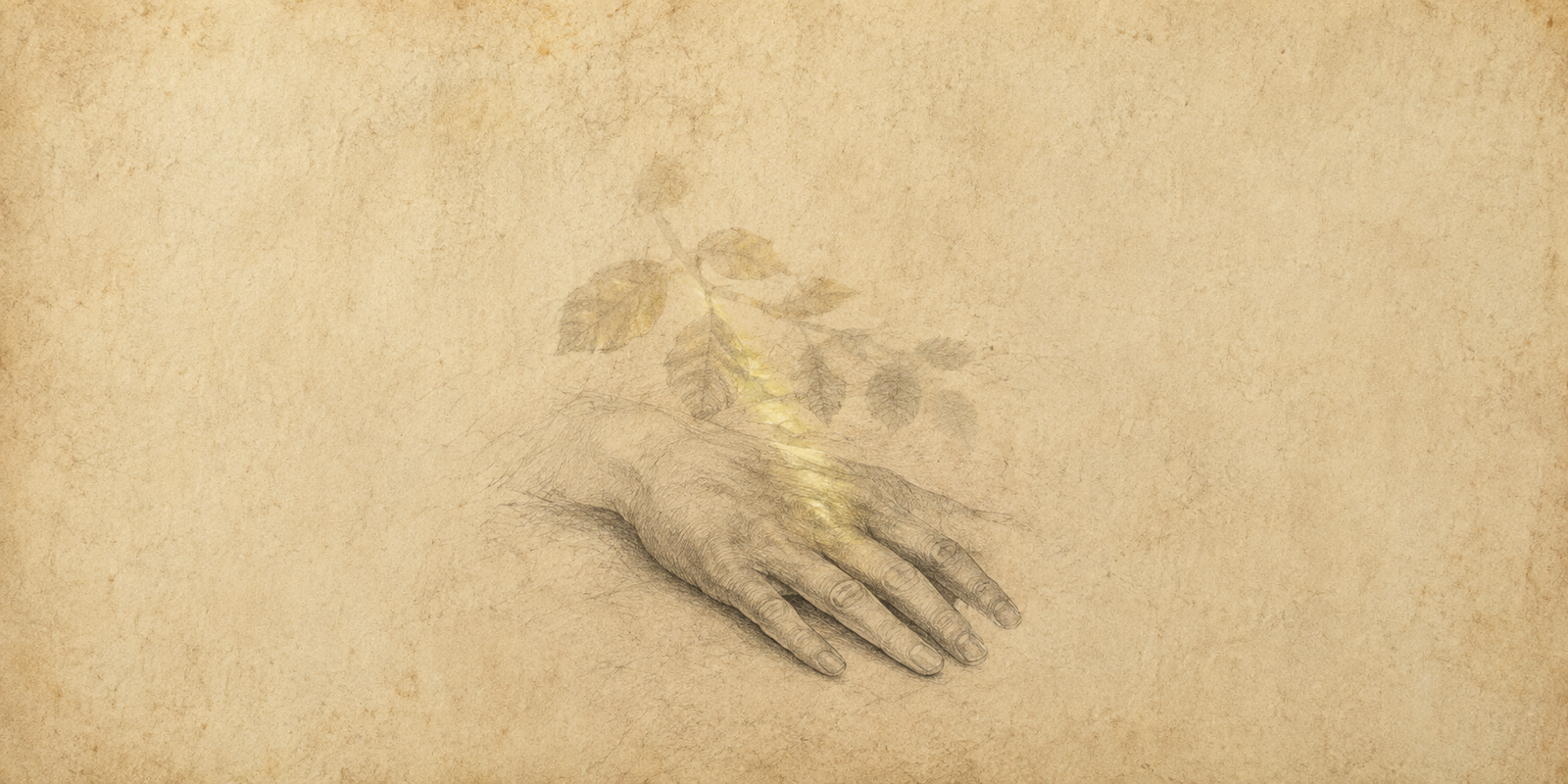

The Joy Sorrow Cannot Foresee
Sam wakes beneath green leaves and asks whether everything sad will come untrue—but Frodo’s wounded hand already complicates the answer. This Mytharium essay explores Tolkien’s eucatastrophe, grace at Mount Doom, and the sudden joy that does not erase sorrow but denies it final authority.
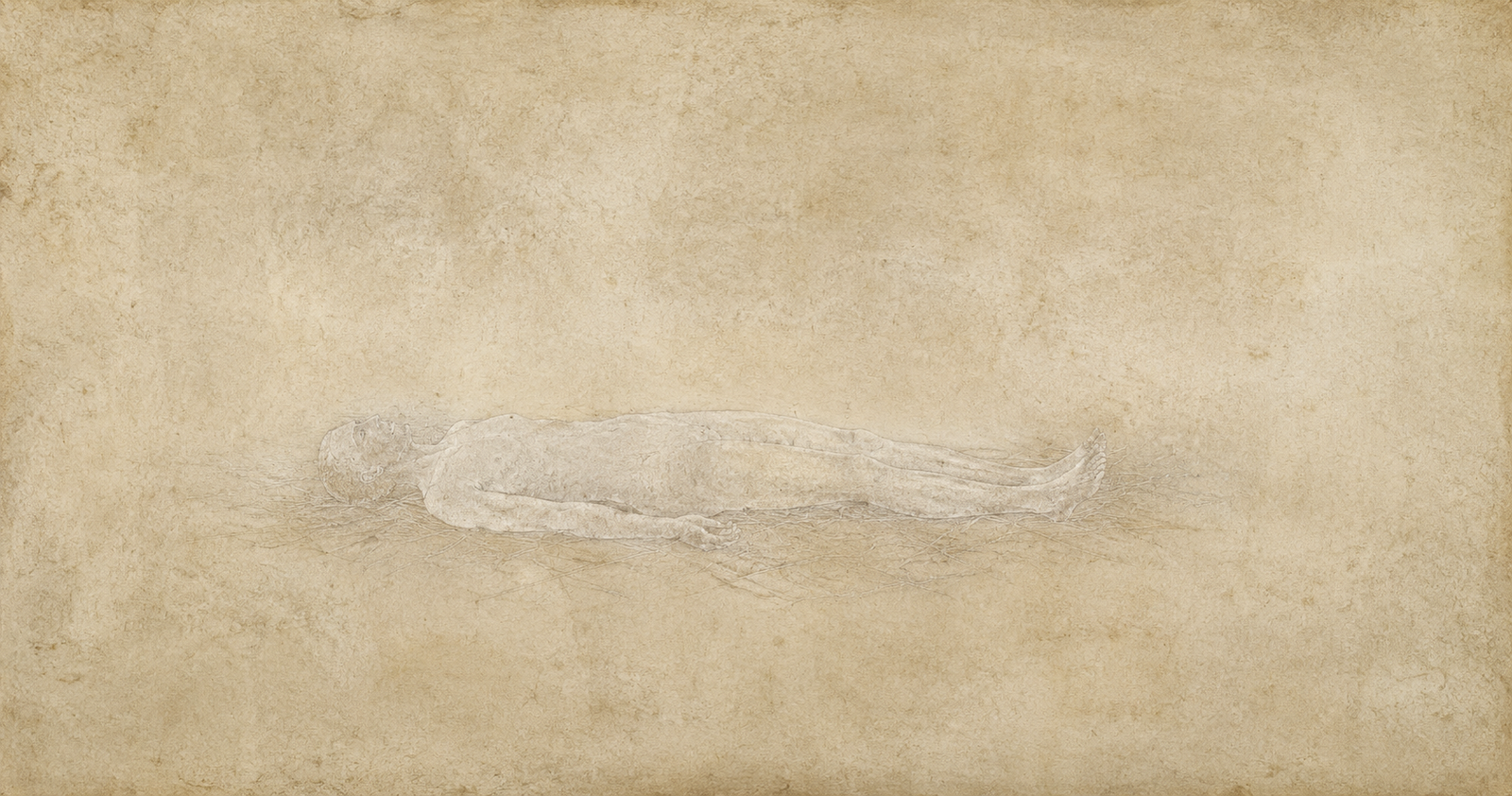

The Body on the Sacred Grass: A Vedic Myth Retelling
A source-faithful literary retelling of the Purusha Sukta from the Rigveda. The gods lay the immeasurable Purusha upon the sacred grass, and from the primordial sacrifice begin to emerge animals, ritual speech, human order, and the cosmos itself. Yet the world will receive only one quarter of him.
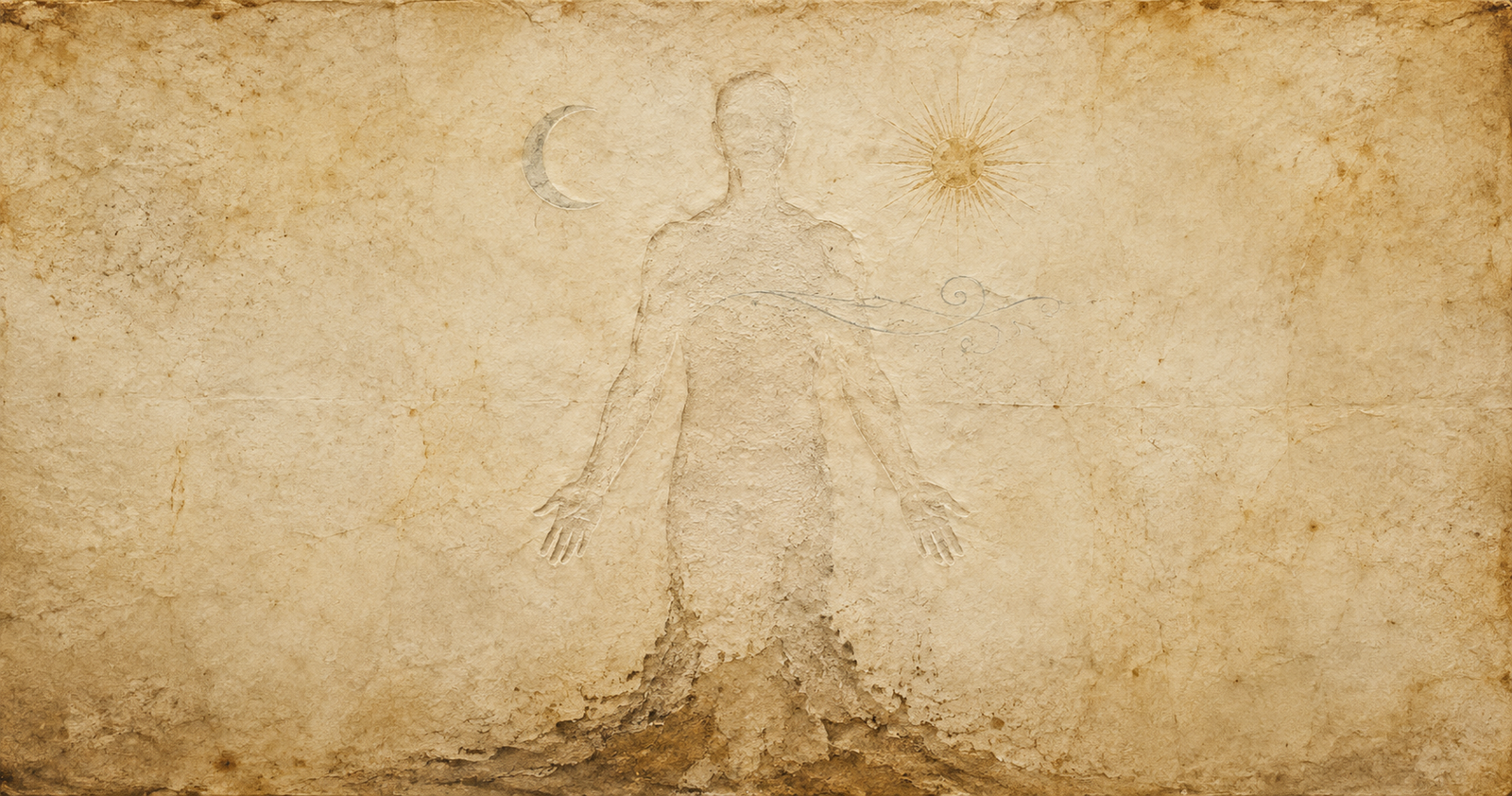

The Body That Became the World
Before the world became separate things, the Rigveda gave it a body. This Mytharium essay reads the sacrifice of Purusha as an image of creation, sacred unity, social hierarchy, and the cost of becoming many.
Continue Reading
If this piece found something in you, you may wish to continue the journey elsewhere.
On The Lantern Chronicles, I gather writings from Angkor, myth and legend, contemplative essays, and poetry — works shaped by silence, beauty, wonder, memory, and the deeper questions that follow us through the world.
It is a place for stone and story, reflection and vow, shadow and revelation.
You would be most welcome there.