
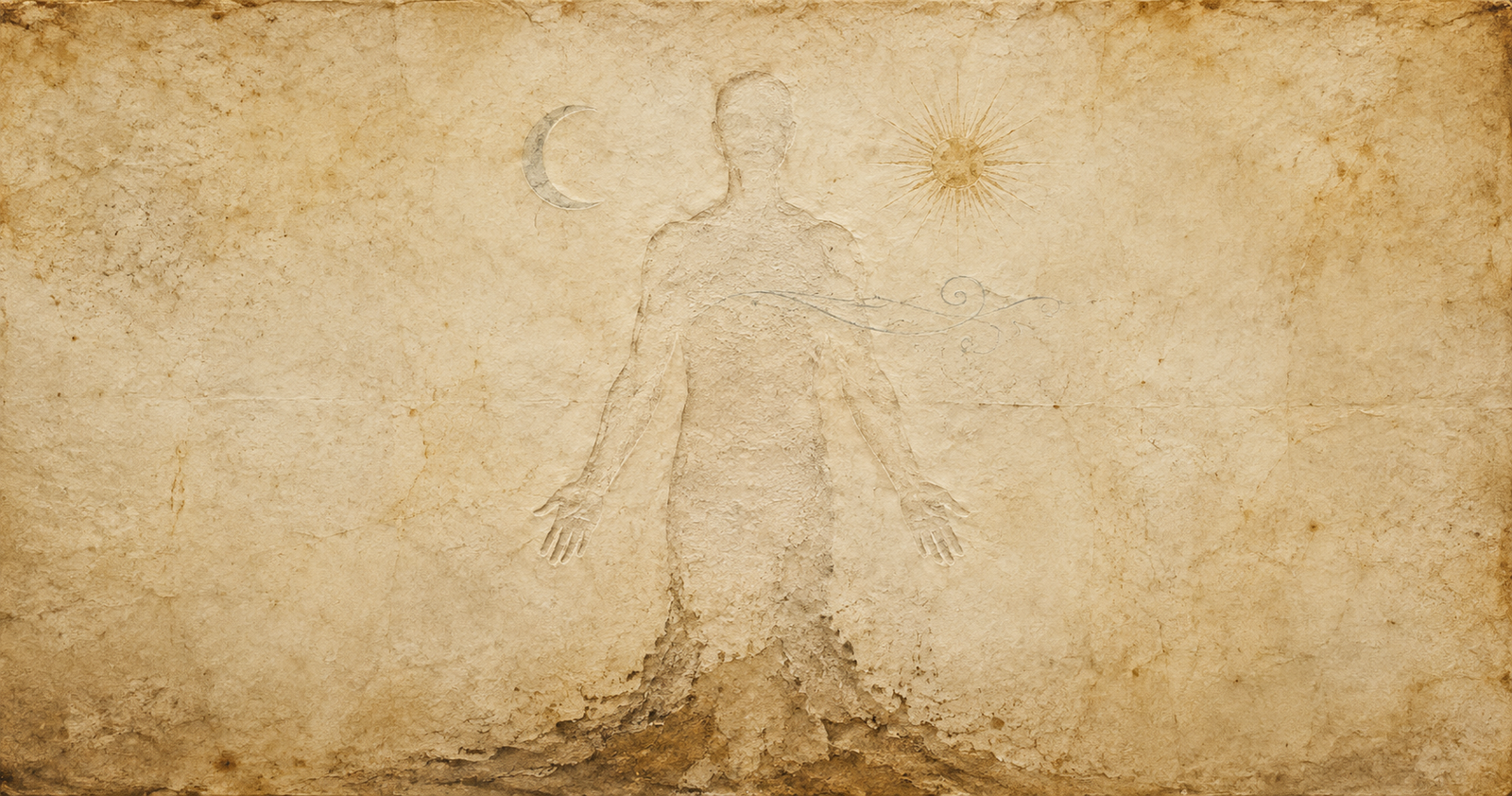

The Body That Became the World
Before the world appears as separate things, the Rigveda gives it a body.
Purusha has a thousand heads, a thousand eyes, and a thousand feet. He covers the earth, yet extends beyond it. Everything that has existed and everything that will exist belongs to him. All living beings are contained within him, but even the whole created world amounts to only one quarter of his being. The other three quarters remain beyond manifestation, undiminished and deathless.
Then the gods prepare a sacrifice.
They do not bring Purusha into a world already made. They place him at the beginning of making. Spring becomes the richness of the offering, summer its fuel, autumn its gift. The seasons gather around the altar before there is yet a world through which the seasons can pass.
From the offering come animals, hymns, ritual formulas, celestial bodies, human society, earth, sky, and the directions of space.
The world begins when wholeness is divided.
But the body does not disappear.
It becomes everything.
The Purusha hymn—Rigveda 10.90—begins with an image too large to be pictured. “A thousand” does not ask us to count. It tells us that counting has already failed. Purusha is not merely a giant among other beings. He is total presence given bodily form.
Yet the hymn immediately prevents us from enclosing him within the universe. All creatures are only one quarter of Purusha. Three quarters remain beyond the visible world.
Creation proceeds from him, but creation does not exhaust him.
The hymn then gives us a sequence that refuses ordinary chronology. From Purusha comes Viraj, the expansive or radiant form. From Viraj, Purusha is born again. Source gives birth to manifestation; manifestation gives birth to source.
A modern account might try to repair the circle. The hymn does not.
It is not describing a chain of events in which one finished thing causes another. It is showing a relation in which origin and manifestation continually disclose one another. The maker, the material, and the made will not remain separate.
The sacrifice itself follows the same impossible pattern. The gods conduct an offering from which sacred speech, ritual formulas, and sacrificial order will emerge. They perform the first sacrifice before the full grammar of sacrifice exists. The act produces the conditions that make the act possible.
Then the cosmic anatomy opens.
The moon comes from Purusha’s mind, the sun from his eye, and wind from his breath. Heaven comes from his head, earth from his feet, and the directions from his ears.
Purusha does not manufacture these things. His eye does not construct the sun as a craftsman might fashion a lamp.
His eye becomes sun.
His mind becomes moon.
His breath becomes wind.
The world is the body translated into distance.
But the hymn does not allow this radiant vision of common origin to remain innocent. The same body that becomes moon, wind, earth, animal, and sacred speech is also made to carry human society—and the parts are not given equal places.
The full essay continues into that more difficult chamber: the relationship between unity and rank, the silence of the sacrificed figure, and the question of whether beauty can reveal an old myth without protecting it from scrutiny.
Continue reading: The Body That Became the World at The Mytharium on Substack.
Also in The Mytharium

The Joy Sorrow Cannot Foresee
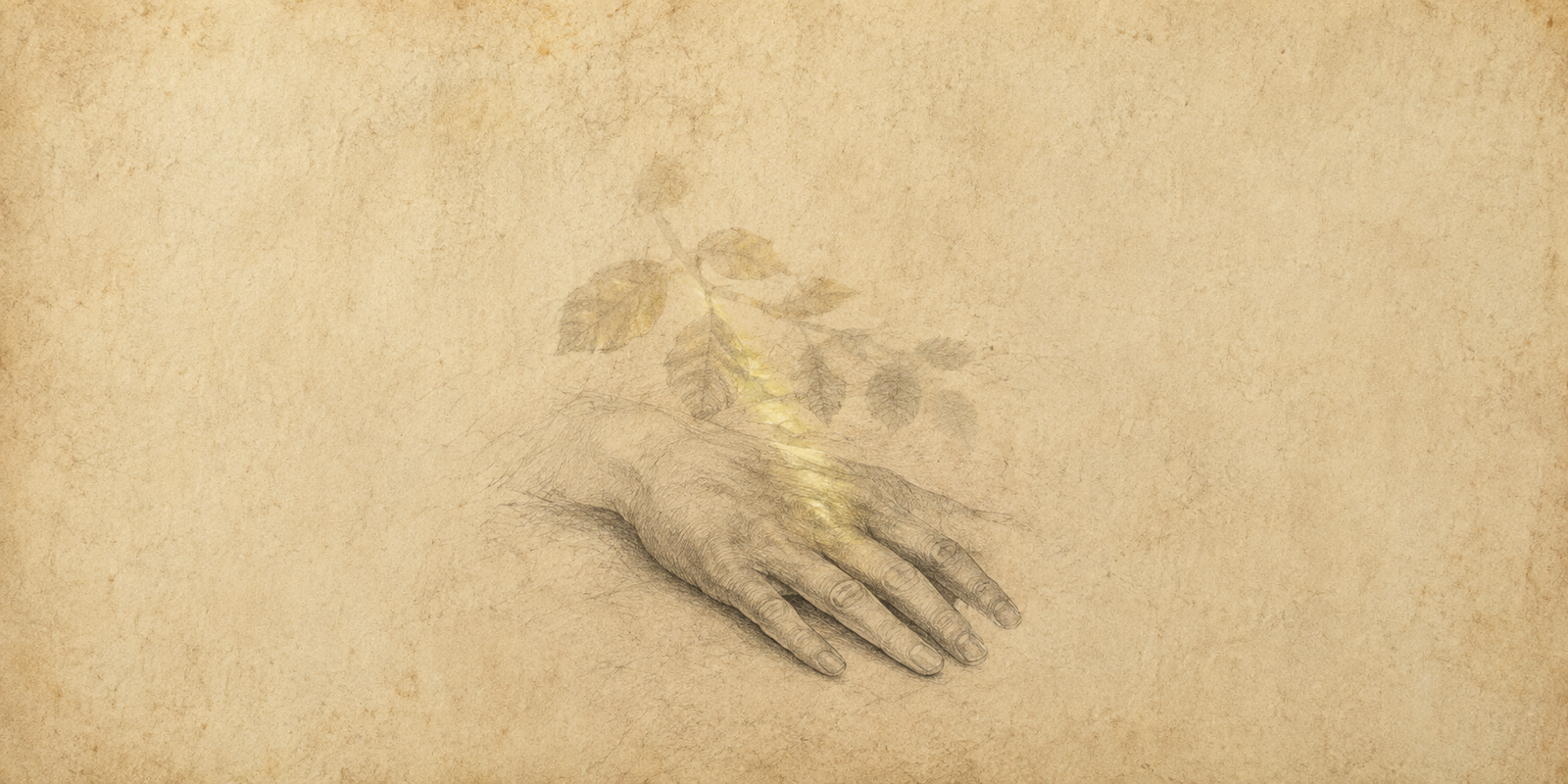
Sam wakes beneath green leaves and asks whether everything sad will come untrue—but Frodo’s wounded hand already complicates the answer. This Mytharium essay explores Tolkien’s eucatastrophe, grace at Mount Doom, and the sudden joy that does not erase sorrow but denies it final authority.

The Body on the Sacred Grass: A Vedic Myth Retelling
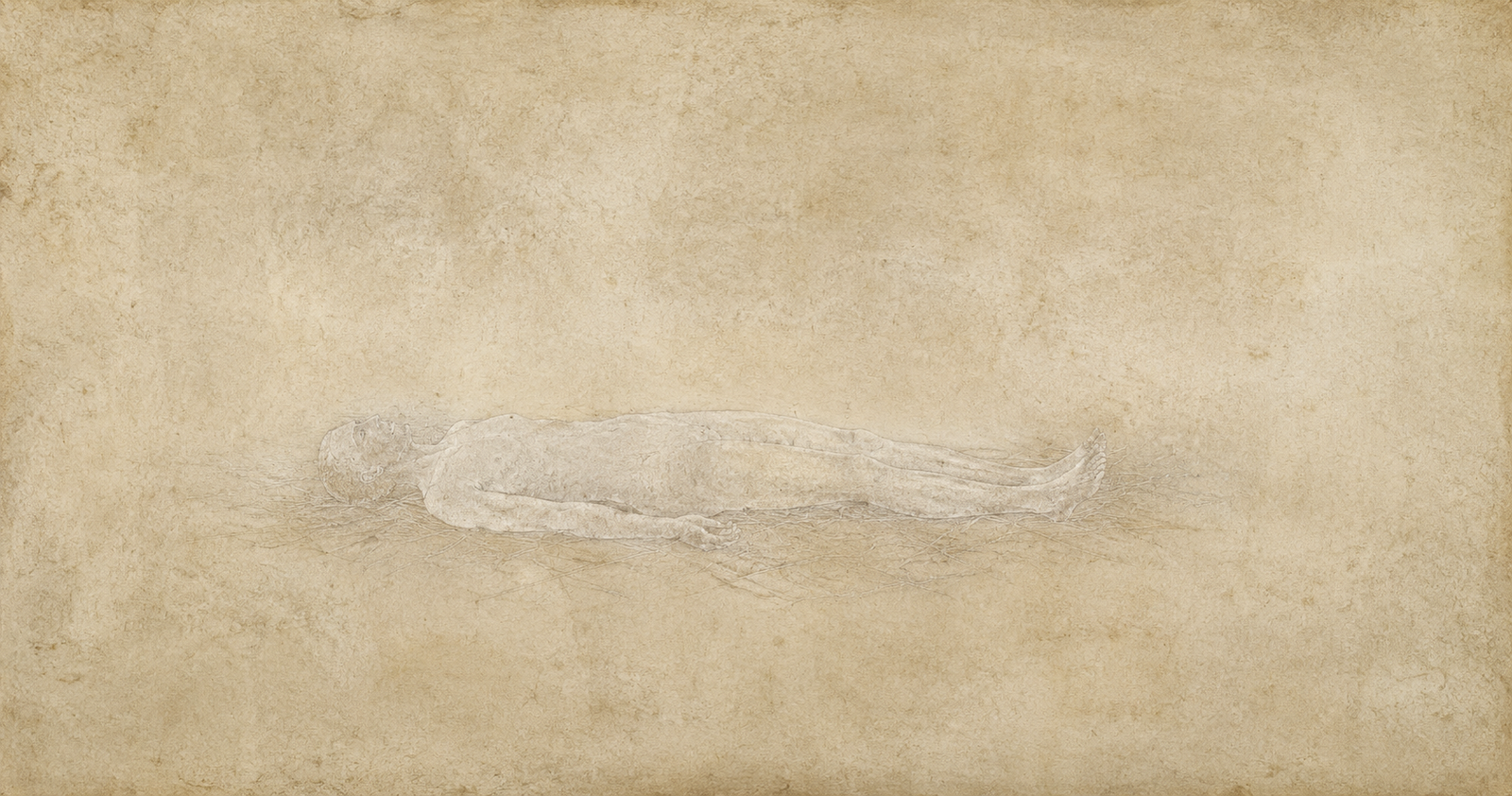
A source-faithful literary retelling of the Purusha Sukta from the Rigveda. The gods lay the immeasurable Purusha upon the sacred grass, and from the primordial sacrifice begin to emerge animals, ritual speech, human order, and the cosmos itself. Yet the world will receive only one quarter of him.

Morgoth’s Ring: The World Evil Cannot Unmake
A serious Mytharium reading of Morgoth’s Ring, Arda Marred, Sauron, matter, evil, and Tolkien’s wounded but good world. The essay asks how deeply evil can enter creation without ever becoming its source.
Continue Reading
If this piece found something in you, you may wish to continue the journey elsewhere.
On The Lantern Chronicles, I gather writings from Angkor, myth and legend, contemplative essays, and poetry — works shaped by silence, beauty, wonder, memory, and the deeper questions that follow us through the world.
It is a place for stone and story, reflection and vow, shadow and revelation.
You would be most welcome there.