

The Fear of Being Difficult
Spell: “Let’s be constructive.”
The sentence is offered gently.
Almost kindly.
It arrives with the tone of a reasonable person trying to help. It is spoken in meetings, in corridors afterwards, in messages that begin with Just a thought and end with a smiling face.
Let’s be constructive.
It does not sound like a threat. It sounds like maturity. It sounds like leadership. It sounds like the kind of thing only difficult people would object to.
That is the first trick.
The phrase works because it is not a command. It is an invitation into virtue. It offers you a moral identity — reasonable, professional, adult — and then quietly makes dissent incompatible with it.
There are harsher words in institutional life. Warning. Breach. Termination. Inadmissible. But mild phrases can be more effective because they do not look like violence. They look like hygiene. They present obedience as etiquette.
Constructive.
Who could object?
And yet in practice it often means something very precise:
Do not say what you are about to say.
Do not make this heavier.
Do not force us to feel what we are doing.
Be pleasant.
Be manageable.
Be silent in the correct way.
It works because it recruits a deep human vulnerability: the fear of being disliked. Not mildly disliked — that is survivable — but marked.
Difficult.
A person can be right and still be difficult. A person can be moral and still be difficult. Once the label lands, everything they do is interpreted through it. Their question becomes obstruction. Their discomfort becomes attitude. Their refusal becomes a personality flaw.
They stop being heard as someone responding to reality.
They become the problem.
That is the mechanism. Let’s be constructive does not answer what you said. It reclassifies you. It shifts the conversation from substance to social acceptability. It replaces truth with tone. It moves the issue out of the world and into the speaker.
It is not an argument.
It is discipline.
And the discipline is carried out through social pain.
Most people do not obey institutions because they have been persuaded.
They obey because they have been trained.
Trained by small consequences: the look, the laugh, the pause after you speak. The polite flattening of your sentence. The sudden eagerness to “move on.” The message later: Just be careful with how you come across.
The nervous system registers it instantly.
The throat narrows.
The hands become careful.
The breath goes shallow.
The next sentence is revised before it exists.
This is how compliance begins: not with ideology, but with the body.
The body learns first: it hurts to speak like that here.
Then the mind gives the pain a respectable name: professionalism. Emotional intelligence. Being constructive.
Tone becomes the instrument of this. Not politeness — which is often kindness — but tone as a method of control: the conversion of truth into offence.
You are not pointing to harm. You are being negative.
You are not dissenting. You are not a team player.
The punishment is rarely formal.
It is atmospheric.
You stop being invited. Your emails receive fewer replies. Meetings happen without you. Your suggestions are repeated later by someone else and suddenly become acceptable. Your name begins to travel with qualifiers.
Bright, but intense.
Values-driven, but not strategic.
Hard to work with.
It is astonishing how much modern discipline can be done without ever raising a voice.
And behind it sits a quiet fact most adults never name aloud: the fear of being fired does not need to be spoken. It does its work silently. If you need your job to live, you do not only fear unemployment. You fear becoming the kind of person who can be removed without the room feeling bad about it.
Difficult.
Unreasonable.
Not constructive.
So dissent begins to feel dangerous. Speaking becomes risk. Conscience becomes exposure. A person learns to trade reality for belonging.
And a great deal of harm becomes possible, not because everyone is wicked, but because everyone is careful.
A meeting. A decision. A sentence poised in the throat.
You can feel its weight. It is not clever. It is simply true.
If we do this, someone will be harmed.
If we do this, we are hiding.
If we do this, we are lying to ourselves.
You feel the room tighten. You see the small impatience that appears when someone threatens the schedule. The group’s desire to keep the mood smooth.
And then — almost without conscious choice — you do the ordinary thing.
You swallow the sentence.
You offer something smaller. A safer question. A note for later.
The better moment never arrives.
Here is what the phrase looks like when it is doing its quiet work.
A woman in a mid-level role sits in a meeting with a restructure document open in front of her. There is a paragraph labelled “efficiencies.” A sentence about “redeployment.” Everyone understands what it means. Two people are going to lose their jobs. One of them is a single mother. Everyone knows this too. No one says it.
The woman clears her throat — a small sound, almost an apology.
She says, “If we proceed, we should name what we’re doing. We’re cutting two roles. We’re removing income from two households. One of them has no margin.”
A pause.
Then the senior manager smiles — not cruelly, almost warmly — and says, “Let’s be constructive. We don’t need to get emotional.”
The room releases its tension with a small laugh. Someone looks down at their notes. The woman feels heat in her face. She feels the body’s warning: you have broken the mood. She is aware, suddenly, of how alone a person can be while sitting among colleagues.
She nods.
The paragraph stays.
This is how reality is edited out of the room.
And yet — there is a harder truth that must be faced.
Sometimes let’s be constructive is legitimate.
Some people do weaponise moral language. Some people use “truth” as a cover for contempt. Some people mistake theatrical intensity for integrity. Some people are not dissenting; they are performing. They are spilling heat into a room and calling it courage. They are attacking colleagues and claiming the mantle of virtue.
In those moments, the phrase is not discipline. It is a boundary. It is an attempt to keep the work human.
So the ethical problem is not to praise dissent blindly.
It is to discriminate.
To learn the difference between unproductive disruption and necessary naming; between cruelty dressed as candour and conscience doing its work.
That is difficult.
It is also unavoidable.
And it is disorienting in exactly the way institutions rely on.
In the moment, you cannot always tell whether you are naming harm or feeding your own heat. The body gives the same signals for both: adrenaline, tight throat, the urge to be heard. A room can be genuinely correcting you — and it can be protecting itself — and the difference is not always visible from where you stand.
So you need a plainer kind of discrimination. Not purity. Not certainty. A small discipline that keeps you out of theatre.
Ask three questions before you speak — and again after you are answered.
First: am I naming an act, or displaying a self?
Second: am I naming a consequence, or an opinion?
Third: am I willing to be corrected on facts, while refusing to have the harm turned into “tone”?
These questions do not make you safe.
They make you precise.
And precision is the difference between dissent and performance.
Now: the distinction the reader actually wants — the one the room tries to blur.
How do you tell, in real time, whether you are being silenced or corrected?
Not cleanly. Not always. But there are tells.
When you are being corrected, the room can usually do one of three things:
It can restate your point fairly before disagreeing.
It can name the specific claim it thinks is wrong.
It can offer an alternative that still faces the consequence you named.
Correction stays in contact with substance.
Silencing does something else.
It changes the subject from what is happening to what you are like.
It replies to consequence with etiquette.
It replies to harm with mood.
It replies to facts with “how this is landing.”
It replies to content with a diagnosis of your attitude.
And it often comes with a small moral inversion: your act of naming is treated as the danger.
You’re being divisive.
You’re making this personal.
You’re not being constructive.
The room does not have to refute you.
It only has to make you socially expensive.
This is why institutions love ambiguity here. If you cannot tell whether you are being corrected or silenced, you will hesitate. You will soften. You will pre-emptively apologise. You will do their work for them.
So what is the counter-move?
Not rudeness. Not abrasive performance. Not becoming addicted to friction. That is another way of being managed — a predictable “difficult person” the institution can dismiss without cost.
The counter-move is disciplined dissent: dissent without theatre.
You refuse the conversion of truth into tone, without refusing tone itself.
Three practices are enough. They are small. They are survivable. They change the air.
First: name the act, not the mood.
This decision cuts two roles. This removes income from two households.
Second: separate substance from etiquette.
If my tone is wrong, I will correct it. But answer the substance.
Third: leave a trace.
One clean sentence in writing afterwards — not a manifesto, not an accusation:
I raised concern that this decision harms X; it was set aside as “not constructive.”
This is not heroism.
It is refusal of the alibi.
It is the decision not to let a mild phrase do violent work.
Yes, moral clarity is often punished. Sometimes formally. Sometimes socially. Sometimes through the slow freezing of warmth until a person becomes movable. Reputations are cheap to damage and hard to repair. “Difficult” travels faster than truth. And sanction does not always arrive as termination. It arrives as stalled progression, withheld opportunity, quiet exclusion, the file that begins to thicken.
That is why the fear is common and resistance rare.
But a society does not collapse all at once.
It collapses in meetings.
It collapses through euphemisms.
It collapses through the gradual training of conscientious people into quietness.
And so the work is not only political.
It is interpersonal.
It is linguistic.
It is the decision to speak one clean sentence even when it makes the room tense — and to remain adult enough to endure what follows.
To let the label arrive.
To endure the chill.
And to keep speaking anyway.
Not because you believe you will win.
Because you refuse to participate in the lie.
Because you will not let constructive mean obedient.
Because you refuse to let falseness become your habit.
—
Receive the next work
Subscribe free to receive new work from the Mytharium Library by email.
More from the Library

See Also
A concise and impartial dictionary of absence, promises, quarrels, ordinary objects, and the troublesome instability of words.

The City of Service
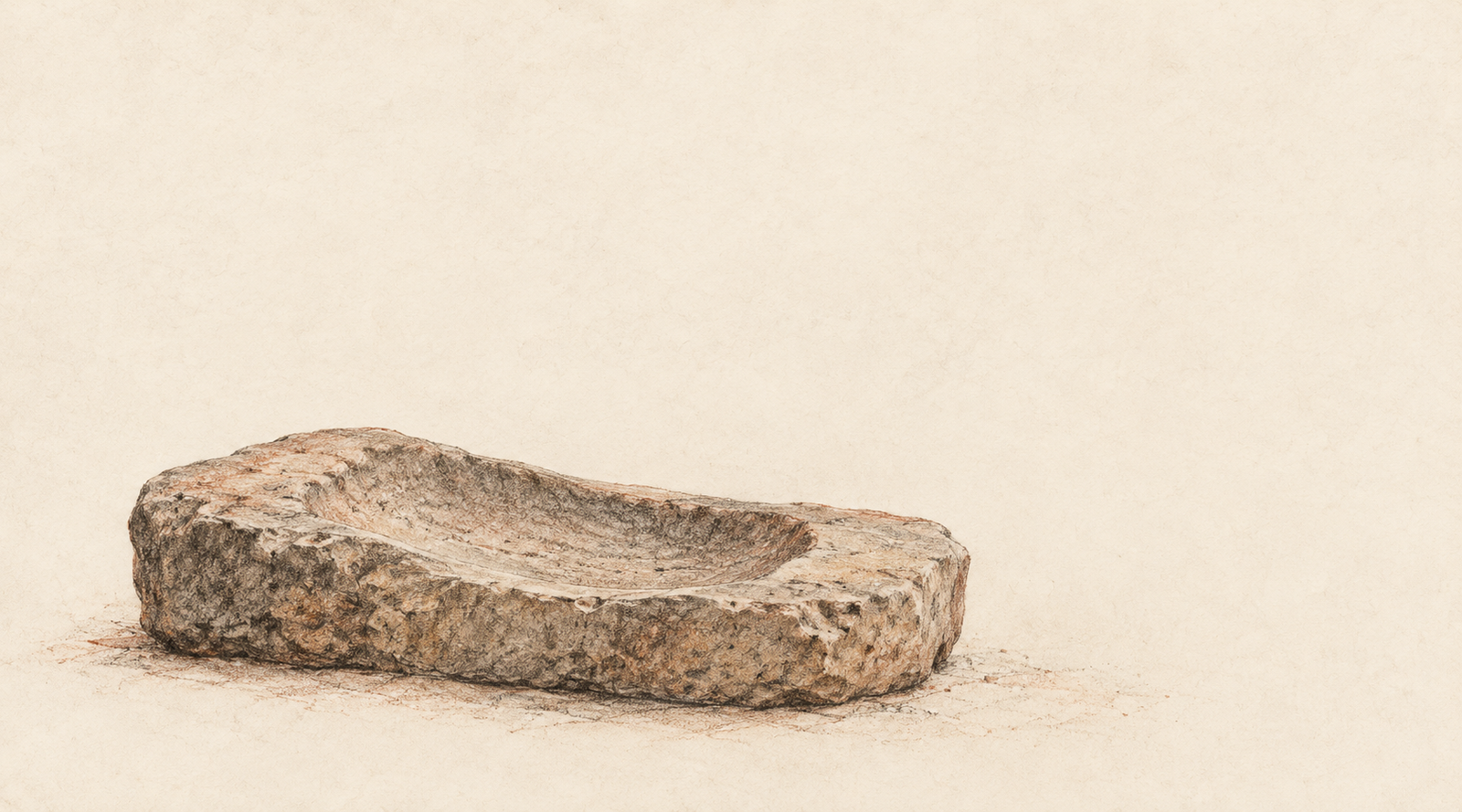
The temple we inherit is a building from which almost all necessity has been removed. Nothing must be brought for it to continue being what we call a temple. The sanctuary asks nothing of us. Stone is good at this kind of independence.
A living temple was otherwise.
Water had to come in. So did grain, cloth, oil, aromatic substances, fuel. The things required for worship arrived because someone carried them across a threshold.


Houses of Wood, Light, and Smoke
Some of Angkor’s most intimate ruins do not rise above the ground at all. They are postholes, low mounds, hearths and ponds: durable traces of a domestic city built largely from things that decay. To restore that city is to see Angkor not only as stone, but as wood, smoke, water, repair, and people living within calling distance.