

What the Dancers Still Remember
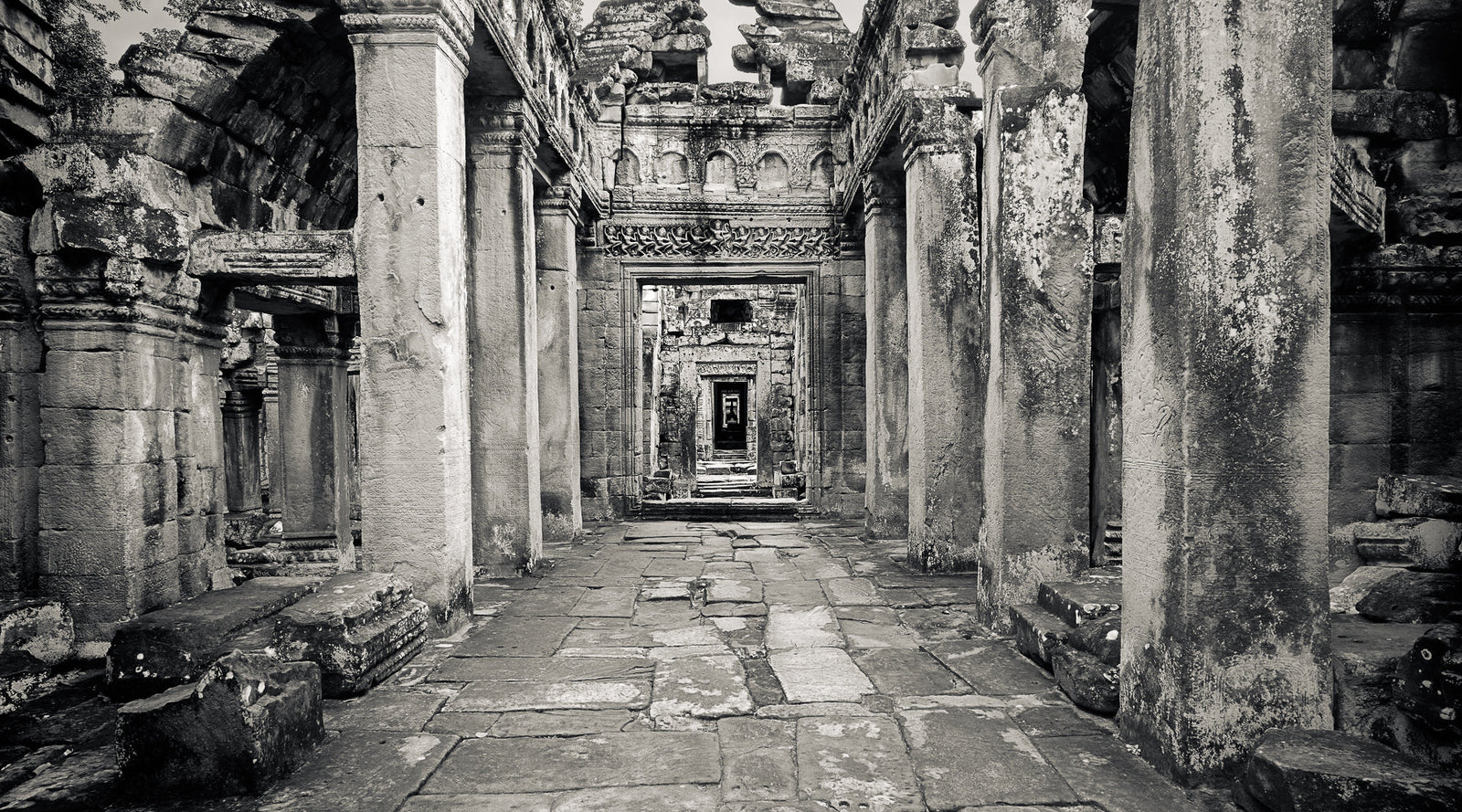
The silence came first—wet stone, breath suspended. I stepped softly through the Hall of Dancers, where columns lean like trees, and doorways open not just through walls, but through memory.
The apsaras above each lintel had not moved in centuries, yet they felt alert. Not frozen—alive in a way stone sometimes is, when weather and reverence have passed through it long enough. One seemed to lean slightly toward the light, as if she remembered something just beyond articulation.
I set the exposure slowly. It was not an act of technique—it was an offering of patience. The film would receive what I could not name.
And then, it happened.
The glint of spirit not as flash,
but as return.I watched the light walk
into the room
as if it had done so
every morning
for centuries.Not one dancer moved—
yet something
leaned forward.A wall cracked,
a column leaned—
but the breath still came back
exactly
where it left.One stupa waited
at the end of the corridor,
not asking to be seen—
only to be felt.
More from the Library

Houses of Wood, Light, and Smoke
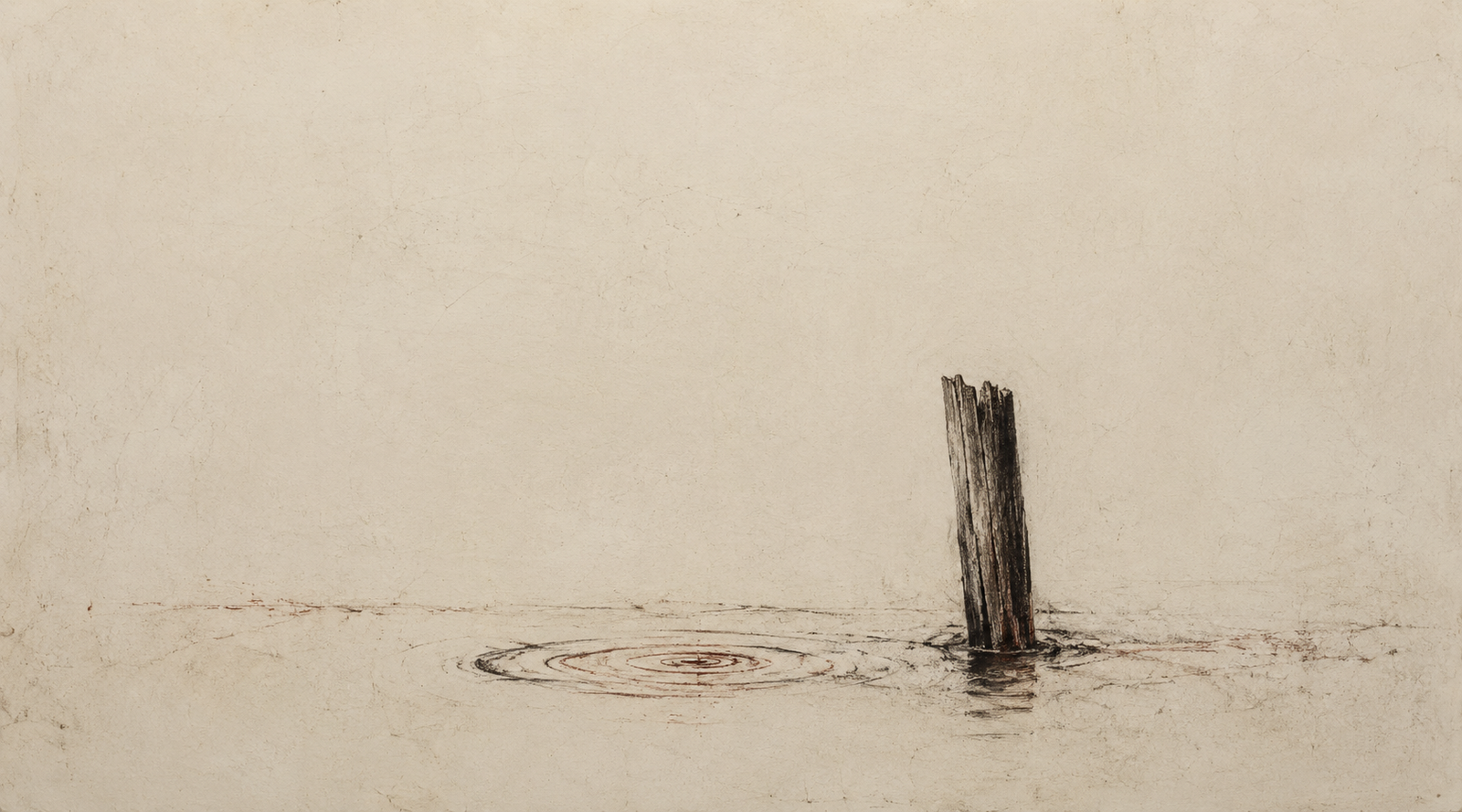
Some of Angkor’s most intimate ruins do not rise above the ground at all. They are postholes, low mounds, hearths and ponds: durable traces of a domestic city built largely from things that decay. To restore that city is to see Angkor not only as stone, but as wood, smoke, water, repair, and people living within calling distance.

What Stone Brings Forth
I had mistaken a gift for something being expelled.
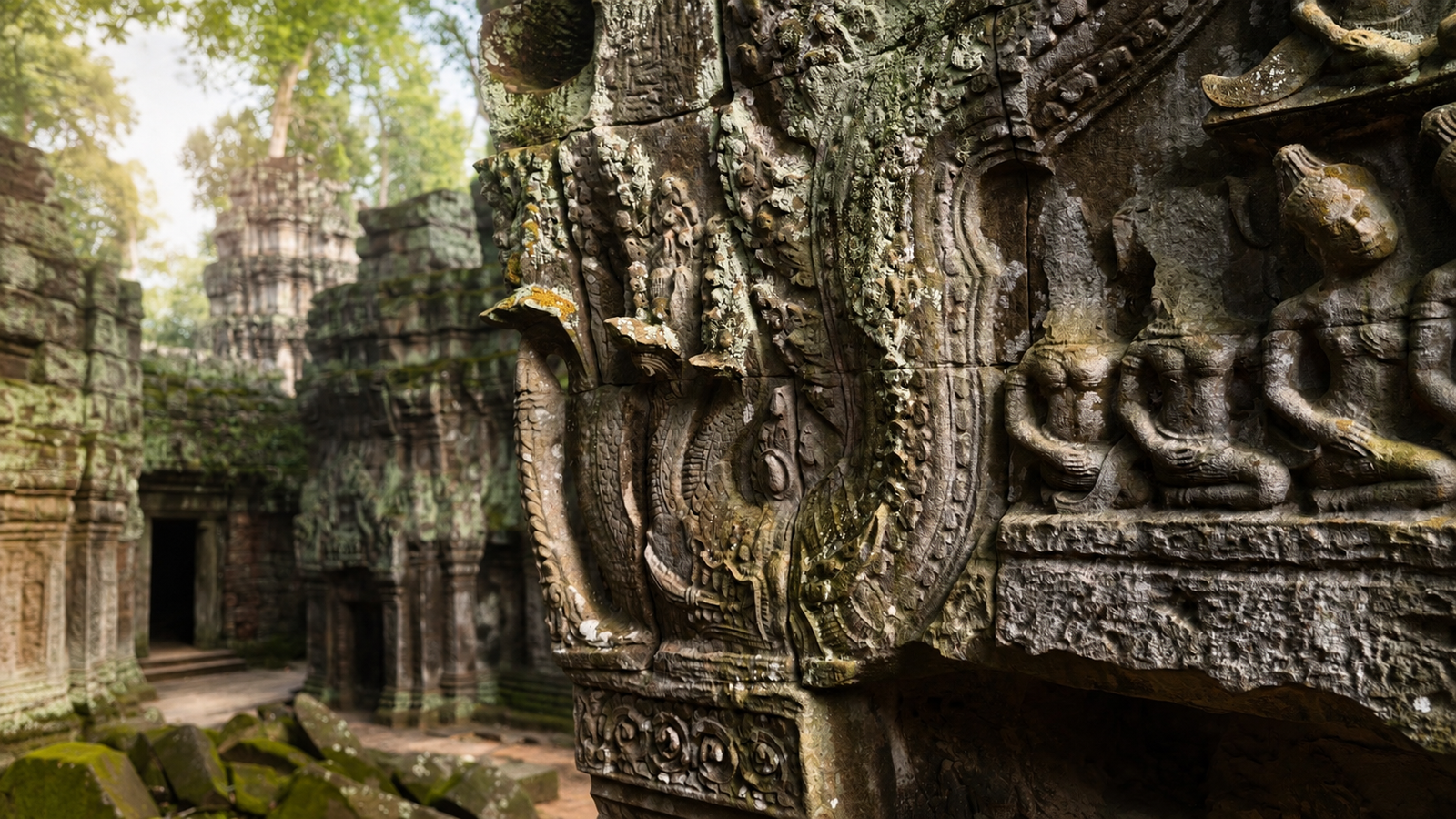
Beneath the nāga's mouth, a stone garland descended bead by bead. Nearby, a makara opened its jaws and another form emerged. Looking closer, the whole temple began to change: serpent became ornament, ornament became architecture, architecture became foliage.
The forest did not introduce this language.
It answered it.

The Eighth Daughter
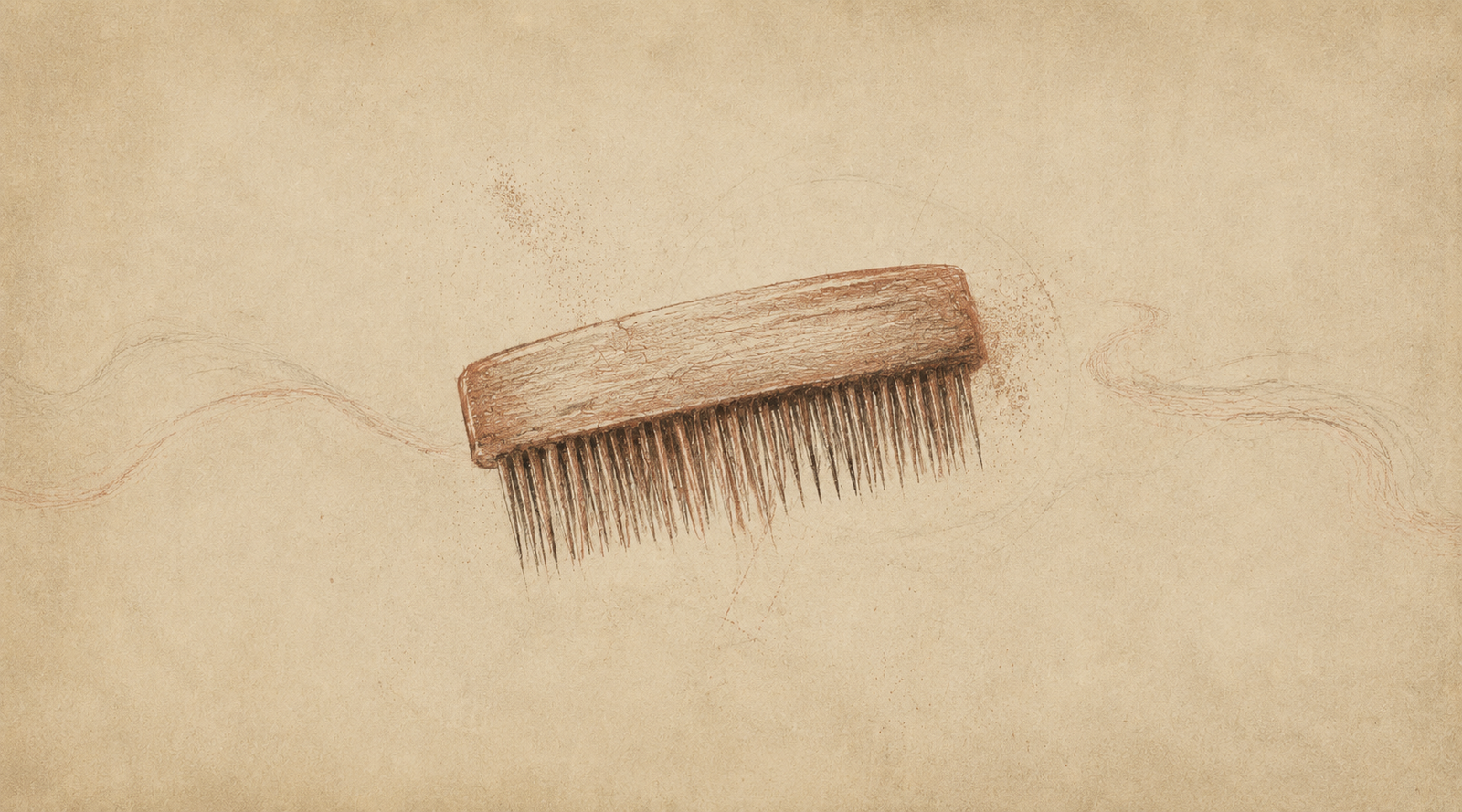
Seven daughters have already been taken by Yamata-no-Orochi when Susanoo reaches the River Hi. Only Kushinada-hime remains. The Eighth Daughter retells the Kojiki episode through a family’s waiting, a girl transformed into a comb, and the patient preparation for the serpent’s return.

$895
Preah Khan Temple, Angkor, Cambodia — 2021
Limited Edition Archival Pigment Print
Edition
Strictly limited to 7 prints + 2 Artist’s Proofs
Edition Number
This listing is for the first numbered print from the Large Collector Edition: 1/7
Medium
Hand-toned black-and-white archival pigment print on Hahnemühle Bamboo — a museum-grade fine art paper chosen for its quiet tactility and reverent depth, echoing the spirit of the temples.
Signature & Numbering
Each print is individually signed and numbered by the artist on the border (recto)
Certificate of Authenticity
Accompanies every print
Image Size
28 x 28 inches (71.1 x 71.1 cm)
Light does not ask whether the roof remains. It enters anyway—through stone, through silence, through the long corridor of memory.
Captured before dawn in the Hall of Dancers at Preah Khan, this image reveals a chamber both open and intact, broken and breathing. Rain has passed. The roof is gone. And still, the apsaras lean above the doorways as though they remember something sacred. In the distance, the stupa gathers shadow and quiet—a centre not of form, but of presence.
Standing before this scene, I felt no urgency. The long exposure was not a technique, but a way of listening. Later, in the studio, I shaped the photograph through chiaroscuro and hand-toning—guiding it gently toward the spirit I met that morning.
This signed and numbered archival pigment print is crafted on museum-grade Hahnemühle Bamboo paper, offered in a strictly Limited Edition of 25 + 2 Artist’s Proofs. Each print is hand-toned individually and accompanied by a Certificate of Authenticity.
Let it be a still point—where breath, shadow, and memory remain.
click here to enter the Artist’s Journal and walk through the silence.