
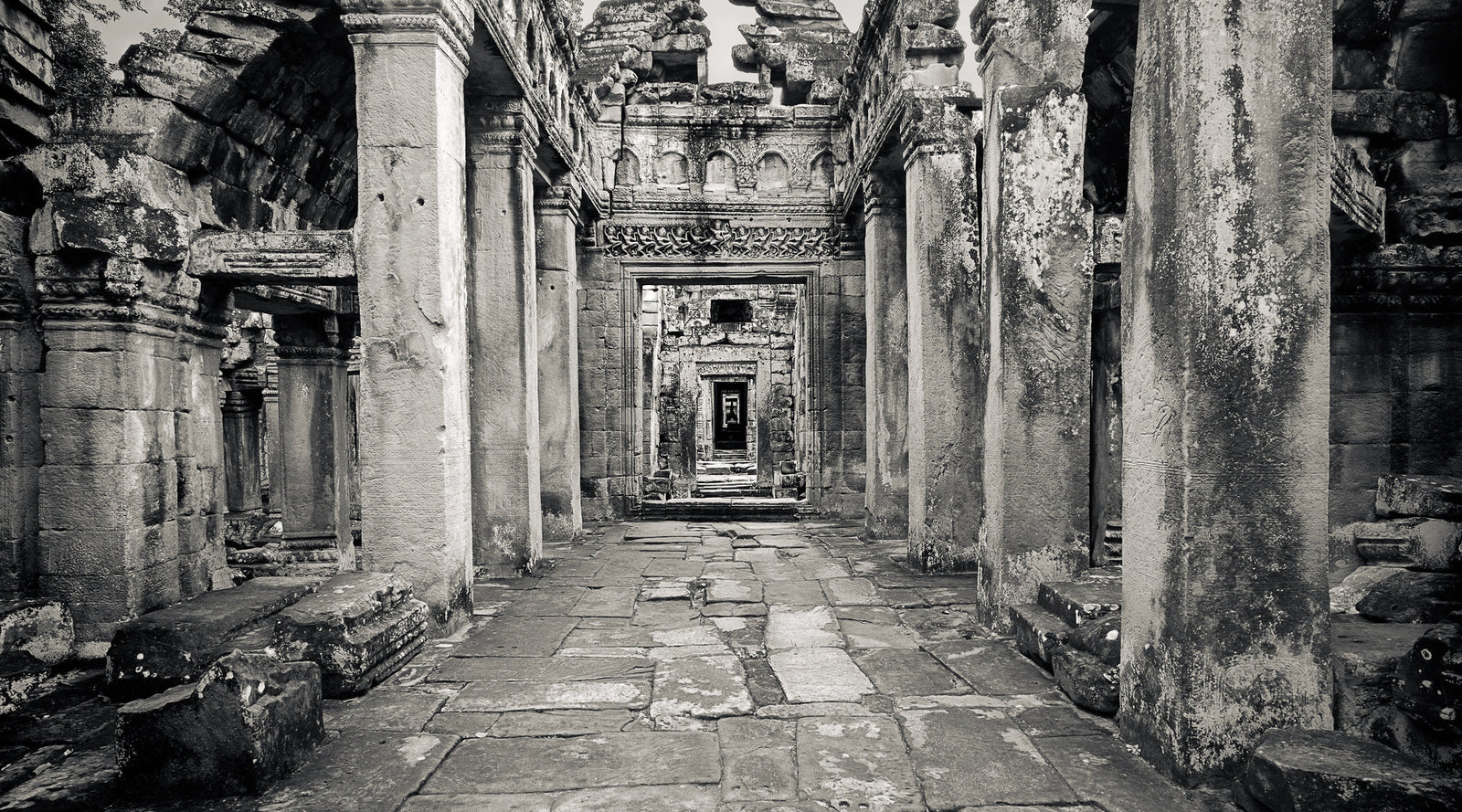

A Breath Beneath the Broken Roof
The rain had passed, but the stone was still wet with memory. At Preah Khan, nothing begins suddenly. Light enters the way silence does—without force, without edge. I arrived before dawn, when even the birds were still holding their voices.
The Hall of Dancers lay open to the sky, its roof long gone. Columns leaned slightly, like old monks mid-prayer. Water clung to the crevices. The apsaras above each doorway had lost none of their grace, though time had softened their lines. One in particular, just ahead, seemed caught in the act of listening—her mouth neither closed nor open, her gesture neither finished nor frozen.
I stood beneath her for some time. Not composing—receiving. The camera was already placed, the tripod already still. I had no desire to correct or impose. My breath slowed. In that moment, I felt what had gathered: not simply rain or shadow, but presence.
It did not matter that the ceiling had collapsed. Light still walked in.
light beneath broken
roofless hush holding its breath—
stone leans into light
Later, in the studio, I would draw that breath out again—not to fix or dramatise it, but to keep it open. Long hours of careful shaping, chiaroscuro deepening, and hand-toning helped the image remember its silence. It is not a depiction. It is a keeping.
More from the Library

See Also
A concise and impartial dictionary of absence, promises, quarrels, ordinary objects, and the troublesome instability of words.

The City of Service
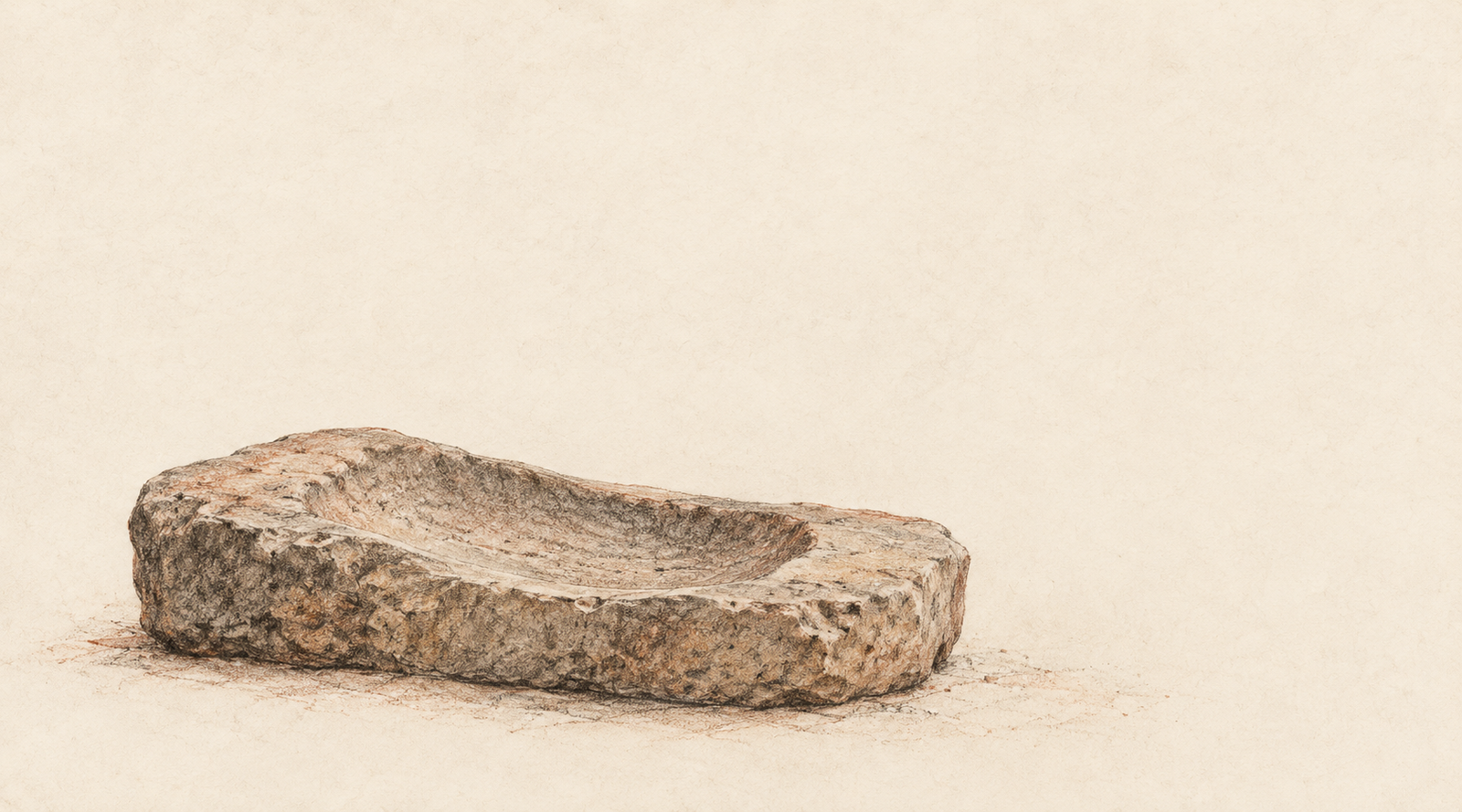
The temple we inherit is a building from which almost all necessity has been removed. Nothing must be brought for it to continue being what we call a temple. The sanctuary asks nothing of us. Stone is good at this kind of independence.
A living temple was otherwise.
Water had to come in. So did grain, cloth, oil, aromatic substances, fuel. The things required for worship arrived because someone carried them across a threshold.

Houses of Wood, Light, and Smoke
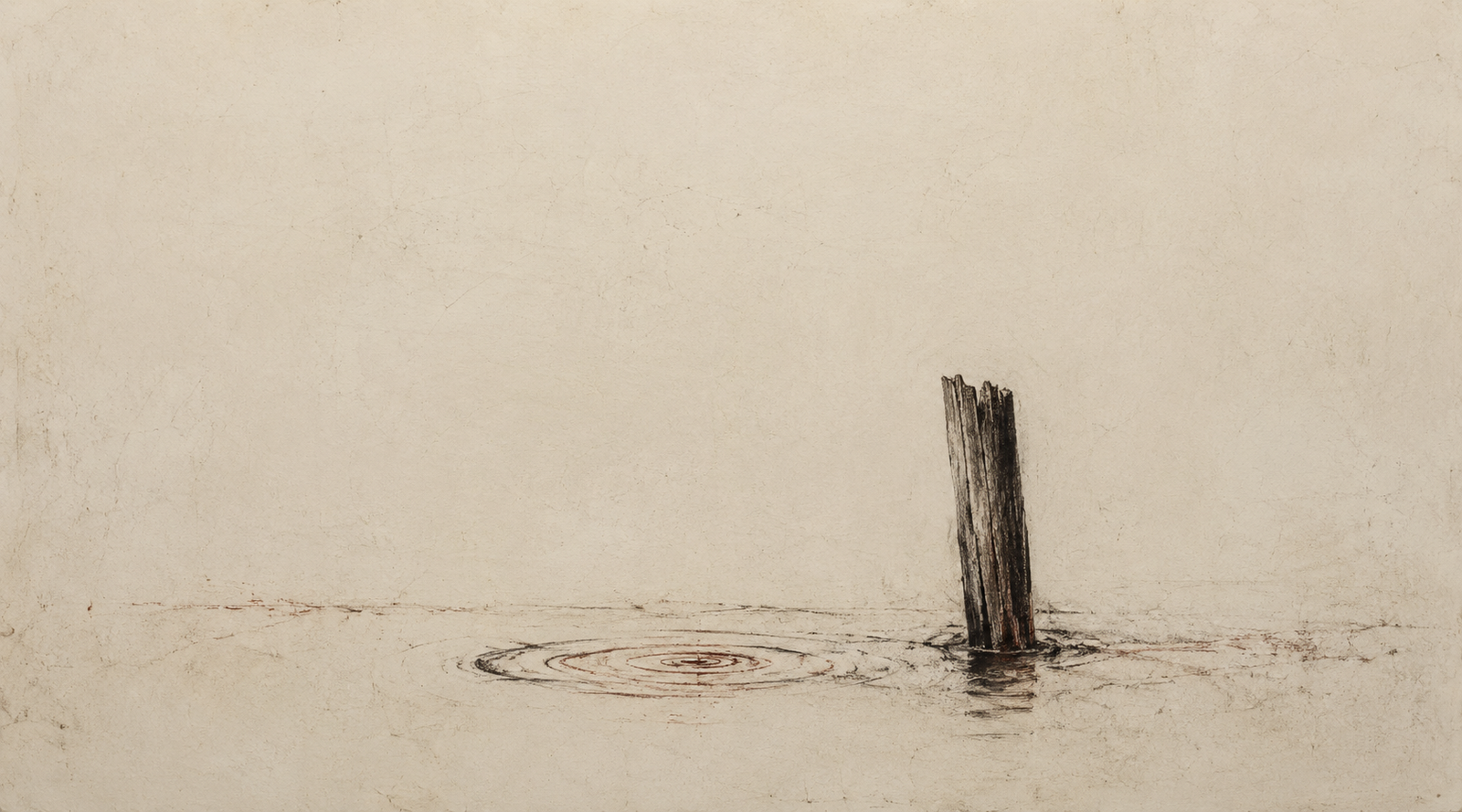
Some of Angkor’s most intimate ruins do not rise above the ground at all. They are postholes, low mounds, hearths and ponds: durable traces of a domestic city built largely from things that decay. To restore that city is to see Angkor not only as stone, but as wood, smoke, water, repair, and people living within calling distance.

$895
Preah Khan Temple, Angkor, Cambodia — 2021
Limited Edition Archival Pigment Print
Edition
Strictly limited to 7 prints + 2 Artist’s Proofs
Edition Number
This listing is for the first numbered print from the Large Collector Edition: 1/7
Medium
Hand-toned black-and-white archival pigment print on Hahnemühle Bamboo — a museum-grade fine art paper chosen for its quiet tactility and reverent depth, echoing the spirit of the temples.
Signature & Numbering
Each print is individually signed and numbered by the artist on the border (recto)
Certificate of Authenticity
Accompanies every print
Image Size
28 x 28 inches (71.1 x 71.1 cm)
Light does not ask whether the roof remains. It enters anyway—through stone, through silence, through the long corridor of memory.
Captured before dawn in the Hall of Dancers at Preah Khan, this image reveals a chamber both open and intact, broken and breathing. Rain has passed. The roof is gone. And still, the apsaras lean above the doorways as though they remember something sacred. In the distance, the stupa gathers shadow and quiet—a centre not of form, but of presence.
Standing before this scene, I felt no urgency. The long exposure was not a technique, but a way of listening. Later, in the studio, I shaped the photograph through chiaroscuro and hand-toning—guiding it gently toward the spirit I met that morning.
This signed and numbered archival pigment print is crafted on museum-grade Hahnemühle Bamboo paper, offered in a strictly Limited Edition of 25 + 2 Artist’s Proofs. Each print is hand-toned individually and accompanied by a Certificate of Authenticity.
Let it be a still point—where breath, shadow, and memory remain.
click here to enter the Artist’s Journal and walk through the silence.