
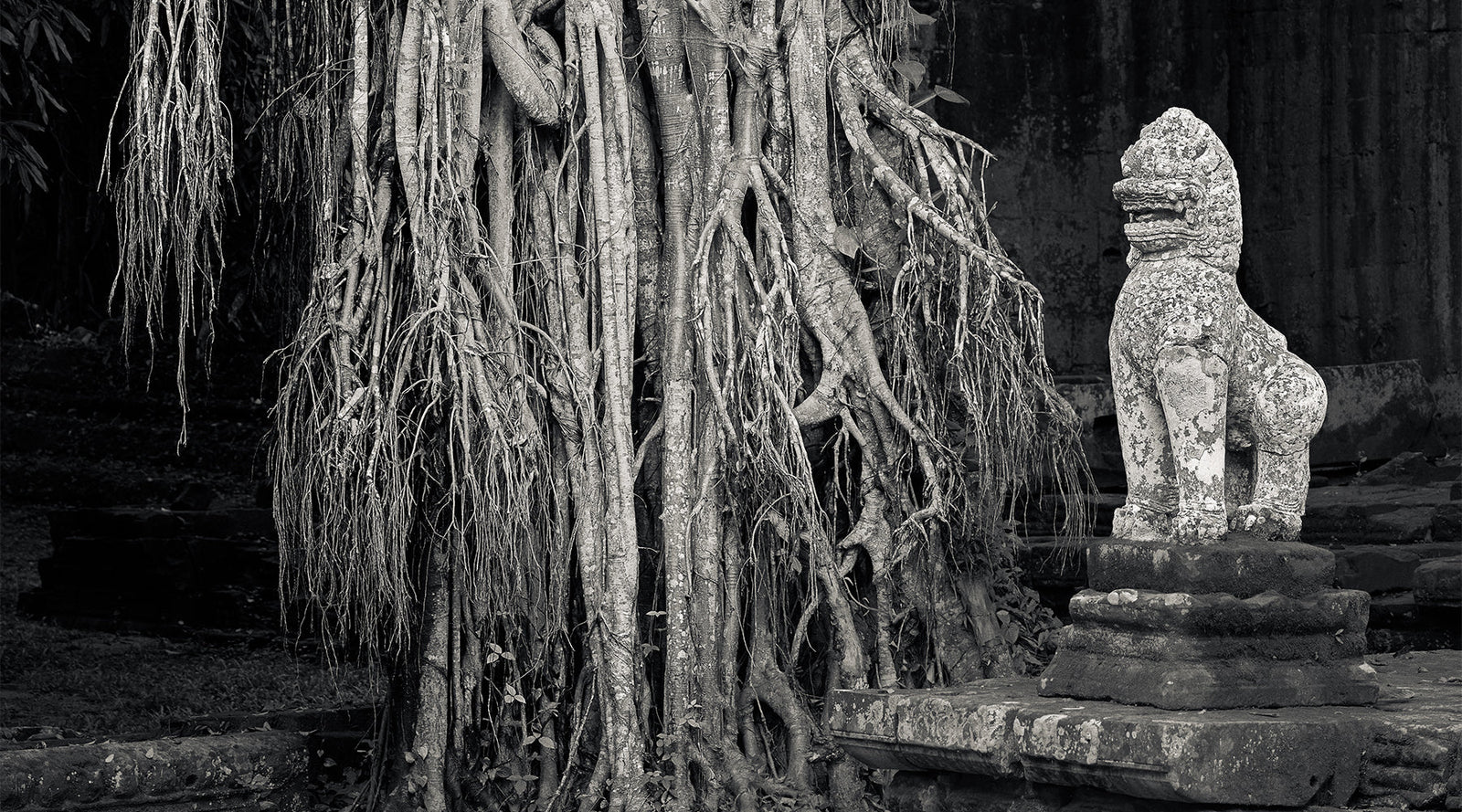

Where Root Meets Stone Before the First Light
“Not all guardians roar. Some wait in silence until the light remembers them.”
The path curved in shadow. Damp stone, fig leaves, earth softened by last night’s rain. I moved slowly through the hush, every step diminishing the self until only listening remained.
He was already there. A lion, half-consumed by lichen, pale as ash, standing not in defiance, but in a kind of surrender—still, watchful without watching. And beside him, the strangler fig, vast and weightless, its roots not clinging but cascading, as though the air itself asked to be draped in silence.
They did not move, but presence moved between them. That movement—the conversation of things older than sound—is what called me to pause. To witness, not capture. To be still long enough that stone might speak.
Eventually, I set the tripod. Gently, deliberately. The camera opened, and light seeped in like breath. In the studio weeks later, that hush still lingered on the negative. I shaped the image as one might cradle an echo: slowly, with reverence, breath by breath.
Roots drink the dawn’s hush
Lichen masks the granite roar
Silence between breaths
More from the Library

The Leaf and the Pencil
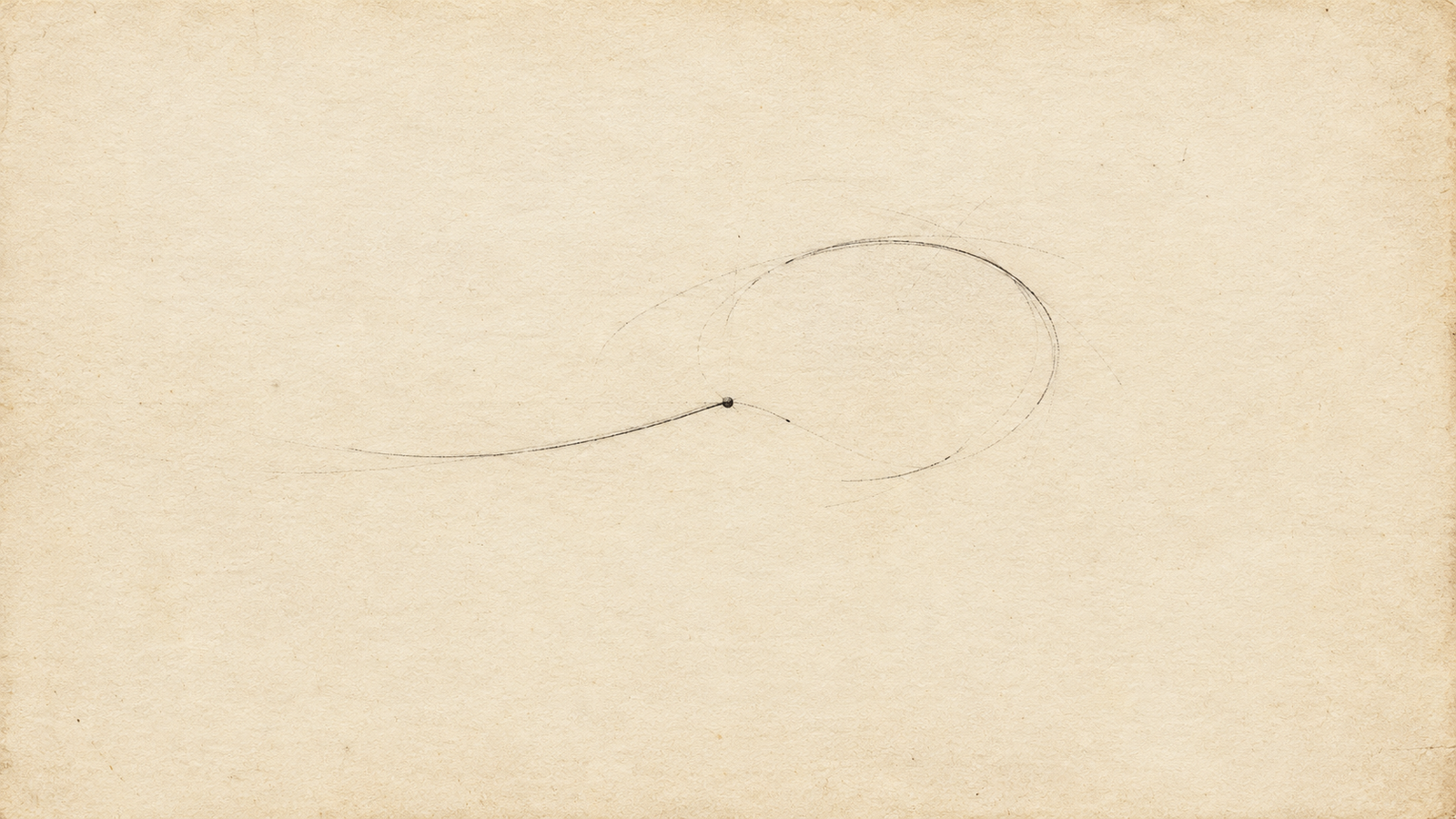
A leaf holds my attention. Then I remember that I can draw. The pencil reveals things I had never noticed, but introduces its own demands: proportion, shading, the desire to make something beautiful. When I try to describe the encounter, language presents another difficulty. An essay about the uncertain distance between looking at something, understanding it, and being present with it.

The Work We Return To
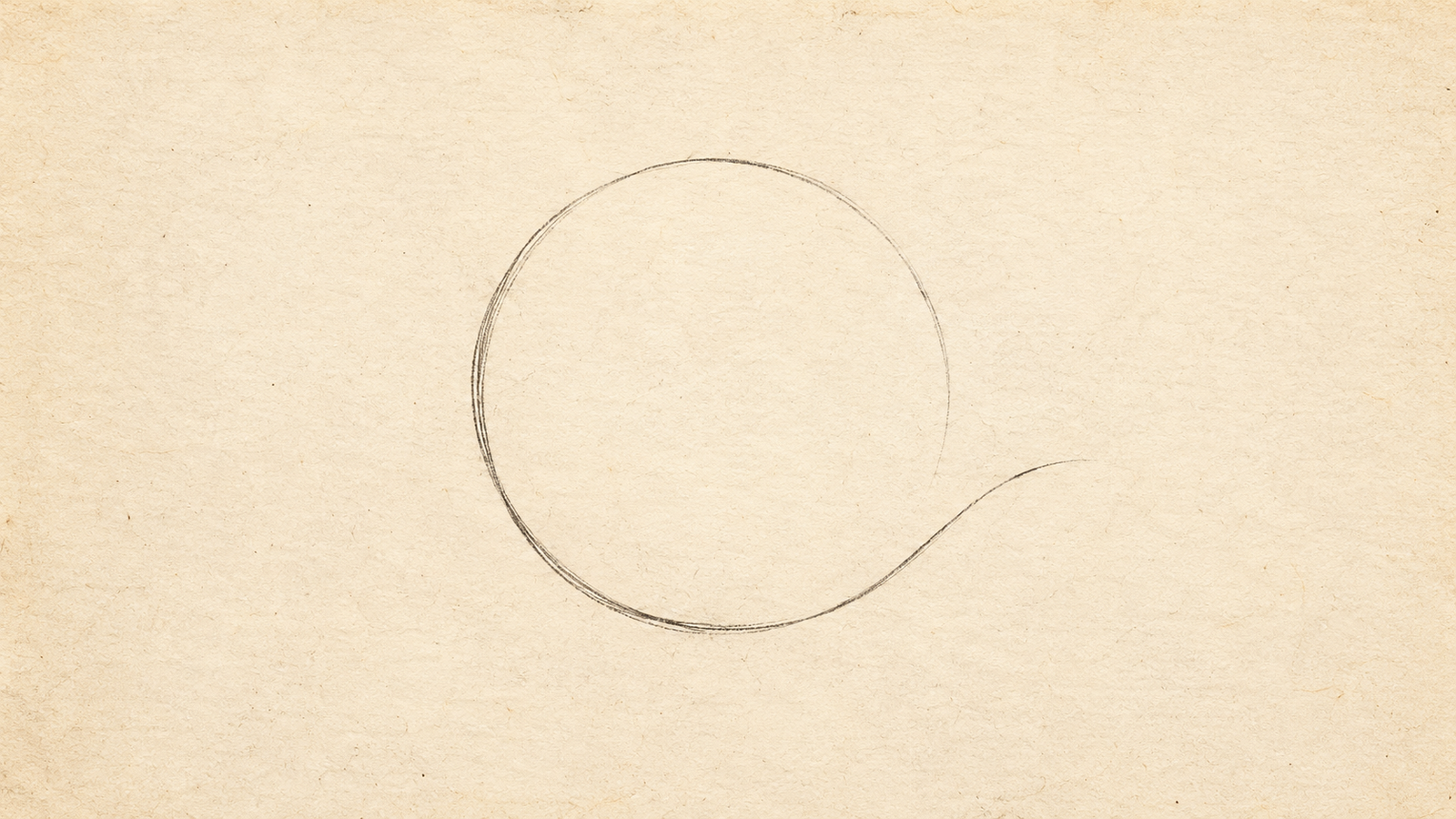
We have become very good at measuring persistence, and less good at asking what deserves it.
A musician begins the same passage again. A writer returns to an unfinished sentence. Someone stands before a familiar face carved in stone, with nothing new to photograph.
What brings us back when enthusiasm has gone? And how do we distinguish devotion from the demands that quietly consume the rest of our lives?

Under the Gallery
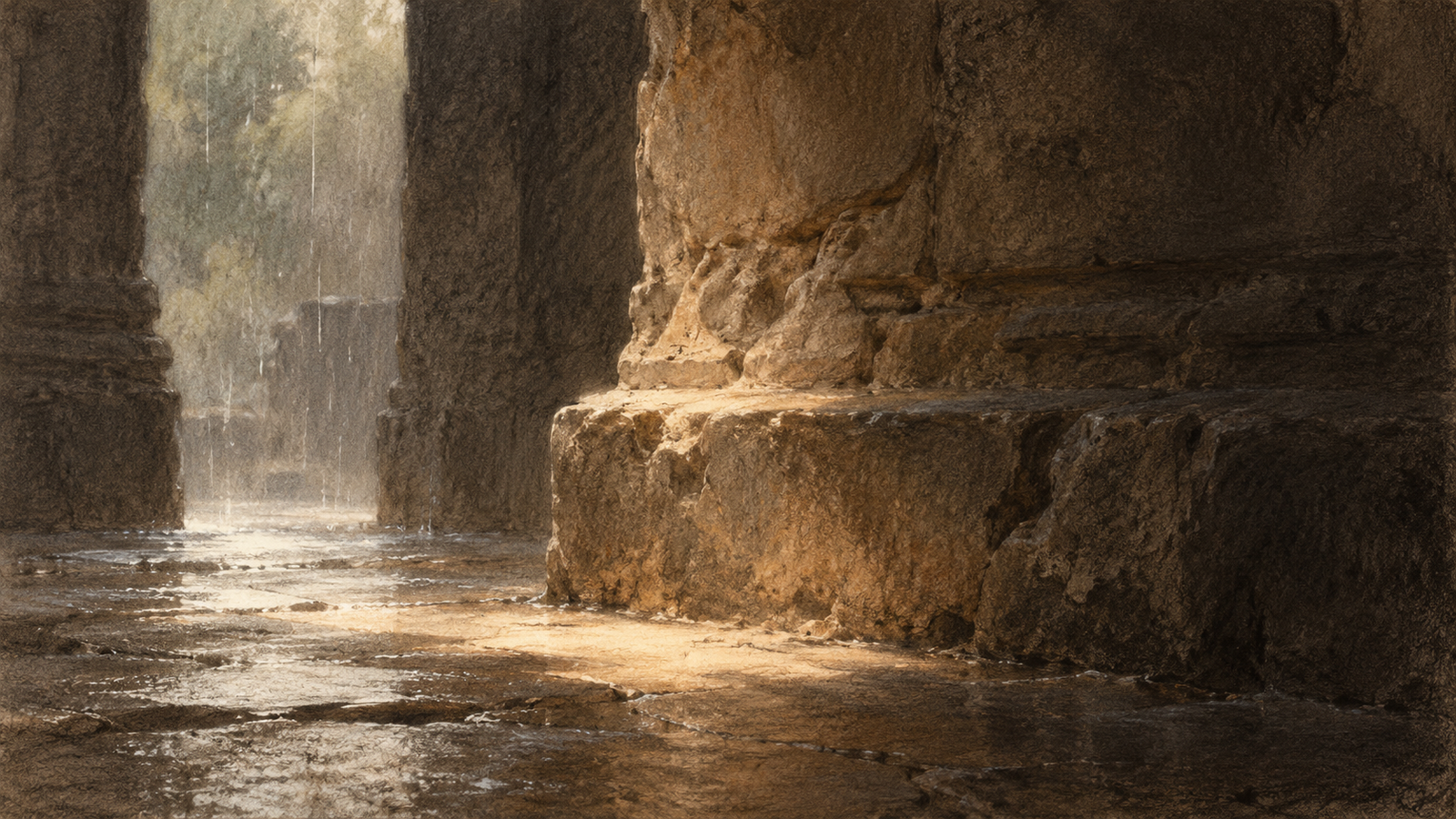
Rain, a carved hand, and the small movements of lives separated by centuries. A new literary piece from The Vow.

$895
Preah Khan Temple, Angkor, Cambodia — 2020
Limited Edition Archival Pigment Print
Edition
Strictly limited to 7 prints + 2 Artist’s Proofs
Edition Number
This listing is for the first numbered print from the Large Collector Edition: 1/7
Medium
Hand-toned black-and-white archival pigment print on Hahnemühle Bamboo — a museum-grade fine art paper chosen for its quiet tactility and reverent depth, echoing the spirit of the temples.
Signature & Numbering
Each print is individually signed and numbered by the artist on the border (recto)
Certificate of Authenticity
Accompanies every print
Image Size
28 x 28 inches (71.1 x 71.1 cm)
A hush presses down over Preah Khan before sunrise—thick with breath, shadow, and the scent of old rain. Roots fall like robes, and the white-mottled guardian lion waits in silence.
Here, tree and statue face one another without motion. A sacred tension lingers—not of conflict, but of equilibrium—where each presence dignifies the other. Light arrives slowly, as if asking permission to touch what time has already sanctified.
Lucas Varro stood within that silence, sensing an unspoken ritual unfolding. The image was captured on large-format black-and-white film with a long exposure. Later, in the darkroom, chiaroscuro was shaped by hand, and the final print was toned to echo the breath of stone and bark.
Each archival pigment print is hand-toned by the artist on museum-grade Hahnemühle Bamboo paper and issued in a strictly limited edition of 25 + 2 Artist’s Proofs.
Let this guardian of stillness take root within your contemplative space.
To trace the hush between breath and stone, click here to explore the Artist’s Journal.
Previously titled ‘Guardian, Preah Khan Temple, Angkor, Cambodia. 2020,’ this photograph has been renamed to better reflect its place in the series and its spiritual tone. The edition, provenance, and authenticity remain unchanged.