
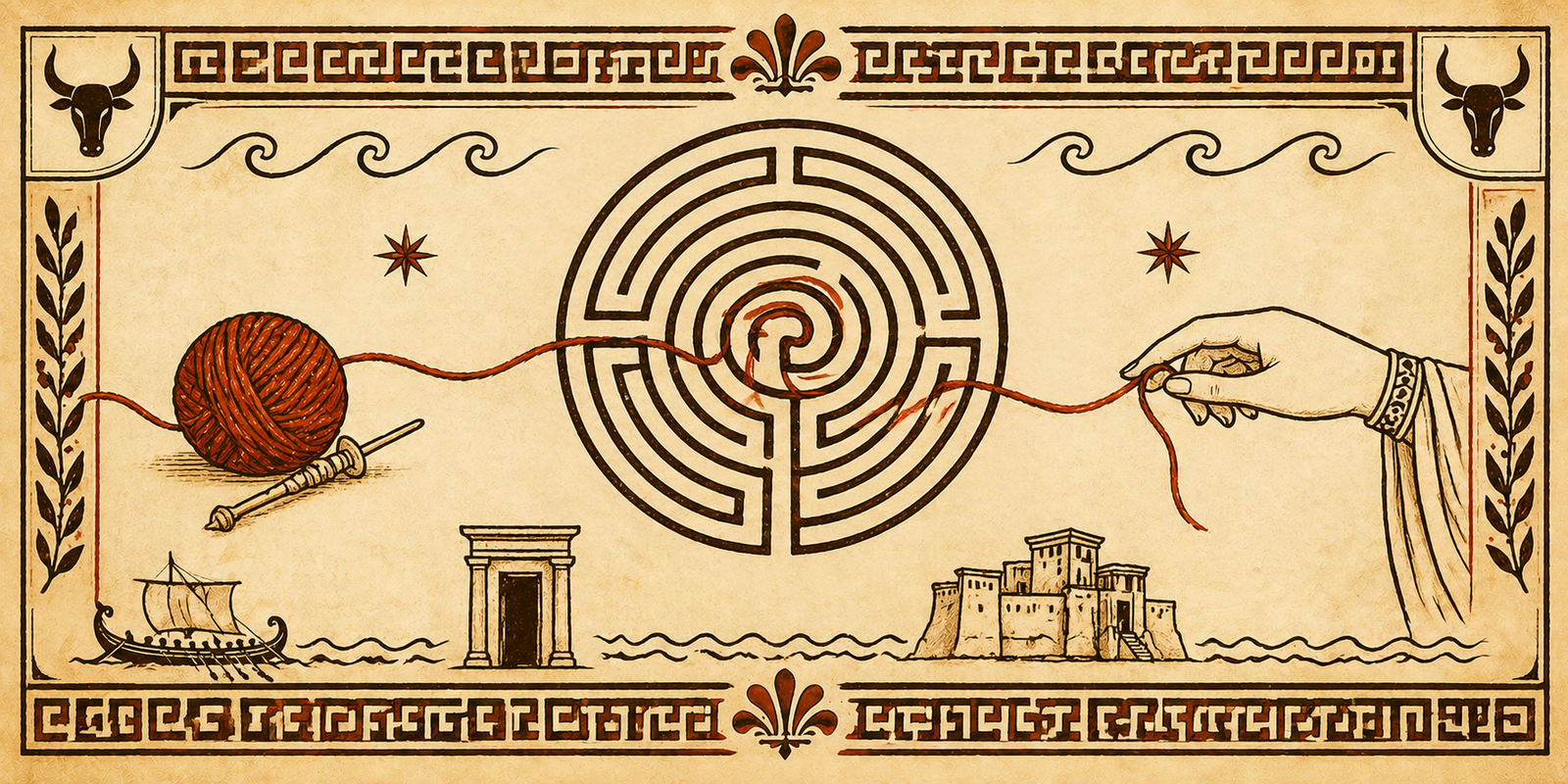

Ariadne’s Thread: The Small Thing That Leads Courage Home
After Theseus enters the Labyrinth and comes out again, one small object remains at the centre of the story.
Not the ship.
Not the sword.
Not the horns of the Minotaur.
The thread.
This new entry in The Greek World, part of The Alexander Series, introduces children to Ariadne’s thread as one of the great objects of Greek myth — not because it is large, shining, or god-made, but because it remembers the way home.
At first, Ariadne’s thread does not look like much. That is one of the reasons it matters. Greek myth is full of marvellous objects: winged sandals, shining shields, golden apples, thunderbolts, bows that only one man can string, helmets that make the wearer unseen. Beside such things, a ball of thread seems almost too ordinary to belong in a great adventure.
But Theseus does not come back from the Labyrinth because of something large, bright, and god-made.
He comes back because of a line.
Ariadne gives him the sword too, in many tellings. The sword matters. Without it, Theseus could not face the Minotaur.
But the sword only answers one part of the danger.
The thread answers the other.
Ariadne’s thread is the line Theseus uses to find his way back out of the Labyrinth after facing the Minotaur.
Ariadne, daughter of King Minos of Crete, gives it to him before he enters the maze. Theseus ties one end near the entrance and lets the thread run through his hands as he walks deeper and deeper into the dark.
Then, after the Minotaur is dead, he follows the thread back.
That is the important part.
The thread does not defeat the monster.
It defeats being lost.
In Theseus and the Thread, the danger does not end when the Minotaur falls. That is easy to forget. A great monster makes a great noise. It has horns, breath, weight, hunger, and a body that can be seen by lamp-light. When it charges, everyone knows the danger has arrived.
The Labyrinth is quieter.
It has no teeth. It does not roar. It does not chase Theseus through the passages. It simply waits for him to forget, boast, hurry, panic, or trust himself too much.
That is why Ariadne understands the story better than almost anyone else.
Theseus thinks first of the Minotaur.
Ariadne thinks of the way back.
She knows that courage can carry a person into danger, but courage alone does not always bring them home. Heroes often know how to begin. Fewer know how to return.
The thread is Ariadne’s answer to the part of the adventure that looks small from outside and becomes enormous from within.
It says:
You may enter the dark.
You may face what waits there.
But do not pretend you can remember every turn alone.
Continue reading: Ariadne’s Thread at The Alexander Series on Substack.
Also in The Alexander Series
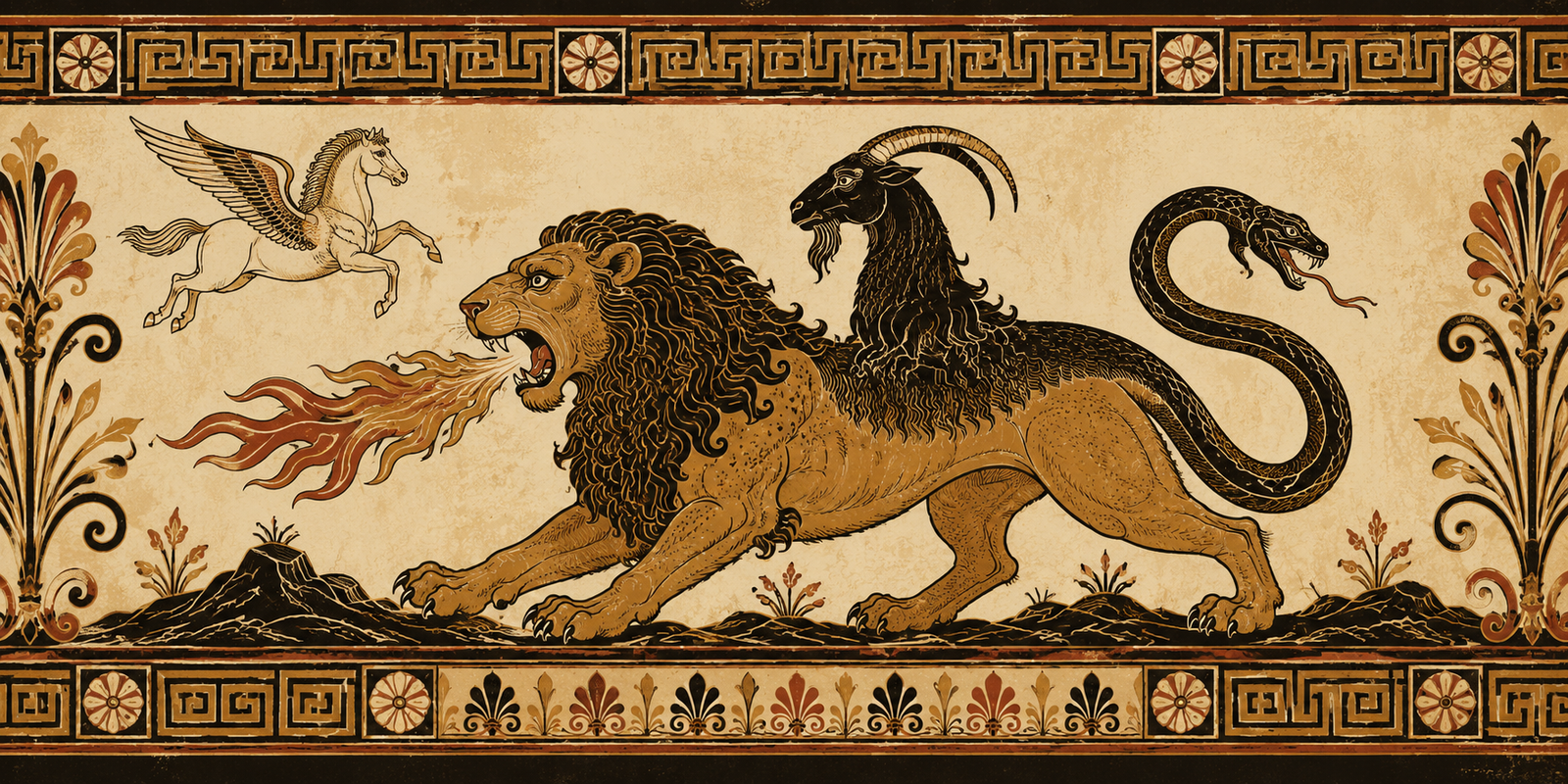

The Chimaera — A Greek Monster of Many Dangers
A child-readable Greek myth guide to the Chimaera: lion, goat, serpent, fire, and the monster’s many joined dangers. This excerpt from The Greek World shows why Bellerophon needed Pegasus, and why the Chimaera is not merely a strange animal mixture, but a precise Greek monster-sign.
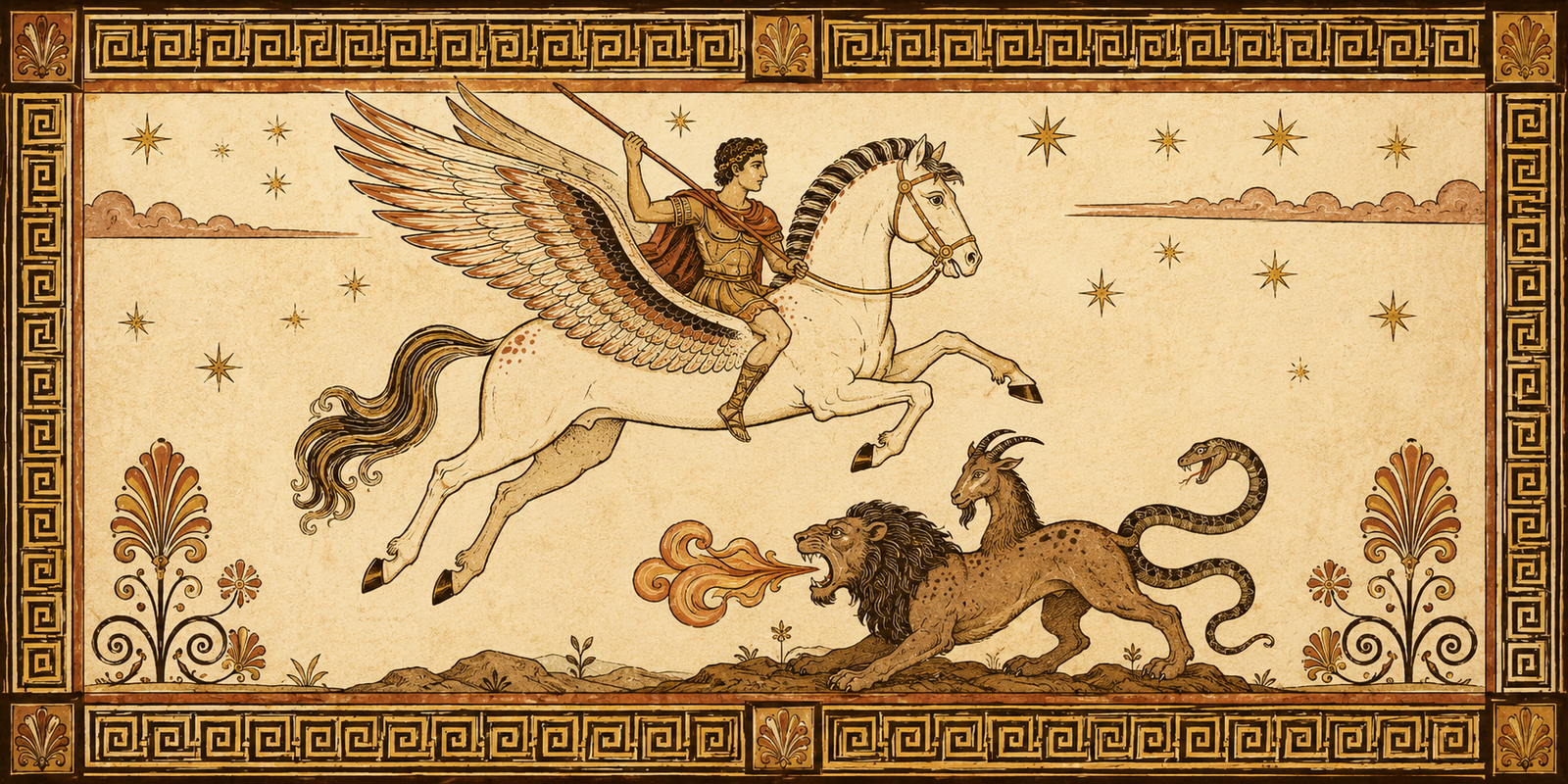

Bellerophon and Pegasus — A Greek Myth Retold for Children
A sealed message, a fire-breathing monster, a golden bridle, and the winged horse Pegasus. This Alexander Series tale retells the Greek myth of Bellerophon for serious child readers, preserving wonder, danger, courage, and the old warning hidden inside height.
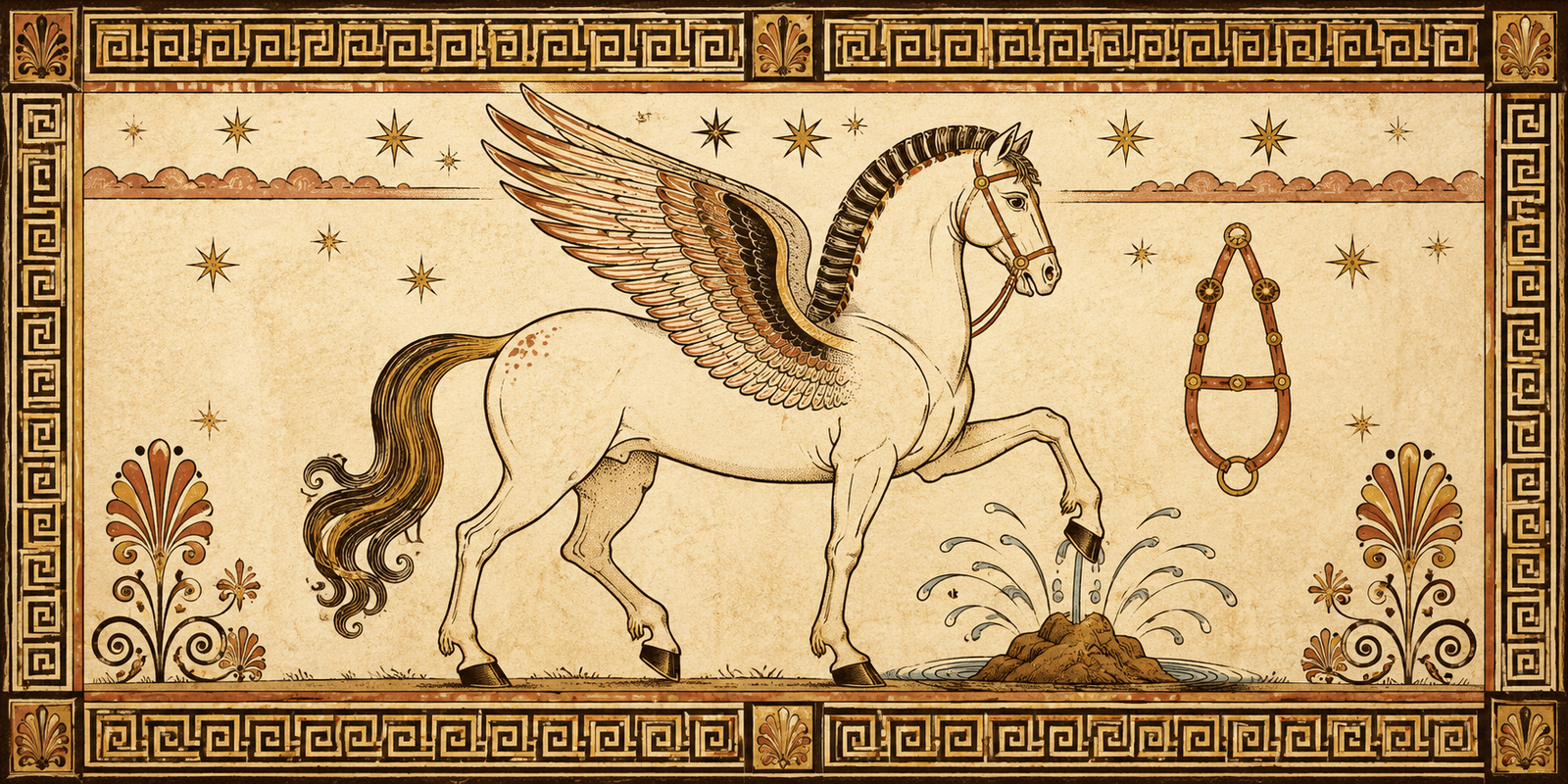

Pegasus — The Winged Horse of Greek Myth
Before Bellerophon takes the bridle, a child should know that Pegasus is not a pet, not a cloud, and not a harmless fantasy creature. This Greek World entry introduces the winged horse of Greek myth as wonder with hooves, wings, danger, and rules.
Continue Reading
If this piece found something in you, you may wish to continue the journey elsewhere.
On The Lantern Chronicles, I gather writings from Angkor, myth and legend, contemplative essays, and poetry — works shaped by silence, beauty, wonder, memory, and the deeper questions that follow us through the world.
It is a place for stone and story, reflection and vow, shadow and revelation.
You would be most welcome there.