
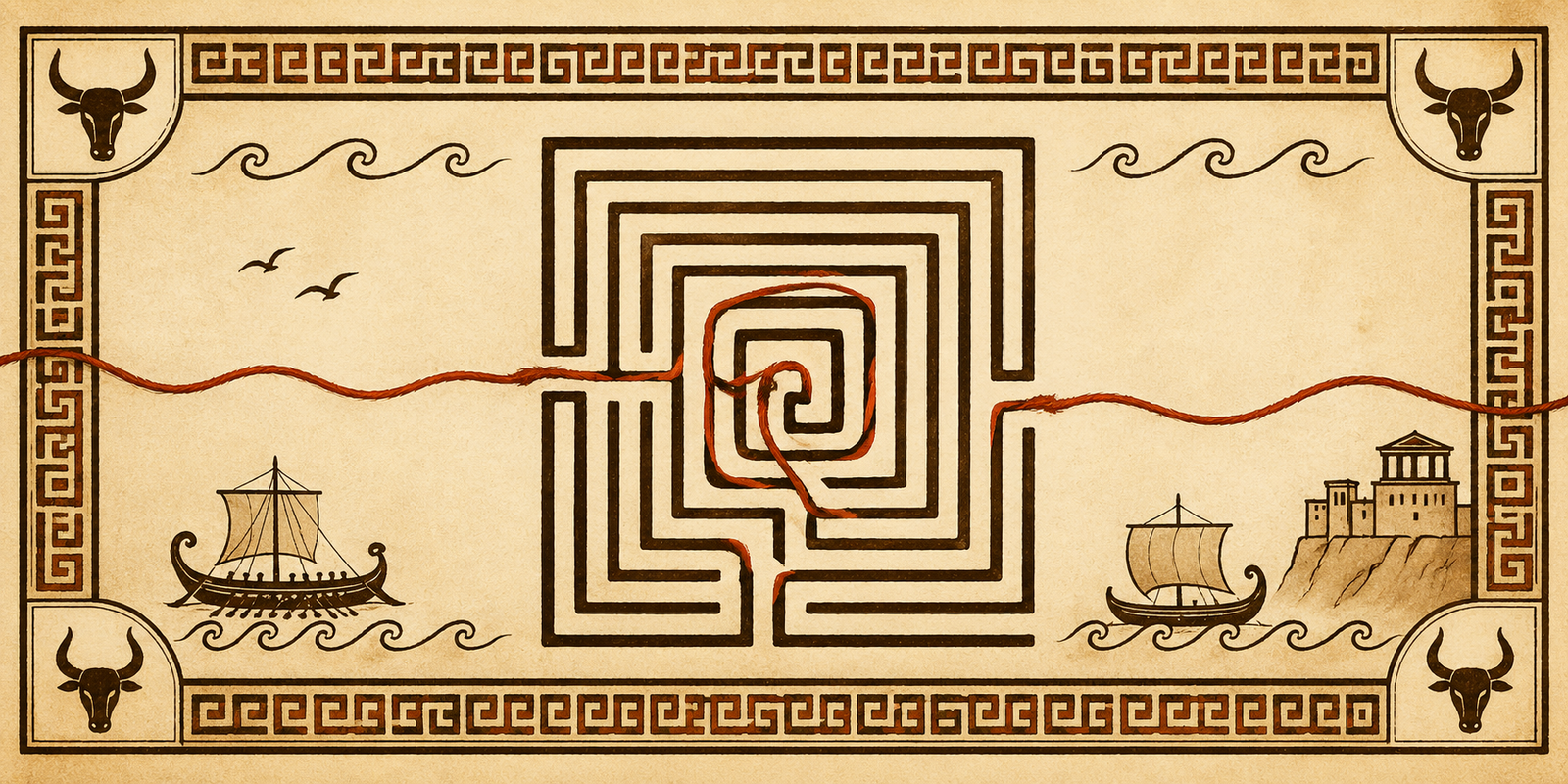

Theseus and the Thread
Theseus and the Thread is a Greek myth retold for serious child readers: warm, dangerous, clear, and alive to the old power of courage, fear, cleverness, and return.
This is the story of a black-sailed ship, fourteen children sent across the sea, a monster hidden beneath a palace, and a thread so small it almost seems foolish — until it becomes the one thing courage cannot do without. Theseus enters the Labyrinth with a sword, but it is Ariadne’s thread that teaches the deeper lesson: bravery may carry a child into the dark, but something else must remember the way home.
There was a ship in Athens that no one liked to see.
It was not the largest ship in the harbour. It was not the fastest, nor the finest, nor the one with the proudest carving at its prow. But whenever its black sail was raised, the whole city seemed to grow quieter.
Men stopped speaking in the marketplace.
Women came to their doorways and stood with their hands folded.
Children who had been chasing one another between the houses slowed down, because even children know when grown-ups have become afraid.
The ship sailed for Crete.
And every time it sailed, it carried seven Athenian boys and seven Athenian girls away from their homes.
It did not carry them to become servants, or messengers, or guests at some foreign palace. It carried them to the island of King Minos, who had power, wealth, many guards, and a very unpleasant habit of making other people pay for things he called justice.
Long before, Athens had angered Crete. That is the kind of sentence kings use when they do not wish to explain themselves gently. So Minos had demanded a tribute. Every few years, Athens must send fourteen young people across the sea.
They were sent to the Labyrinth.
And in the Labyrinth lived the Minotaur.
You may already have heard that name. If you have, you will know it is not a name that belongs beside a warm fire. The Minotaur was part man, part bull, and wholly dreadful. He had been born into the house of Minos like a secret too terrible to keep in an ordinary room. So Minos had hidden him beneath the palace, in a maze built by Daedalus, the cleverest craftsman in the world.
Daedalus could make wood seem almost alive. He could make statues look as if they might walk away if you turned your back. He could design a building so cunningly that even the person who entered it willingly might never find the door again.
That was the Labyrinth.
It was not only a prison for the Minotaur.
It was a prison for anyone sent in after him.
And so, whenever the black sail rose in Athens, the city remembered that courage is sometimes demanded from people who have not yet had time to grow old enough to choose it.
Continue reading: Theseus and the Thread at The Alexander Series on Substack.
Also in The Alexander Series
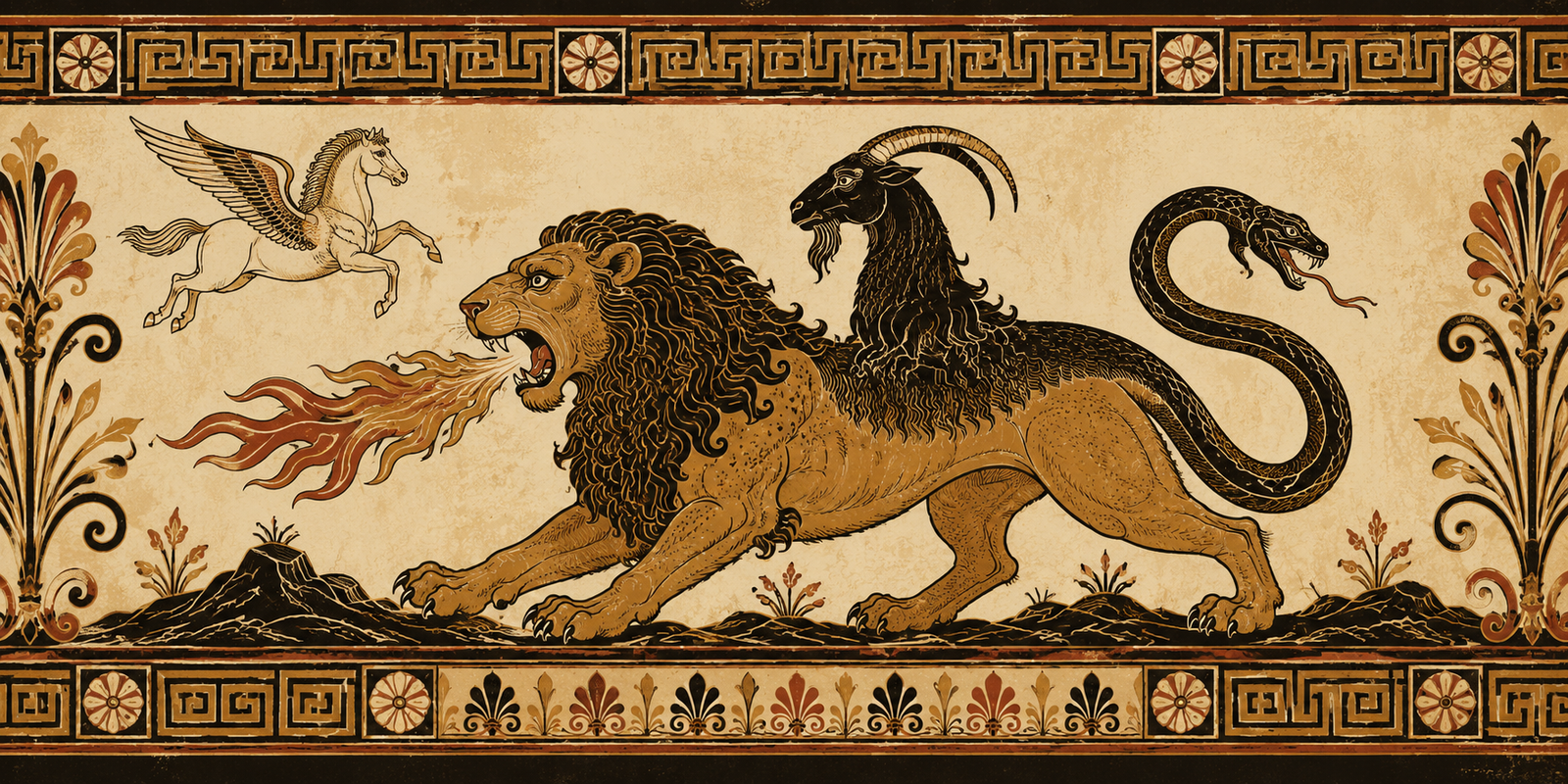

The Chimaera — A Greek Monster of Many Dangers
A child-readable Greek myth guide to the Chimaera: lion, goat, serpent, fire, and the monster’s many joined dangers. This excerpt from The Greek World shows why Bellerophon needed Pegasus, and why the Chimaera is not merely a strange animal mixture, but a precise Greek monster-sign.
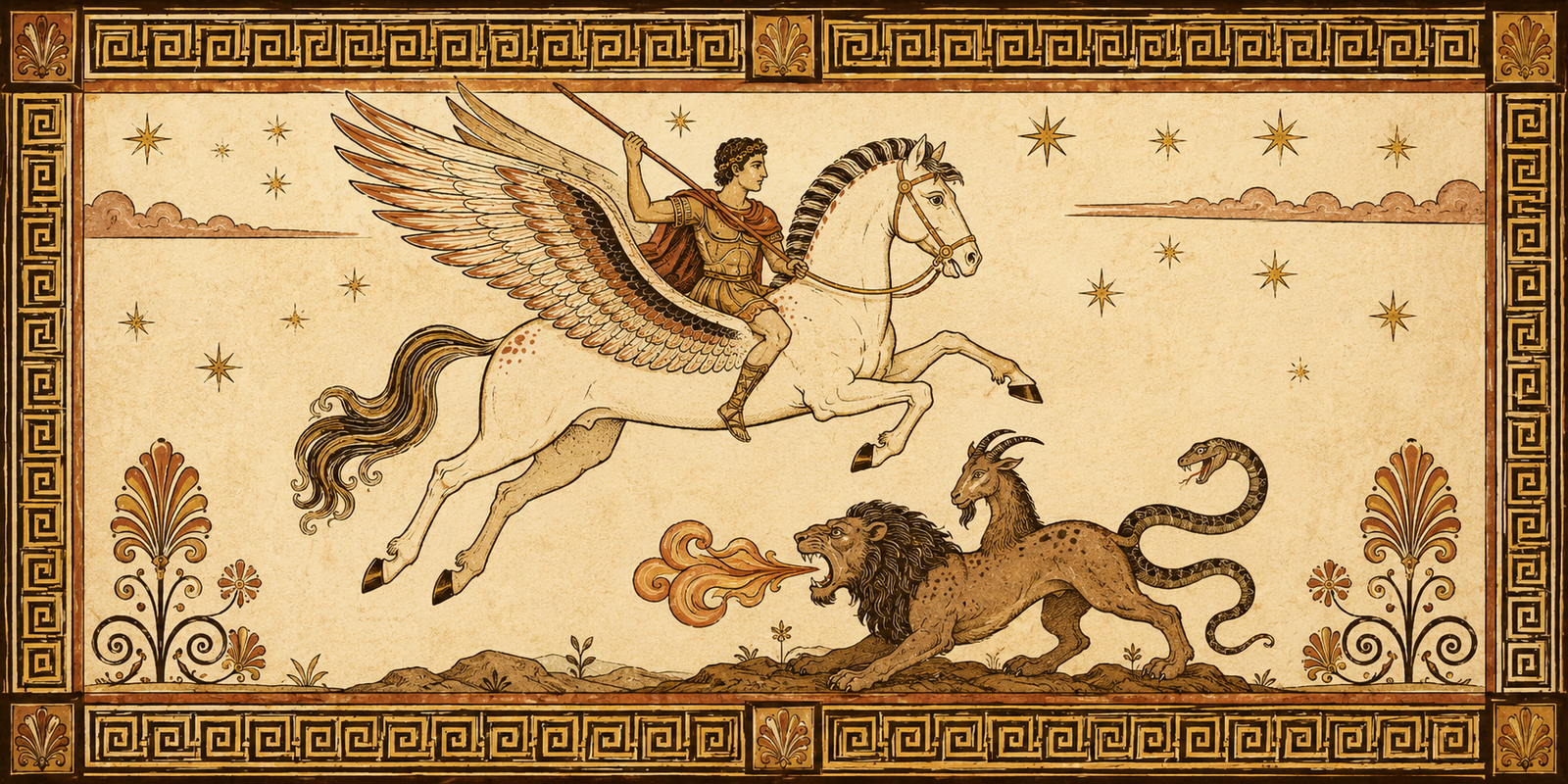

Bellerophon and Pegasus — A Greek Myth Retold for Children
A sealed message, a fire-breathing monster, a golden bridle, and the winged horse Pegasus. This Alexander Series tale retells the Greek myth of Bellerophon for serious child readers, preserving wonder, danger, courage, and the old warning hidden inside height.
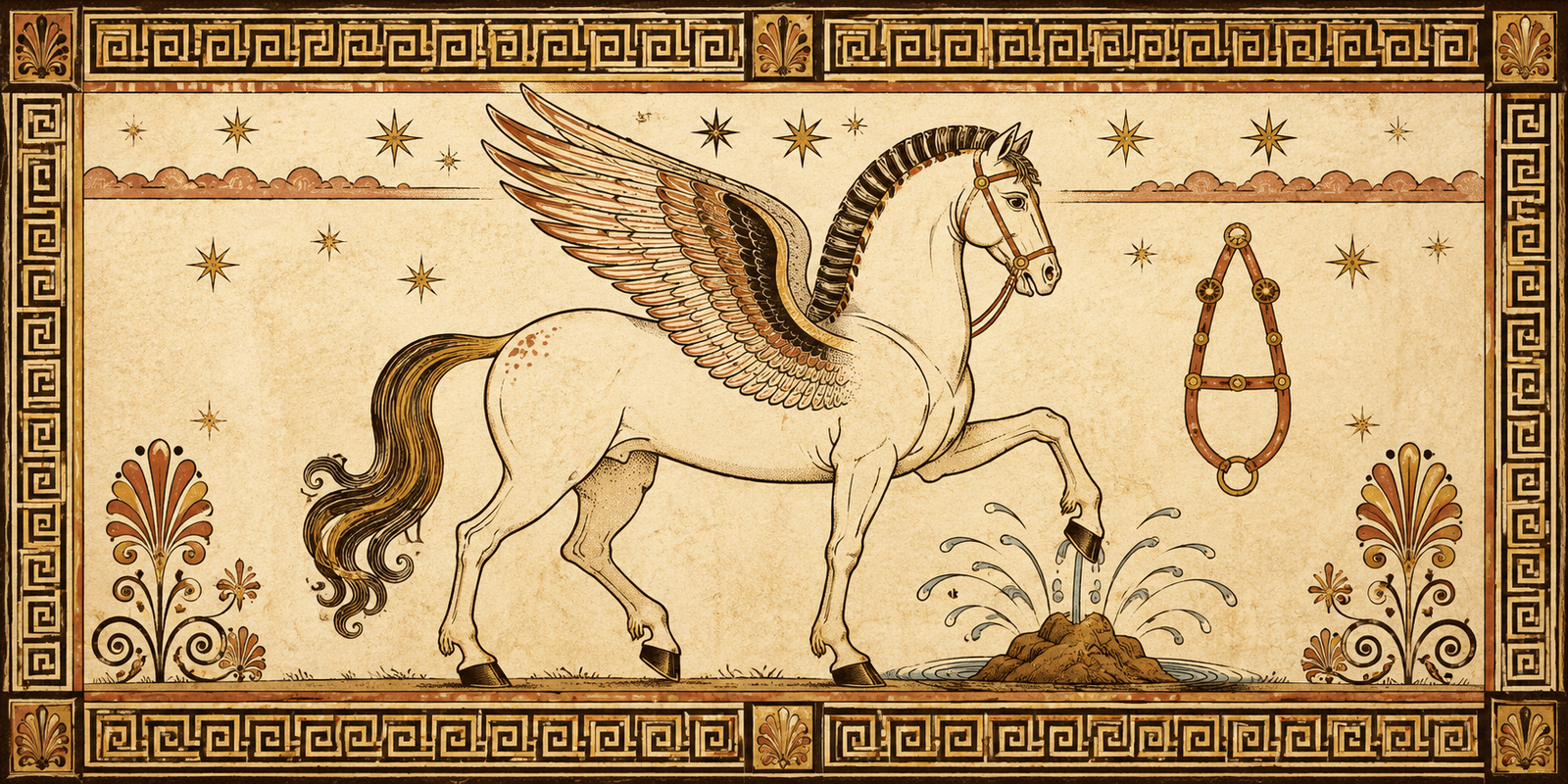

Pegasus — The Winged Horse of Greek Myth
Before Bellerophon takes the bridle, a child should know that Pegasus is not a pet, not a cloud, and not a harmless fantasy creature. This Greek World entry introduces the winged horse of Greek myth as wonder with hooves, wings, danger, and rules.
Continue Reading
If this piece found something in you, you may wish to continue the journey elsewhere.
On The Lantern Chronicles, I gather writings from Angkor, myth and legend, contemplative essays, and poetry — works shaped by silence, beauty, wonder, memory, and the deeper questions that follow us through the world.
It is a place for stone and story, reflection and vow, shadow and revelation.
You would be most welcome there.