
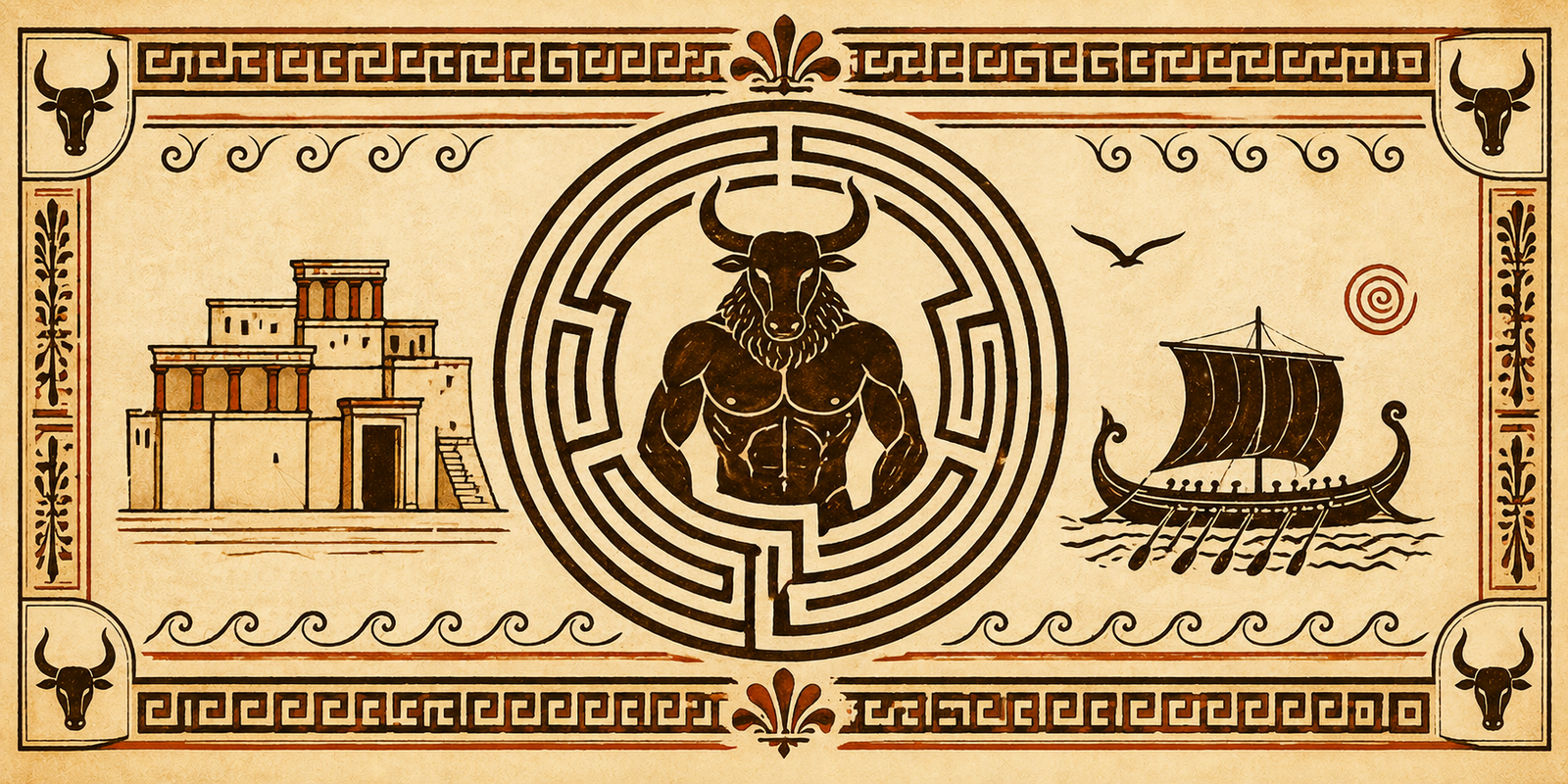

The Minotaur: The Monster at the Centre of the Labyrinth
Before Theseus enters the Labyrinth, before Ariadne gives him the thread, before the dark begins to turn and twist around him, there is the Minotaur.
Not just a monster.
That is the first thing to understand.
This entry in The Greek World, part of The Alexander Series, introduces children to the Minotaur not simply as a frightening creature in the dark, but as a secret hidden inside a royal house: part man, part bull, bound to King Minos, the palace of Crete, the Labyrinth, and the tribute sent from Athens.
Greek myths have many monsters. Some live in caves. Some rise from the sea. Some guard gates, haunt lonely places, or wait at the edge of the known world. But the Minotaur is stranger than many of them because he is not only a danger hiding in the dark.
He is a secret.
He belongs to a palace, a king, a queen, a craftsman, a god’s anger, and a family that tried to hide what had gone wrong.
That is why his story is frightening. Not because he has horns, though he does. Not because he waits in the Labyrinth, though he does. The Minotaur is frightening because grown-ups with crowns, servants, guards, and beautiful painted walls decided that something terrible could be shut away and fed.
In Greek myth, this almost never works.
The Minotaur is a creature from the island of Crete: part man, part bull, and kept hidden inside the Labyrinth beneath or beside the palace of King Minos.
His name means “the bull of Minos.”
He is at the centre of the story of Theseus because Athens must send young people to Crete as tribute, and those young people are given to the Labyrinth.
No one sent into the Labyrinth is expected to come out again.
Crete was a powerful island kingdom. Its king was Minos, who wanted everyone to know that he had the favour of the gods.
This was often a dangerous thing for a king to want.
One story says that Minos asked Poseidon, god of the sea, to send him a marvellous bull from the waves as a sign that he should be king. Poseidon sent the bull. It was magnificent — strong, bright, impossible to ignore.
Minos was supposed to sacrifice it back to the god.
He did not.
He kept it.
This was a very Minos sort of mistake: proud, greedy, royal, and extremely unwise. When gods give gifts in Greek myth, it is best to pay attention to the conditions attached.
Poseidon was not pleased.
After that, a strange punishment fell on the royal house of Crete. Queen Pasiphae gave birth to a child who was not fully human and not fully animal: the Minotaur.
The palace now had a problem it could not turn into a song of glory.
So Minos hid it.
He ordered Daedalus, the greatest craftsman of Crete, to build a prison so clever that no one placed inside it could find the way out. Daedalus built the Labyrinth — a maze of passages, turns, doors, chambers, and false ways, made not only to hold the Minotaur, but to confuse anyone who entered.
A monster can be dangerous.
A monster hidden by a king is worse.
Continue reading: The Minotaur at The Alexander Series on Substack.
Also in The Alexander Series
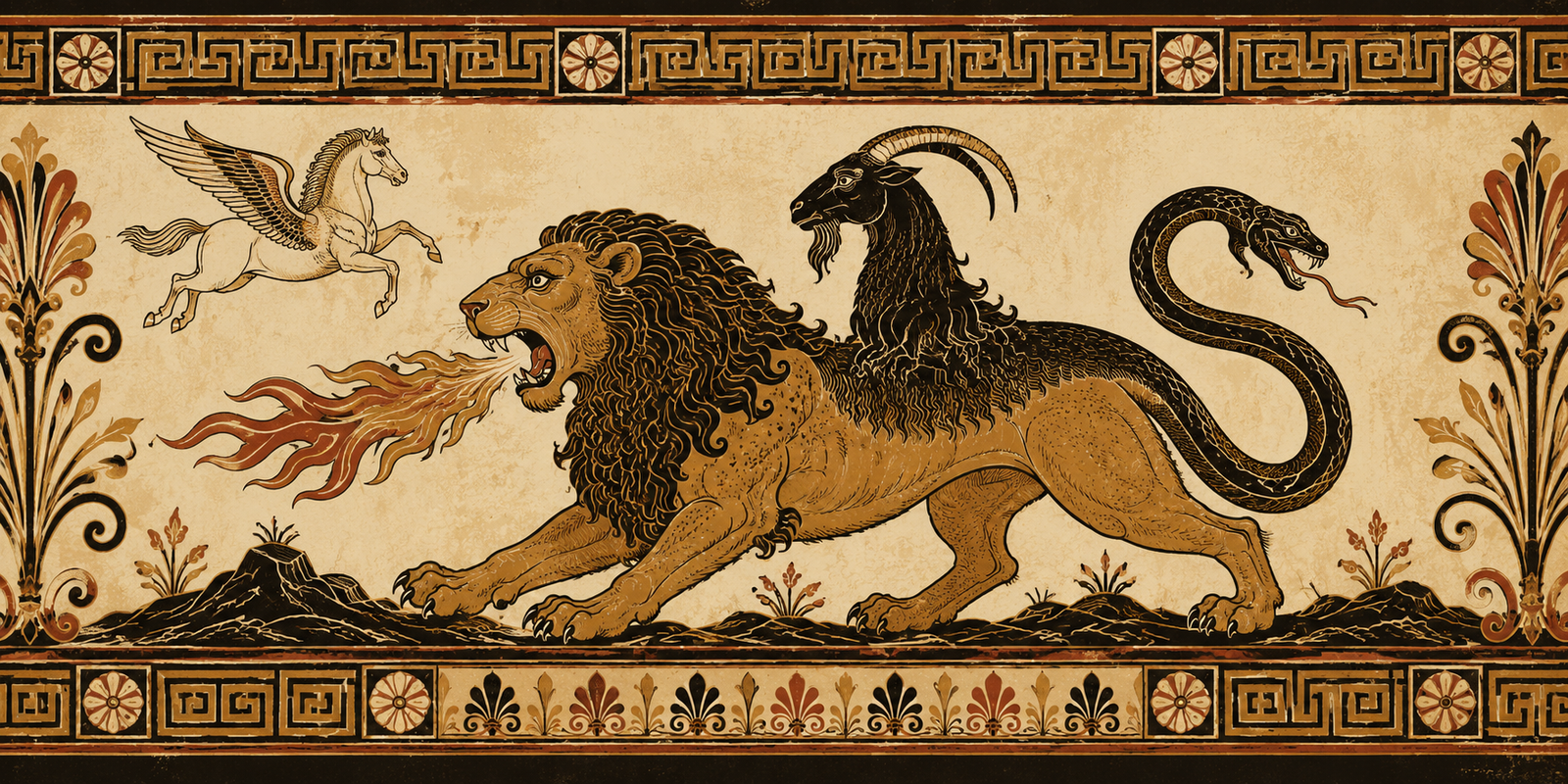

The Chimaera — A Greek Monster of Many Dangers
A child-readable Greek myth guide to the Chimaera: lion, goat, serpent, fire, and the monster’s many joined dangers. This excerpt from The Greek World shows why Bellerophon needed Pegasus, and why the Chimaera is not merely a strange animal mixture, but a precise Greek monster-sign.
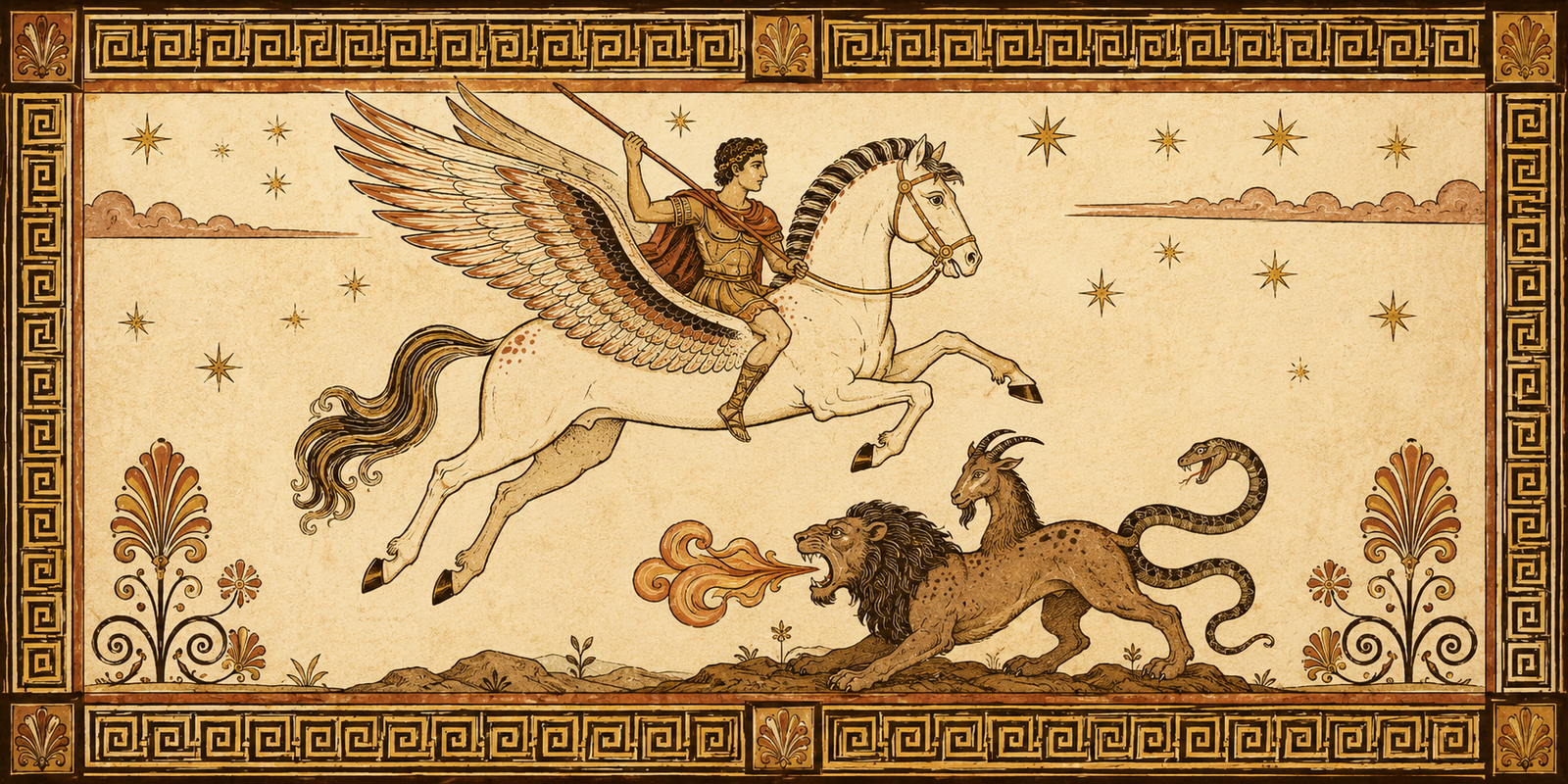

Bellerophon and Pegasus — A Greek Myth Retold for Children
A sealed message, a fire-breathing monster, a golden bridle, and the winged horse Pegasus. This Alexander Series tale retells the Greek myth of Bellerophon for serious child readers, preserving wonder, danger, courage, and the old warning hidden inside height.
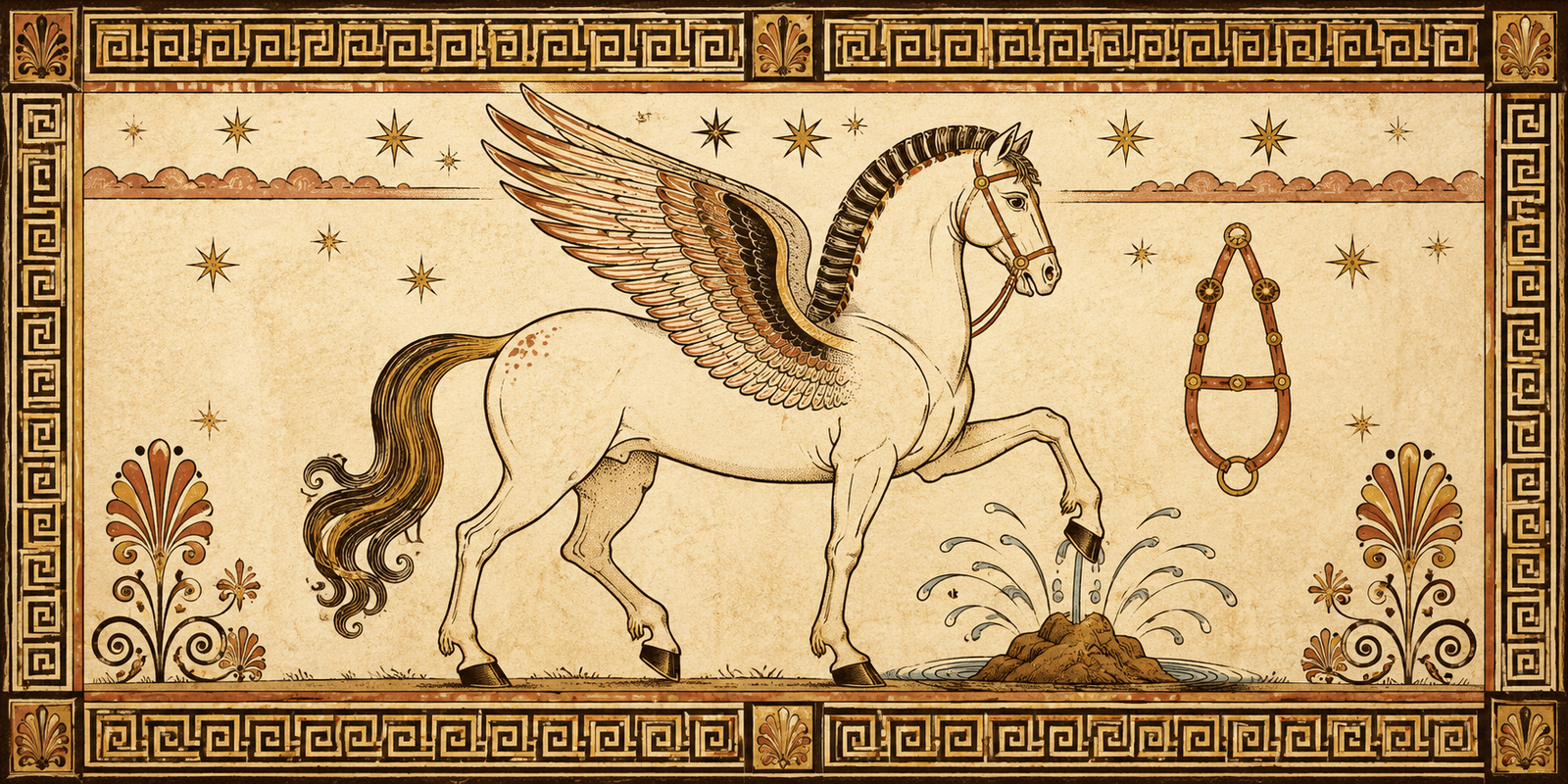

Pegasus — The Winged Horse of Greek Myth
Before Bellerophon takes the bridle, a child should know that Pegasus is not a pet, not a cloud, and not a harmless fantasy creature. This Greek World entry introduces the winged horse of Greek myth as wonder with hooves, wings, danger, and rules.
Continue Reading
If this piece found something in you, you may wish to continue the journey elsewhere.
On The Lantern Chronicles, I gather writings from Angkor, myth and legend, contemplative essays, and poetry — works shaped by silence, beauty, wonder, memory, and the deeper questions that follow us through the world.
It is a place for stone and story, reflection and vow, shadow and revelation.
You would be most welcome there.