
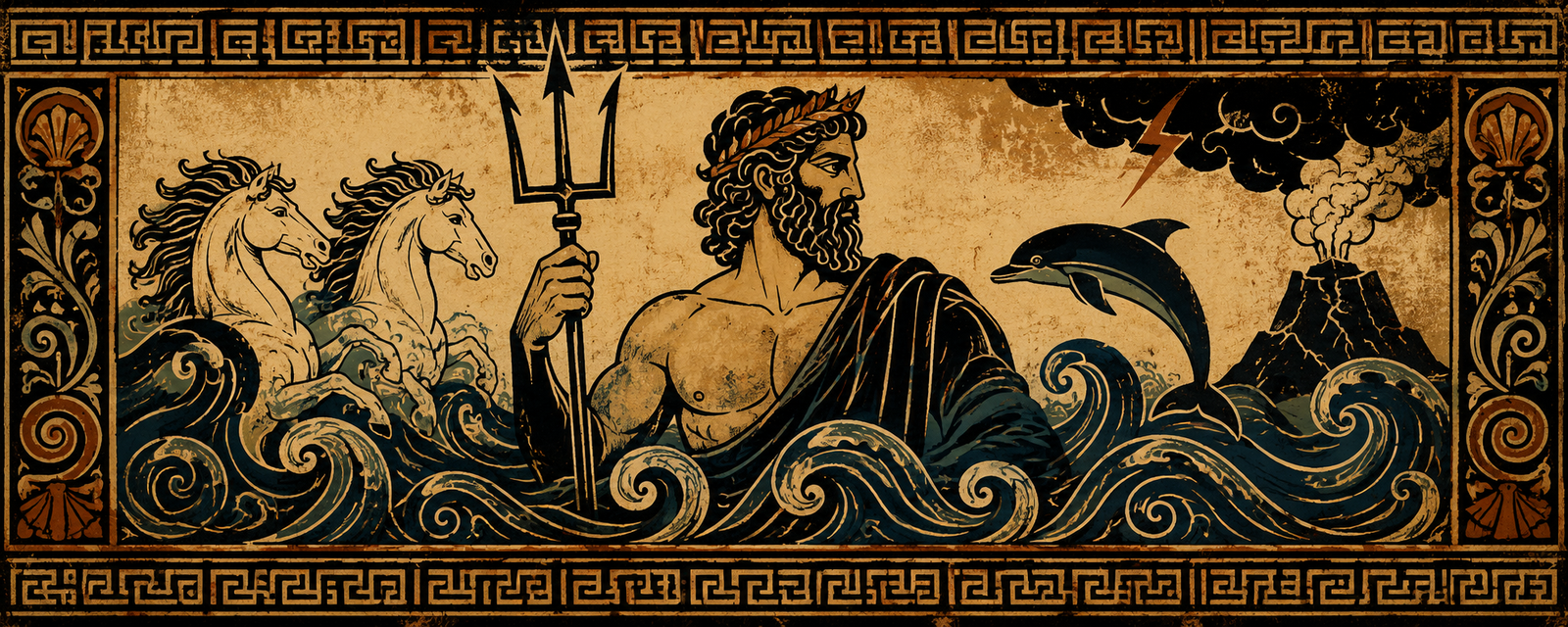

Poseidon: The Sea Is Not Only Water
Before Odysseus reaches the cave, before the single eye opens in the dark, before a clever name saves men who have almost run out of hope, there is Poseidon.
This new entry in The Greek World, part of The Alexander Series, introduces children to the god of the sea, storms, horses, earthquakes, and remembered insults. It prepares the way for Odysseus in the Cave of the Cyclops by showing that, in Greek myth, the sea is not scenery. It is a god’s realm.
You may think the sea is only water.
In Greek myth, this is a dangerous mistake.
The sea has moods. It has roads no one can see. It has voices under its waves and sudden walls of foam. It can carry a ship gently for days, then break it apart because one god has remembered an insult.
To sail on the sea is not simply to travel.
It is to cross Poseidon’s kingdom.
And Poseidon was not a god who enjoyed being laughed at.
Poseidon is the Greek god of the sea, storms, horses, earthquakes, and sudden, terrible force.
He is one of the great Olympian gods. His brothers are Zeus, who rules the sky, and Hades, who rules the Underworld. Poseidon rules the sea — which, for the Greeks, meant nearly everything between one dangerous shore and the next.
He carries a trident, a three-pronged spear. With it, he can stir waves, split rock, raise storms, shake the earth, and remind mortals that the world beneath their feet is not as firm as they like to think.
Poseidon is powerful, proud, and difficult to appease.
This is useful to know before meeting Odysseus.
Odysseus is clever.
Poseidon is not easily forgiven.
The Greeks lived close to the sea.
Their cities stood beside harbours, islands, straits, cliffs, beaches, and trading routes. A person might need the sea for fish, travel, war, trade, news, rescue, or return. The sea could make a family wealthy. It could carry a father home.
It could also take everything.
That is why Poseidon matters so much. He is not a small god of waves and shells. He is the power of the sea itself: the dark water under the ship, the storm beyond the headland, the prayer in a sailor’s mouth when the sky lowers and the oars begin to feel useless.
He is sometimes shown with horses, too.
This may seem strange until you remember how the sea moves: white-maned, rushing, stamping, foaming, impossible to hold. In some stories, Poseidon creates horses or gives them to mortals. In others, he drives his chariot over the waves.
He is also called the Earth-Shaker.
That name is not decoration.
The Greeks believed earthquakes belonged to him. The ground itself could tremble under his anger. A city might think it was safe behind walls; Poseidon could remind it that stone also has fear inside it.
So Poseidon is not only the god of water.
He is the god of force beneath surfaces.
The calm sea may be holding a storm.
The quiet earth may be holding a shudder.
The smiling god may be holding a grudge.
Continue reading: Poseidon at The Alexander Series on Substack.
Also in The Alexander Series
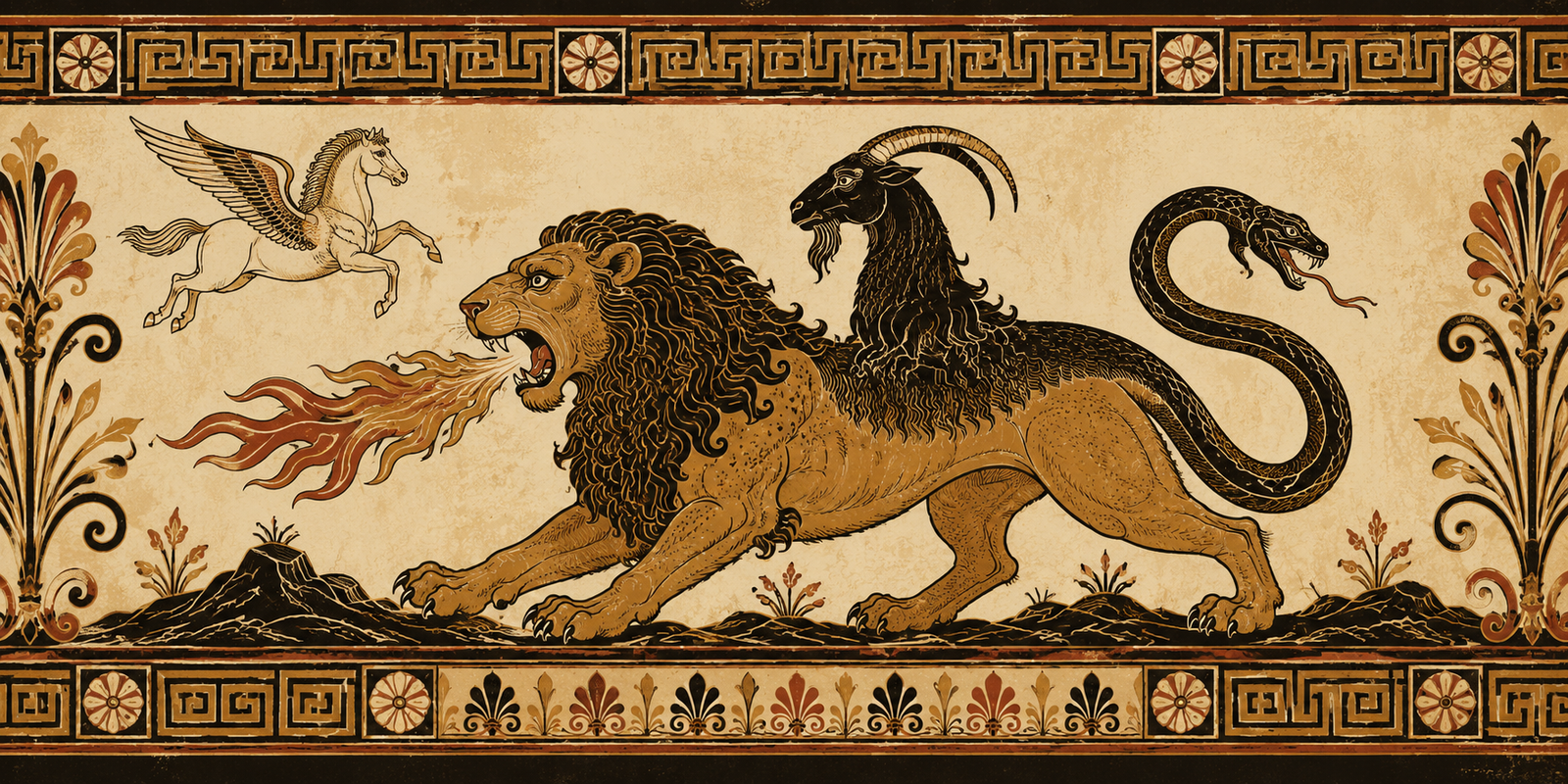

The Chimaera — A Greek Monster of Many Dangers
A child-readable Greek myth guide to the Chimaera: lion, goat, serpent, fire, and the monster’s many joined dangers. This excerpt from The Greek World shows why Bellerophon needed Pegasus, and why the Chimaera is not merely a strange animal mixture, but a precise Greek monster-sign.
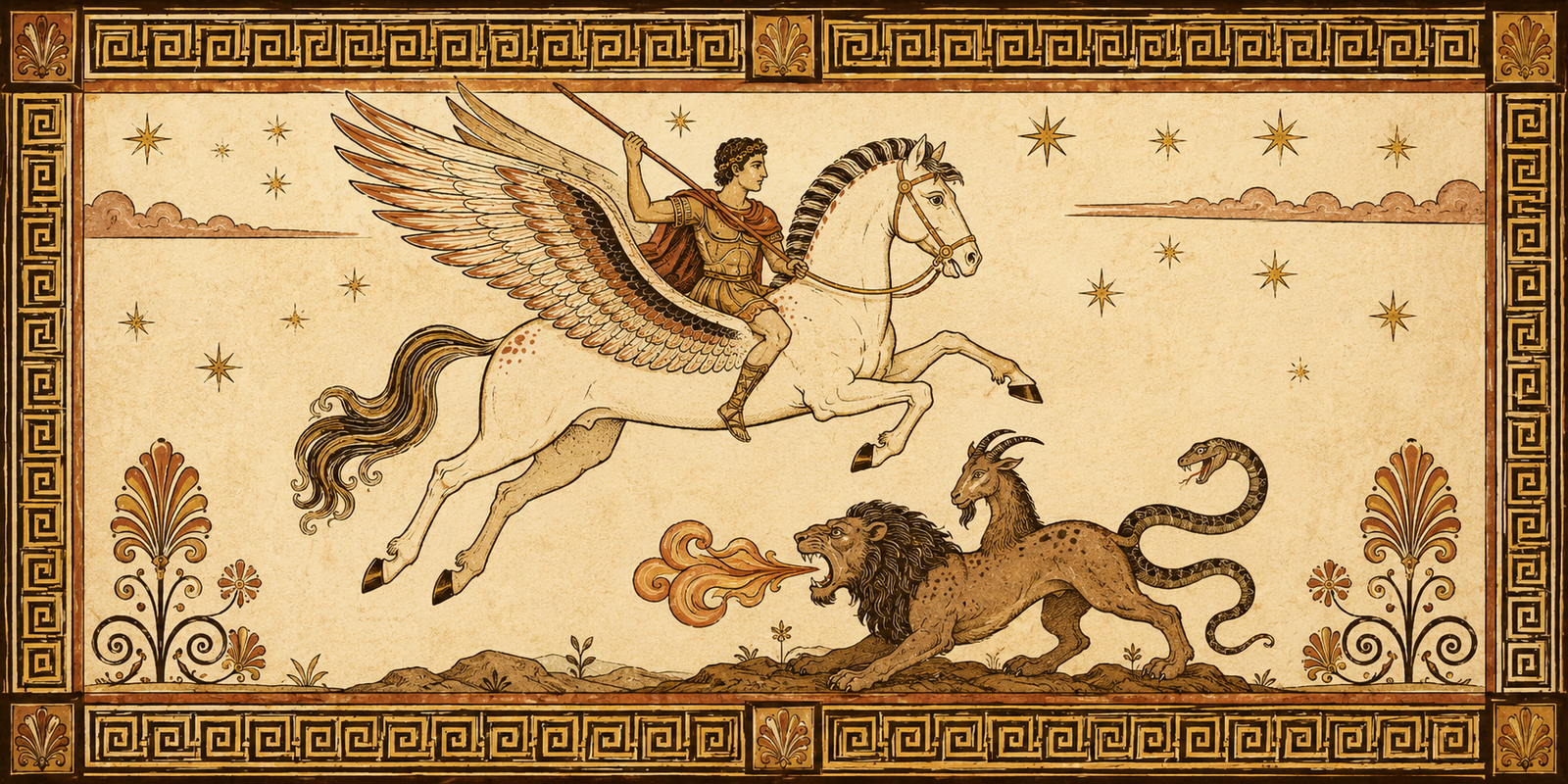

Bellerophon and Pegasus — A Greek Myth Retold for Children
A sealed message, a fire-breathing monster, a golden bridle, and the winged horse Pegasus. This Alexander Series tale retells the Greek myth of Bellerophon for serious child readers, preserving wonder, danger, courage, and the old warning hidden inside height.
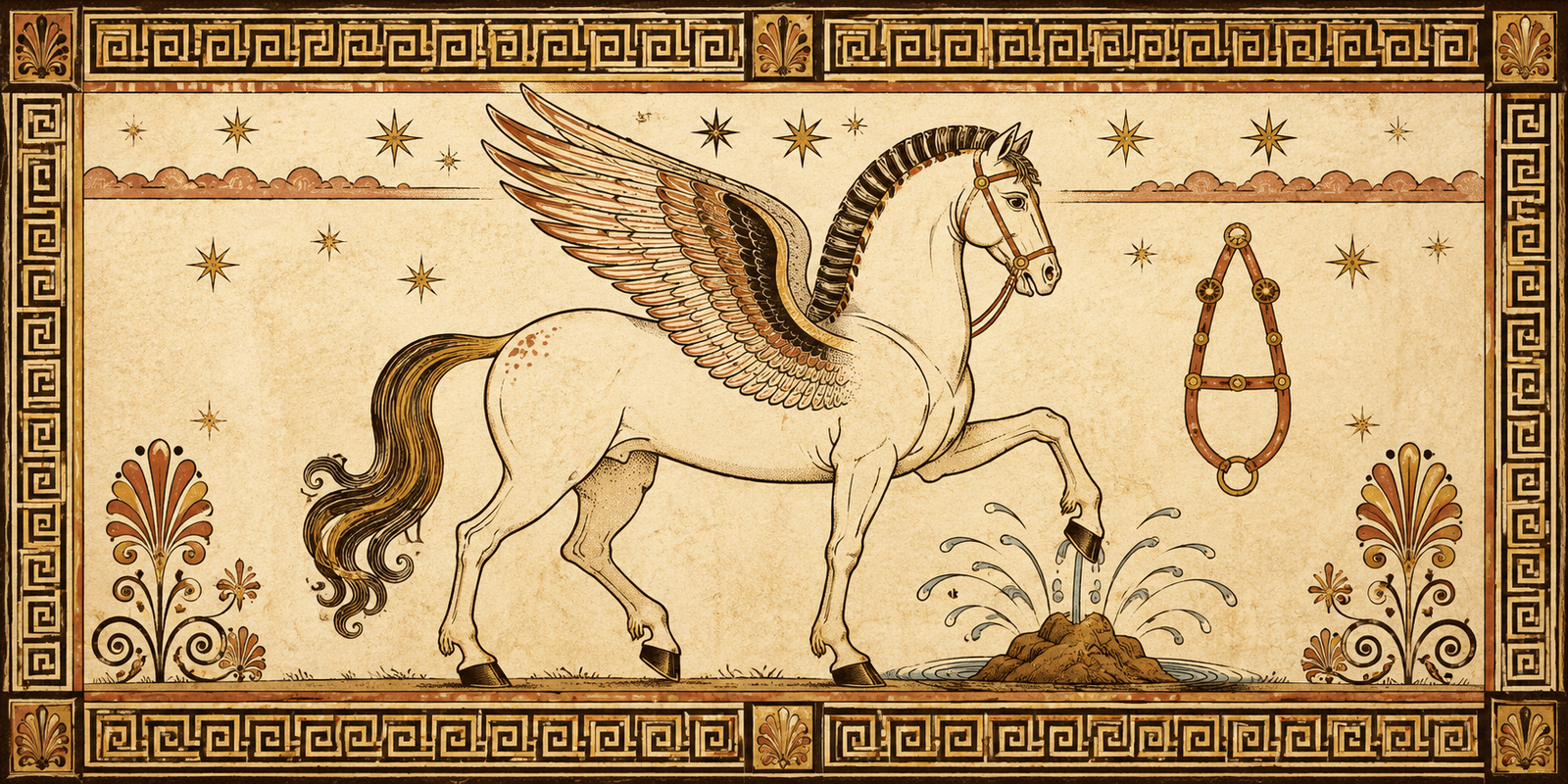

Pegasus — The Winged Horse of Greek Myth
Before Bellerophon takes the bridle, a child should know that Pegasus is not a pet, not a cloud, and not a harmless fantasy creature. This Greek World entry introduces the winged horse of Greek myth as wonder with hooves, wings, danger, and rules.
Continue Reading
If this piece found something in you, you may wish to continue the journey elsewhere.
On The Lantern Chronicles, I gather writings from Angkor, myth and legend, contemplative essays, and poetry — works shaped by silence, beauty, wonder, memory, and the deeper questions that follow us through the world.
It is a place for stone and story, reflection and vow, shadow and revelation.
You would be most welcome there.