
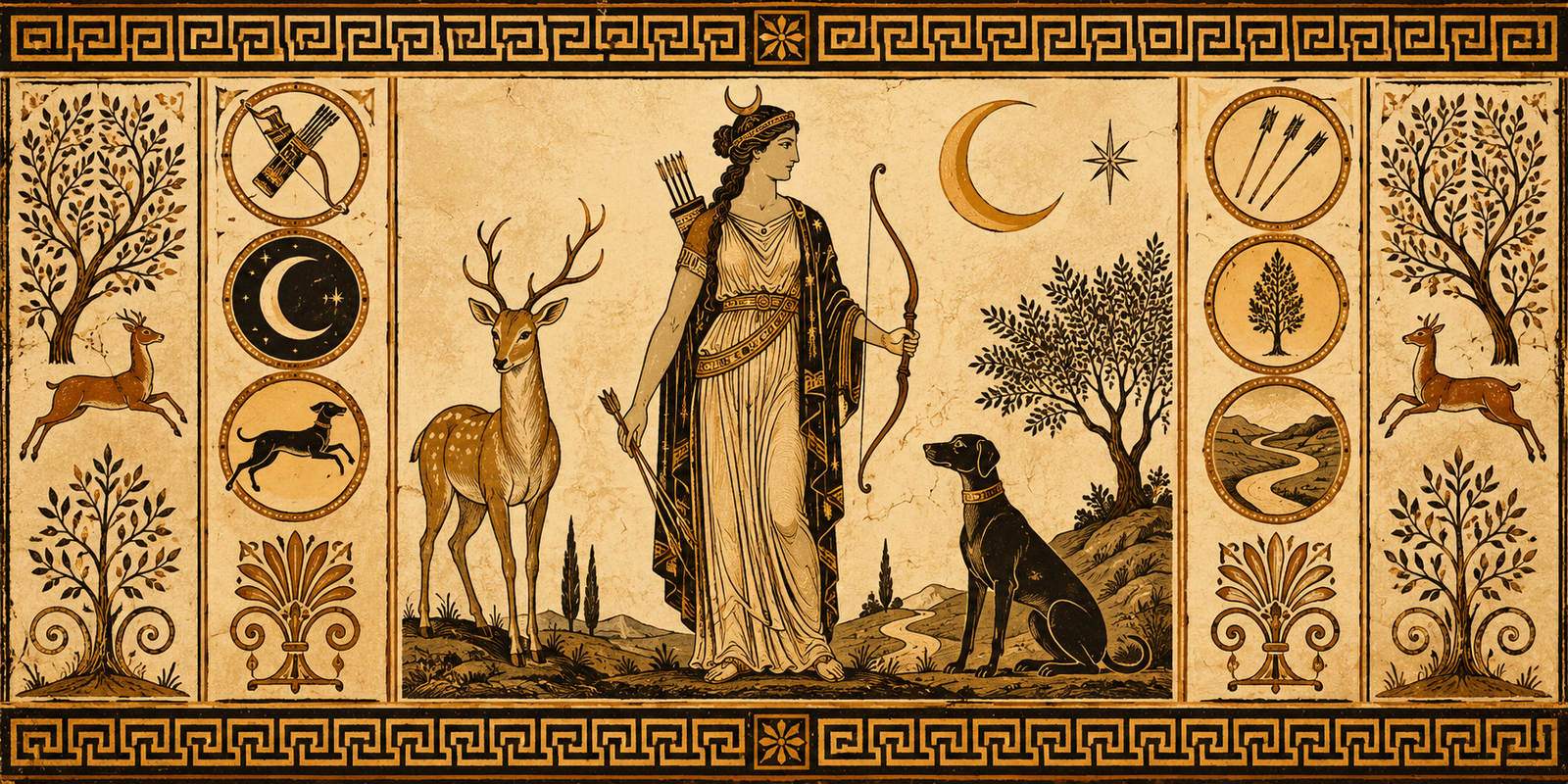

Artemis: The Bow, the Deer, and the Wild Path
Before Atalanta runs, before the golden apples shine on the path, before anyone mistakes speed for something that can be won, there is Artemis.
She stands at the edge of the story with a bow in her hand, a deer at her side, and the wild behind her.
This new entry in The Greek World, part of The Alexander Series, introduces children to Artemis not as a soft forest figure, but as one of the old Greek world’s most watchful and dangerous powers: goddess of the hunt, wild animals, young creatures, moonlit paths, swift arrows, and fierce maiden freedom.
Artemis belongs to places where a footstep matters.
To someone careless, the wild may look empty.
There are trees. There are rocks. There is grass. Perhaps there is a bird somewhere making a sound. A person from a palace might look at a forest and think nothing much is happening there.
Artemis would know better.
To Artemis, the wild is full.
It is full of hoofprints in damp earth, broken twigs, hidden nests, low dens, lifted heads, listening ears, dark water, cold stars, and paths no human foot has made. It is full of creatures who do not announce themselves. It is full of things that move before you are ready.
A deer can vanish between two trees.
A hare can break from cover like a thought escaping.
A bird can rise so suddenly that even a brave person takes one step back.
Artemis knows this world. She does not need a road. She does not need a gate. She does not need anyone to tell her which way to go.
That is why her signs are so easy to remember.
The bow.
The deer.
The moon.
The hunting dog.
The wild hill.
The path that does not belong to anyone.
A bow is not like a sword. A sword belongs to closeness. It means the enemy is near enough to touch. A bow belongs to distance, patience, aim, and silence.
To use a bow well, you must wait. You must watch. You must see clearly before you move.
That is one reason Artemis is dangerous.
She does not have to rush. She does not have to shout. She does not have to explain herself. A goddess with a bow can answer an insult from very far away.
A deer is beautiful, but not helpless. It listens with its whole body. It stands still only until stillness is no longer wise. Then it runs.
This is important for Atalanta.
In Artemis’s world, swiftness is not a trick. It is a way of staying alive.
Continue reading: Artemis at The Alexander Series on Substack.
Also in The Alexander Series
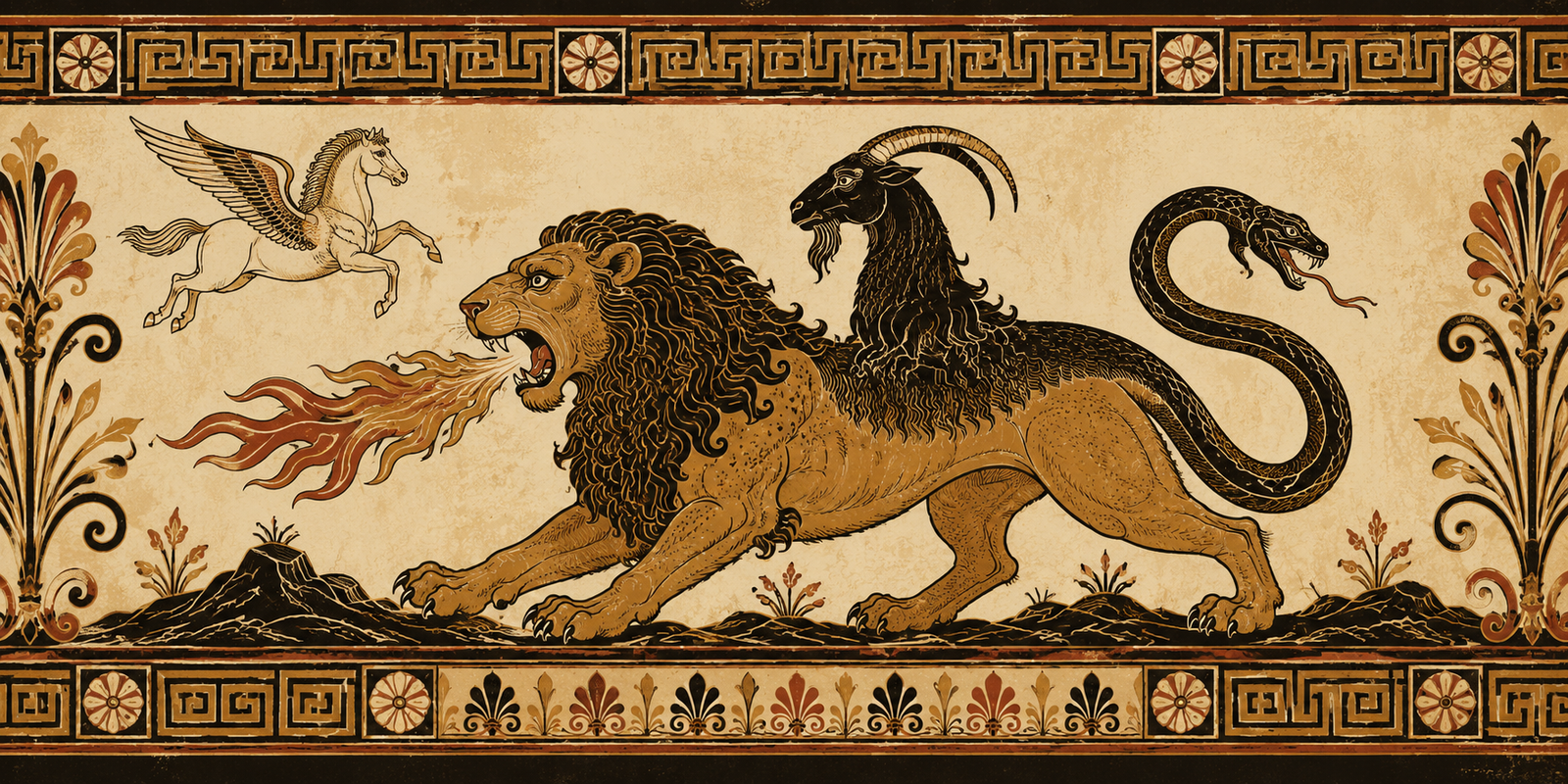

The Chimaera — A Greek Monster of Many Dangers
A child-readable Greek myth guide to the Chimaera: lion, goat, serpent, fire, and the monster’s many joined dangers. This excerpt from The Greek World shows why Bellerophon needed Pegasus, and why the Chimaera is not merely a strange animal mixture, but a precise Greek monster-sign.
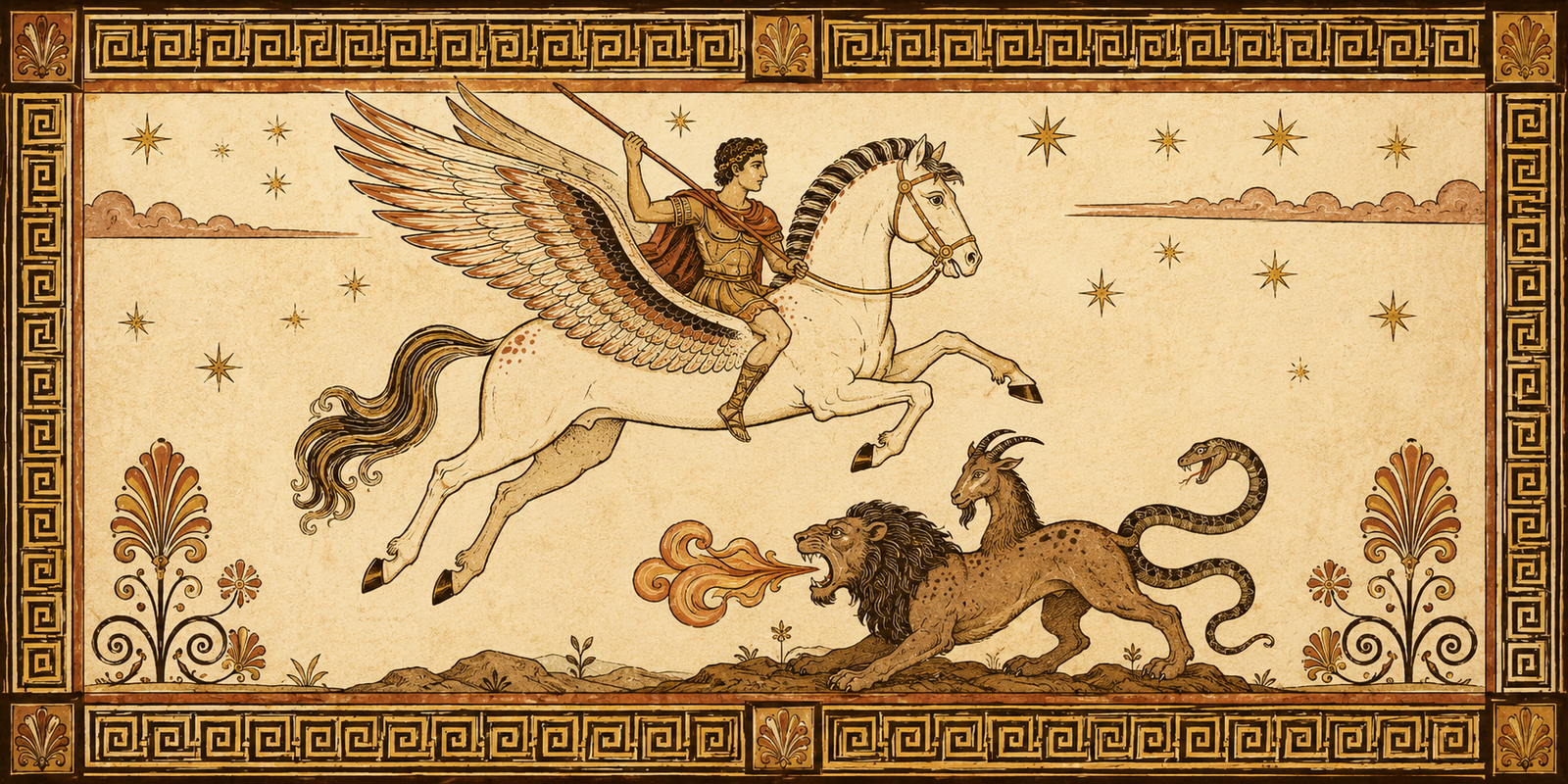

Bellerophon and Pegasus — A Greek Myth Retold for Children
A sealed message, a fire-breathing monster, a golden bridle, and the winged horse Pegasus. This Alexander Series tale retells the Greek myth of Bellerophon for serious child readers, preserving wonder, danger, courage, and the old warning hidden inside height.
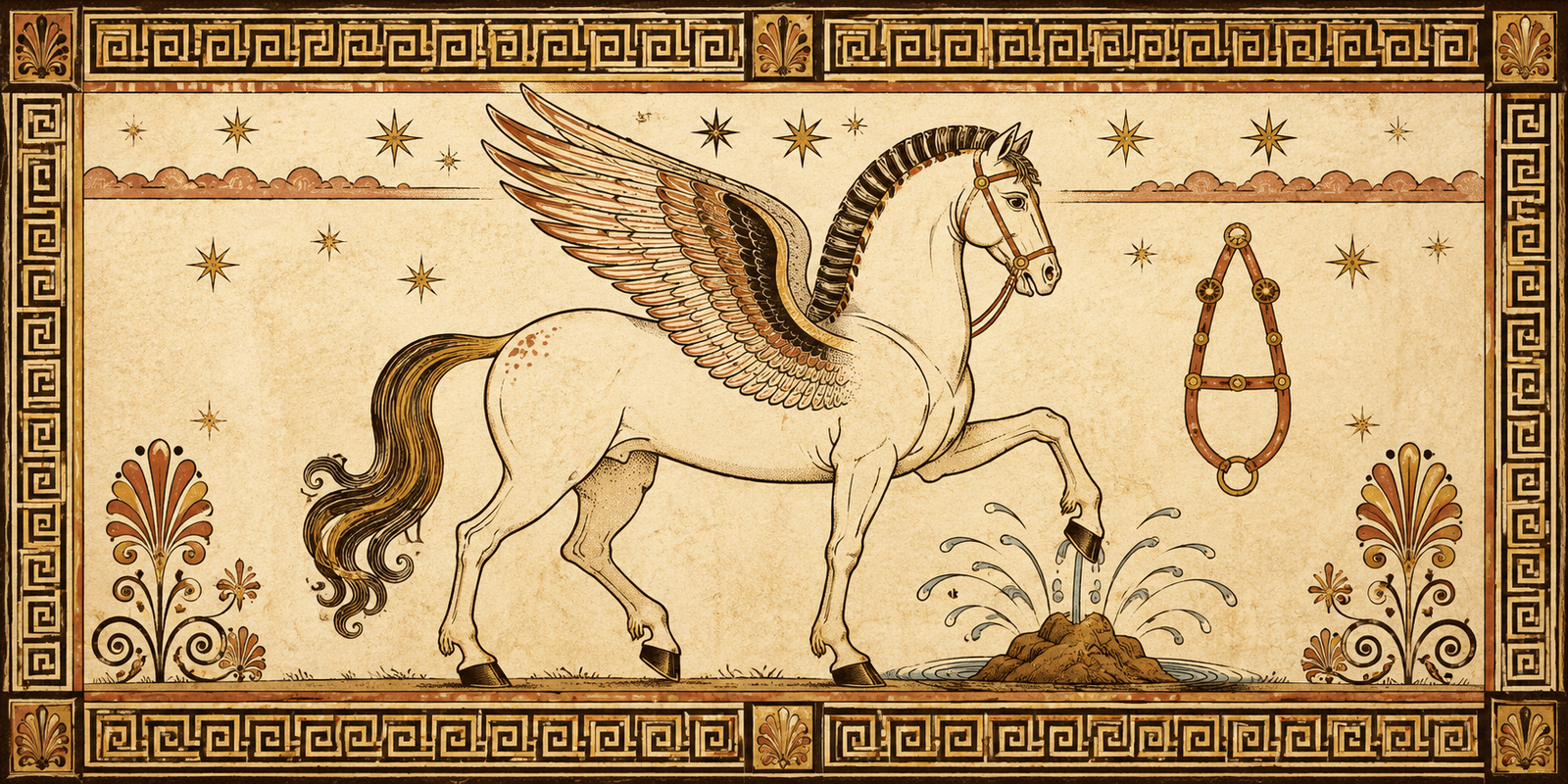

Pegasus — The Winged Horse of Greek Myth
Before Bellerophon takes the bridle, a child should know that Pegasus is not a pet, not a cloud, and not a harmless fantasy creature. This Greek World entry introduces the winged horse of Greek myth as wonder with hooves, wings, danger, and rules.
Continue Reading
If this piece found something in you, you may wish to continue the journey elsewhere.
On The Lantern Chronicles, I gather writings from Angkor, myth and legend, contemplative essays, and poetry — works shaped by silence, beauty, wonder, memory, and the deeper questions that follow us through the world.
It is a place for stone and story, reflection and vow, shadow and revelation.
You would be most welcome there.