
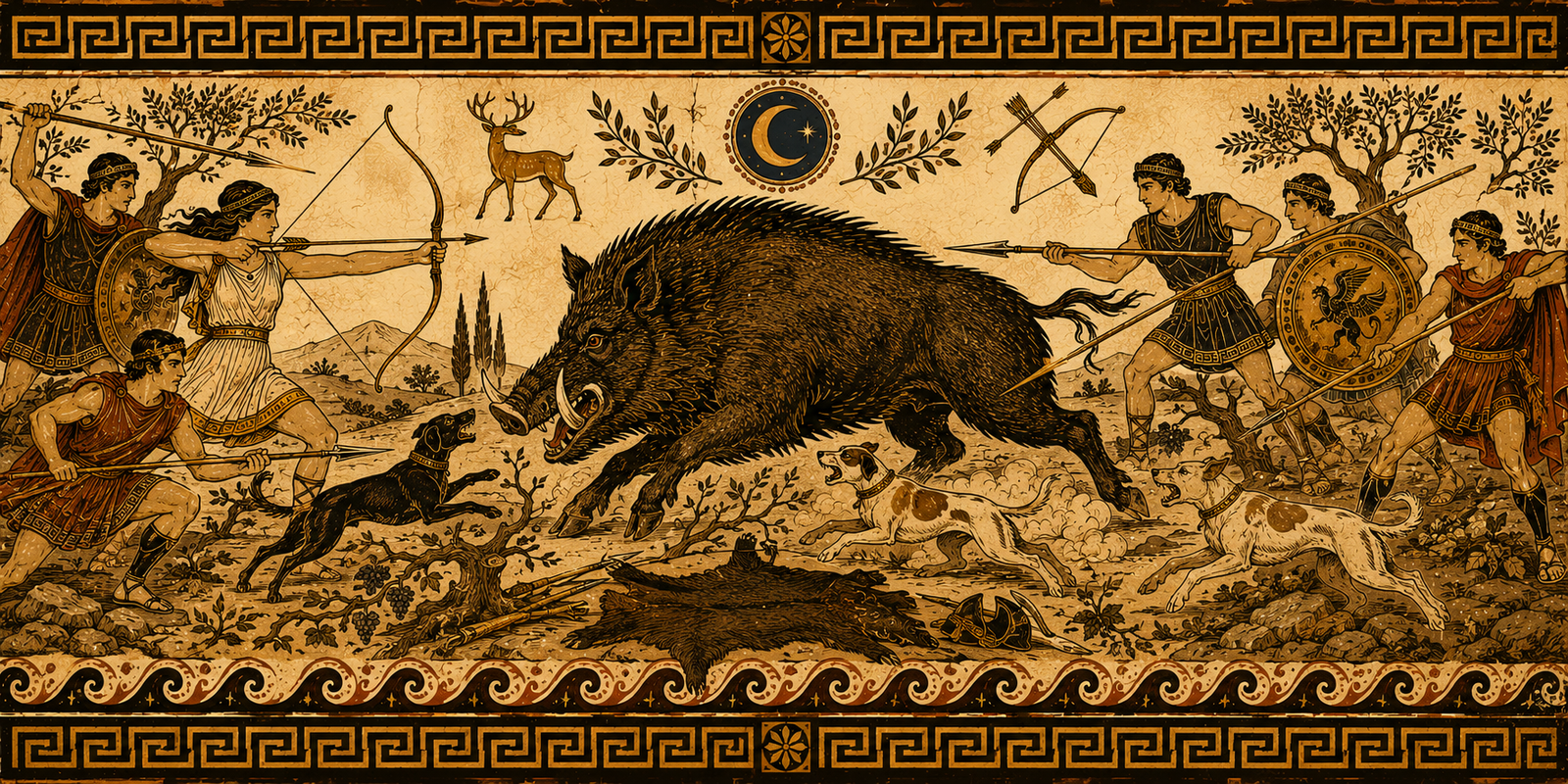

The Calydonian Boar Hunt: Artemis, Atalanta, and the Monster in the Fields
After Atalanta runs, another part of her story waits in the old Greek world — not on a race path, but in a hunt where kings, heroes, dogs, spears, and one terrible boar all meet in the fields of Calydon.
This new entry in The Greek World, part of The Alexander Series, introduces children to the Calydonian Boar Hunt as more than a monster story. It is a tale of Artemis’s anger, heroic courage, Atalanta’s place among hunters, and the pride that can survive even after the monster falls.
The Calydonian Boar Hunt began when King Oeneus of Calydon honoured the gods after a rich harvest, but failed to honour Artemis properly.
In Greek myth, forgetting a goddess is not a small mistake.
Artemis answered by sending a monstrous boar into the land.
This was not an ordinary animal wandering where farmers wished it would not wander. It was a punishment with tusks. It tore through the fields, ruined vines and orchards, frightened people from their work, and made the land itself feel unsafe.
So Oeneus’s son, Meleager, called for heroes to come and hunt the boar.
Many came.
Among them was Atalanta.
She was not there to watch.
She was there to hunt.
Artemis is the goddess of the hunt, wild animals, young creatures, swift arrows, and the wild places that do not belong to anyone. She can protect. She can guide. She can stand near the young, the swift, and the untaken.
But Artemis is not a goddess one forgets safely.
When King Oeneus celebrated his harvest, he gave honour to the gods. That was wise. A harvest does not arrive only because a king says so. It comes through rain, soil, seed, labour, sun, season, and the mysterious patience of the earth. In the old Greek world, it also came under the eyes of gods who expected to be remembered.
But Oeneus failed to honour Artemis.
Some tellings say he forgot her. Some suggest he neglected her. Either way, Artemis was left out.
This was unwise.
A mortal may forget a cup, a cloak, or where he has put his sandals. Forgetting Artemis is a different matter.
She did not need to come to the palace and shout. A goddess with a bow can answer an insult from very far away.
She sent the boar.
The boar came into Calydon like rage given a body.
It had bristles along its back, hard and dark. Its tusks curved white from its mouth. Its shoulders were heavy. Its eyes were small, hot, and full of the simple dreadful certainty that everything before it should be broken.
It tore through the fields as if the earth had offended it.
Vines were ripped up. Young trees were broken. Crops were flattened. The neat work of human hands became mud, splinters, and fear. Dogs barked from a distance and then thought better of it. Men who had boasted loudly indoors discovered excellent reasons to remain indoors a little longer.
The people of Calydon could not live like this.
Fields must be tended. Roads must be used. Children must be able to walk without every bush becoming a possible terror. A kingdom cannot continue if one terrible animal has made the outside world belong only to fear.
So Meleager called for help.
And Atalanta came.
Continue reading: The Calydonian Boar Hunt at The Alexander Series on Substack.
Also in The Alexander Series
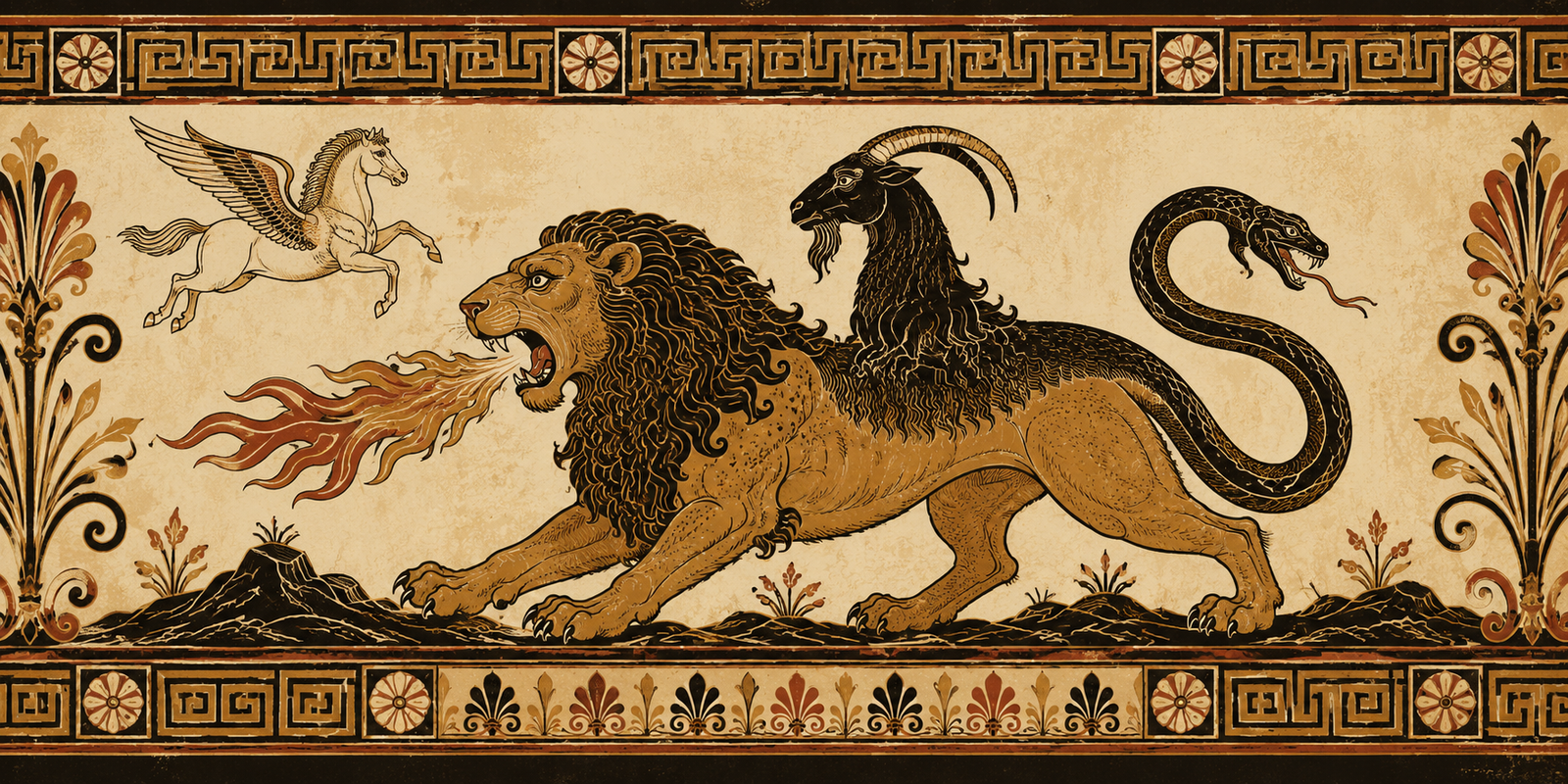

The Chimaera — A Greek Monster of Many Dangers
A child-readable Greek myth guide to the Chimaera: lion, goat, serpent, fire, and the monster’s many joined dangers. This excerpt from The Greek World shows why Bellerophon needed Pegasus, and why the Chimaera is not merely a strange animal mixture, but a precise Greek monster-sign.
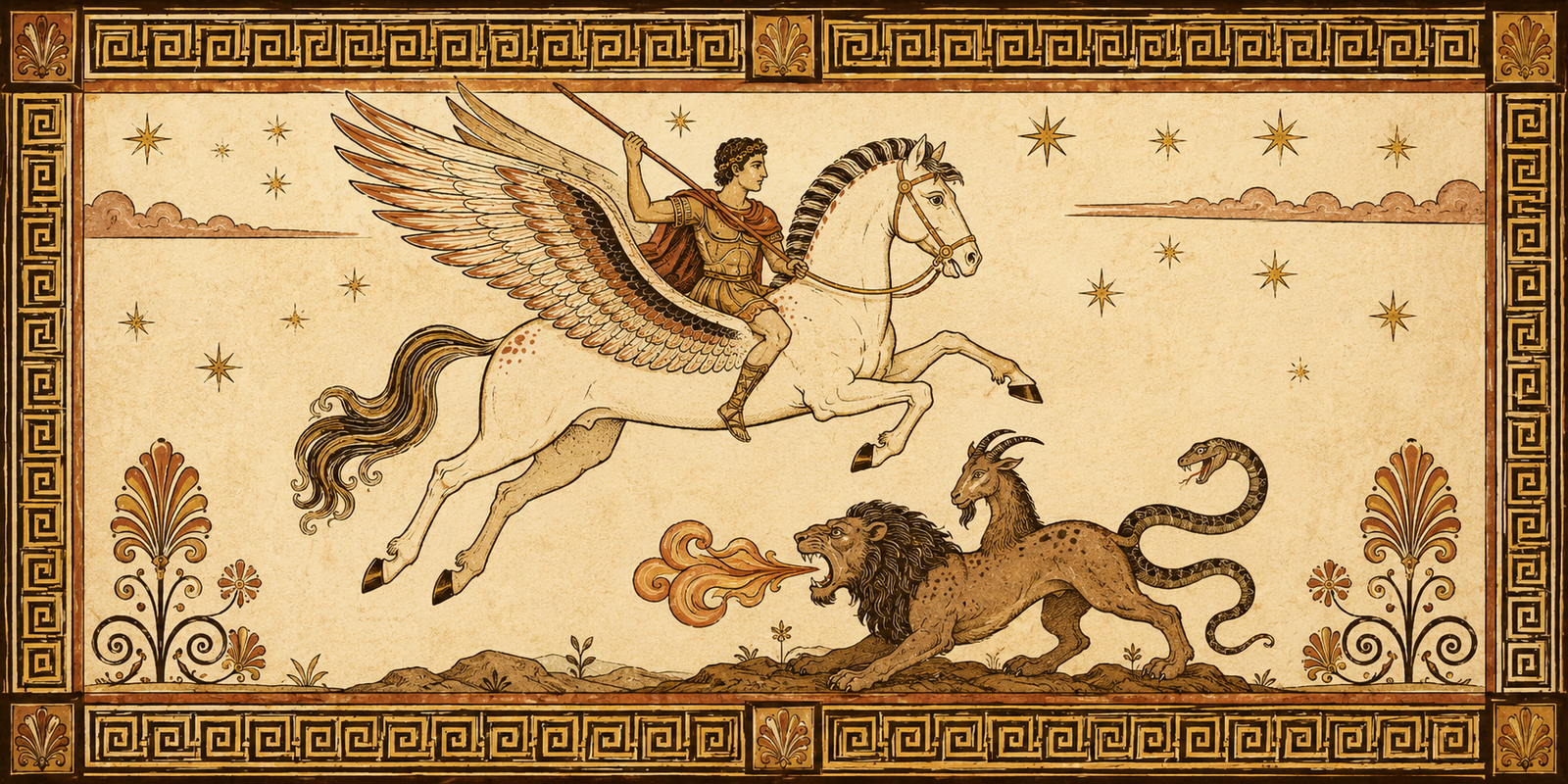

Bellerophon and Pegasus — A Greek Myth Retold for Children
A sealed message, a fire-breathing monster, a golden bridle, and the winged horse Pegasus. This Alexander Series tale retells the Greek myth of Bellerophon for serious child readers, preserving wonder, danger, courage, and the old warning hidden inside height.
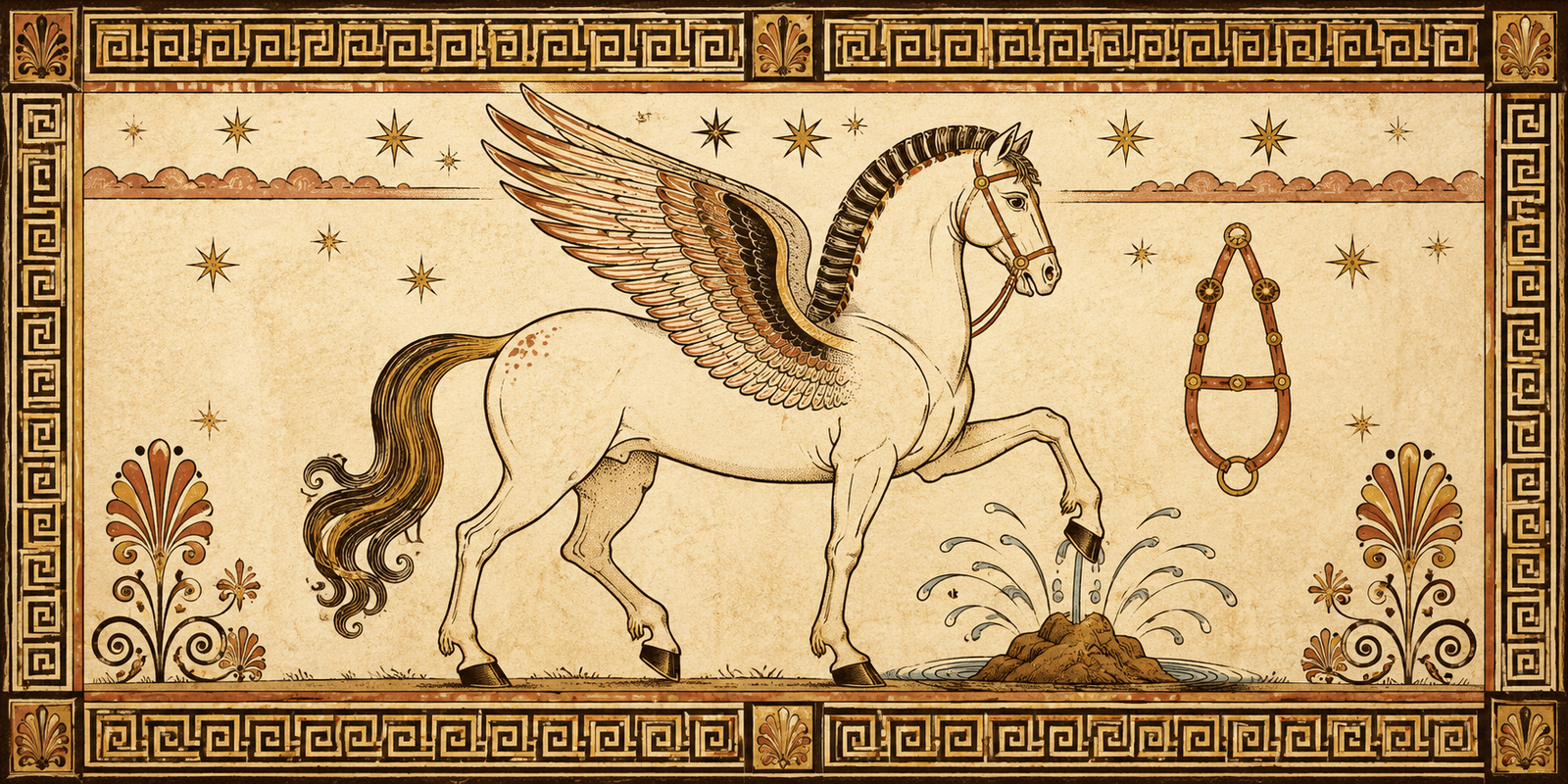

Pegasus — The Winged Horse of Greek Myth
Before Bellerophon takes the bridle, a child should know that Pegasus is not a pet, not a cloud, and not a harmless fantasy creature. This Greek World entry introduces the winged horse of Greek myth as wonder with hooves, wings, danger, and rules.
Continue Reading
If this piece found something in you, you may wish to continue the journey elsewhere.
On The Lantern Chronicles, I gather writings from Angkor, myth and legend, contemplative essays, and poetry — works shaped by silence, beauty, wonder, memory, and the deeper questions that follow us through the world.
It is a place for stone and story, reflection and vow, shadow and revelation.
You would be most welcome there.