

Old Stories, Young Hands — The Little Mythologist Printable Greek Mythology Workbook
There is a moment, when a child meets a myth, when the story becomes more than something heard.
It becomes an image.
An owl in the branches of an olive tree.
A thread held carefully in the dark.
A shield polished bright enough to help a hero look without looking.
A wooden horse waiting silently before the gates.
Children understand this more quickly than we sometimes expect. They do not only receive stories as plots. They receive them as objects, animals, paths, gifts, warnings, mistakes, and signs.
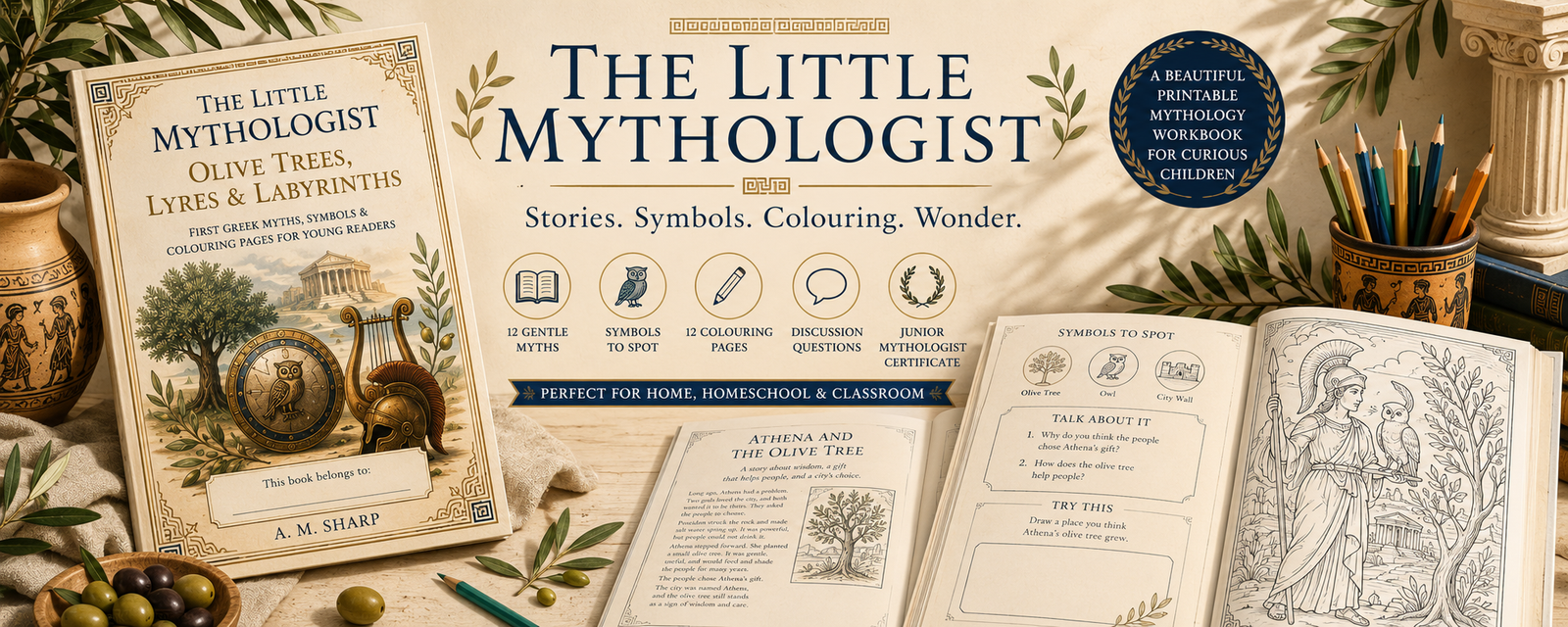
That is one of the reasons I have made The Little Mythologist: Olive Trees, Lyres & Labyrinths — a printable Greek mythology workbook for children aged 6–10, created as a hands-on companion to The Alexander Series.
A free sample is available for families, homeschoolers, teachers, and curious young readers who would like to try the format before purchasing the full workbook:
Download the free sample:
The_Little_Mythologist_Sample.pdf
The full workbook is available here:
The Little Mythologist on Etsy:
https://littlemythologist.etsy.com
The Alexander Series began with a simple belief: Greek myths can still be placed before children without being flattened, sweetened, or made small. Children do not need the old stories stripped of danger. They need clarity. They need care. They need the door opened gently.
But once the door is open, many children want to do more than listen.
They want to point.
They want to notice.
They want to colour.
They want to ask.
The Little Mythologist was created for those children: young readers ready to meet myth through stories, symbols, colouring pages, simple questions, and wonder.
It gathers twelve Greek myths into a ready-to-print PDF workbook, including Athena and the Olive Tree, Hermes and the Tortoise Lyre, Demeter and Persephone, Midas and the Golden Touch, Arachne and Athena, Atalanta Runs for Her Freedom, Perseus and Medusa, Theseus and the Minotaur, Daedalus and Icarus, Bellerophon and Pegasus, Odysseus and the Cyclops, and The Trojan Horse.
Each myth is approached through story, image, symbol, and gentle activity. The aim is not to turn Greek mythology into a worksheet. The aim is to give children a way to handle the stories with their eyes, their questions, and their hands.
The danger remains present, but held in proportion.
Show the pressure, not the trauma.
Show the symbol, not the wound.
Show the choice, not the spectacle.
Show the consequence, not the punishment.
That is the governing spirit of the workbook.
Greek myths contain courage, cleverness, pride, fear, mistakes, kindness, danger, and wonder. Children can meet these things. They have always met them in stories.
The old tales are not finished.
They are waiting for young hands.
Try the free sample: The_Little_Mythologist_Sample.pdf
View the full printable workbook on Etsy: https://littlemythologist.etsy.com
Continue reading: Old Stories, Young Hands at The Alexander Series on Substack.
Also in The Alexander Series

The Chimaera — A Greek Monster of Many Dangers
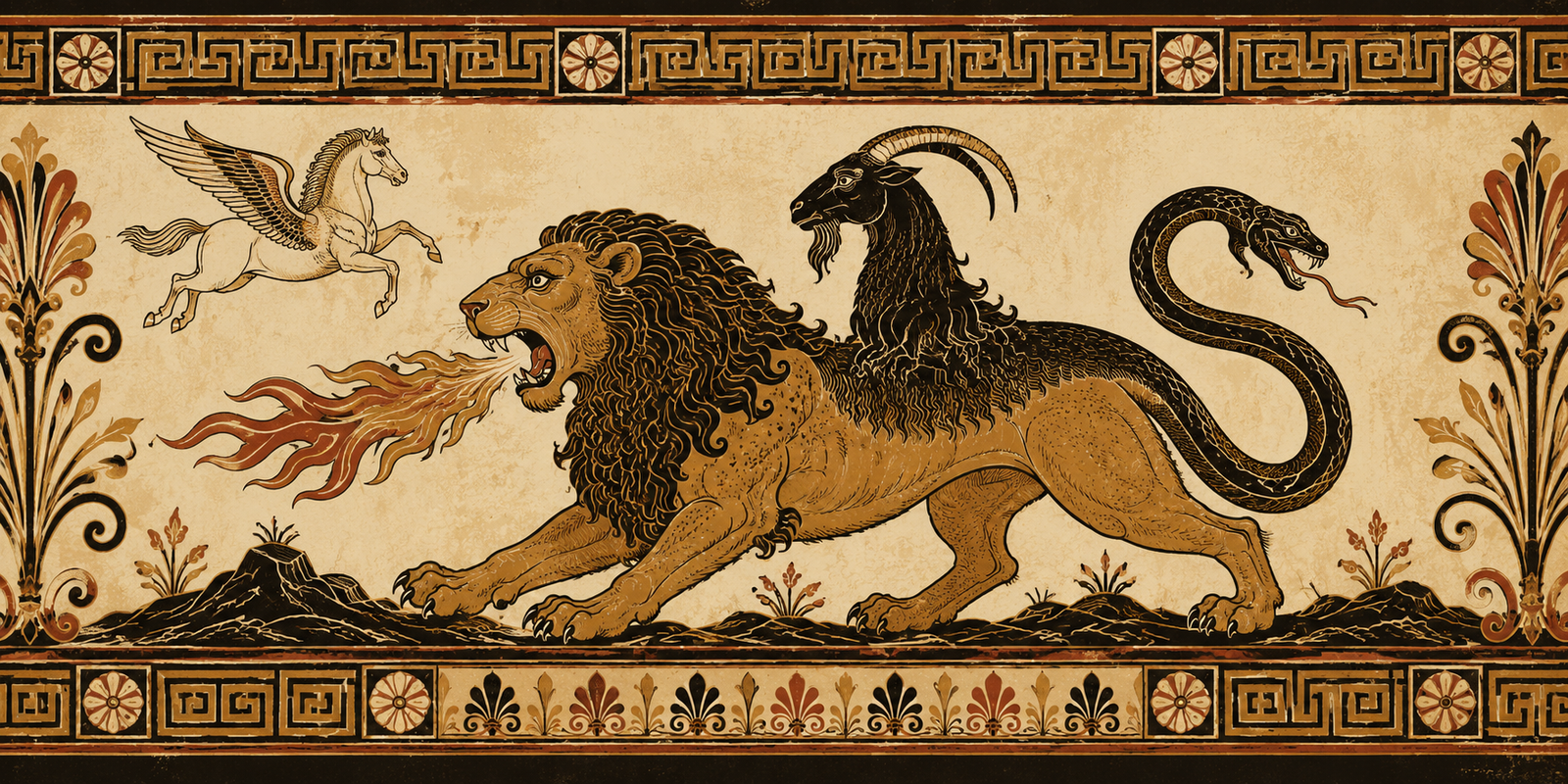
A child-readable Greek myth guide to the Chimaera: lion, goat, serpent, fire, and the monster’s many joined dangers. This excerpt from The Greek World shows why Bellerophon needed Pegasus, and why the Chimaera is not merely a strange animal mixture, but a precise Greek monster-sign.

Bellerophon and Pegasus — A Greek Myth Retold for Children
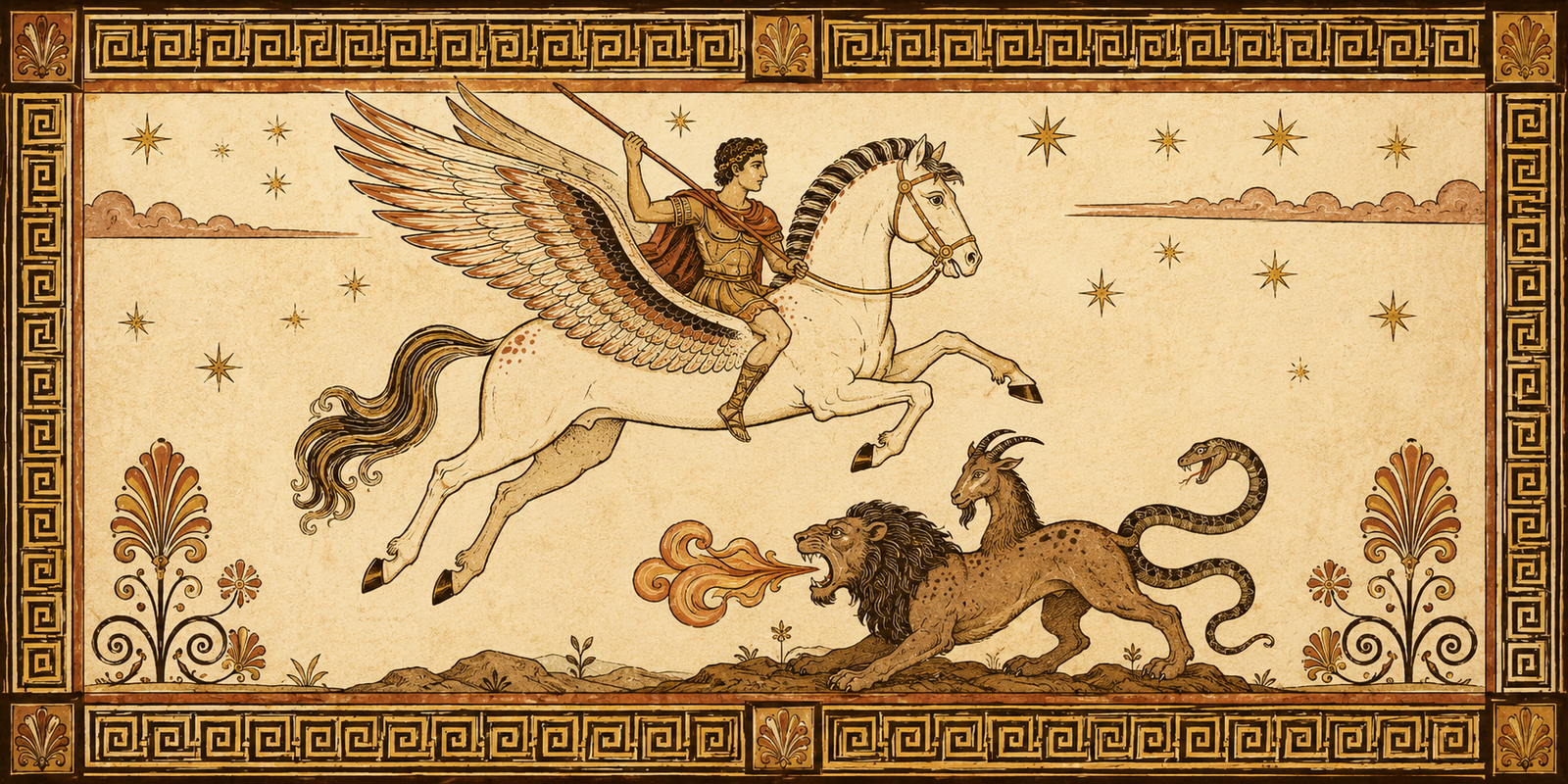
A sealed message, a fire-breathing monster, a golden bridle, and the winged horse Pegasus. This Alexander Series tale retells the Greek myth of Bellerophon for serious child readers, preserving wonder, danger, courage, and the old warning hidden inside height.

Pegasus — The Winged Horse of Greek Myth
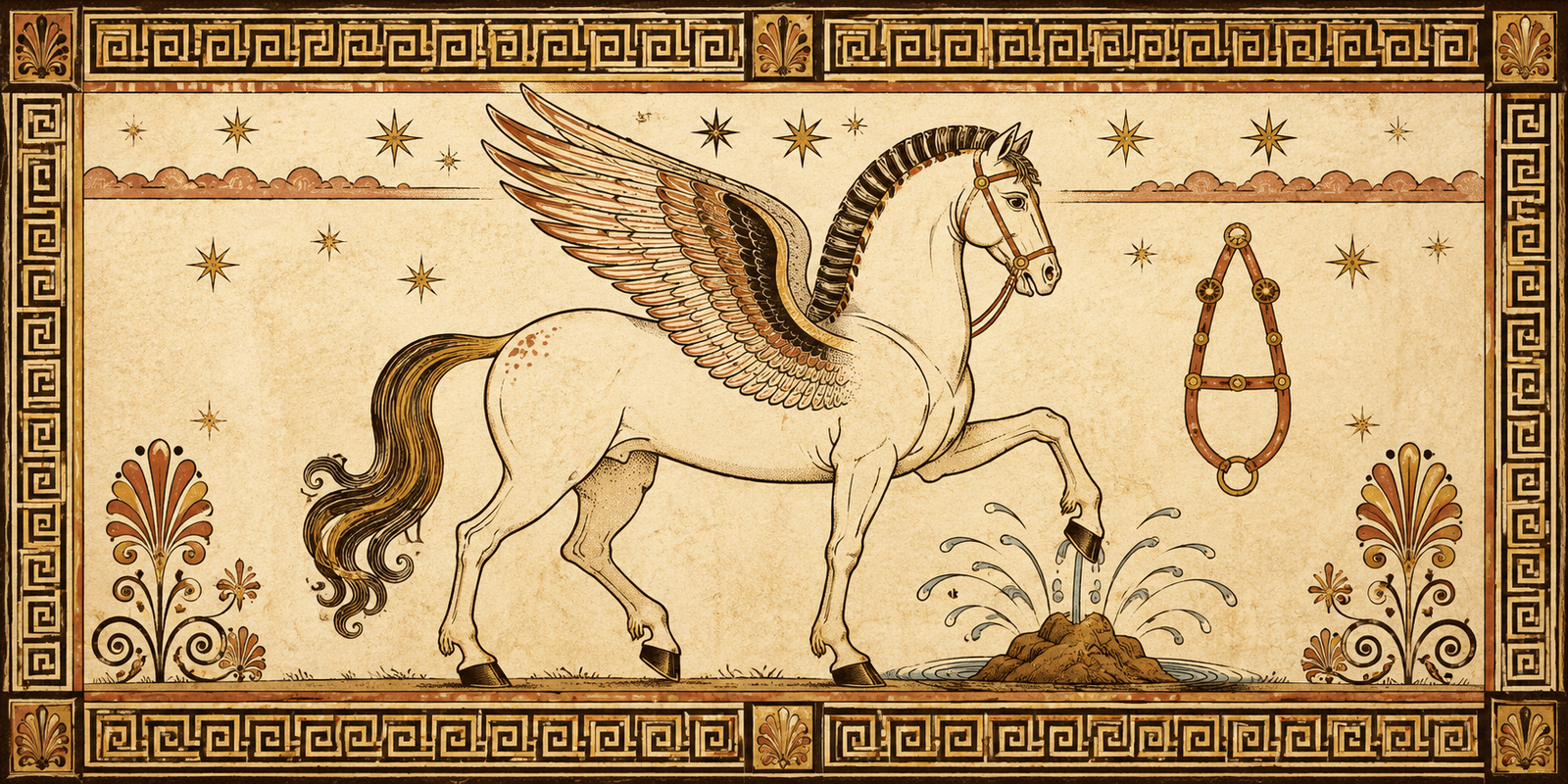
Before Bellerophon takes the bridle, a child should know that Pegasus is not a pet, not a cloud, and not a harmless fantasy creature. This Greek World entry introduces the winged horse of Greek myth as wonder with hooves, wings, danger, and rules.
Continue Reading
If this piece found something in you, you may wish to continue the journey elsewhere.
On The Lantern Chronicles, I gather writings from Angkor, myth and legend, contemplative essays, and poetry — works shaped by silence, beauty, wonder, memory, and the deeper questions that follow us through the world.
It is a place for stone and story, reflection and vow, shadow and revelation.
You would be most welcome there.