
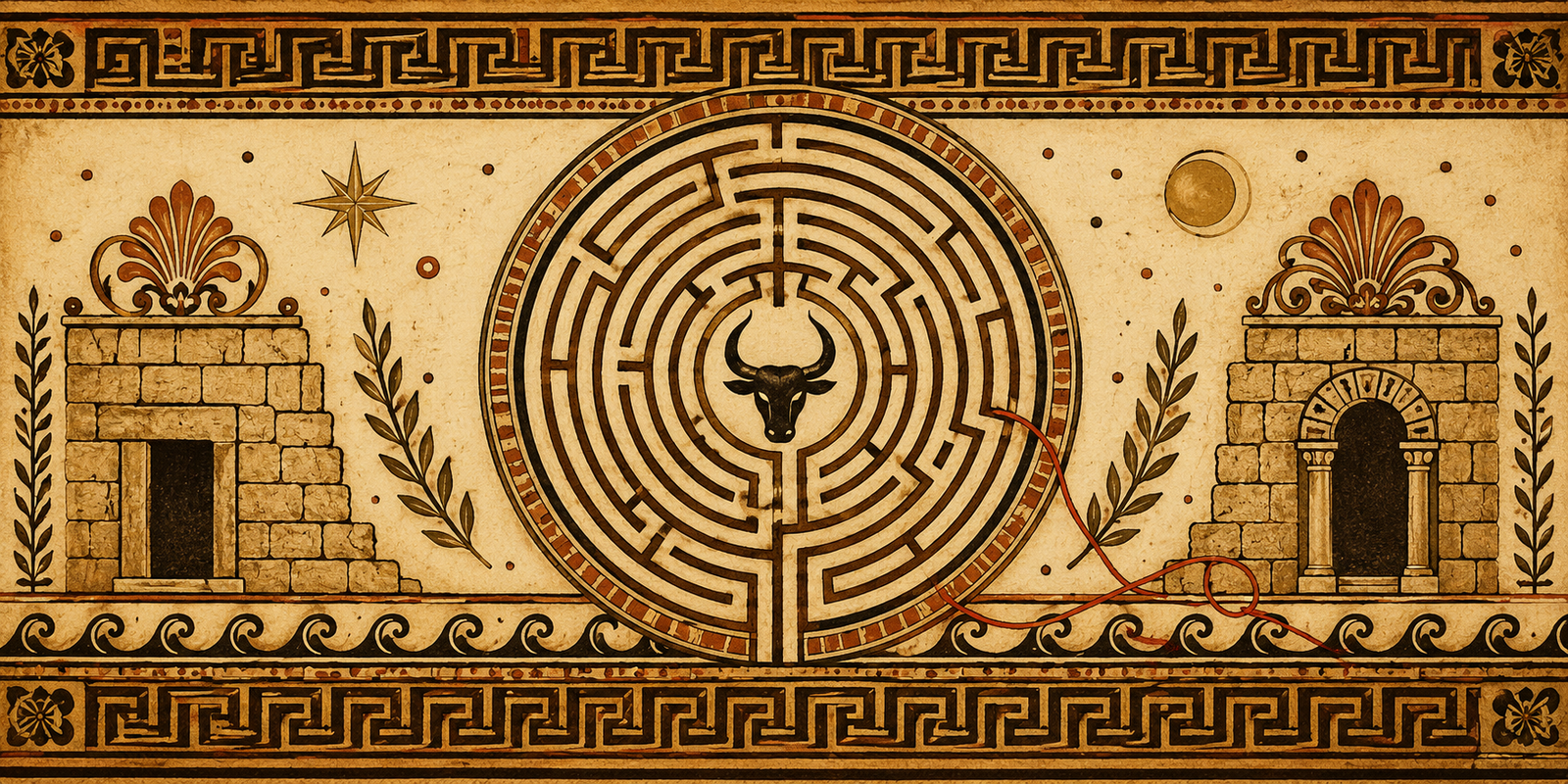

The Labyrinth
In The Greek World, The Alexander Series opens the old myths carefully for serious child readers: not by making them smaller, but by helping children see the shapes, signs, and strange rules behind the stories.
The Labyrinth is a before-the-tale entry for Daedalus and the Wings. It prepares the child to understand that Daedalus was not only the maker of wings. Before he looked toward the sky, he had already built something darker: the prison at the heart of Crete.
Before Daedalus made wings, he made something darker.
He made a house of turns.
Not a house for sleeping. Not a palace for feasting. Not a bright hall where people came and went through open doors.
The Labyrinth was built to confuse the feet, trouble the mind, and make return almost impossible. It was a place of passages, blind corners, circling ways, and walls that seemed to know more than the person walking between them.
At the centre waited the Minotaur.
That is why, before we come to Daedalus and the wings, we must first understand the Labyrinth.
For Daedalus was not only the man clever enough to escape Crete.
He was the man clever enough to build the prison.
The Labyrinth was the great maze of Crete, built by Daedalus for King Minos. It was made to hold the Minotaur, the strange and frightening creature with the body of a man and the head of a bull. No ordinary prison would do for such a being. A locked room could be broken. A gate could be opened. A guard could fall asleep, as guards in stories have a habit of doing at the worst possible moment.
Minos needed something more terrible than a cage.
He needed a place where even if the prisoner moved, he would not truly escape.
So Daedalus built the Labyrinth.
A maze and a labyrinth are not always the same thing. A maze is something you might enter for a challenge. You turn left, turn right, make mistakes, laugh, grumble, try again, and at last find the way out.
The Labyrinth of Crete was not like that.
No one entered it for fun.
It was built to defeat memory.
Continue reading: The Labyrinth at The Alexander Series on Substack.
Also in The Alexander Series
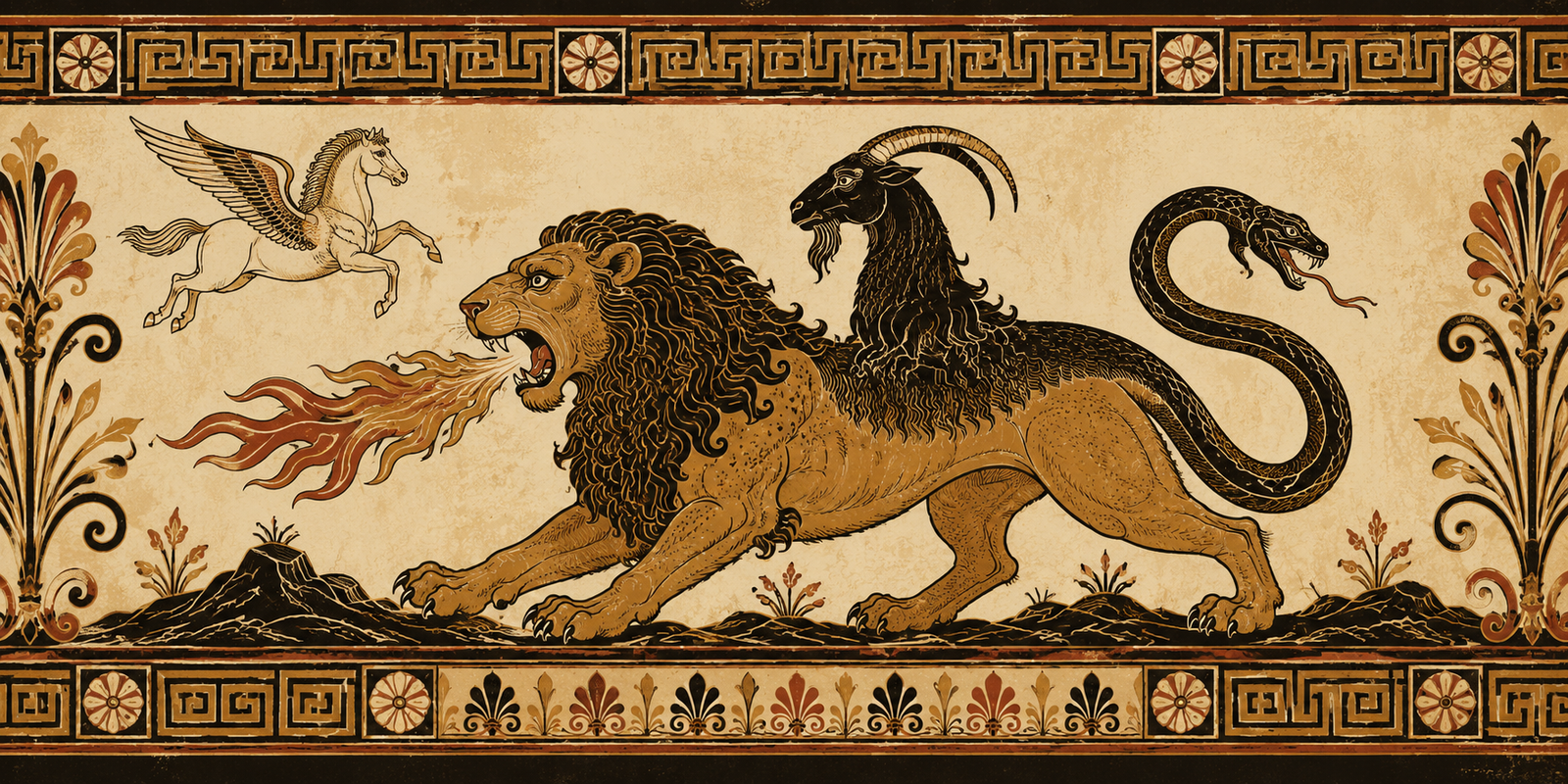

The Chimaera — A Greek Monster of Many Dangers
A child-readable Greek myth guide to the Chimaera: lion, goat, serpent, fire, and the monster’s many joined dangers. This excerpt from The Greek World shows why Bellerophon needed Pegasus, and why the Chimaera is not merely a strange animal mixture, but a precise Greek monster-sign.
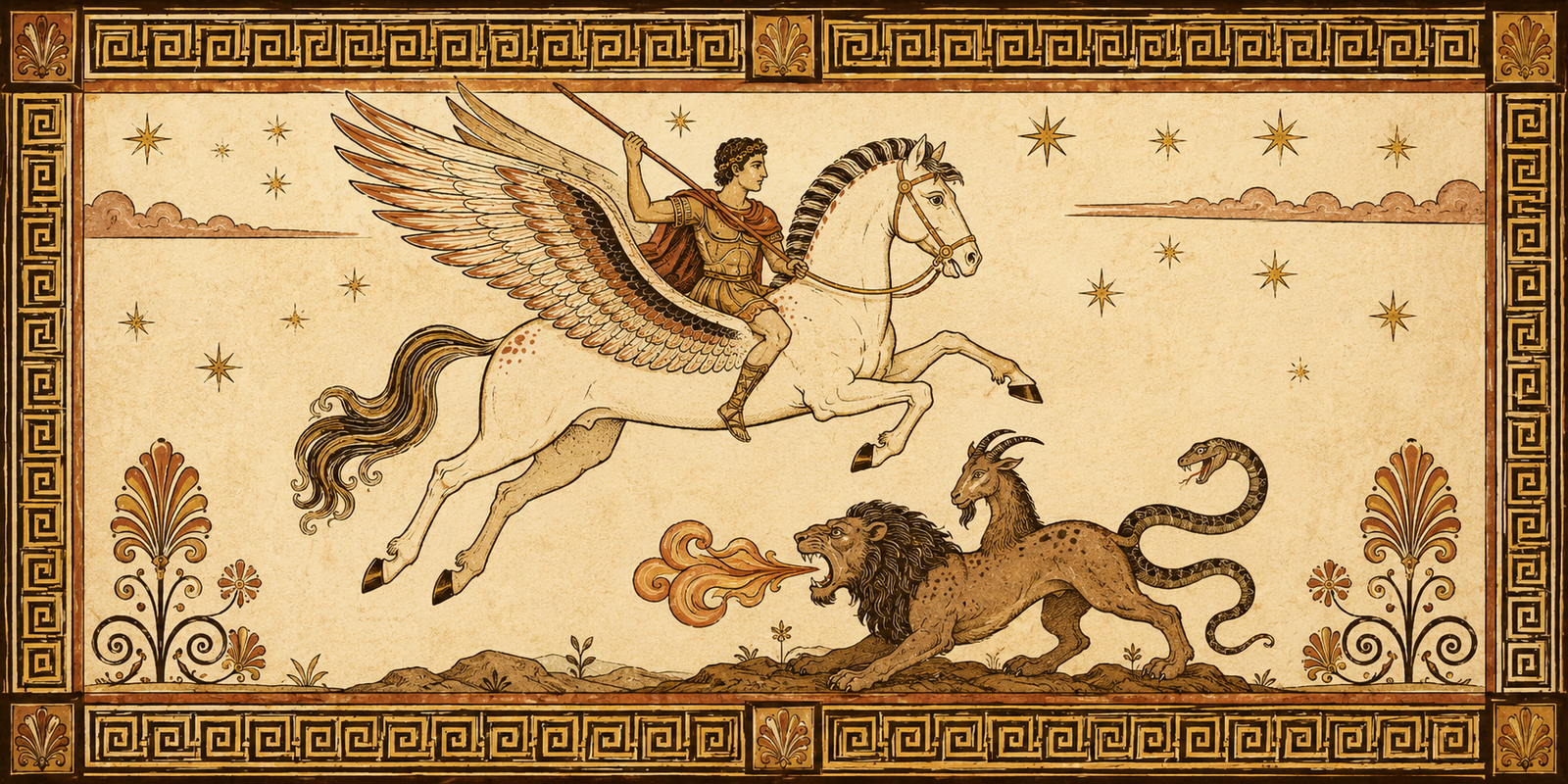

Bellerophon and Pegasus — A Greek Myth Retold for Children
A sealed message, a fire-breathing monster, a golden bridle, and the winged horse Pegasus. This Alexander Series tale retells the Greek myth of Bellerophon for serious child readers, preserving wonder, danger, courage, and the old warning hidden inside height.
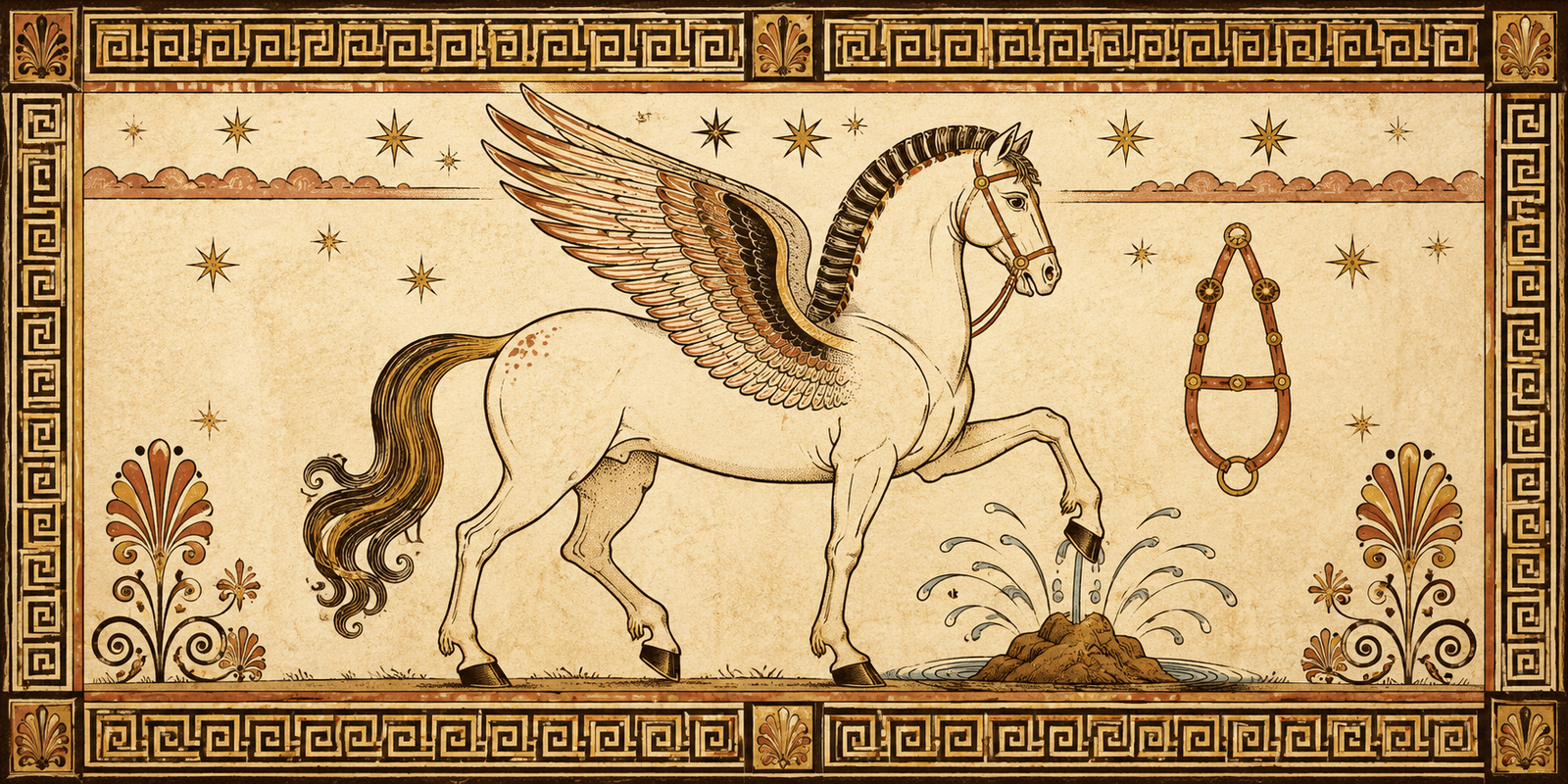

Pegasus — The Winged Horse of Greek Myth
Before Bellerophon takes the bridle, a child should know that Pegasus is not a pet, not a cloud, and not a harmless fantasy creature. This Greek World entry introduces the winged horse of Greek myth as wonder with hooves, wings, danger, and rules.
Continue Reading
If this piece found something in you, you may wish to continue the journey elsewhere.
On The Lantern Chronicles, I gather writings from Angkor, myth and legend, contemplative essays, and poetry — works shaped by silence, beauty, wonder, memory, and the deeper questions that follow us through the world.
It is a place for stone and story, reflection and vow, shadow and revelation.
You would be most welcome there.