
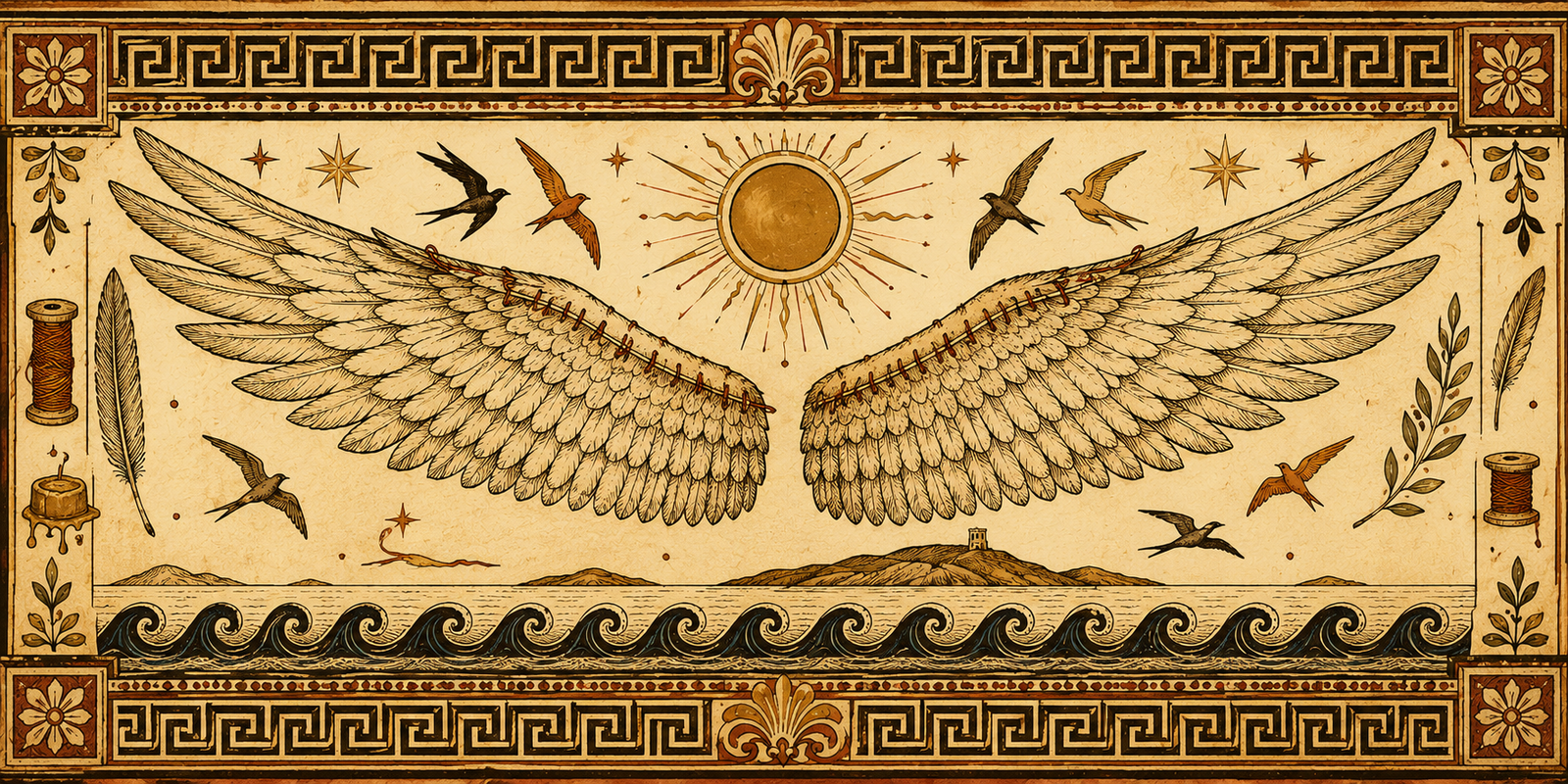

Daedalus and the Wings
In The Alexander Series, the old Greek myths are retold for children who want to be trusted by stories: with danger intact, wonder alive, and sorrow handled carefully rather than hidden.
Daedalus and the Wings is not a lesson about a boy flying too close to the sun. It is a story about a father, a son, a prison with no door, and two wings stitched from feathers, wax, and hope.
Daedalus could hear the sea, but he could not reach it.
That was one of the worst things about being kept on Crete. If there had been no sea at all, perhaps he might have borne it better. If the island had been a wall of mountains, or a desert, or some shut-up place where the world ended in dust, he might have looked at the horizon and said, There is nowhere to go.
But the sea was there.
Every morning it flashed beyond the walls. Every evening it darkened under the last light. It breathed in and out against the rocks as if it knew the way to every shore in the world and was quietly refusing to tell him.
Daedalus stood at the high window and watched it.
Behind him, Icarus was trying to make a boat from two pieces of broken wood, a strip of linen, and far too much confidence.
“It will not float,” said Daedalus, without turning round.
“You have not even looked.”
“I have heard enough.”
Icarus frowned at the little boat. He blew on its scrap of sail. The mast fell over at once.
Daedalus did not smile, though he wanted to.
A child should never have to learn captivity by the sound of locked doors. Icarus had learned it anyway. He knew the tread of the guards outside their room. He knew which window caught the morning wind. He knew how many steps it took his father to cross from the workbench to the wall and back again.
That, more than the locked door, troubled Daedalus.
He had made many things in his life. Doors. Hinges. Toys that seemed almost alive. Statues that could startle a person in bad light. Tools, wheels, secret fittings, clever joints, devices so neat that kings leaned close and forgot to be afraid of them.
And once, for King Minos, he had made the Labyrinth.
It is not a comfortable thing to have built a prison so well that even its maker is remembered for it.
Minos had not forgotten either.
A king who keeps secrets does not let the maker of those secrets walk away.
So Daedalus and Icarus were kept on Crete, high above the sea, with guards at the doors, ships watched in the harbour, and no road out that did not end under the king’s eye.
Continue reading: Daedalus and the Wings at The Alexander Series on Substack.
Also in The Alexander Series
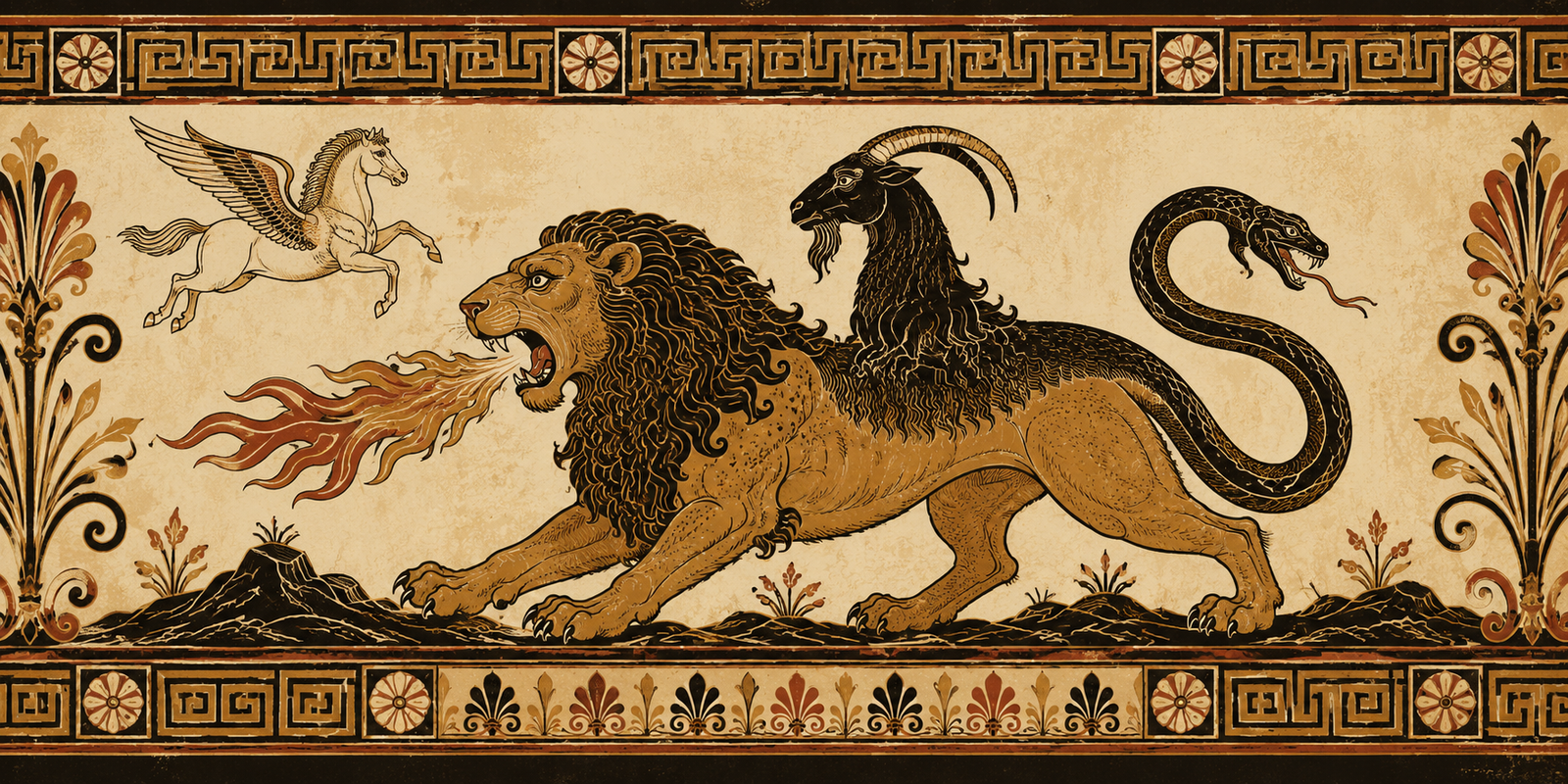

The Chimaera — A Greek Monster of Many Dangers
A child-readable Greek myth guide to the Chimaera: lion, goat, serpent, fire, and the monster’s many joined dangers. This excerpt from The Greek World shows why Bellerophon needed Pegasus, and why the Chimaera is not merely a strange animal mixture, but a precise Greek monster-sign.
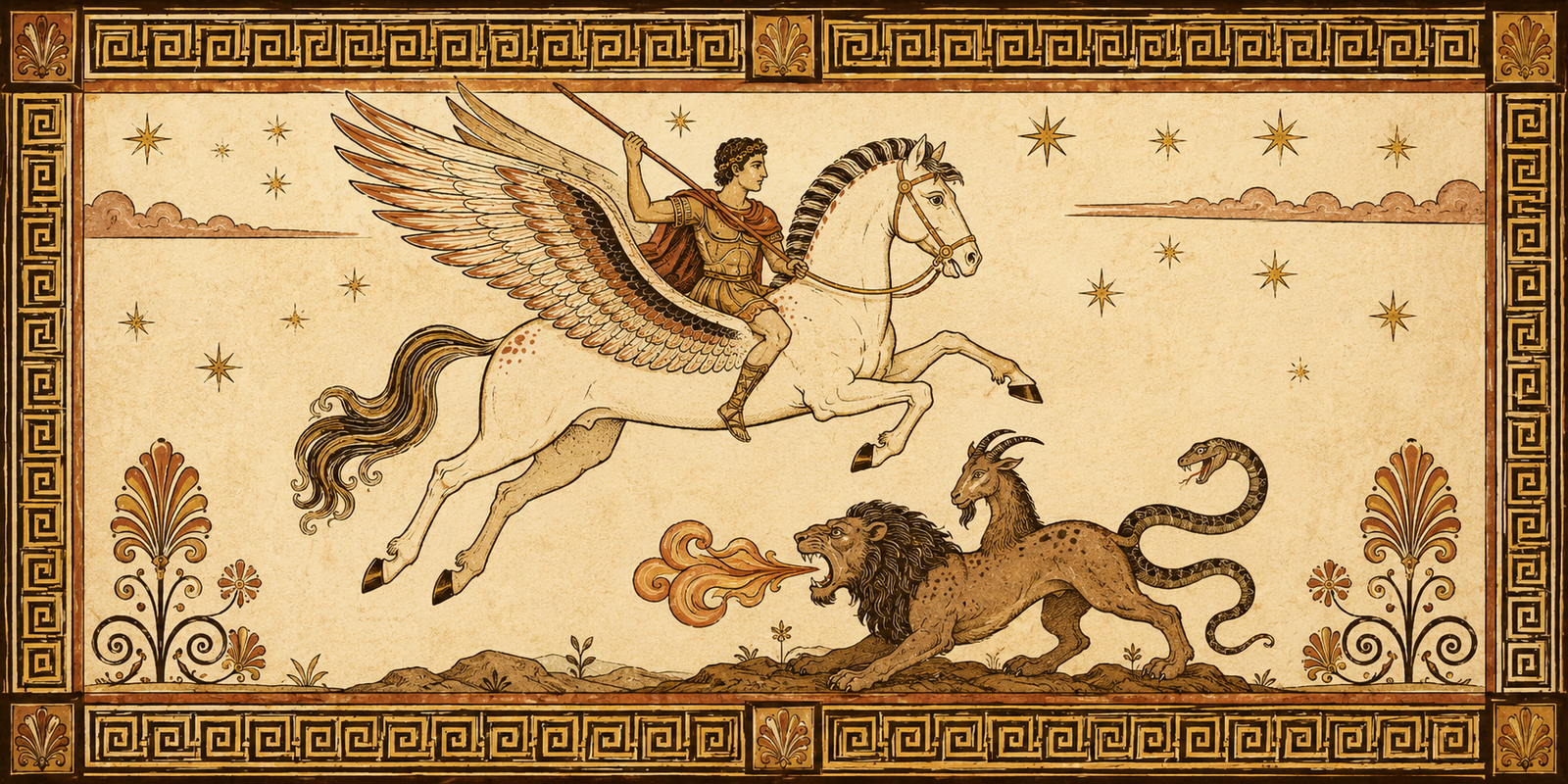

Bellerophon and Pegasus — A Greek Myth Retold for Children
A sealed message, a fire-breathing monster, a golden bridle, and the winged horse Pegasus. This Alexander Series tale retells the Greek myth of Bellerophon for serious child readers, preserving wonder, danger, courage, and the old warning hidden inside height.
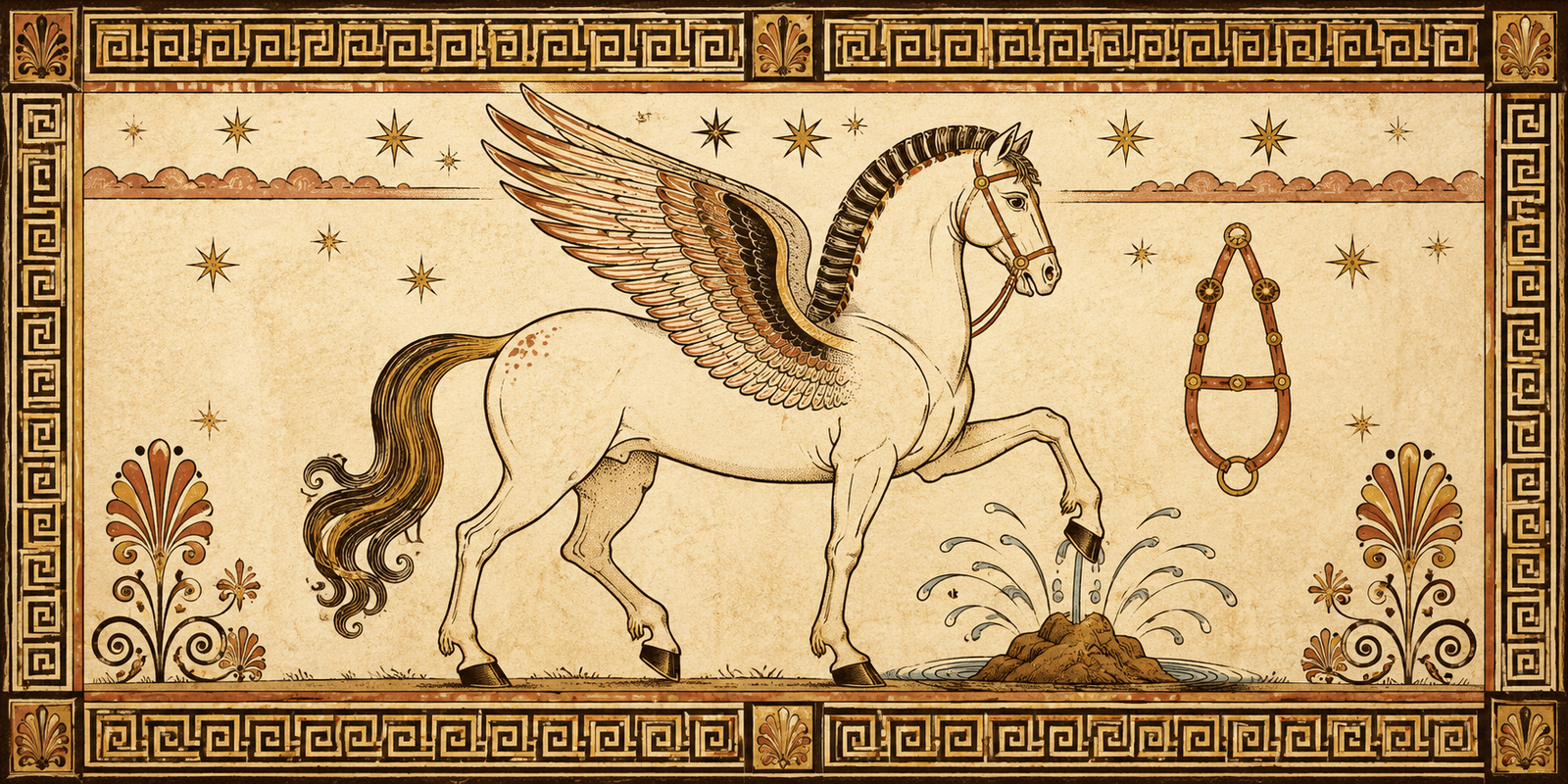

Pegasus — The Winged Horse of Greek Myth
Before Bellerophon takes the bridle, a child should know that Pegasus is not a pet, not a cloud, and not a harmless fantasy creature. This Greek World entry introduces the winged horse of Greek myth as wonder with hooves, wings, danger, and rules.
Continue Reading
If this piece found something in you, you may wish to continue the journey elsewhere.
On The Lantern Chronicles, I gather writings from Angkor, myth and legend, contemplative essays, and poetry — works shaped by silence, beauty, wonder, memory, and the deeper questions that follow us through the world.
It is a place for stone and story, reflection and vow, shadow and revelation.
You would be most welcome there.