
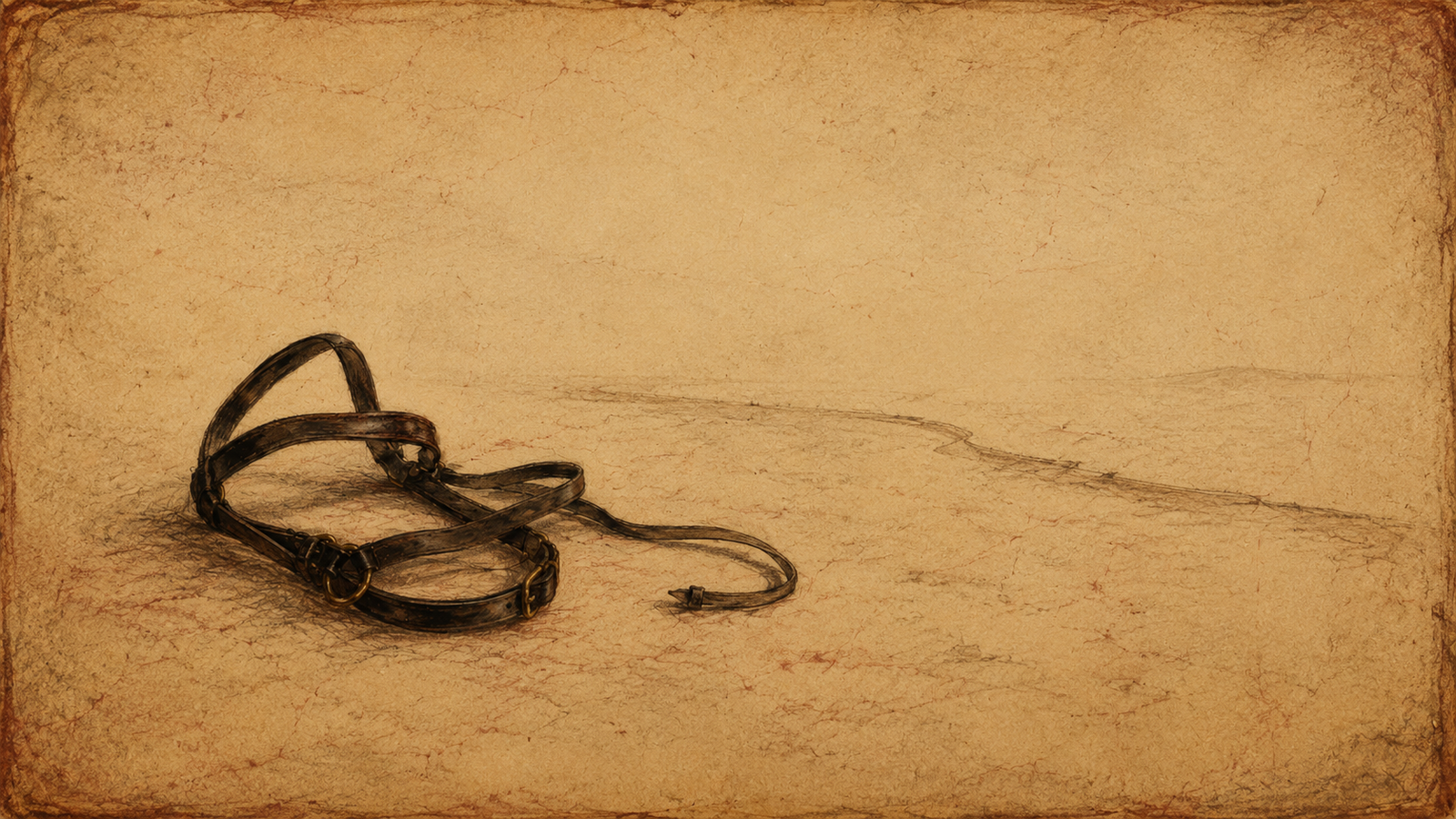

When Favour Is Mistaken for Right — On Bellerophon
When Favour Is Mistaken for Right is a companion essay to Bellerophon — The Bridle and the Fall, from The Hospitable Dark. It asks why Bellerophon’s myth cannot be reduced to a simple warning against pride, and why the real danger begins only after divine help has proved itself real.
What makes Bellerophon difficult is that he was not wrong to think he had been helped.
The help was real. That is the trouble. Pegasus was not an illusion. The bridle was not a trick. The Chimera was not a small danger later enlarged by song. Bellerophon received aid, rose by it, and did what no ordinary strength could have done.
The myth becomes dangerous after that.
It asks what happens when real favour is misread as permanent right.
This is why Bellerophon is a subtler figure than the usual moral of pride can hold. The old shorthand is easy: a man flew too high, tried to reach Olympus, and was cast down. But that version makes the tale smaller than it is. It treats the fall as if it were the whole meaning. It makes the story into a warning against ambition, as though Bellerophon’s first error were simply wanting too much.
The older pressure is more exact.
Bellerophon’s tragedy is not that he was never favoured by the gods. He was. Athena helps him. Pegasus bears him. The bridle works. The Chimera dies. The impossible task becomes possible. He is not a fraud exposed by the fall. He is a man whose greatness was real and whose interpretation of that greatness became false.
That is the more frightening thing.
False greatness is easier to understand. It collapses when tested. Bellerophon’s greatness does not collapse in that way. He is brave. He learns quickly. He faces the monster. He survives what was intended to kill him. He does not merely pretend to be lifted.
He is lifted.
The danger lies in what he lets that lifting mean.
Greek myth is full of mortals assisted by gods. The gods may sponsor, rescue, desire, punish, deceive, instruct, or use a human being without ever making that human being divine. Their attention is real, but it is not simple. A god’s favour may be blessing, trap, test, advantage, burden, or some mixture of all five. To be noticed by the divine world is not necessarily to be loved safely. It is certainly not to become equal to what has noticed you.
This is one of the great disciplines of myth: it preserves the distinction between contact and identity.
A mortal may touch the divine without becoming divine. A mortal may be carried upward without belonging above. A mortal may receive an instrument from the gods without becoming the source of its power.
The full essay continues into the bridle, Pegasus, Icarus, the loneliness after height, and the difference between being lifted and being admitted.
Continue reading: When Favour Is Mistaken for Right on The Hospitable Dark
Also in The Hospitable Dark

The Long Return VII — The Palace of Alcinous
Odysseus reaches the palace of Alcinous, but safety is not yet home. In this seventh instalment of The Long Return, hospitality becomes a moral test: a good house receives the stranger’s body before demanding his story.
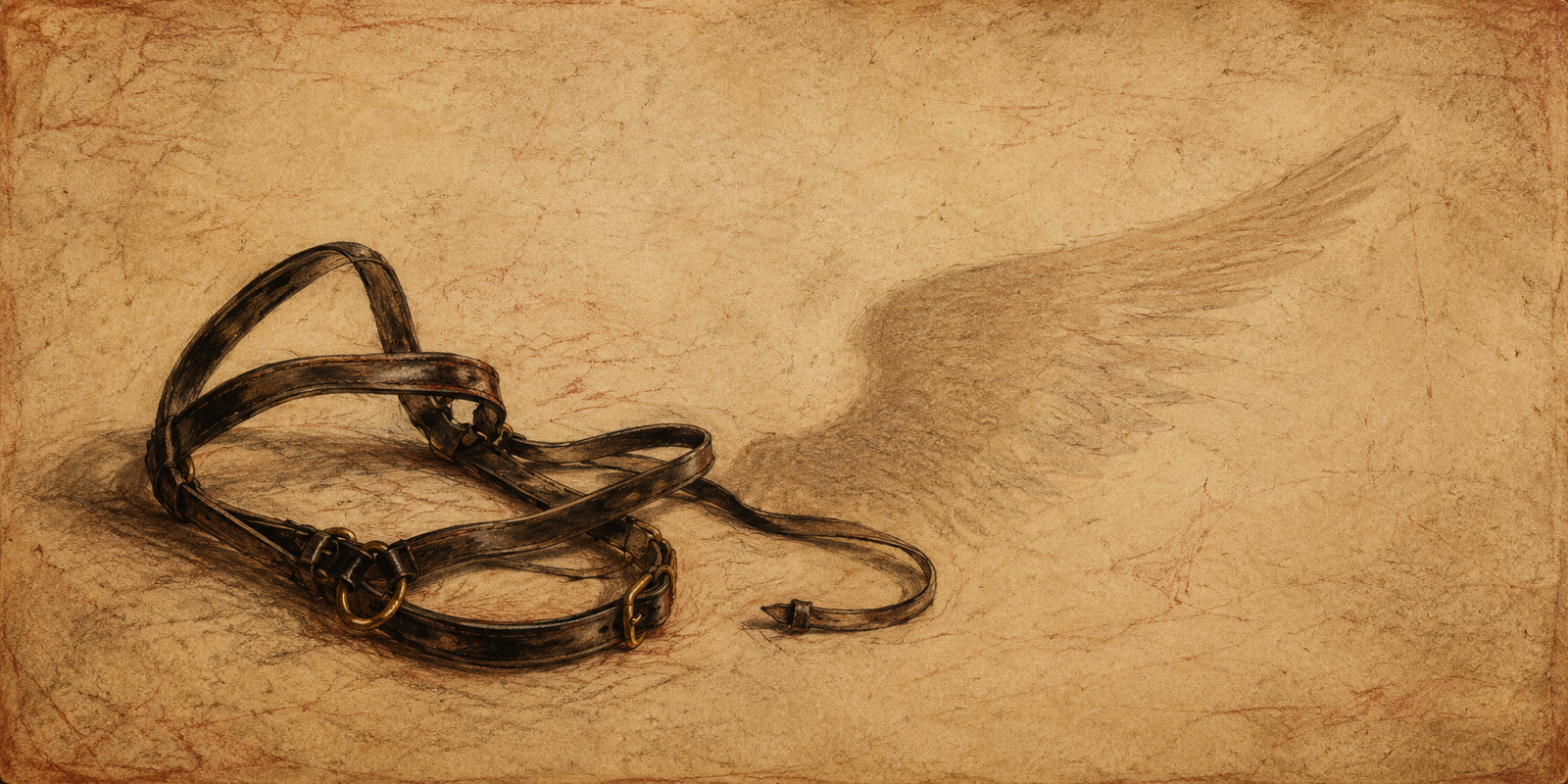

Bellerophon — The Bridle and the Fall
A literary Greek myth retelling of Bellerophon, Pegasus, and the divine bridle: a tale of heroic ascent, misremembered grace, and the moment a true gift becomes proof in the wrong hands. From The Hospitable Dark, where old stories are retold in a warm, grave voice.

The Stranger, the Girl, and the Law of Mercy
A reader’s guide to Nausicaa, Odysseus, and the law of mercy in Homer’s Odyssey. Before Odysseus can be recognised, he must first be received: clothed, fed, washed, and treated as human before his name has become safe or useful.
Continue Reading
If this piece found something in you, you may wish to continue the journey elsewhere.
On The Lantern Chronicles, I gather writings from Angkor, myth and legend, contemplative essays, and poetry — works shaped by silence, beauty, wonder, memory, and the deeper questions that follow us through the world.
It is a place for stone and story, reflection and vow, shadow and revelation.
You would be most welcome there.