
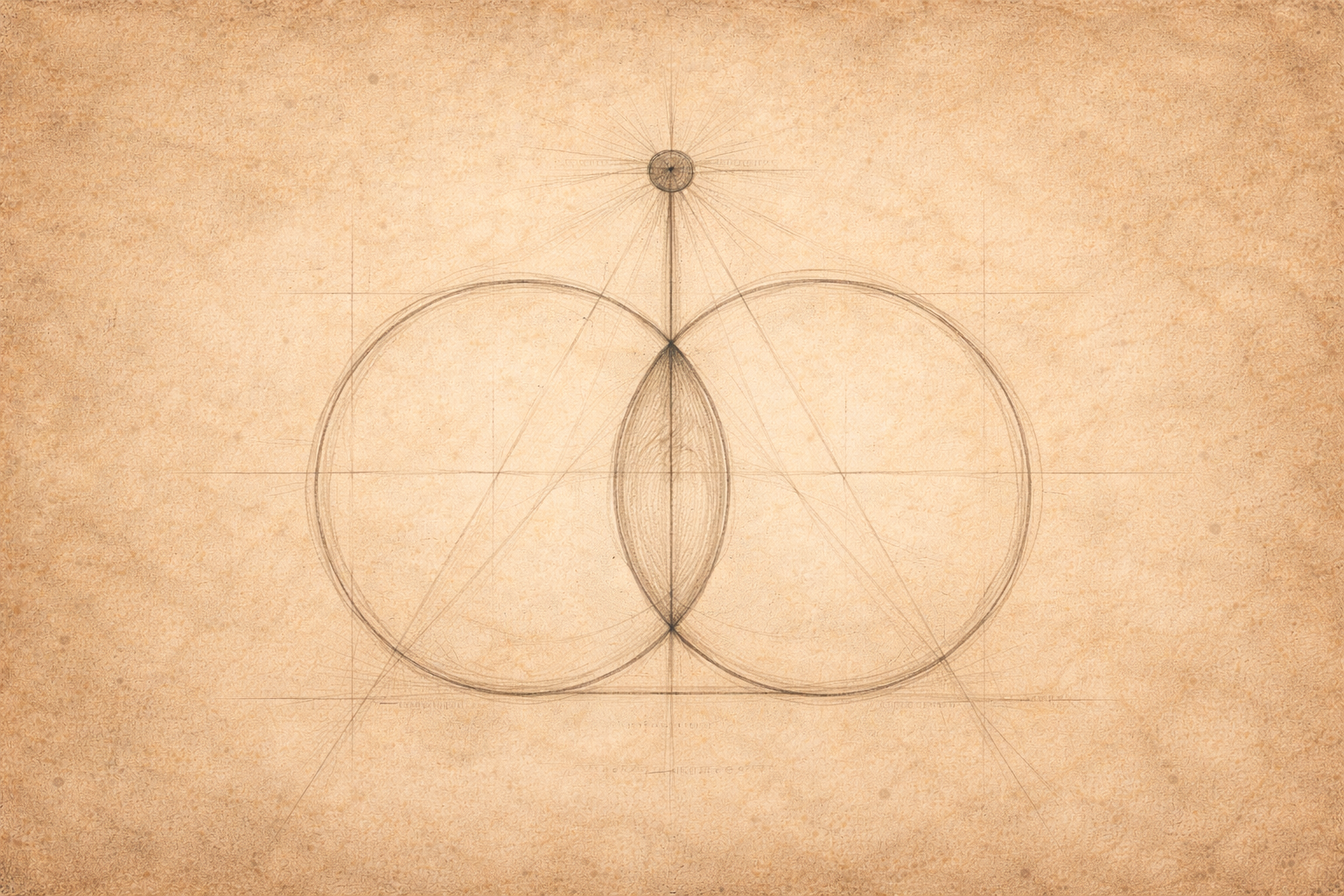

The Discipline of Letting a Thing Appear
In The Discipline of Letting a Thing Appear, Lucas Varro begins at Angkor, before a weathered face in stone that does not reveal itself at once. The essay asks what kind of attention is required when reality does not yield quickly — and what modern consciousness loses when it mistakes a first glance for genuine encounter.
This is a Living Way essay on perception, patience, reverence, and the moral discipline of allowing a place, a person, a sorrow, or a truth to disclose itself without being forced into immediate use.
There are moments at Angkor when nothing seems to happen. Then, because one has not moved, something begins.
A face in the wall is at first only weathered stone among weathered stone. The features do not announce themselves. The relief seems too worn, the light too uncertain, the whole surface too continuous to yield anything distinct. Then, after a time, the cheek draws free of shadow, the mouth gathers its composure, the brow enters relation with the line beside it, and what had seemed merely part of the wall becomes presence within it. Nothing has been added. Nothing has been imagined into being. The face was there from the beginning. But it had not yet appeared.
The distinction matters.
We often speak as though seeing were immediate and simple, as though whatever is real ought to offer itself at once. If something does not yield quickly, we assume either that it contains little or that we have already grasped enough. A first glance is mistaken for acquaintance. Recognition is mistaken for knowledge. We say we have seen when in fact we have only registered. Modern consciousness is trained for this error. It prefers speed, legibility, rapid return. It grows restless in the presence of anything that does not make itself available on demand.
Yet some realities are not withheld because they are empty. They are withheld because they are not the kind of thing that can be taken by appetite.
To let a thing appear is to accept this. It is to refuse the small violence by which the mind tries to seize meaning before presence has ripened. It is not vagueness. Not passivity. Not a pious waiting for atmosphere to descend. It is a discipline: not demanding immediate yield; not confusing first impression with full reality; not converting encounter too quickly into summary, judgement, or use. It is a way of looking that does not hurry what is before it into compliance with one’s own tempo.
This is difficult because the mind is quick by habit and impatient by formation. It lunges ahead of the world. It names too soon. It leans on familiar categories, not always from arrogance, but from restlessness. To name something early gives the feeling of having secured it. One has placed it. One can move on. But much of what matters most in life is damaged by this kind of efficiency. The damage is subtle. Nothing dramatic occurs. One simply remains outside things while believing oneself to have entered them.
A place like Angkor makes this plain because it does not reward haste very generously. One may cross the causeway, enter the galleries, pass beneath towers, and leave with many images yet very little encounter. The eye skims. The camera confirms. The body advances. It all counts as experience in the ordinary sense. Yet the temple, in any deeper sense, has scarcely begun. A glance yields surfaces. Duration yields form. Stillness yields relation.
The temple has not changed. What changes is the pressure brought against it.
Continue reading: The Discipline of Letting a Thing Appear at The Living Way on Substack.
Also in The Lantern Chronicles

The Stranger Is Where Inheritance Is Weighed
A Living Way essay on faith, inheritance, empire, and moral humility. The Stranger Is Where Inheritance Is Weighed asks how the stories that form us can become either mercy or contempt — and why the true test of any tradition is whether it can still see the stranger.
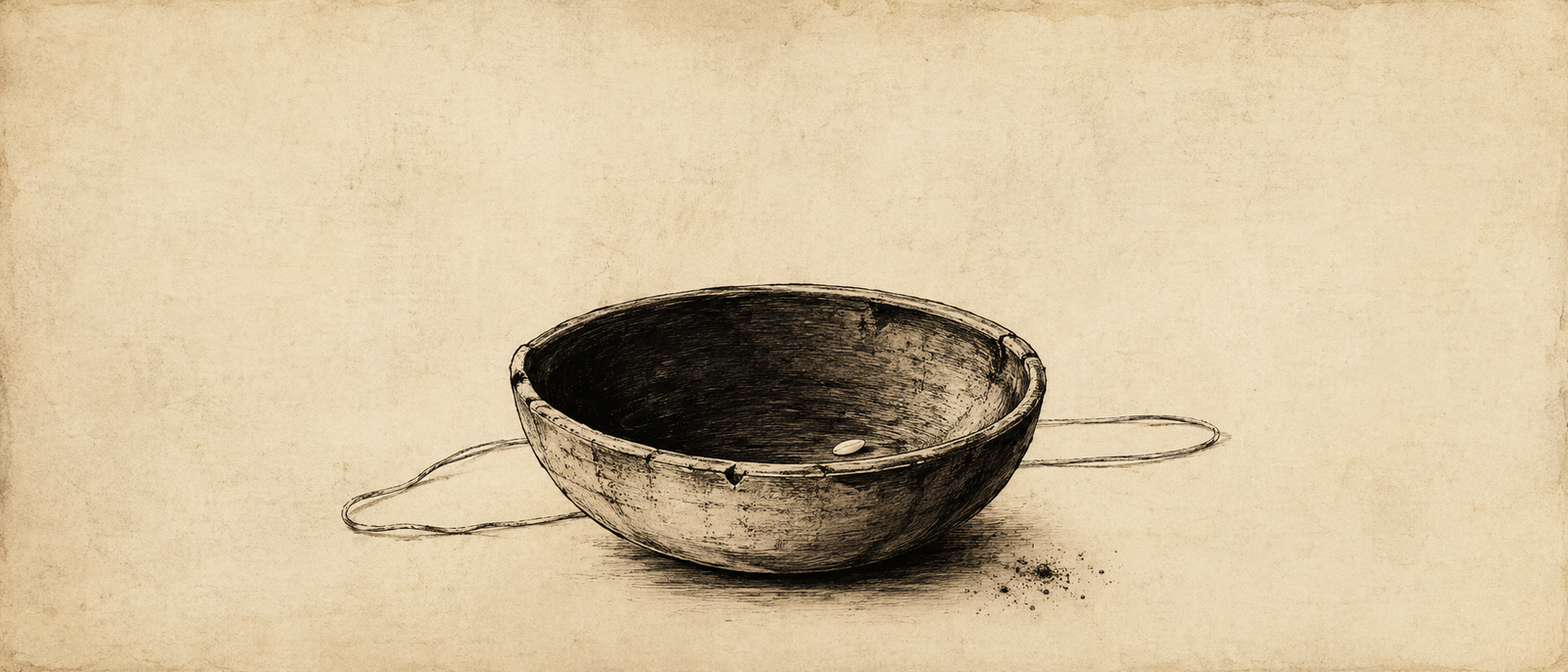

The Beggar God: A Bhikshatana Retelling
A hearthlit retelling of Bhikshatana: Shiva enters the forest as a barefoot beggar, carrying only ash, silence, and an empty bowl. In this Fires of the Old World tale, spiritual pride is not defeated by argument or spectacle, but revealed by what the hand cannot yet release.

At the Lip — A Poem from The Vow
A poem from The Vow on a waterfall, a river reaching the edge, and the stillness that gives falling its shape. At the Lip stays with one overwhelming natural image until movement, constraint, and scale become almost unbearable in their precision.
Continue Reading
If this piece found something in you, you may wish to continue the journey elsewhere.
On The Lantern Chronicles, I gather writings from Angkor, myth and legend, contemplative essays, and poetry — works shaped by silence, beauty, wonder, memory, and the deeper questions that follow us through the world.
It is a place for stone and story, reflection and vow, shadow and revelation.
You would be most welcome there.