
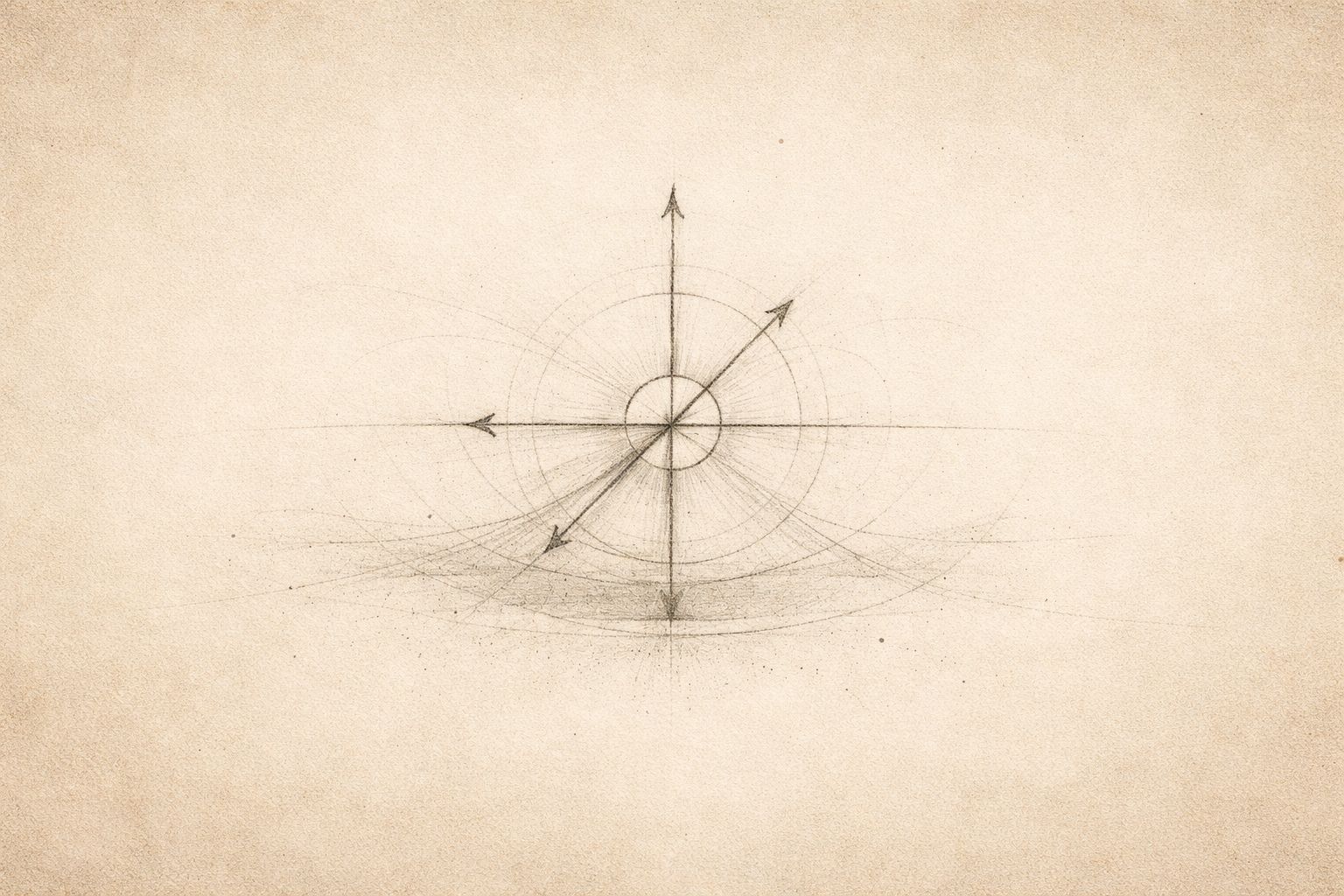

The Spark and the Weight of Being Human
The Spark and the Weight of Being Human is a Living Way essay on self-awareness, mortality, conscience, and the strange dignity of being human. It asks what happens when a creature not only lives, but knows that it lives — and must bear the beauty and burden of that knowledge.
We like to think of self-awareness as a gift. And it is. A creature that can say “I” does not merely feel hunger, fear, pleasure, or pain. It knows that it is the one who feels them. It can remember itself, anticipate itself, judge itself. Somewhere in the long prehistory of our species, life crossed a threshold strange enough to seem almost mythical: a being arose that could turn inward and find itself there.
That changed everything.
It gave us language, memory shaped into story, plans stretched across seasons and generations, moral reflection, ritual, science, law, confession, prayer, theatre, burial, prophecy. It made possible not merely experience, but experience gathered into a self.
And yet the same power that raised us also unsettled us.
For self-awareness does not only illuminate. It exposes. It places the mind before itself. It makes us both actor and witness, creature and commentator. A deer may startle. A wolf may suffer injury. But a human being can suffer, then think about suffering, then fear its return, then ask what it means, then wonder whether the suffering reveals weakness, failure, punishment, injustice, or fate. The hurt does not remain an event. It gathers echo.
This is one of the central facts of human life: we do not merely live. We also live with ourselves.
That is why self-awareness cannot be understood as a simple improvement, as though evolution merely fitted a brighter lamp inside the animal mind. It altered the whole interior climate. Once consciousness folds back upon itself, experience thickens. It gains depth, tension, recursion. Pain becomes more than pain. It becomes memory, anticipation, interpretation. The body burns; the mind can watch the fire.
From this come many of our highest achievements.
Also many of our torments.
The first burden of self-awareness is ignorance.
Not ignorance itself. Any animal may not know. Our difficulty is stranger: we know that we do not know. We are aware of the edges of our understanding, and often of how narrow it is. The child asking why the stars are there, the philosopher asking what can be known, the physicist staring into equations that explain one layer while opening ten more — all belong to the same lineage. Human beings are compelled towards understanding. Once the inward light is lit, it begins to search.
This hunger has made us formidable. We have learned to split the atom, map the genome, predict eclipses, model the birth of stars, send instruments into the dark between worlds. We have torn open matter and found pattern in it. We have looked at life closely enough to read something of its script.
Yet knowledge has not given us rest. It has made our ignorance more articulate.
Continue reading: The Spark and the Weight of Being Human at The Living Way on Substack.
Also in The Lantern Chronicles

The Stranger Is Where Inheritance Is Weighed
A Living Way essay on faith, inheritance, empire, and moral humility. The Stranger Is Where Inheritance Is Weighed asks how the stories that form us can become either mercy or contempt — and why the true test of any tradition is whether it can still see the stranger.
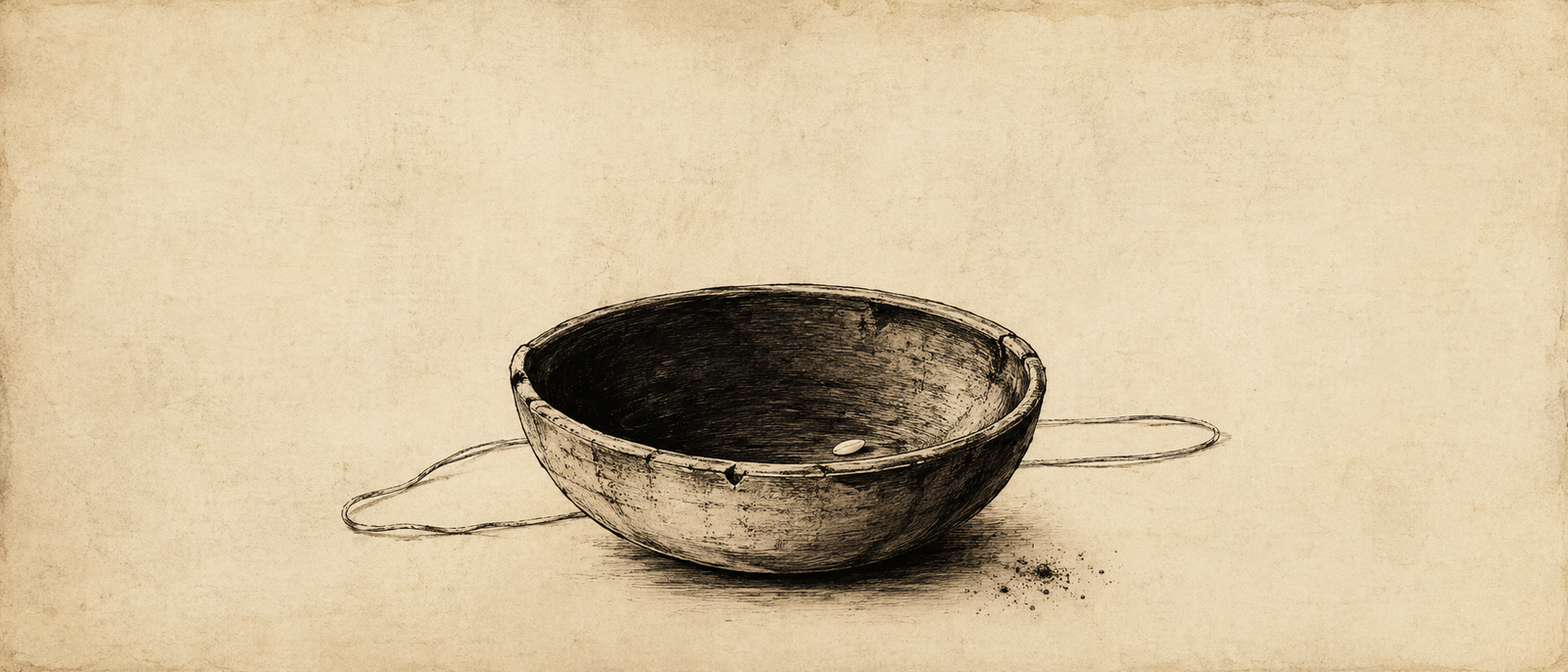

The Beggar God: A Bhikshatana Retelling
A hearthlit retelling of Bhikshatana: Shiva enters the forest as a barefoot beggar, carrying only ash, silence, and an empty bowl. In this Fires of the Old World tale, spiritual pride is not defeated by argument or spectacle, but revealed by what the hand cannot yet release.

At the Lip — A Poem from The Vow
A poem from The Vow on a waterfall, a river reaching the edge, and the stillness that gives falling its shape. At the Lip stays with one overwhelming natural image until movement, constraint, and scale become almost unbearable in their precision.
Continue Reading
If this piece found something in you, you may wish to continue the journey elsewhere.
On The Lantern Chronicles, I gather writings from Angkor, myth and legend, contemplative essays, and poetry — works shaped by silence, beauty, wonder, memory, and the deeper questions that follow us through the world.
It is a place for stone and story, reflection and vow, shadow and revelation.
You would be most welcome there.