
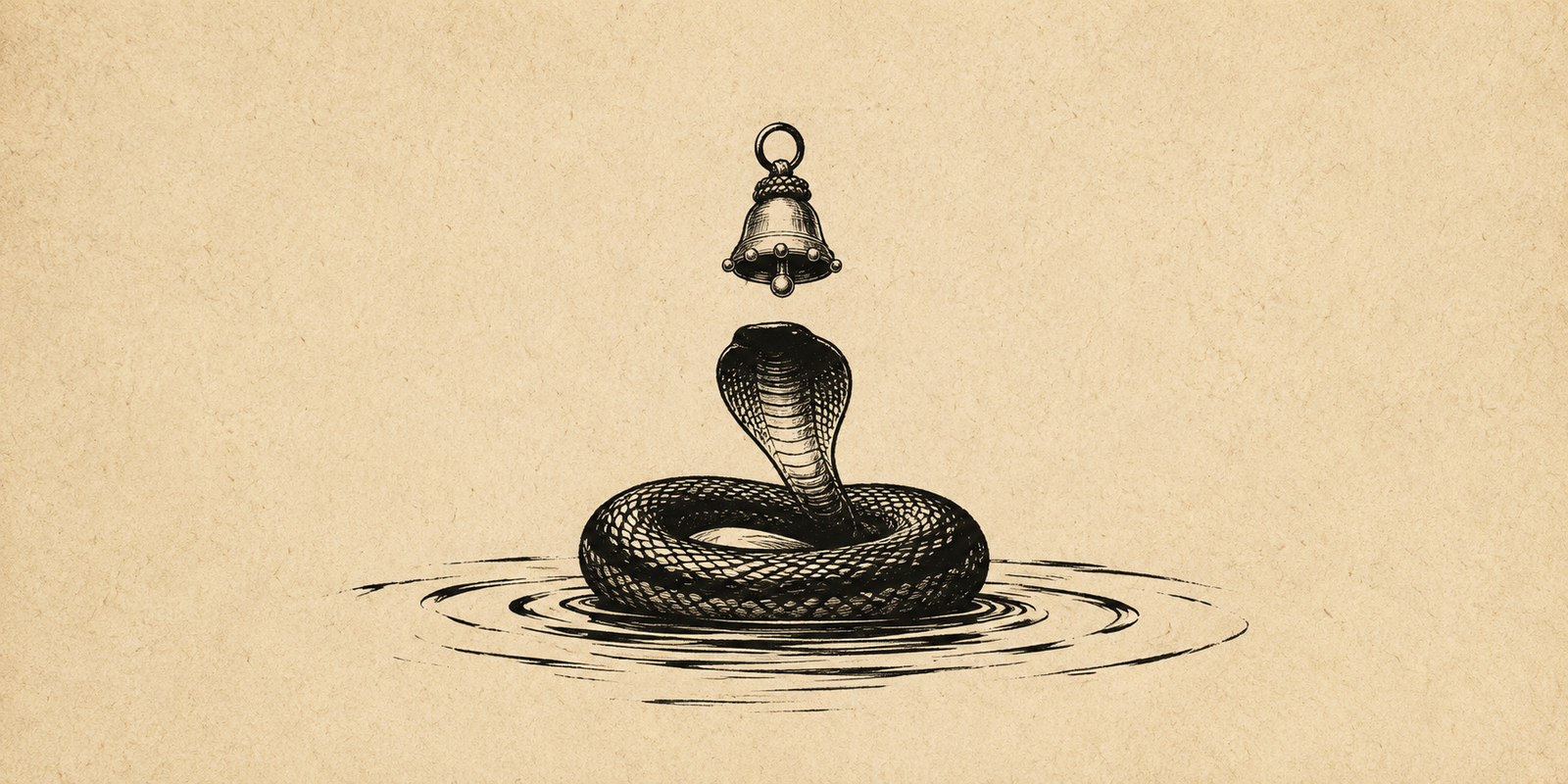

Fires of the Old World XV — The Serpent-River Dance
There was once a bend in the river where birds would not settle.
Cows lowered their heads, then stepped back. Even the wind seemed to pass that water with its mouth closed. In that deep, dark pool lived Kaliya, the serpent, who had made fear into a home and poison into a kingdom.
Then Krishna came to the riverbank.
He did not bring a weapon.
He climbed the kadamba tree, leapt into the black water, and rose above the many-hooded serpent with an ankle-bell bright against the roar. The river watched. The village watched. Yashoda watched with her hands pressed to her mouth.
And Krishna danced.
Not to destroy.
Not to boast.
He danced until the poison loosened.
He danced until the serpent bowed.
He danced until the river remembered how to carry the moon.
The Serpent-River Dance is a hearthlit retelling of Krishna and Kaliya: a tale of venom, mercy, fear, and the child who stepped onto the serpent as if onto a song.
Continue reading on Substack:
Fires of the Old World XV — The Serpent-River Dance
Also in The Lantern Chronicles

The Stranger Is Where Inheritance Is Weighed
A Living Way essay on faith, inheritance, empire, and moral humility. The Stranger Is Where Inheritance Is Weighed asks how the stories that form us can become either mercy or contempt — and why the true test of any tradition is whether it can still see the stranger.
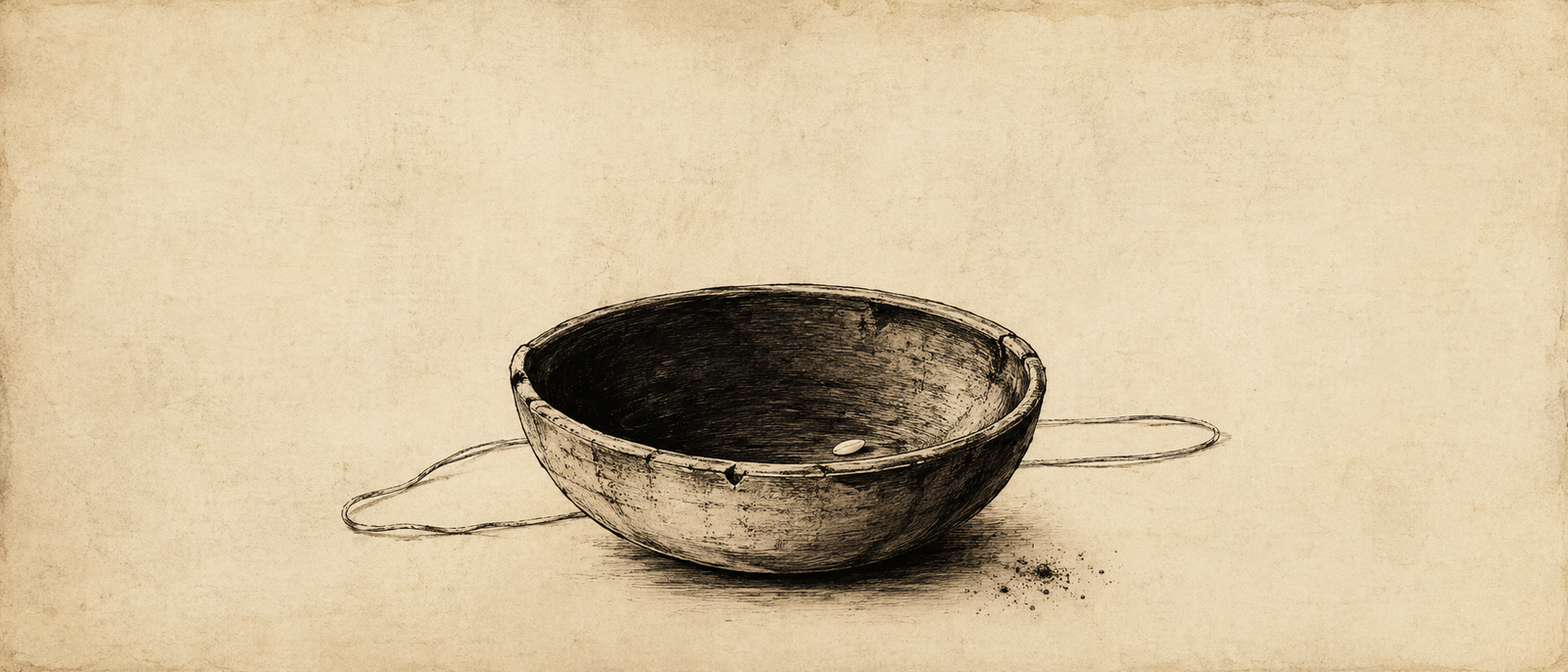

The Beggar God: A Bhikshatana Retelling
A hearthlit retelling of Bhikshatana: Shiva enters the forest as a barefoot beggar, carrying only ash, silence, and an empty bowl. In this Fires of the Old World tale, spiritual pride is not defeated by argument or spectacle, but revealed by what the hand cannot yet release.
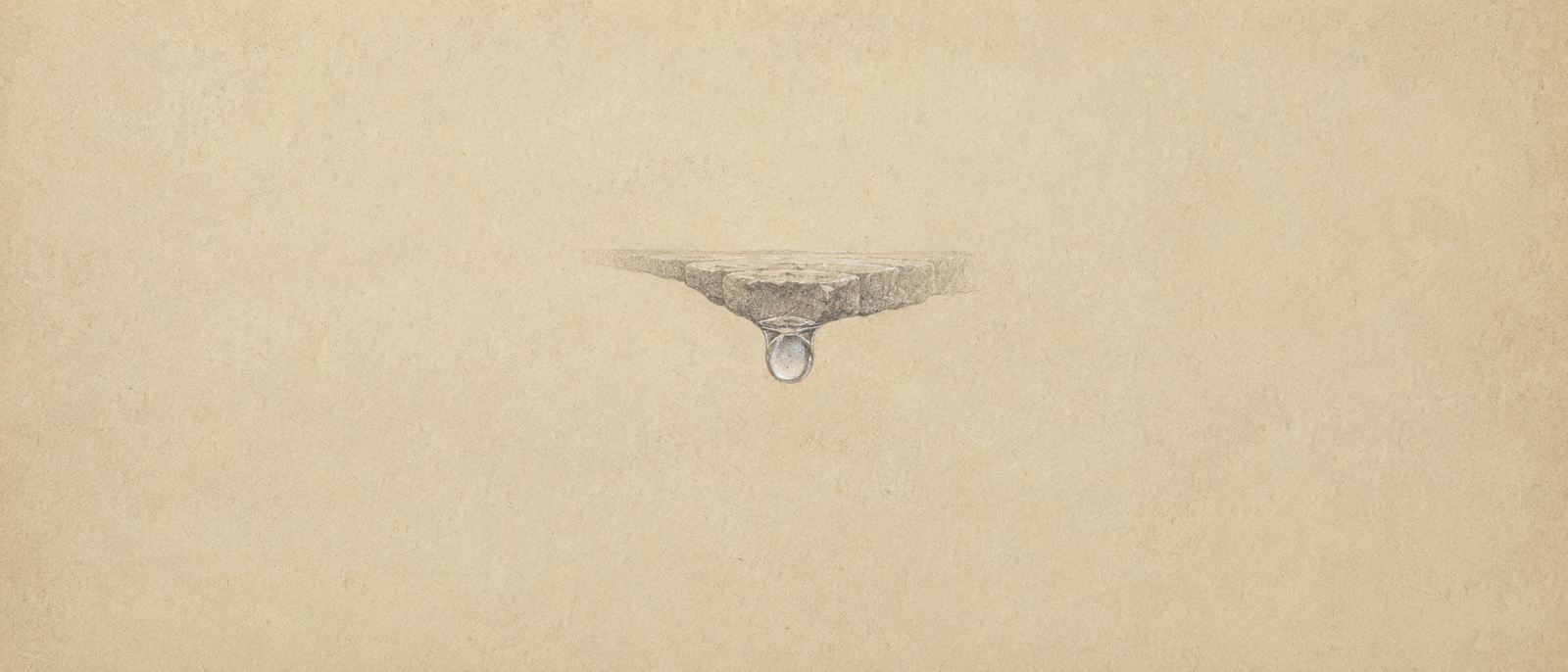

At the Lip — A Poem from The Vow
A poem from The Vow on a waterfall, a river reaching the edge, and the stillness that gives falling its shape. At the Lip stays with one overwhelming natural image until movement, constraint, and scale become almost unbearable in their precision.
Continue Reading
If this piece found something in you, you may wish to continue the journey elsewhere.
On The Lantern Chronicles, I gather writings from Angkor, myth and legend, contemplative essays, and poetry — works shaped by silence, beauty, wonder, memory, and the deeper questions that follow us through the world.
It is a place for stone and story, reflection and vow, shadow and revelation.
You would be most welcome there.