
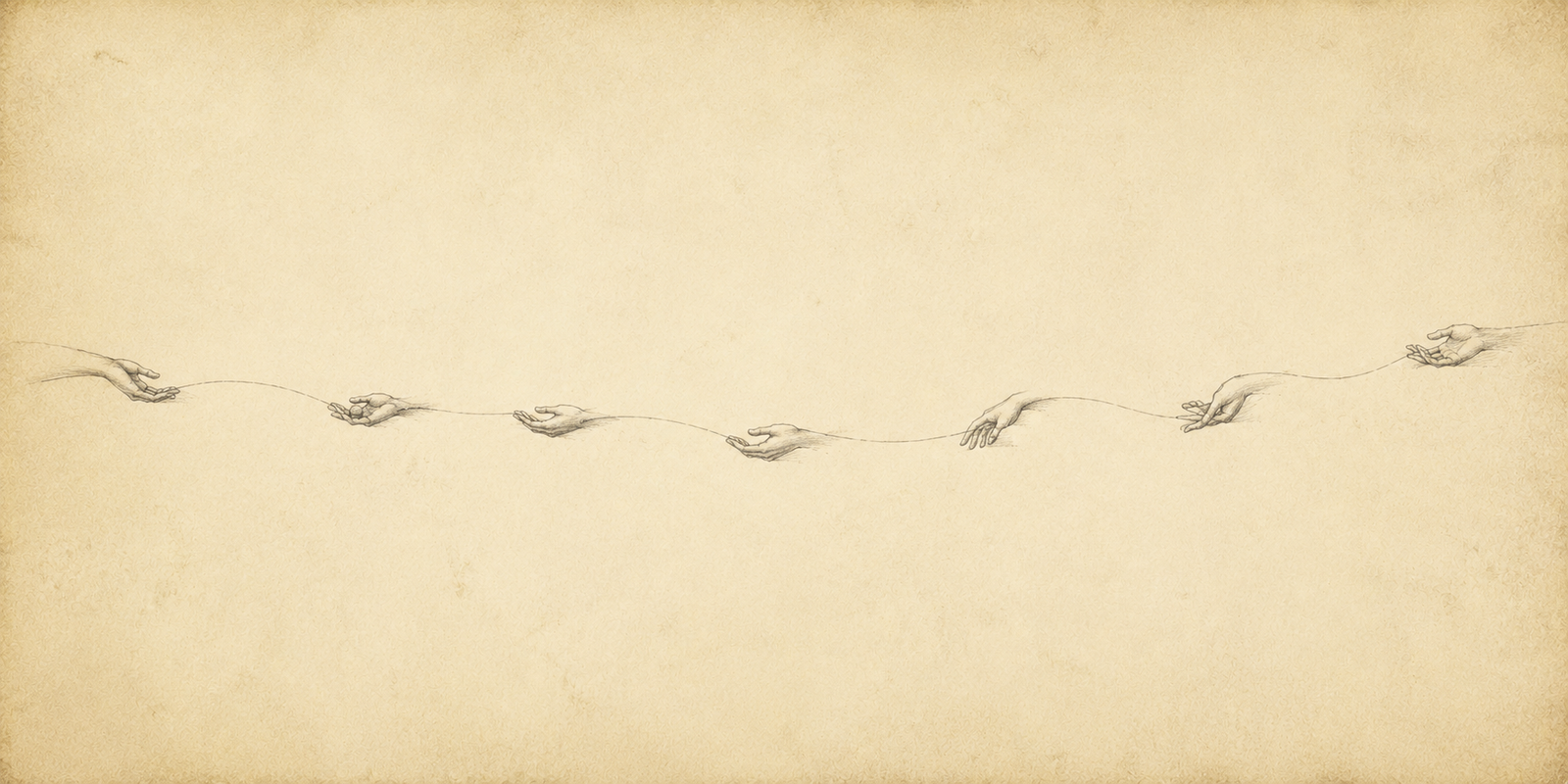

The Kindness That Continues
One act of kindness is never enough.
That is the first thing to admit, because without that admission kindness becomes dishonest. It becomes one more way for a society to admire private virtue while leaving public failure intact. A hungry person should not have to depend on the moral mood of strangers. An unhoused person should not have to wait for generosity to become visible in a passer-by. A sick person should not have to become fortunate before receiving care.
When a society asks kindness to do the work of justice, it is not honouring kindness.
It is exploiting it.
But the opposite error is just as dangerous. Because kindness is not enough, we are tempted to decide that it is not much. Because it cannot carry the whole weight of the world, we begin to treat it as ornamental. Because it cannot replace law, housing, medicine, safety, wages, and institutions, we imagine it belongs to the soft margins of life, suitable for children’s stories, private sentiment, religious consolation, or seasonal speeches.
This is a mistake.
Kindness is not a substitute for structure. It is one of the forces that teaches structure how to remain human.
The act itself may look almost weightless. Someone lifts what another person cannot carry. Someone pays a fare for a stranger whose card has failed. Someone waits beside a frightened person until help comes. Someone puts food down without making the hunger perform gratitude. Someone absorbs a moment of inconvenience without turning it into a grievance. Someone sees humiliation approaching another human being and quietly steps between.
Nothing large appears to have happened.
The traffic continues. The queue moves. The office door closes. The bus pulls away. The person helped may never know the helper’s name. The helper may forget the act by evening. No system has changed. No injustice has been abolished. No headline records it.
And yet the moral temperature of the next moment is different.
The full essay continues from this small alteration into a meditation on everyday altruism, moral transmission, the face before us, and the hidden ways ordinary kindness can keep justice human without pretending to replace it.
Continue reading: The Kindness That Continues at The Living Way on Substack
Also in The Lantern Chronicles

The Stranger Is Where Inheritance Is Weighed
A Living Way essay on faith, inheritance, empire, and moral humility. The Stranger Is Where Inheritance Is Weighed asks how the stories that form us can become either mercy or contempt — and why the true test of any tradition is whether it can still see the stranger.
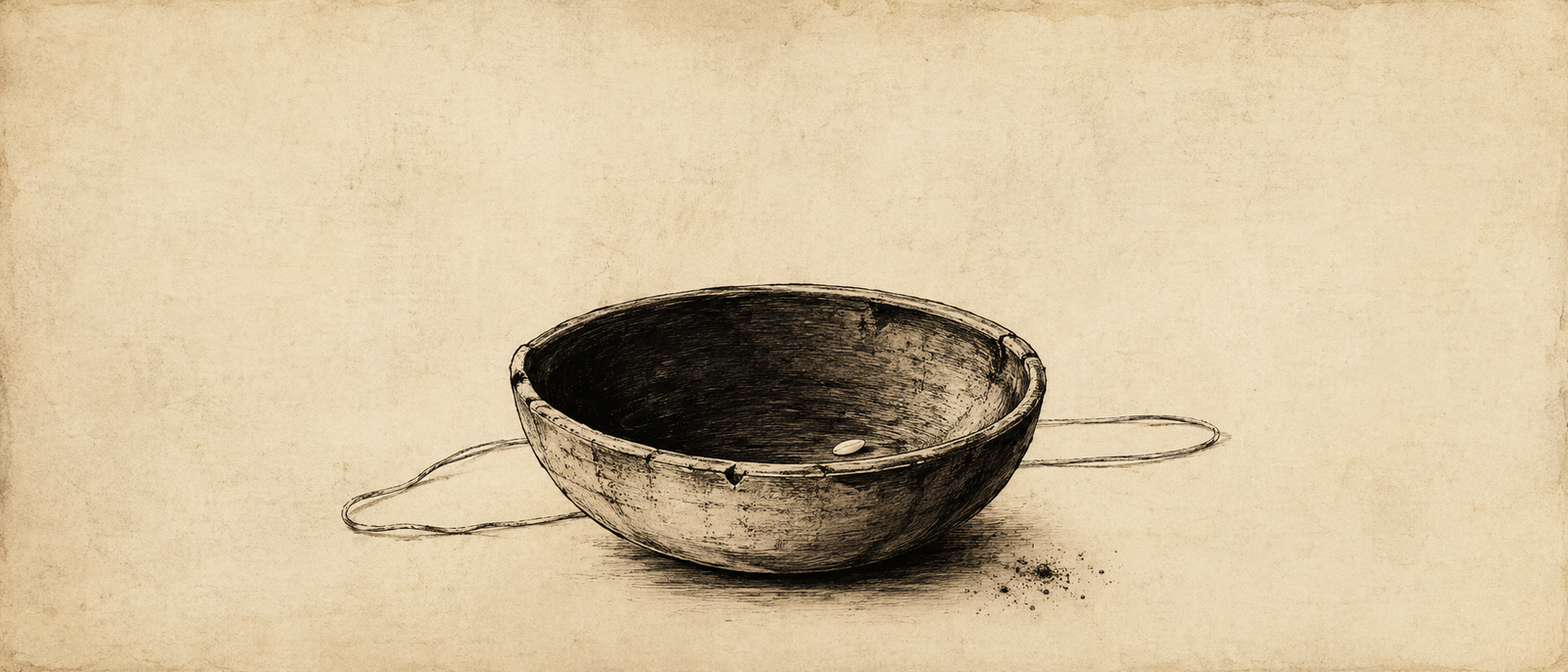

The Beggar God: A Bhikshatana Retelling
A hearthlit retelling of Bhikshatana: Shiva enters the forest as a barefoot beggar, carrying only ash, silence, and an empty bowl. In this Fires of the Old World tale, spiritual pride is not defeated by argument or spectacle, but revealed by what the hand cannot yet release.


At the Lip — A Poem from The Vow
A poem from The Vow on a waterfall, a river reaching the edge, and the stillness that gives falling its shape. At the Lip stays with one overwhelming natural image until movement, constraint, and scale become almost unbearable in their precision.
Continue Reading
If this piece found something in you, you may wish to continue the journey elsewhere.
On The Lantern Chronicles, I gather writings from Angkor, myth and legend, contemplative essays, and poetry — works shaped by silence, beauty, wonder, memory, and the deeper questions that follow us through the world.
It is a place for stone and story, reflection and vow, shadow and revelation.
You would be most welcome there.