
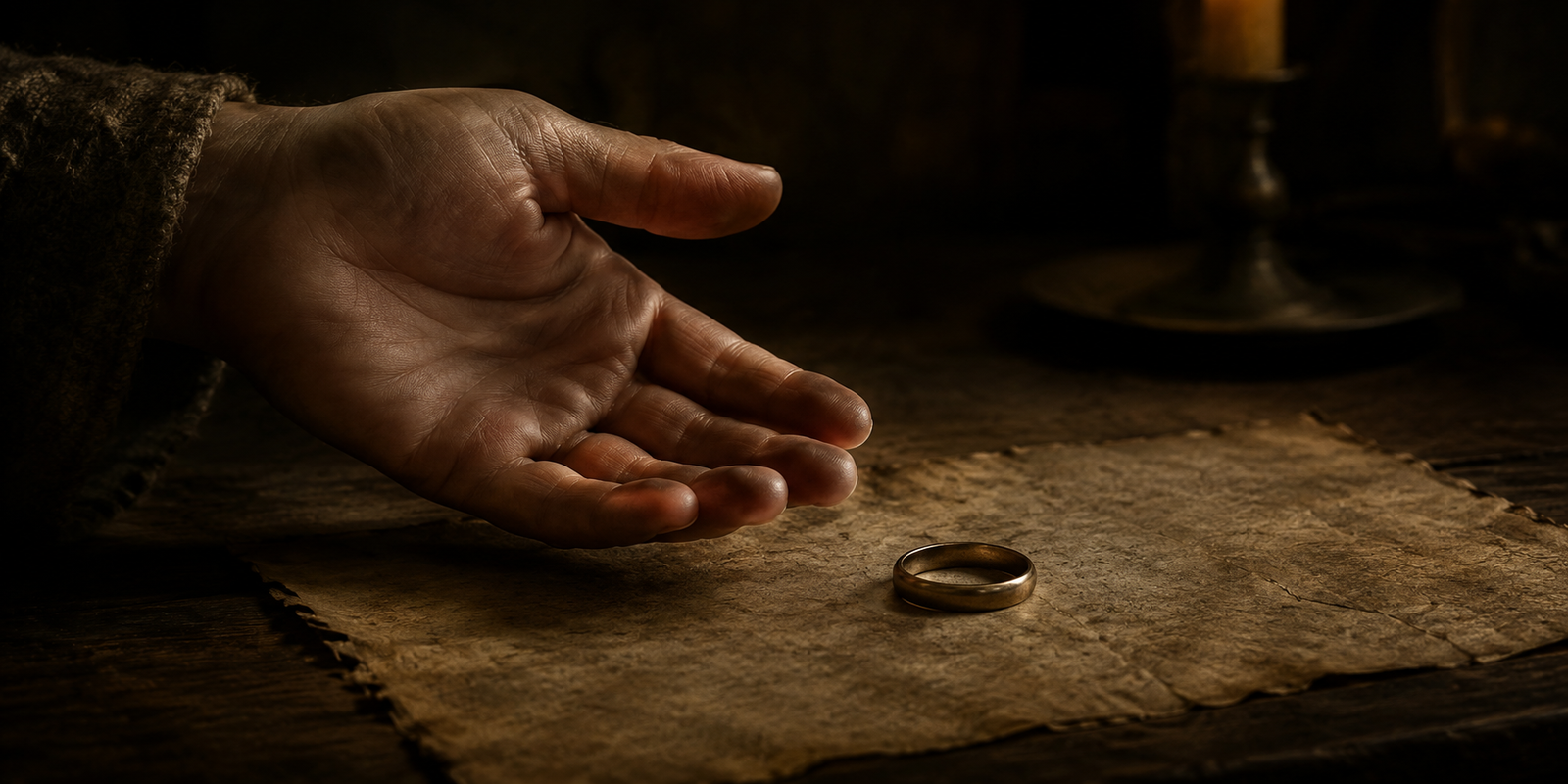

If Gandalf Took the Ring
A Mytharium threshold reading of Tolkien’s The Lord of the Rings, this essay asks what would have happened if Gandalf had accepted the Ring—and why his refusal is one of the first moral victories of the whole story.
There is a moment in Bag End when the fate of Middle-earth rests not on a battle, a prophecy, or a kingly claim, but on a hand that does not close.
Frodo offers the Ring to Gandalf because he is frightened, and because the offer appears reasonable. Gandalf is wise. Gandalf is powerful. Gandalf has already become, in Frodo’s imagination, the one who knows what to do when everyone else is lost. If the Ring is too great for a hobbit, then surely it should be given to one who has spent long years opposing the Shadow. The gesture is almost innocent. Frodo is not trying to tempt him. He is trying to be relieved.
That is why Gandalf’s refusal matters.
He does not refuse because the Ring would be useless to him. He refuses because it would be useful. He does not say that he is too weak to wield it. He understands that he is too strong to be trusted with it. The Ring would come to him by the road most open in his heart: pity, the desire to protect the weak, and the wish for strength to do good. His danger is not that he secretly longs to become Sauron. His danger is that he might wish, with terrible sincerity, to save everyone.
This is the first thing the scene reveals. The question is not whether Gandalf, taking the Ring, would immediately become a cackling tyrant, a monstrous parody of himself, a grey pilgrim suddenly robed in obvious darkness. Tolkien’s terror is subtler than that. Gandalf as Ring-Lord would be frightening because he would not cease, at once, to be Gandalf. He would retain wisdom, compassion, patience learned over long labour, and the memory of his mission. He might still speak of healing. He might still oppose cruelty. He might still call many things good by their rightful names.
And then, slowly or swiftly, those good things would cease to ask permission.
The Ring does not merely offer power. It offers desire released from the discipline of love. It is not a weapon lying on a table, morally neutral until lifted by a hand. It carries a grammar: command, mastery, the will made effective over others.
That is why the Ring tempts each person according to the shape of the self.
Continue reading: If Gandalf Took the Ring at The Mytharium on Substack.
Also in The Mytharium
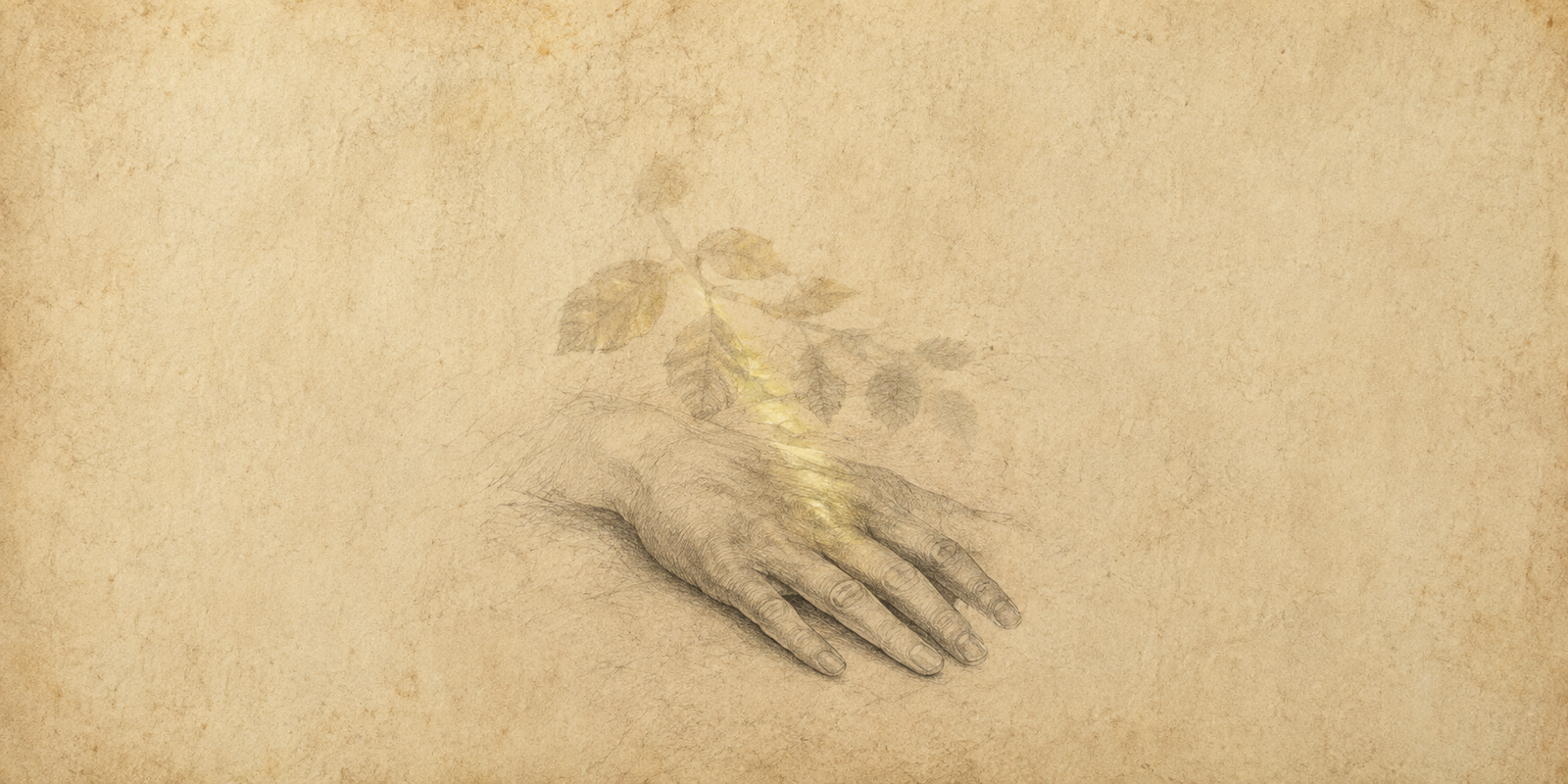

The Joy Sorrow Cannot Foresee
Sam wakes beneath green leaves and asks whether everything sad will come untrue—but Frodo’s wounded hand already complicates the answer. This Mytharium essay explores Tolkien’s eucatastrophe, grace at Mount Doom, and the sudden joy that does not erase sorrow but denies it final authority.
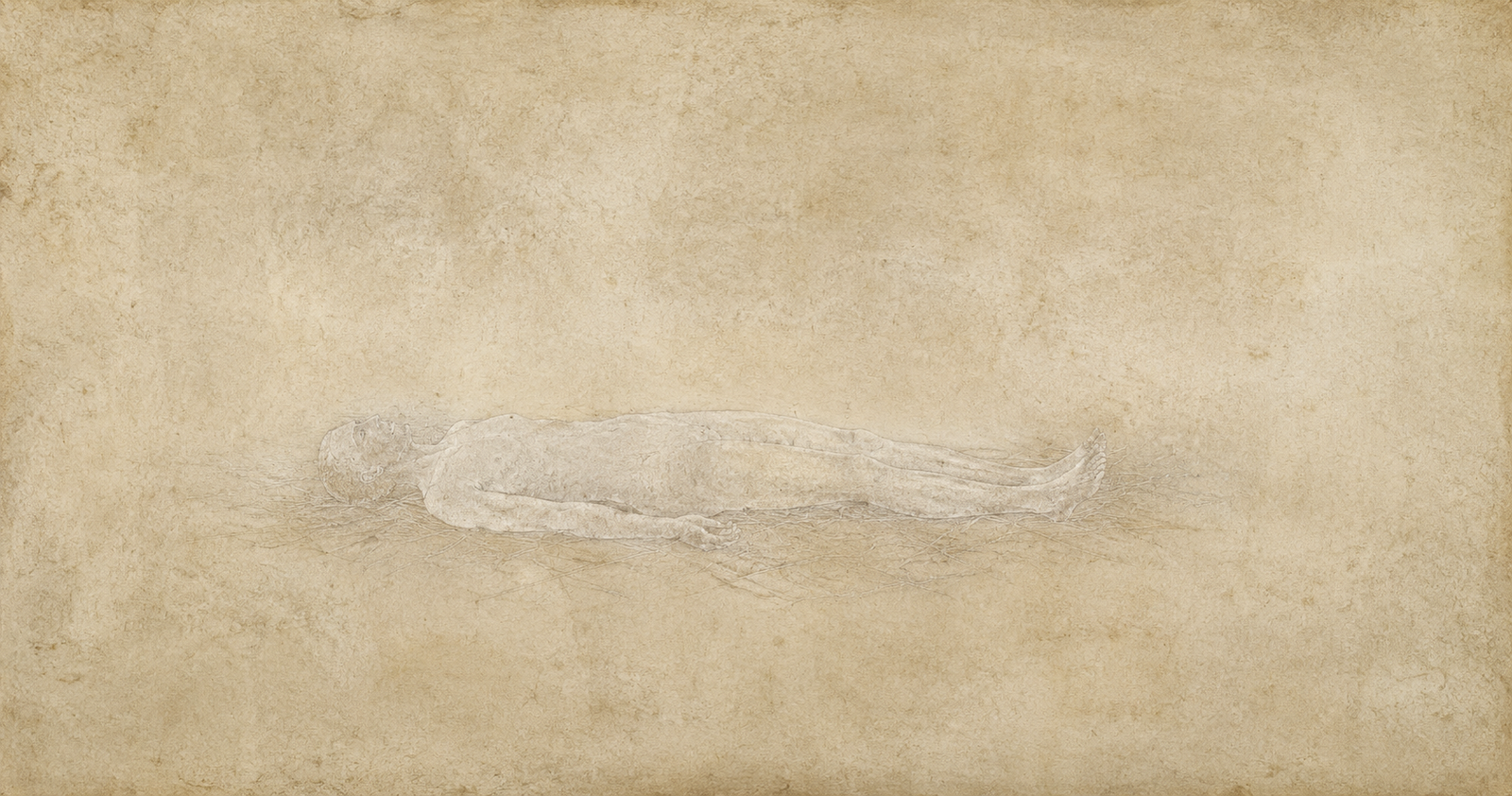

The Body on the Sacred Grass: A Vedic Myth Retelling
A source-faithful literary retelling of the Purusha Sukta from the Rigveda. The gods lay the immeasurable Purusha upon the sacred grass, and from the primordial sacrifice begin to emerge animals, ritual speech, human order, and the cosmos itself. Yet the world will receive only one quarter of him.
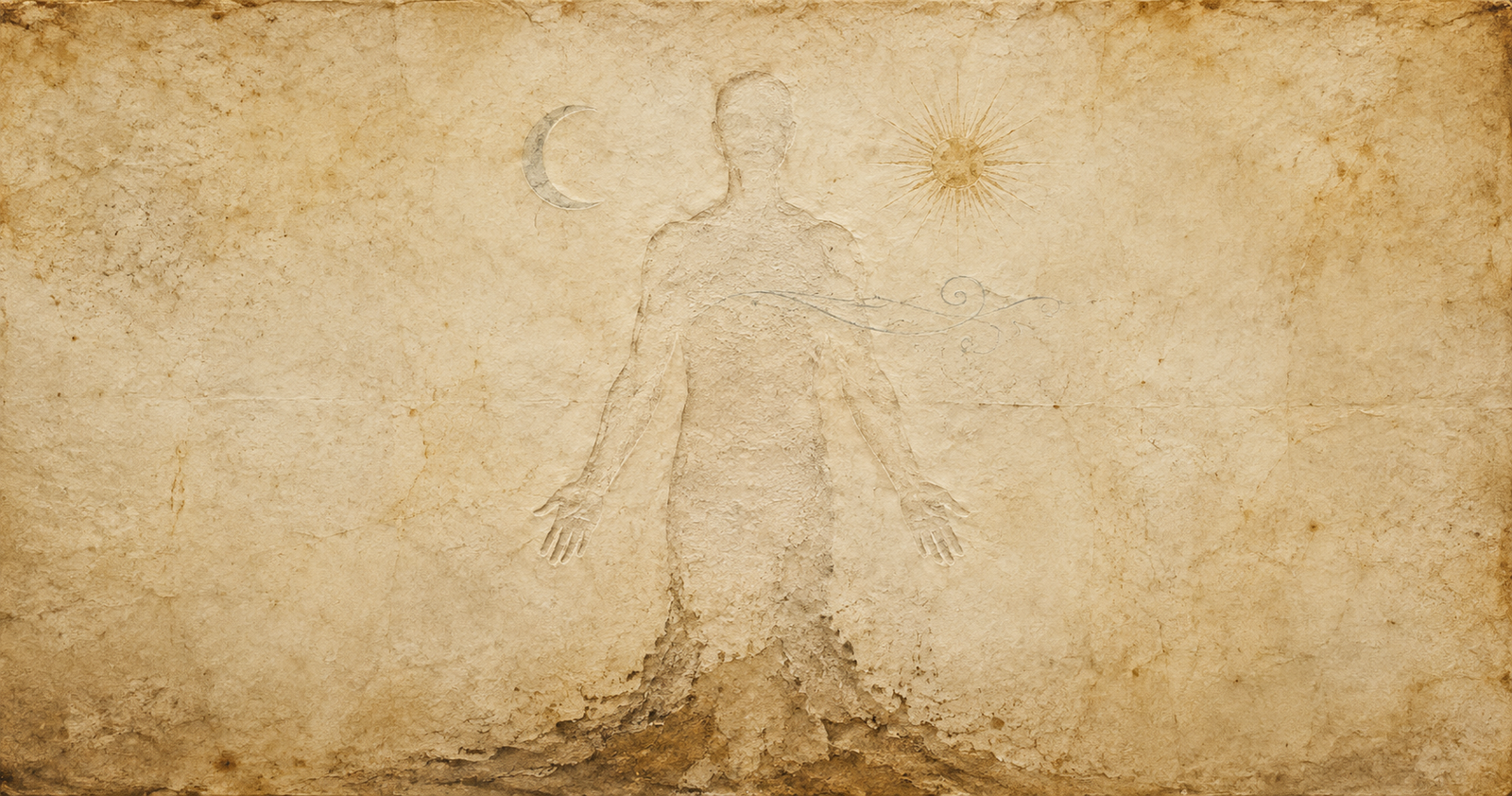

The Body That Became the World
Before the world became separate things, the Rigveda gave it a body. This Mytharium essay reads the sacrifice of Purusha as an image of creation, sacred unity, social hierarchy, and the cost of becoming many.
Continue Reading
If this piece found something in you, you may wish to continue the journey elsewhere.
On The Lantern Chronicles, I gather writings from Angkor, myth and legend, contemplative essays, and poetry — works shaped by silence, beauty, wonder, memory, and the deeper questions that follow us through the world.
It is a place for stone and story, reflection and vow, shadow and revelation.
You would be most welcome there.