
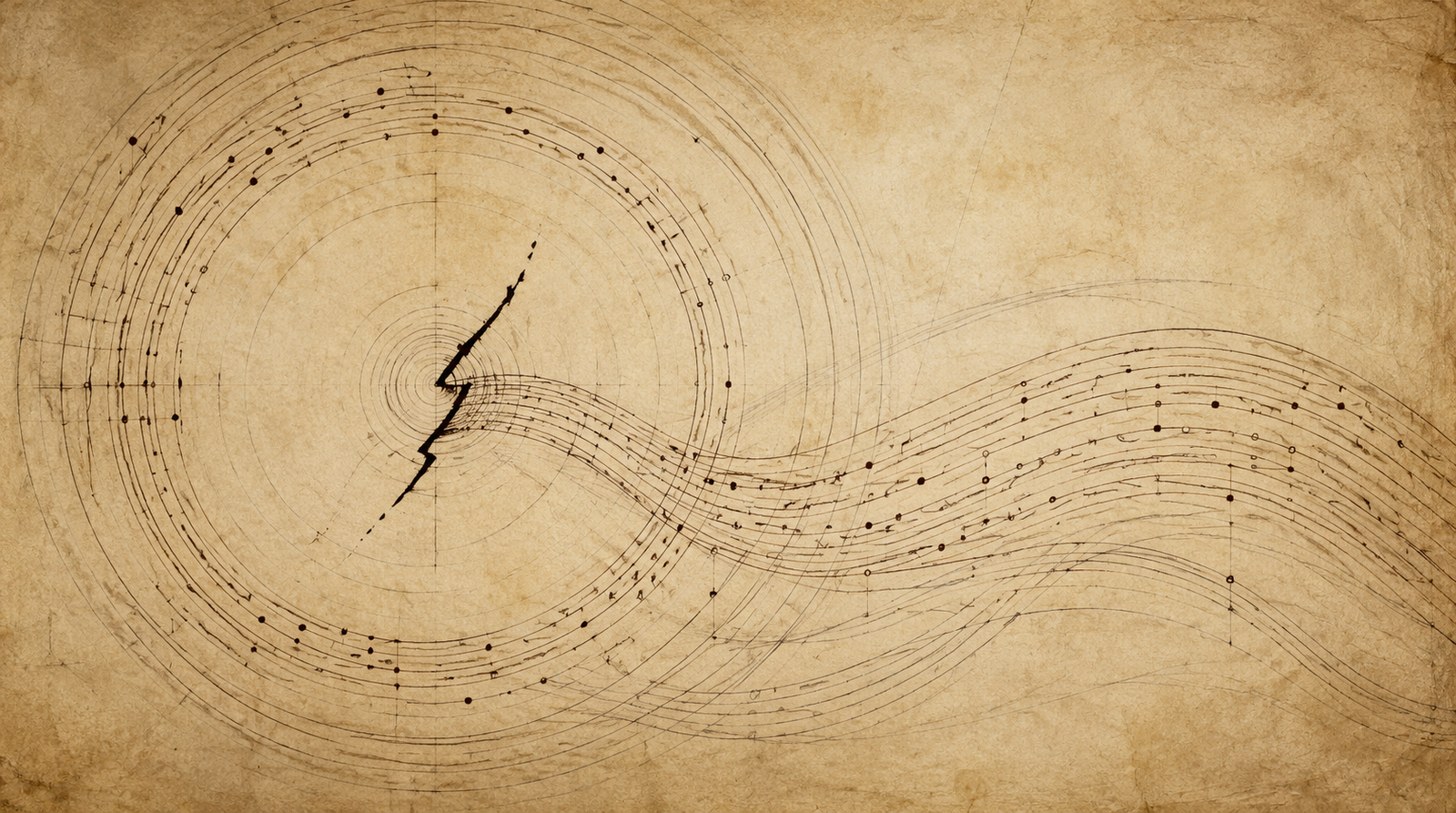

The Music of the Ainur and the Problem of Discord
A Mytharium essay on Tolkien’s creation myth, Melkor’s rebellion, and the profound moral architecture beneath The Silmarillion: evil may wound the Music, but it cannot become its composer.
Before there is a world in Tolkien, there is music. Not stone, not sea, not tree, not star, but sound: ordered, given, received. The first drama of Middle-earth is not a battle between armies, nor even the fall of an angelic power into pride. It is a note struck against the theme. Melkor does not begin by making a rival world. He begins by trying to sing alone.
That matters. Tolkien could have opened his mythology with a war, a genealogy, a throne, a kingdom, or a map. He opens it instead with harmony. The world does not begin as territory to be conquered, nor as matter waiting for force. It begins as gift: a theme given by Ilúvatar to the Ainur, who answer by making before him the Great Music.
Before Arda is seen, it is heard. Before history has events, it has pattern. Before evil has a body, it has a sound.
This is why the Ainulindalë is not an ornamental creation myth placed at the threshold of The Silmarillion. It is the moral grammar of the whole legendarium. Everything that follows—the rebellion of the Noldor, the making and loss of the Silmarils, the marring of Arda, the rise of Sauron, the burden of the Ring, the pity of Bilbo, the failure of Frodo, the long defeat of Galadriel—has already been given its deepest form in this first music. Tolkien tells us, before he tells us almost anything else, what evil is and what evil is not.
Evil is discord.
But discord is not another music.
Melkor’s rebellion begins inwardly. It comes into his heart to interweave matters of his own imagining into the theme, not because he wishes to enrich what has been given, but because he seeks to magnify the part assigned to himself. The phrasing is exact. His sin is not imagination itself. Tolkien, of all writers, could never make imagination the root of evil. Nor is the fault that Melkor has a part. Each of the Ainur has a part. The fault is that Melkor cannot bear his part as part.
He wants the assigned portion to become autonomous. He wants the given voice to sound as though it had given itself.
This is the beginning of evil in Tolkien: the refusal of relation.
Continue reading: The Music of the Ainur and the Problem of Discord at The Mytharium on Substack.
Also in The Mytharium
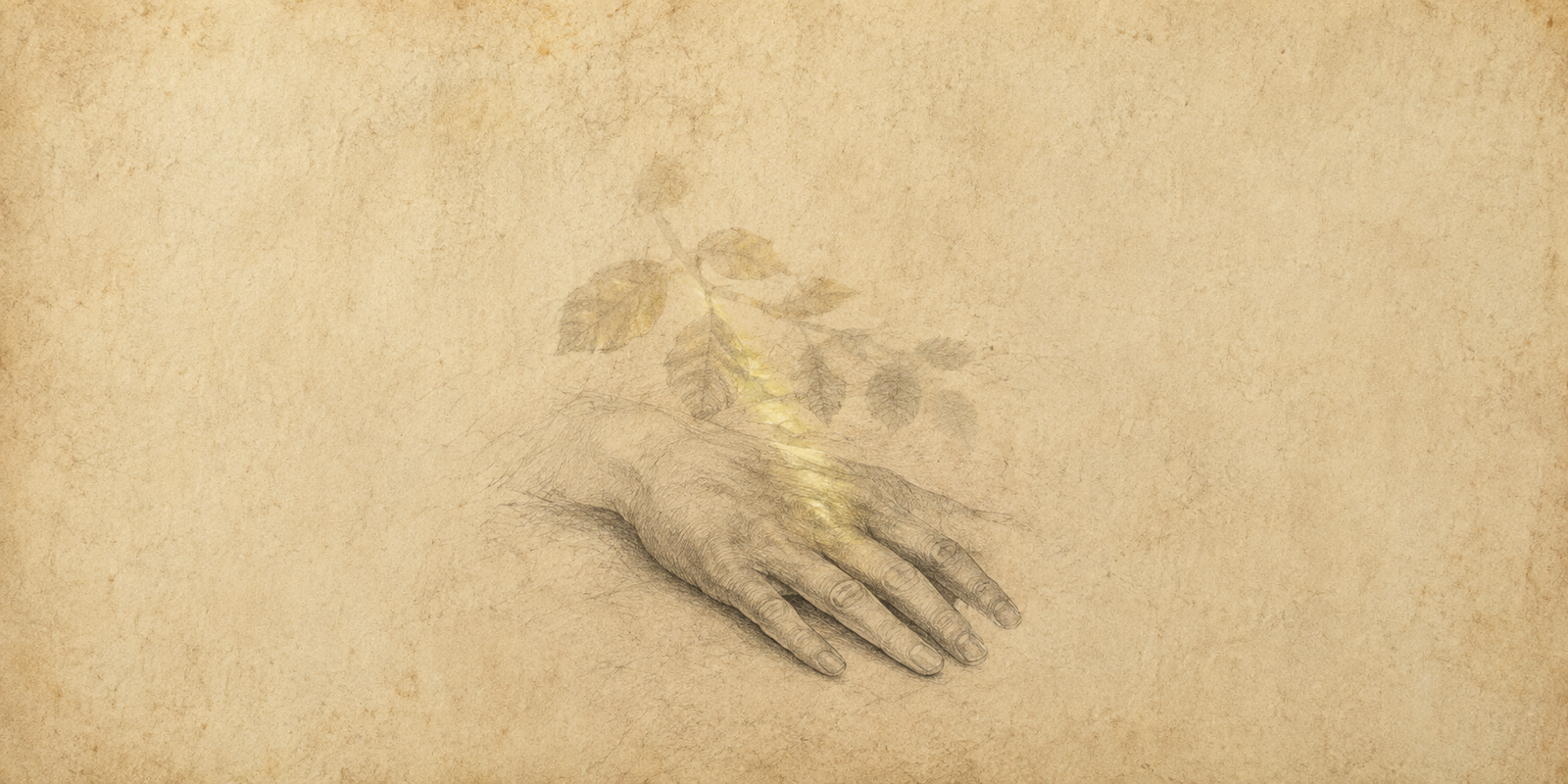

The Joy Sorrow Cannot Foresee
Sam wakes beneath green leaves and asks whether everything sad will come untrue—but Frodo’s wounded hand already complicates the answer. This Mytharium essay explores Tolkien’s eucatastrophe, grace at Mount Doom, and the sudden joy that does not erase sorrow but denies it final authority.
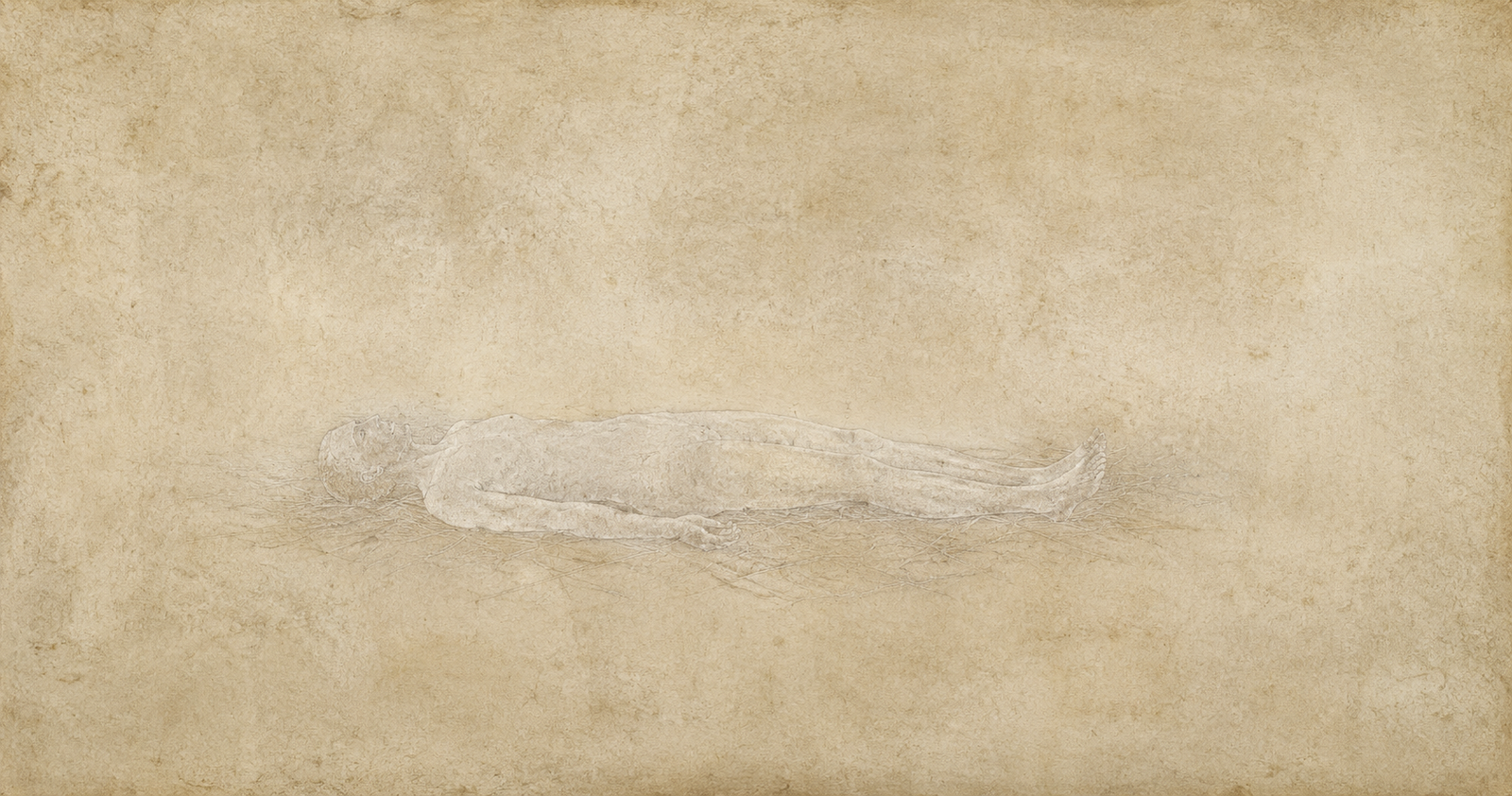

The Body on the Sacred Grass: A Vedic Myth Retelling
A source-faithful literary retelling of the Purusha Sukta from the Rigveda. The gods lay the immeasurable Purusha upon the sacred grass, and from the primordial sacrifice begin to emerge animals, ritual speech, human order, and the cosmos itself. Yet the world will receive only one quarter of him.
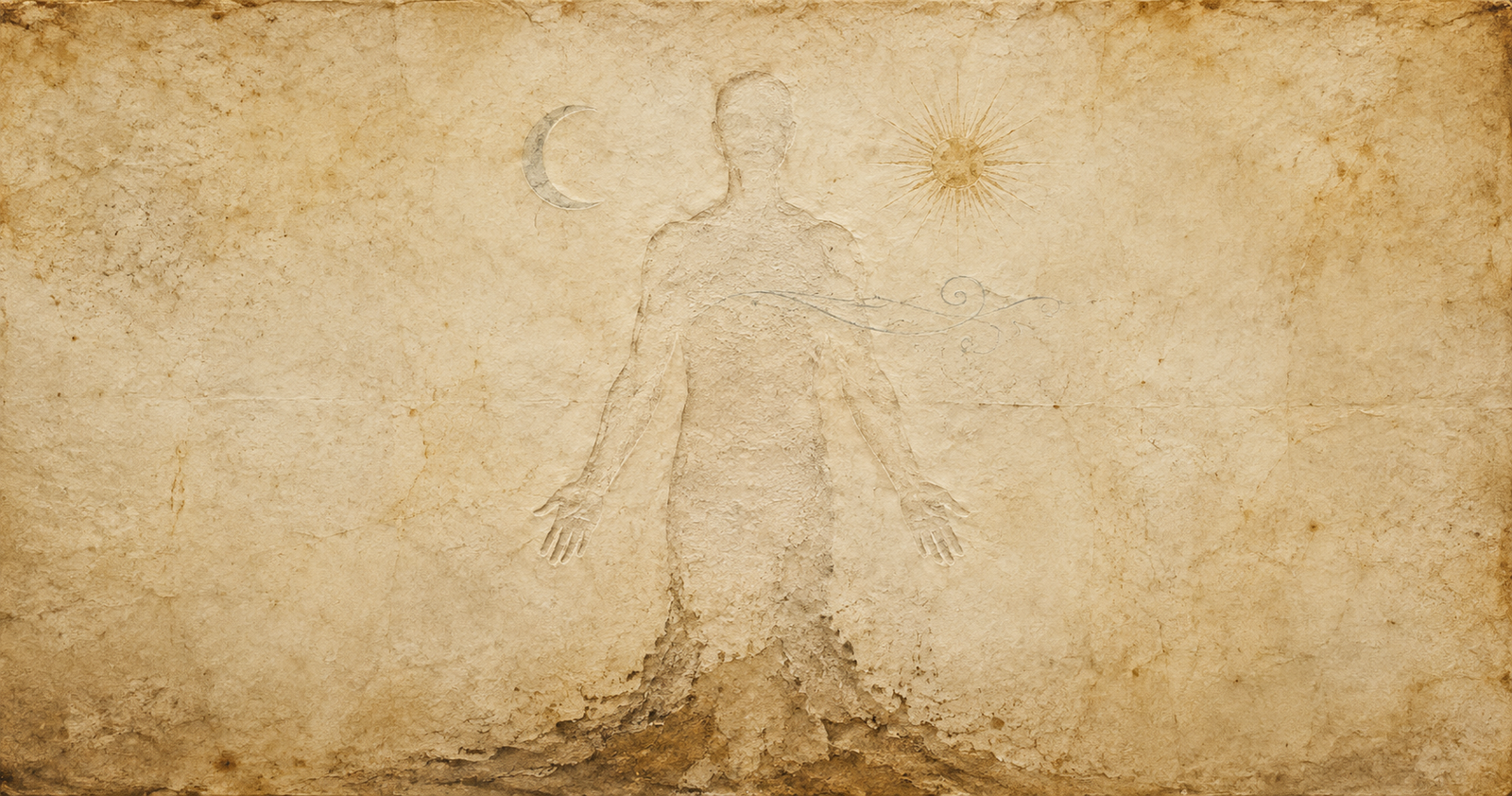

The Body That Became the World
Before the world became separate things, the Rigveda gave it a body. This Mytharium essay reads the sacrifice of Purusha as an image of creation, sacred unity, social hierarchy, and the cost of becoming many.
Continue Reading
If this piece found something in you, you may wish to continue the journey elsewhere.
On The Lantern Chronicles, I gather writings from Angkor, myth and legend, contemplative essays, and poetry — works shaped by silence, beauty, wonder, memory, and the deeper questions that follow us through the world.
It is a place for stone and story, reflection and vow, shadow and revelation.
You would be most welcome there.