
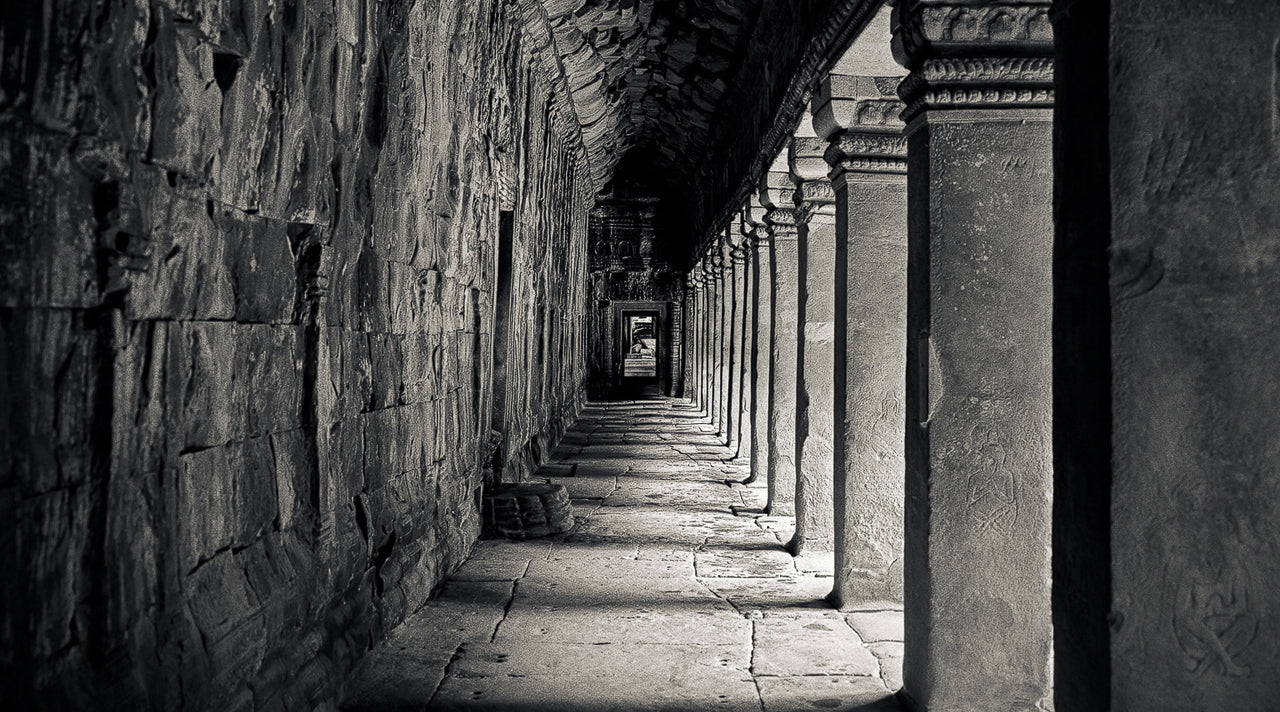

A Corridor that Breathes
"To see is not enough. One must be still enough to receive."
Ta Prohm’s eastern gallery stands not in grandeur, but in listening. In the pre-dawn hush, before the jungle stirs, light returns across the stone—not as spectacle, but as presence. It brushes the floor like memory and leans into shadow like breath. This is where the artist stood: not to capture, but to dissolve.
In Shadow and Stone, Lucas Varro draws us into this threshold space with reverent precision. The photograph was made on large format black-and-white film, using long exposure to receive the corridor’s unfolding hush. In the darkroom, each print was shaped by hand—using classical chiaroscuro and slow toning to coax the memory forward.
This image does not depict architecture. It reveals a stillness that resides within it.
Within the broader Spirit of Angkor series, Shadow and Stone serves as a locus of breath and absence—a visual invocation of silence carried through the language of stone.
Printed as an archival pigment print on Hahnemühle Bamboo paper, each edition is individually hand-toned and signed by the artist. The work is offered in a strictly limited edition of 25 + 2 Artist’s Proofs, accompanied by a Certificate of Authenticity and Collector’s Print Folio Statement.
To live with this image is to receive a companion in stillness—an invitation to dwell where light remembers, and silence remains.
More from the Library

See Also
A concise and impartial dictionary of absence, promises, quarrels, ordinary objects, and the troublesome instability of words.
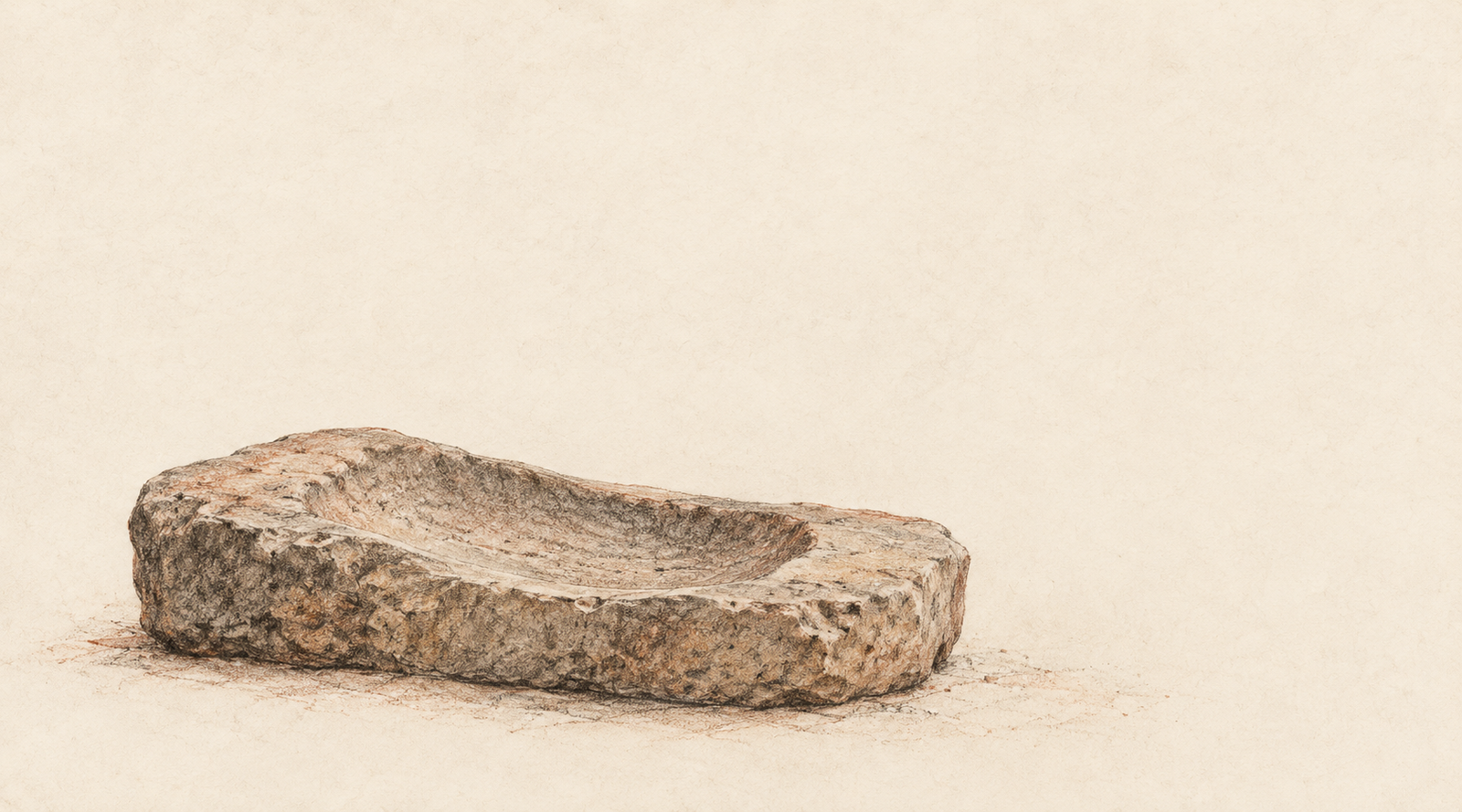

The City of Service
The temple we inherit is a building from which almost all necessity has been removed. Nothing must be brought for it to continue being what we call a temple. The sanctuary asks nothing of us. Stone is good at this kind of independence.
A living temple was otherwise.
Water had to come in. So did grain, cloth, oil, aromatic substances, fuel. The things required for worship arrived because someone carried them across a threshold.
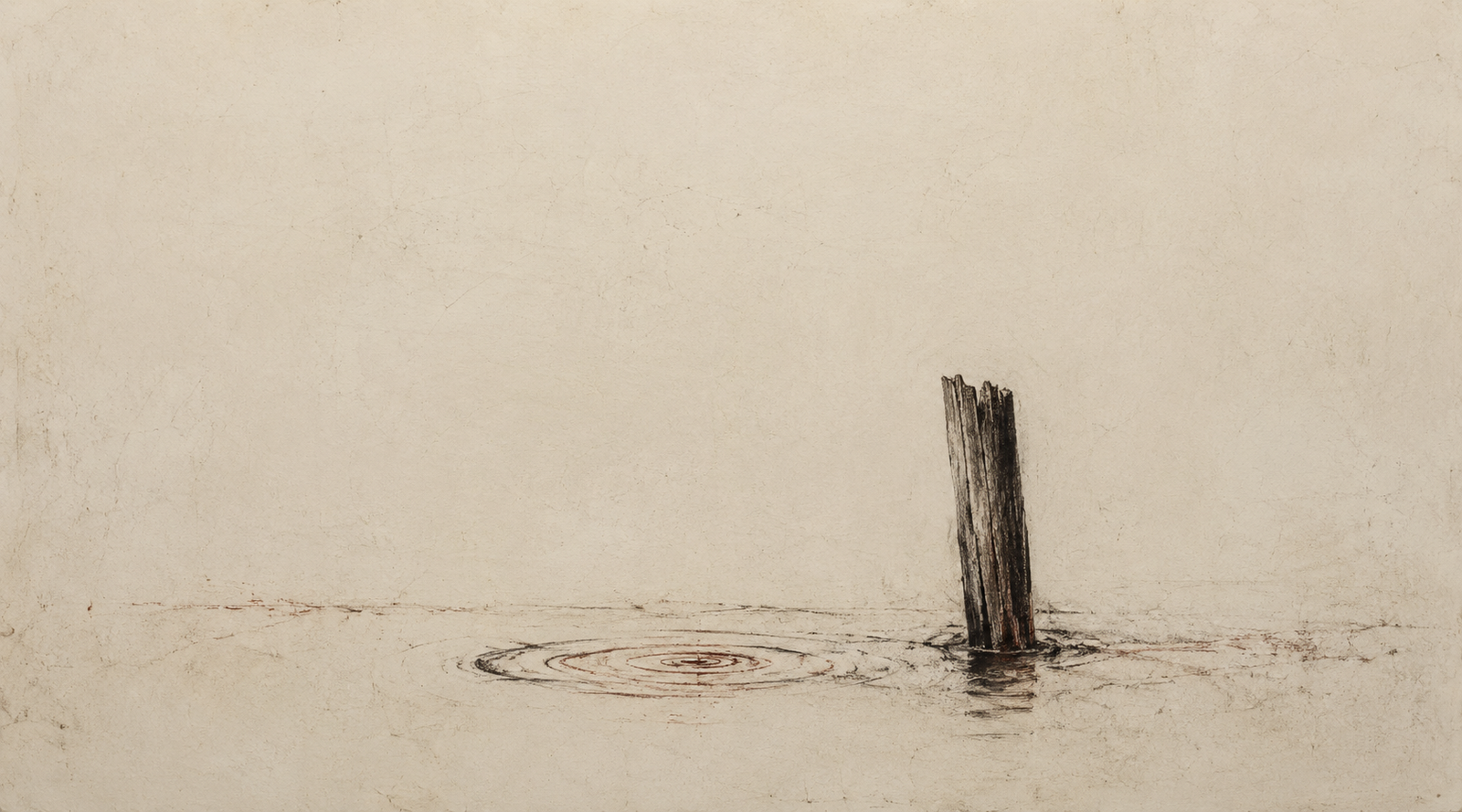

Houses of Wood, Light, and Smoke
Some of Angkor’s most intimate ruins do not rise above the ground at all. They are postholes, low mounds, hearths and ponds: durable traces of a domestic city built largely from things that decay. To restore that city is to see Angkor not only as stone, but as wood, smoke, water, repair, and people living within calling distance.

$895
Ta Prohm, Angkor, Cambodia — 2021
Limited Edition Archival Pigment Print
Edition
Strictly limited to 7 prints + 2 Artist’s Proofs
Edition Number
This listing is for the first numbered print from the Large Collector Edition: 1/7
Medium
Hand-toned black-and-white archival pigment print on Hahnemühle Bamboo — a museum-grade fine art paper chosen for its quiet tactility and reverent depth, echoing the spirit of the temples.
Signature & Numbering
Each print is individually signed and numbered by the artist on the border (recto)
Certificate of Authenticity
Accompanies every print
Image Size
28 x 28 inches (71.1 x 71.1 cm)
Here, light does not arrive. It returns—brushing the ancient corridor of Ta Prohm Temple with a hush so soft it feels inherited. One side of the gallery glows with early breath; the other listens in shadow. The space curves slightly, gently concealing its end. Stillness gathers in the silence between each pillar.
Captured just before dawn, the eastern gallery reveals itself not through spectacle but restraint. The air hangs with moss and age. No voice disturbs it. Every line of stone, every nuance of shade, seems shaped not by hand but by time held in prayer.
The artist entered this space as one would enter a sanctuary—with breath slowed, presence quieted. Using a large format analogue camera, he waited in long exposure for the light to speak. Later, in the darkroom, chiaroscuro shaping and hand-toning gave voice to that silence—layered until feeling overtook form.
This museum-grade archival pigment print is rendered on warm, tactile Hahnemühle Bamboo paper, in a strictly limited edition of 25 + 2 Artist’s Proofs. Each is signed and numbered by the artist and accompanied by a Certificate of Authenticity and Collector’s Print Folio Statement.
To welcome this image is to open a space where stone and breath remember each other.
To walk deeper into the stillness, click here to enter the Artist’s Journal.
Previously titled ‘Gallery, Ta Prohm Temple, Angkor, Cambodia. 2021,’ this photograph has been renamed to better reflect its place in the series and its spiritual tone. The edition, provenance, and authenticity remain unchanged.