

A Manifesto for Modern Living
The age of borrowed meaning is ending.
The authorities that once organised human life—religion, tradition, ideology, inherited certainty—no longer command universal belief. We live in a world where the old frameworks have loosened and the ground beneath unquestioned truths has shifted.
Many experience this as confusion.
Some call it crisis.
But the collapse of inherited meaning is not the end of purpose.
It is the beginning of responsibility.
This manifesto is not a doctrine, nor a system, nor an ideology. It is a declaration of how one might live when no authority can finally decide what life must mean.
It is an invitation to live deliberately, courageously, and creatively.
1. Accept the Open World
The world does not come with instructions.
No doctrine can finally explain existence. No institution can permanently define truth. Every system humanity has built will eventually weaken, fracture, or dissolve.
Do not fear this.
The absence of final answers is not a tragedy—it is freedom.
Meaning is not discovered like a hidden object.
Meaning is created.
The responsibility for that creation now rests with each of us.
2. Question Inherited Beliefs
Most people inherit their worldview.
They absorb moral codes, political identities, cultural assumptions, and social expectations without examining them. They live inside frameworks constructed by others.
But a life lived entirely through inherited assumptions is not truly one’s own.
Examine every belief you hold.
Ask whether it arises from your deepest understanding, or merely from habit, fear, or social pressure.
What cannot withstand honest examination must be released.
3. Become the Author of Your Life
You are not merely a participant in life.
You are its author.
Your character, your ideals, your direction—these are not fixed by background, circumstance, or expectation. They are shaped by the choices you make.
Do not drift through existence following invisible currents.
Choose.
Choose deliberately.
Choose consciously.
Choose courageously.
A meaningful life rarely appears by accident.
It is built through intention.
4. Protect the Independence of Your Mind
Modern society praises individuality while quietly discouraging it.
The pressure to conform—to ideological camps, cultural fashions, digital consensus, and social expectation—has never been stronger.
True independence requires resistance.
Think slowly in a culture that rewards instant opinion.
Stand apart when necessary.
Allow yourself to disagree with the world.
A free mind is rare because it demands intellectual courage.
Guard it carefully.
5. Welcome Difficulty
Comfort weakens the spirit.
Security can dull ambition. Ease invites stagnation.
Growth rarely emerges from favourable conditions. It is shaped through challenge, uncertainty, and resistance.
Hardship is not merely something to endure.
It is something that can strengthen.
Let difficulty refine your character rather than diminish it.
6. Practice Self-Mastery
The most significant victories are not over others.
They are over oneself.
Self-mastery begins with discipline—of thought, emotion, and action. It requires the ability to endure discomfort, delay gratification, and pursue meaningful goals rather than immediate pleasure.
Without self-command, freedom dissolves into chaos.
With it, freedom becomes creative power.
The individual capable of shaping themselves becomes capable of shaping their world.
7. Create Values Worth Living For
When old moral systems weaken, many people search for ready-made replacements.
But the highest task is not merely adopting new values.
It is creating them.
Ask yourself:
What deserves devotion?
What kind of life is worthy of admiration?
What principles would give meaning to existence even in uncertainty?
Answer these questions not only with words but with the way you live.
8. Affirm Life Fully
Life contains suffering.
It contains uncertainty, disappointment, loss, and struggle. No philosophy can remove these realities.
But strength lies not in escaping life’s difficulties, but in embracing life in its entirety.
To affirm life fully is to accept its joys and its hardships together—to recognise that both are part of the same unfolding experience.
Live in such a way that you would not wish your life to be smaller, safer, or less demanding.
9. Become a Creator
The future does not emerge from systems alone.
It emerges from individuals capable of vision.
Artists, thinkers, builders, innovators, and explorers expand the horizon of what human life can become.
Creation is not limited to art.
Every original idea, every courageous act, every new way of living enlarges the field of possibility.
Be a creator, not merely a consumer.
10. Become More Than You Were
Human life is not fixed.
Each generation carries the possibility of transformation.
The task of modern living is not merely survival or comfort. It is growth—in clarity, courage, imagination, and responsibility.
To deepen the mind.
To strengthen the spirit.
To widen the horizon of what a human life can be.
Stand in the open space where inherited certainty once stood and say:
I will create meaning here.
For more essays on how to live, think, and remain human in an uncertain world, subscribe to The Living Way on Substack and receive new pieces by email.
Also in Library


What the World Remembers
July moved through walls, bodies, songs, scars, cups, pages and stones—ordinary and mythic things that remember what human beings forget. Across Angkor, the Odyssey, Tolkien, Vedic creation, Greek war and quiet domestic rooms, the Library returned to one governing question: when memory fails, what in the world continues to know us?

The Story on the Wall
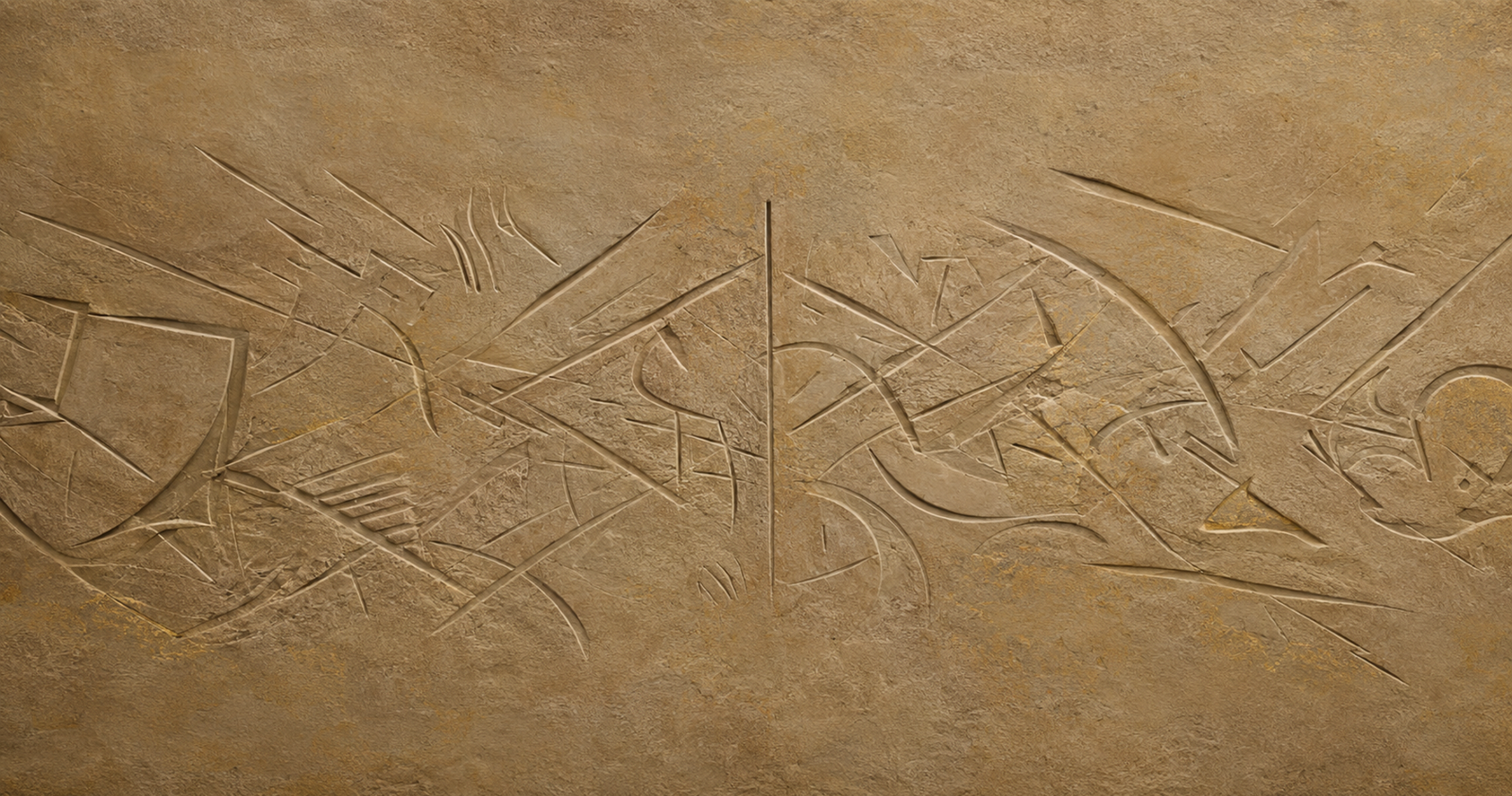
At Angkor Wat, more than fifty metres of carved sandstone hold the Battle of Lanka. Rama is present, but he must be found. This Prologue to The Story That Became Cambodia begins with the monumental certainty of the wall—and asks what the finished image cannot reveal about the Ramayana’s earlier journey into Khmer history.

The Mouth You Gave Me
A spare lyric poem from The Vow on breath, speech, gratitude, and the received body through which every answer must be formed and released.
Continue Reading
If this piece found something in you, you may wish to continue the journey elsewhere.
On The Lantern Chronicles, I gather writings from Angkor, myth and legend, contemplative essays, and poetry — works shaped by silence, beauty, wonder, memory, and the deeper questions that follow us through the world.
It is a place for stone and story, reflection and vow, shadow and revelation.
You would be most welcome there.